Sausage and cabbage stir fry hits that sweet spot between fast and satisfying: browned sausage, tender cabbage with a little edge, and a savory glaze that clings to every bite. The best versions don’t drown the pan in sauce. They let the sausage caramelize first, then use those browned bits to build a sharp, buttery finish that tastes like you spent a lot longer at the stove than you did.
What makes this version work is the order. The sausage goes in first so it can render a little fat and pick up real color, then the onion softens in the same pan before the cabbage goes in. That keeps the vegetables from steaming into submission. A little Dijon and apple cider vinegar cut through the richness, and a touch of brown sugar rounds out the bite without making the dish sweet.
Below, I’ll walk through the one pan technique that keeps the cabbage from going limp, plus the small ingredient swaps that still give you a solid dinner when the fridge is running low.
The cabbage got those little caramelized edges I was hoping for, and the Dijon-vinegar glaze pulled everything together without making it heavy. My husband went back for seconds before I even sat down.
Pin this sausage and cabbage stir fry for a quick skillet dinner with caramelized sausage, tender cabbage, and a tangy Dijon glaze.
The Secret to Keeping the Cabbage Crisp-Tender, Not Watery
The biggest mistake with cabbage stir fry is crowding the pan and expecting browning anyway. Cabbage releases moisture as it cooks, and if the skillet is too full, that moisture has nowhere to go. You end up with soft, pale cabbage instead of the savory, lightly caramelized edges that make this dish worth repeating.
Start with the sausage and let it brown well. Those browned spots are not decoration; they’re the base of the glaze. Then cook the onion before the cabbage so the pan has a little structure and the aromatics soften into the fat. Once the cabbage goes in, stir only occasionally. Constant stirring keeps it from taking on color, and color is where the best flavor lives here.
- Smoked sausage — Kielbasa gives you a round, smoky flavor and enough fat to help the rest of the pan along. Andouille brings more heat. Any fully cooked smoked sausage works; raw sausage changes the timing and needs a different method.
- Cabbage — Green cabbage holds up best because it softens without falling apart. Slice it into rough pieces, not ribbons. Bigger pieces give you some bite after the final toss.
- Dijon mustard — This is the sharp, salty backbone of the glaze. Yellow mustard won’t taste the same. If you need a substitute, whole-grain mustard is the closest swap and gives a little texture too.
- Apple cider vinegar — It keeps the butter and sausage from tasting heavy. White vinegar works in a pinch, but cider vinegar gives a softer edge that fits the cabbage better.
What Each Ingredient Is Actually Doing in This Recipe

- Primary ingredient (the star) — Quality matters most. Choose the best you can find.
- Cooking medium (oil, butter, or broth) — This carries flavors and prevents dryness.
- Seasonings (salt, pepper, spices, herbs) — Layer flavors so nothing overpowers. Build depth gradually.
- Aromatics (garlic, onion, herbs) — Cook with fat to bloom flavors. Become the foundation.
- Supporting ingredients — Complement the main ingredient without overpowering it.
- Sauce or liquid (if applicable) — Brings flavors together. Balance richness with acid.
- Acid (lemon, vinegar, wine, or other) — Brightens and prevents flat-tasting results.
- Final finish (garnish, glaze, or sauce) — Prevents one-dimensional taste and adds visual appeal.
Building the Pan in the Right Order
Brown the Sausage First
Put the sausage slices in a large skillet over medium-high heat and let them sit long enough to pick up a deep golden crust. You’re not just heating them through; you’re building flavor in the pan. Once both sides have color, move them to a plate. If the pan starts looking dry, the sausage will usually give off enough fat once it warms.
Soften the Onion in the Same Fat
Add the butter to the same skillet, then slide in the onion. The goal is softened and golden, not browned around the edges from the start. Stir every minute or so and scrape up the sausage fond as the onion cooks. If the pan looks dark but smells nutty rather than burnt, you’re on track.
Wake Up the Garlic and Caraway
Garlic only needs about a minute, just until fragrant. Caraway seeds, if you’re using them, should go in at the same time so they toast lightly in the butter. If the garlic sits too long, it turns bitter fast and can overshadow the sweetness of the cabbage. Keep the heat moderate and move quickly once it hits the pan.
Cook the Cabbage Until the Edges Color
Add the cabbage and let it soften, stirring only now and then. At first it looks like too much, then it shrinks down and starts to glisten. The target is tender with a few browned edges still intact. If it turns pale and watery, the heat was too low or the pan too crowded; next time, use a wider skillet and resist the urge to stir constantly.
Finish With the Glaze and Bring It Back Together
Whisk the Dijon, vinegar, and brown sugar together before they hit the pan so the sauce disperses evenly. Pour it over the cabbage, return the sausage, and toss until everything is coated. Season at the end so you can taste the glaze before adding more salt. Fresh parsley on top lifts the whole pan and keeps the dish from tasting flat.
How to Adapt This When the Fridge Is Working Against You
Make It Dairy-Free Without Losing the Silkiness
Swap the butter for olive oil or avocado oil. You’ll lose a little of that buttery finish, but the pan still gets plenty of richness from the sausage and the caramelized onions. Use a light hand with the oil so the cabbage can still brown instead of turning greasy.
Make It Lower-Carb by Skipping the Sugar
Leave out the brown sugar and add a little extra vinegar if the glaze needs more balance. The result is sharper and less rounded, but still plenty satisfying because the sausage and cabbage already bring sweetness of their own. If you want a softer finish without sugar, use a small splash of apple juice instead.
Use Brussels Sprouts or a Cabbage Blend
Shredded Brussels sprouts or a coleslaw blend can stand in for part of the cabbage. They cook a little faster and brown more quickly, so keep the heat moderate and watch closely near the end. The flavor turns a little more nutty and less sweet, which works well with the mustard glaze.
Storage and Reheating
- Refrigerator: Store in an airtight container for up to 4 days. The cabbage softens a bit as it sits, but the flavor holds up well.
- Freezer: It freezes fine, though the cabbage will be softer after thawing. Cool it completely first, then freeze in portions for up to 2 months.
- Reheating: Warm it in a skillet over medium heat with a small splash of water if needed. The biggest mistake is blasting it in the microwave until the cabbage turns limp and the sausage tightens up.
Answers to the Questions Worth Asking
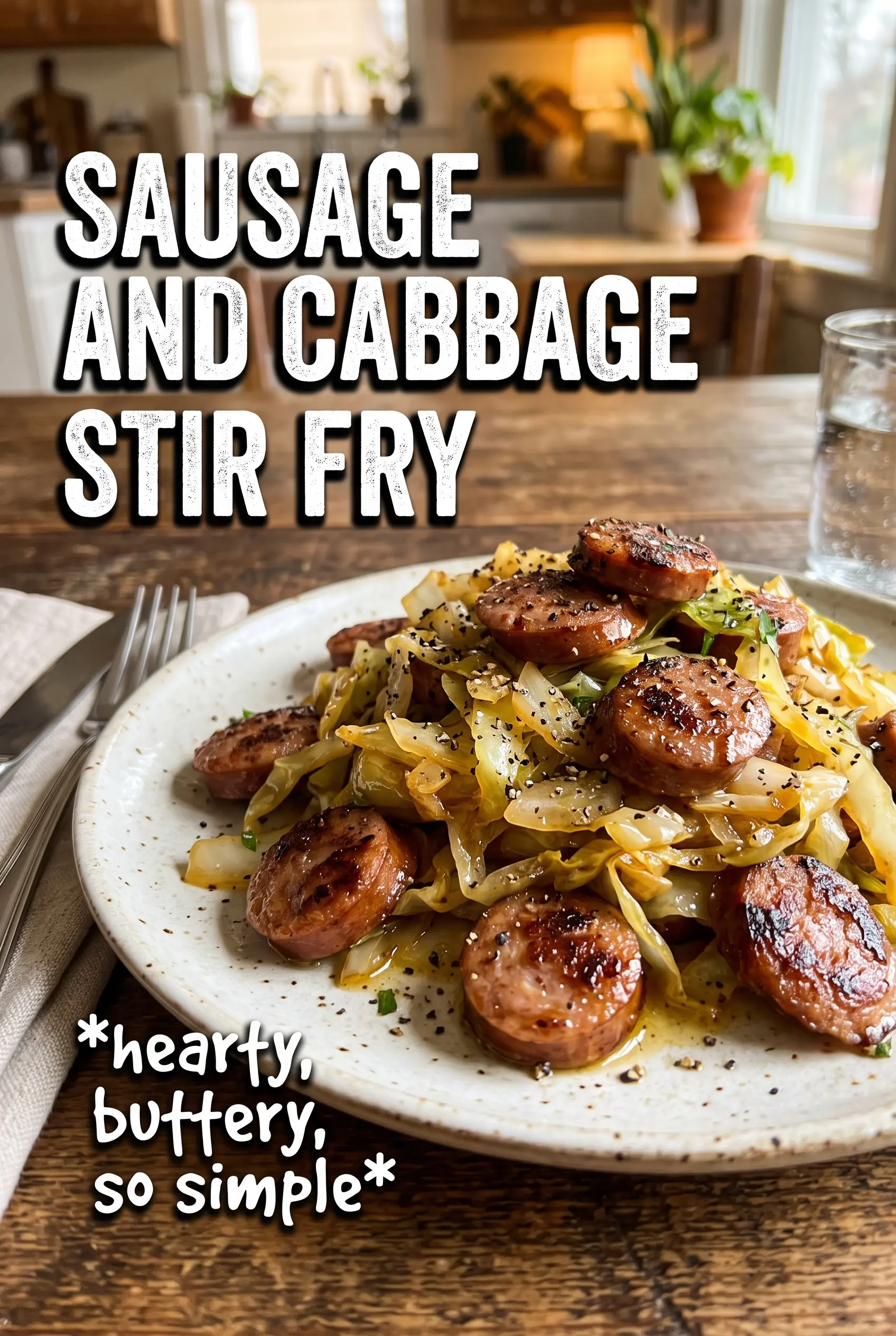
Sausage and Cabbage Stir Fry
Ingredients
Equipment
Method
- Heat a large skillet over medium-high heat and add the sliced kielbasa rounds. Brown until caramelized, then remove to a plate and set aside.
- Reduce heat to medium and melt the butter in the same skillet. Sauté the sliced onion for 5 minutes, until softened and golden.
- Add the minced garlic and caraway seeds to the skillet. Cook for 1 minute, stirring, until fragrant.
- Add the chopped cabbage to the skillet and stir to coat in the buttery onion mixture. Cook for 8-10 minutes, stirring occasionally, until wilted and slightly caramelized at the edges.
- In a small bowl, whisk together Dijon mustard, apple cider vinegar, and brown sugar until smooth. Pour the glaze over the cabbage and stir to combine.
- Return the browned sausage to the skillet and toss everything together until evenly coated. Season with salt and black pepper to taste, then top with fresh parsley before serving.