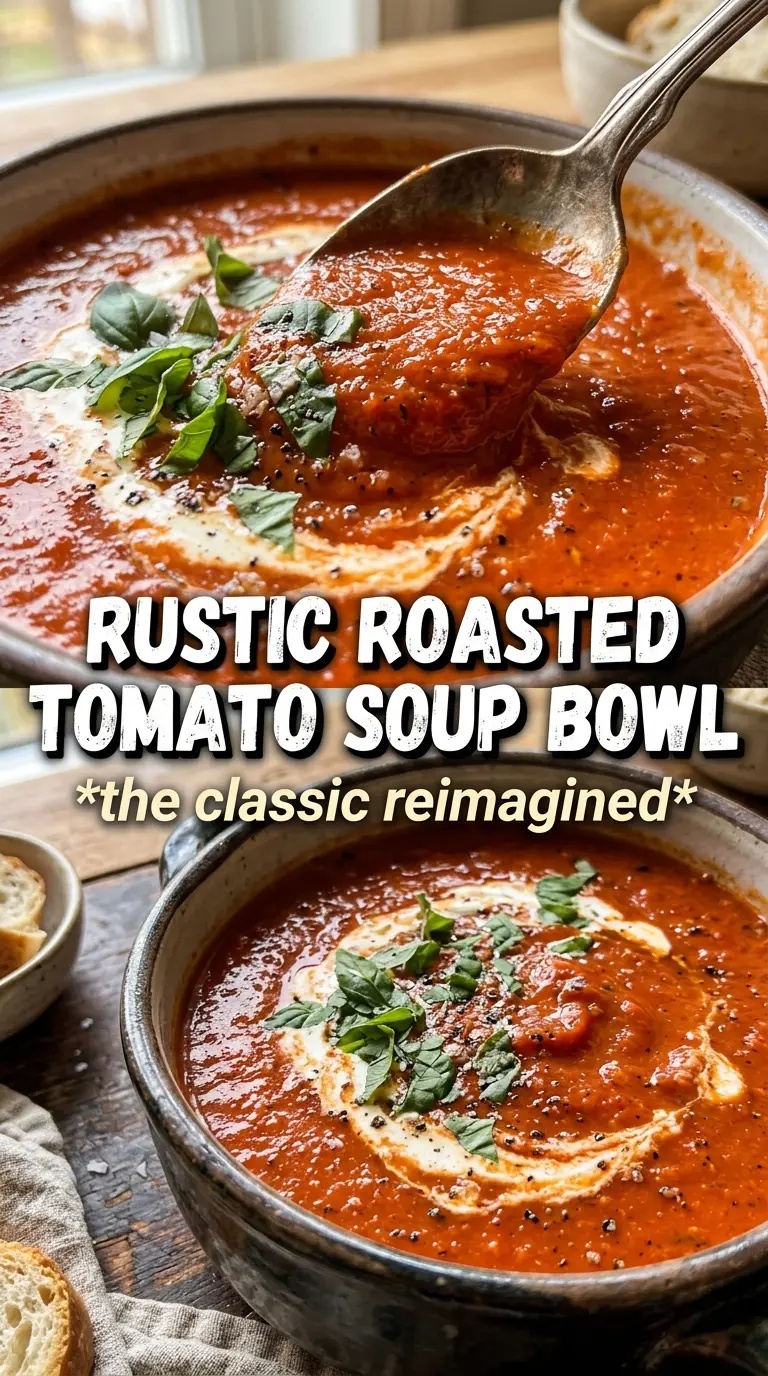
Roasted tomato basil soup lands with a deeper, sweeter tomato flavor than the stovetop version most of us grew up with. Roasting pulls the moisture out of the tomatoes, concentrates their flavor, and gives the onions and garlic a gentle caramelized edge that turns the whole pot from flat to rich. The cream softens the acidity without muting the tomatoes, and the basil stays bright enough to keep each spoonful tasting fresh.
The trick is in the roast. Roma tomatoes hold their shape well and roast down into a dense, savory base, but vine tomatoes work too if that’s what you have on hand. Let the edges get a little dark in the oven; that’s where the soup gets its depth. The balsamic vinegar and small spoonful of sugar don’t make the soup sweet — they round out the sharpness so the tomatoes taste fuller and more balanced.
Below, I’ve included the ingredient details that matter most, the part of the process where the flavor really builds, and a few smart swaps for making this soup dairy-free or serving it different ways.
The tomatoes roasted down into such a deep, sweet base, and the soup blended up silky without needing to strain it. I loved how the basil stayed fresh at the end instead of turning dull.
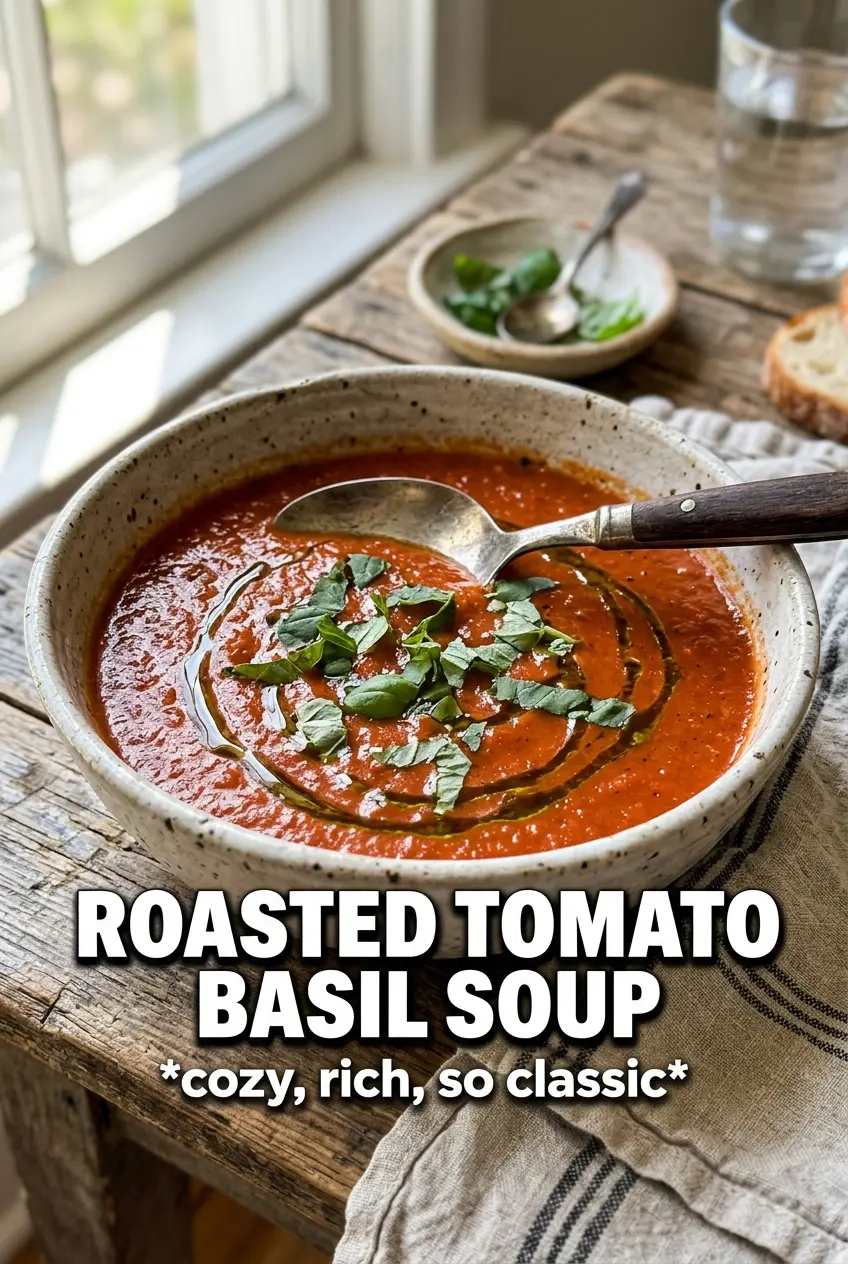
Roasted Tomato Basil Soup has that deep tomato flavor and silky finish you get from oven-roasted vegetables, not a shortcut simmer.
The Roasted Edge That Keeps This Soup From Tasting Flat
Blending raw tomatoes into soup can leave you with something that tastes bright but unfinished. Roasting changes that. Once the tomatoes, onion, and garlic spend time in a hot oven, their natural sugars concentrate and the cut sides pick up browned spots that add the savory backbone this soup needs. That’s the difference between a tomato soup that tastes thin and one that tastes like it simmered all day.
The other detail that matters is how you handle the garlic. Roasted garlic goes soft and sweet, and it should be squeezed straight from the skins into the pot so none of that mellow flavor is lost. If the vegetables look deeply colored at the edges before you pull them, you’re in the right place. Pale roasted tomatoes usually mean pale soup.
- Roma or vine tomatoes — Roma tomatoes give you a thicker, meatier soup, while vine tomatoes bring a slightly brighter flavor. Use what looks best at the store, but pick tomatoes that feel heavy for their size.
- Balsamic vinegar — This doesn’t make the soup taste like balsamic. It sharpens the tomato flavor and gives the finished soup a little depth, especially if your tomatoes are less sweet than you hoped.
- Heavy cream — Cream gives the soup its silky finish. Half-and-half works in a pinch, but the body won’t be as lush. Add it after blending so it stays smooth.
- Fresh basil — Fresh basil is worth using here. Dried basil disappears into the background and won’t give you the same clean, fragrant finish at the end.
What Each Ingredient Is Actually Doing in This Recipe
- Primary ingredient (the star) — Quality matters most. Choose the best you can find.
- Cooking medium (oil, butter, or broth) — This carries flavors and prevents dryness.
- Seasonings (salt, pepper, spices, herbs) — Layer flavors so nothing overpowers. Build depth gradually.
- Aromatics (garlic, onion, herbs) — Cook with fat to bloom flavors. Become the foundation.
- Supporting ingredients — Complement the main ingredient without overpowering it.
- Sauce or liquid (if applicable) — Brings flavors together. Balance richness with acid.
- Acid (lemon, vinegar, wine, or other) — Brightens and prevents flat-tasting results.
- Final finish (garnish, glaze, or sauce) — Prevents one-dimensional taste and adds visual appeal.
Building the Roasted Base Without Losing the Bright Basil Finish
Roast Until the Edges Caramelize
Spread the tomatoes, onion, and halved garlic cut-side up on the baking sheet so they roast instead of steam. The olive oil should gloss everything lightly, not pool under the vegetables. Pull the tray when the tomato edges are browned and a few spots are charred; that color is flavor, and it’s what keeps the soup from tasting one-note. If the vegetables still look pale and wet, give them more time before moving on.
Blend the Vegetables Before the Dairy Goes In
Transfer the roasted vegetables to a pot with the broth and balsamic vinegar, then blend until the soup is completely smooth. An immersion blender gives you the easiest control, but a countertop blender works too if you blend in batches and hold the lid down carefully. Don’t add the cream yet. Hot cream blended too aggressively can dull the texture, while blending the vegetable base first gives you a cleaner, silkier finish.
Finish With Cream and Basil Over Low Heat
Stir in the heavy cream and fresh basil, then let the soup simmer gently for about 10 minutes. Keep the heat low enough that the surface barely moves; a hard boil can separate the cream and darken the basil. Taste at the end for salt, pepper, and the small spoonful of sugar. The sugar should disappear into the background, not make the soup sweet.
Make It Dairy-Free Without Losing Body
Swap the heavy cream for full-fat coconut milk or an unsweetened plain oat cream. Coconut milk gives the soup a slightly richer, rounder finish, while oat cream stays more neutral. Either one should be stirred in off the heat or over very low heat so it doesn’t split.
Use Vegetable Broth for a Fully Meatless Bowl
Vegetable broth keeps the soup vegetarian without changing the method at all. Choose a broth that tastes clean rather than aggressively salty, since the roasted vegetables already bring plenty of depth. If your broth is weak, the soup can taste thin, so taste after blending before you add extra salt.
Skip the Croutons and Serve It Gluten-Free
The soup itself is gluten-free as written. Just serve it without grilled cheese croutons or use gluten-free bread for the topping. A drizzle of olive oil and a few torn basil leaves are enough if you want a simpler finish.
Thicken It Slightly for a Heartier Main Dish
If you want a thicker soup, roast an extra onion or reduce the broth by 1/2 cup. You can also simmer the blended soup a few minutes longer before adding the cream. Don’t puree in a pile of bread or flour; that muddies the tomato flavor and dulls the fresh finish.
Storage and Reheating
- Refrigerator: Store in an airtight container for up to 4 days. The flavor deepens overnight, and the soup may thicken a little as it chills.
- Freezer: Freeze the soup before adding the cream for the best texture. Dairy can separate after thawing, so stir in the cream after reheating if you plan to freeze a batch.
- Reheating: Warm gently on the stove over low heat, stirring often. High heat can make the cream grainy and dull the basil, so keep it below a simmer if the cream is already in the pot.
Questions I Get Asked About This Recipe
Roasted Tomato Basil Soup
Ingredients
Equipment
Method
- Preheat the oven to 425°F, and arrange the tomatoes, garlic, and onion on a rimmed baking sheet.
- Drizzle with 1/4 cup olive oil, then season with salt, pepper, and dried oregano.
- Roast for 35-40 minutes until the tomatoes are caramelized and slightly charred at the edges, using a visible browned surface as your cue.
- Squeeze the roasted garlic from its skins, then transfer all roasted vegetables to a large pot.
- Add the broth and balsamic vinegar, then blend smooth with an immersion blender.
- Stir in the heavy cream and fresh basil, then simmer for 10 minutes.
- Add the sugar, then season with salt and pepper to taste.
- Serve hot with grilled cheese croutons or crusty bread on the side.