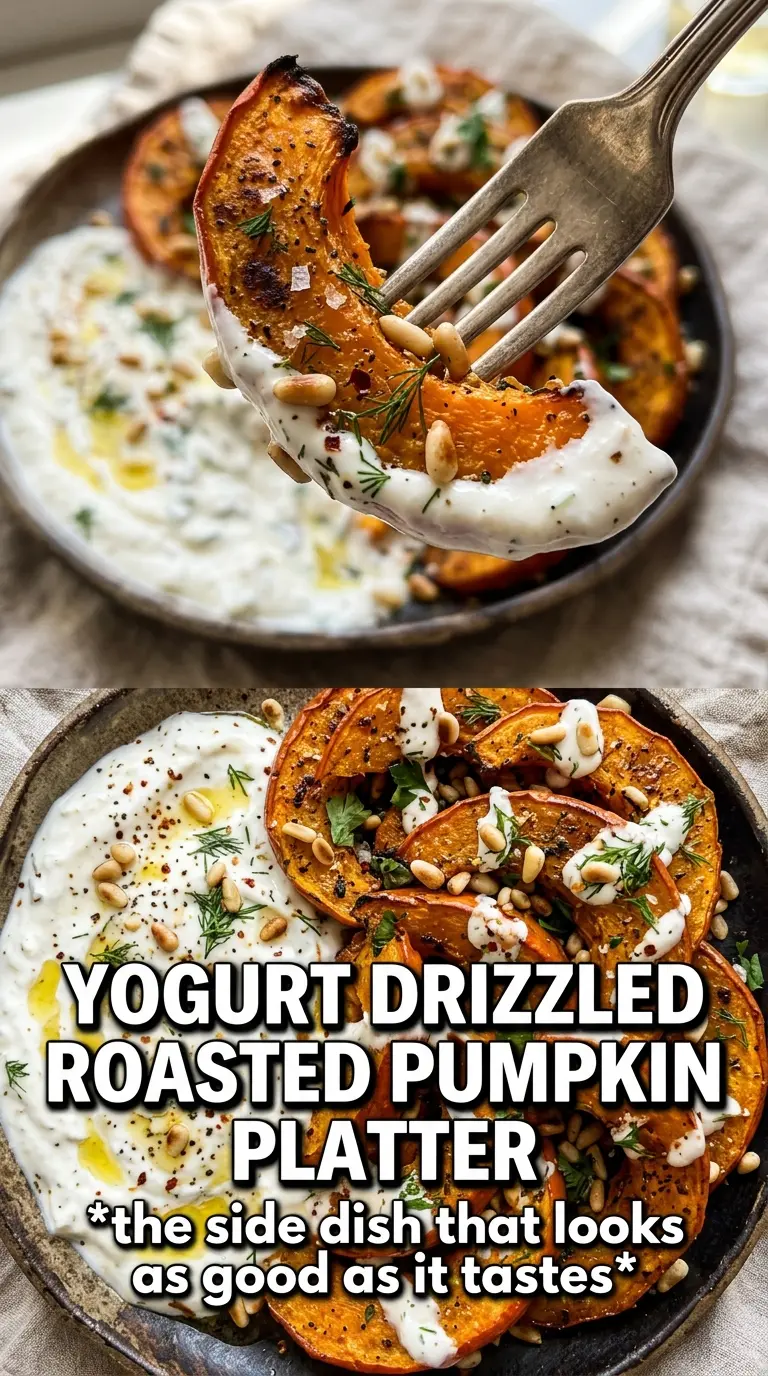
Roasted pumpkin turns deeply savory in the oven, with caramelized edges, soft centers, and enough spice to keep each bite from tasting flat. Spread over cool garlicky yogurt and finished with pine nuts and pomegranate, it lands in that sweet spot where a simple vegetable side feels polished enough for company but easy enough for a weeknight. The contrast is what makes it work: warm against cool, creamy against crisp, sweet against tangy.
The pumpkin gets tossed with olive oil and spices before roasting so the seasoning clings to the wedges instead of sitting in the pan. That matters, because pumpkin and squash need more than salt to taste complete. The yogurt sauce also does more than act like a base. Garlic, lemon, and herbs cut through the richness, while the pomegranate molasses adds a sharp, sticky finish that keeps the dish from reading as heavy.
Below you’ll find the timing that gives you browned edges without collapsed wedges, plus a few smart swaps if you’re working with butternut squash instead of pumpkin or need a dairy-free version.
The pumpkin came out caramelized at the edges and the yogurt stayed thick even under the warm wedges. I also loved the pine nuts and pomegranate together — it tasted fresh, crunchy, and not at all boring.
Save this roasted pumpkin with yogurt sauce and pine nuts for a side dish with caramelized edges, creamy herb yogurt, and a bright pomegranate finish.
The Part That Keeps the Pumpkin from Going Mushy
Pumpkin and squash can turn soft in a hurry, which is why the oven temperature matters just as much as the seasoning here. At 425°F, the wedges have enough heat to caramelize before they collapse. If the pan is crowded, they steam instead of roast, and you lose the browned edges that give the dish its depth.
Cut the wedges into even pieces so they finish at the same time. Smaller pieces will soften faster and may need a few minutes less, while thicker wedges hold their shape better but need full roasting time. The goal is a knife-tender center with edges that look a little sticky and bronzed, not pale and watery.
- Spacing — Give the wedges room on the pan. Crowding traps steam and keeps the sugar in the pumpkin from browning.
- High heat — 425°F drives off moisture fast enough to build color before the flesh turns limp.
- Even cuts — Same-sized wedges mean no half-charred, half-raw tray.
What Each Ingredient Is Actually Doing in This Dish
- Pumpkin or butternut squash — Butternut is the easiest swap if you can’t find a small pumpkin. It roasts evenly, stays sturdy, and tastes sweet in the same way, though pumpkin can be a little more delicate and earthy.
- Olive oil — This helps the spices coat the wedges and encourages browning. Use a good one if you can, because the pumpkin picks up that flavor.
- Cumin, coriander, smoked paprika, and cayenne — This is the spice mix that gives the dish its Middle Eastern feel. If you skip the smoked paprika, you lose some of the warmth and depth; if you skip the cayenne, the dish gets gentler but still works.
- Greek yogurt — Full-fat yogurt gives the sauce body and keeps it from turning watery under the warm pumpkin. Thin yogurt doesn’t hold up as well, so if yours is loose, strain it for 15 to 20 minutes first.
- Garlic and lemon juice — These keep the yogurt bright and sharp. Raw garlic is important here; cooked garlic would lose the bite that balances the sweet squash.
- Herbs, pine nuts, pomegranate seeds, and molasses — Mint and parsley bring freshness, pine nuts add buttery crunch, pomegranate seeds add little bursts of tart juice, and molasses ties everything together with a sweet-sour finish.
Roasting, Saucing, and Finishing Without Losing the Contrast
Coating the Wedges
Toss the pumpkin with olive oil, cumin, coriander, smoked paprika, cayenne, salt, and pepper until every surface looks lightly glazed. If the spices clump in the bowl, the oil is too sparse, and you’ll end up with patchy seasoning. Use your hands if needed; you want the coating to reach into the creases of the wedges.
Roasting to Color, Not Just Softness
Spread the wedges on a lined baking sheet in a single layer and roast until the edges darken and the tips look caramelized. Start checking around 30 minutes, especially if your wedges are on the thin side. The pumpkin is ready when a knife slides in easily but the slices still hold their shape when lifted.
Building the Yogurt Base
Whisk the yogurt, garlic, lemon juice, herbs, and salt until smooth and spreadable. Taste it before you plate, because the sauce needs to be assertive enough to stand up to sweet roasted squash. If it tastes flat, it usually needs more salt or a small extra squeeze of lemon, not more garlic.
Finishing on the Platter
Spread the yogurt on a platter while the pumpkin is still warm, then arrange the wedges over the top. Add the pine nuts, pomegranate seeds, and mint at the last minute so they stay lively and the nuts keep their crunch. Drizzle the pomegranate molasses lightly; too much turns the whole dish syrupy and hides the spices.
How to Adapt This for Different Kitchens and Different Eaters
Dairy-Free Version
Use a thick unsweetened coconut yogurt or almond yogurt with a little extra lemon juice. The sauce will be less tangy than Greek yogurt, but it still gives the dish a cool, creamy base that works with the roasted squash.
Nut-Free Finish
Skip the pine nuts and add toasted pumpkin seeds instead. You still get crunch, but the flavor is a little earthier and less buttery.
Using Butternut Squash
Butternut squash roasts a bit more predictably than pumpkin and is easier to cut into neat wedges. It gives you the same sweet-savory contrast, with a slightly denser texture.
Storage and Reheating
- Refrigerator: Store the pumpkin and yogurt separately for up to 3 days. The pumpkin softens a little, but it still tastes great.
- Freezer: The roasted pumpkin can be frozen, but the yogurt sauce doesn’t freeze well. Freeze the pumpkin in a single layer, then reheat from thawed for best texture.
- Reheating: Warm the pumpkin in a 375°F oven until heated through. Don’t use the microwave if you want to keep the edges from turning soggy.
Answers to the Questions Worth Asking
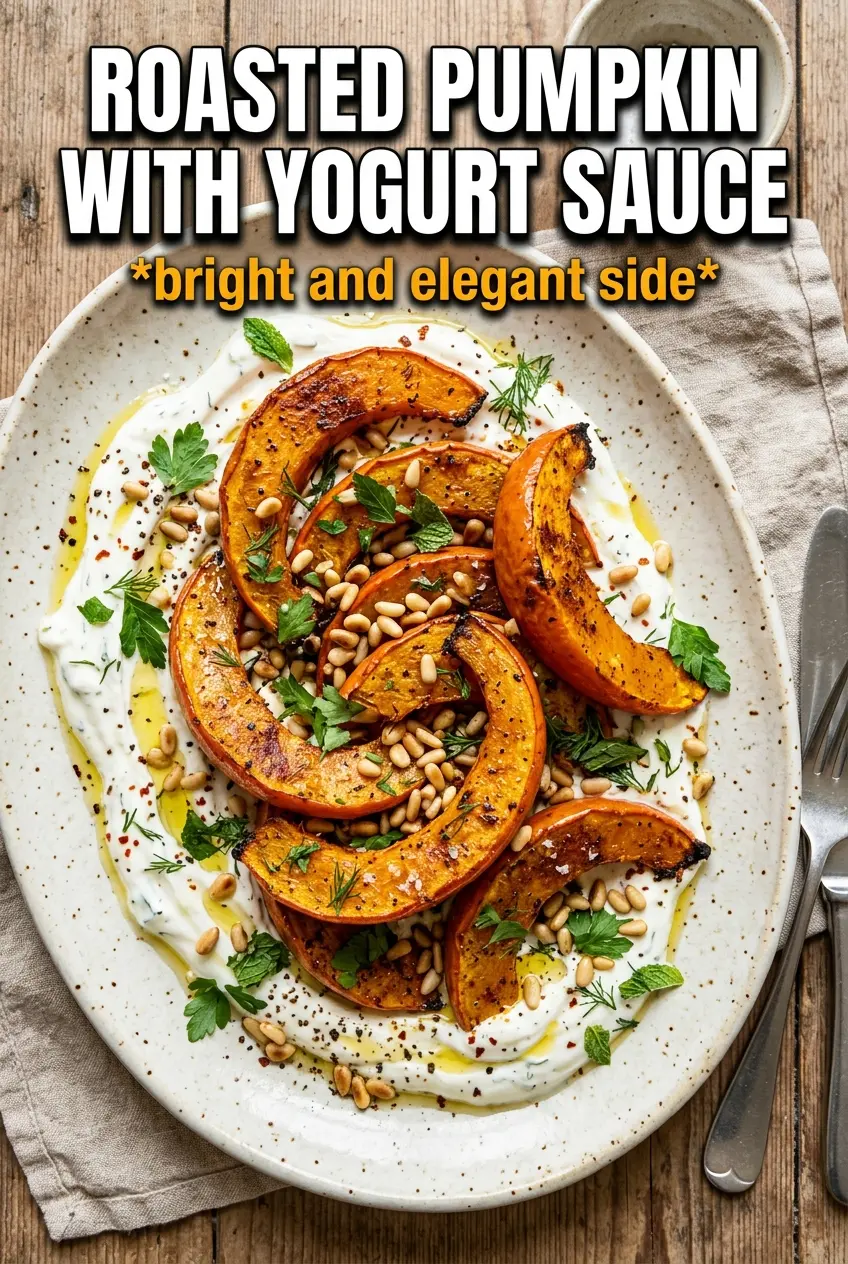
Roasted Pumpkin With Yogurt Sauce And Pine Nuts
Ingredients
Equipment
Method
- Preheat the oven to 425F, then place a sheet pan inside to warm up. Toss the pumpkin wedges with olive oil, cumin, coriander, smoked paprika, cayenne, salt, and pepper until evenly coated.
- Spread the pumpkin in a single layer on the hot sheet pan and roast for 30-35 minutes. Look for caramelized edges and tender centers, turning once halfway for even browning.
- Whisk the yogurt sauce ingredients together until smooth. Spread the sauce on a platter so it forms a creamy base.
- Arrange the warm roasted pumpkin over the yogurt sauce. Scatter toasted pine nuts, pomegranate seeds, and fresh mint on top, then drizzle with pomegranate molasses.