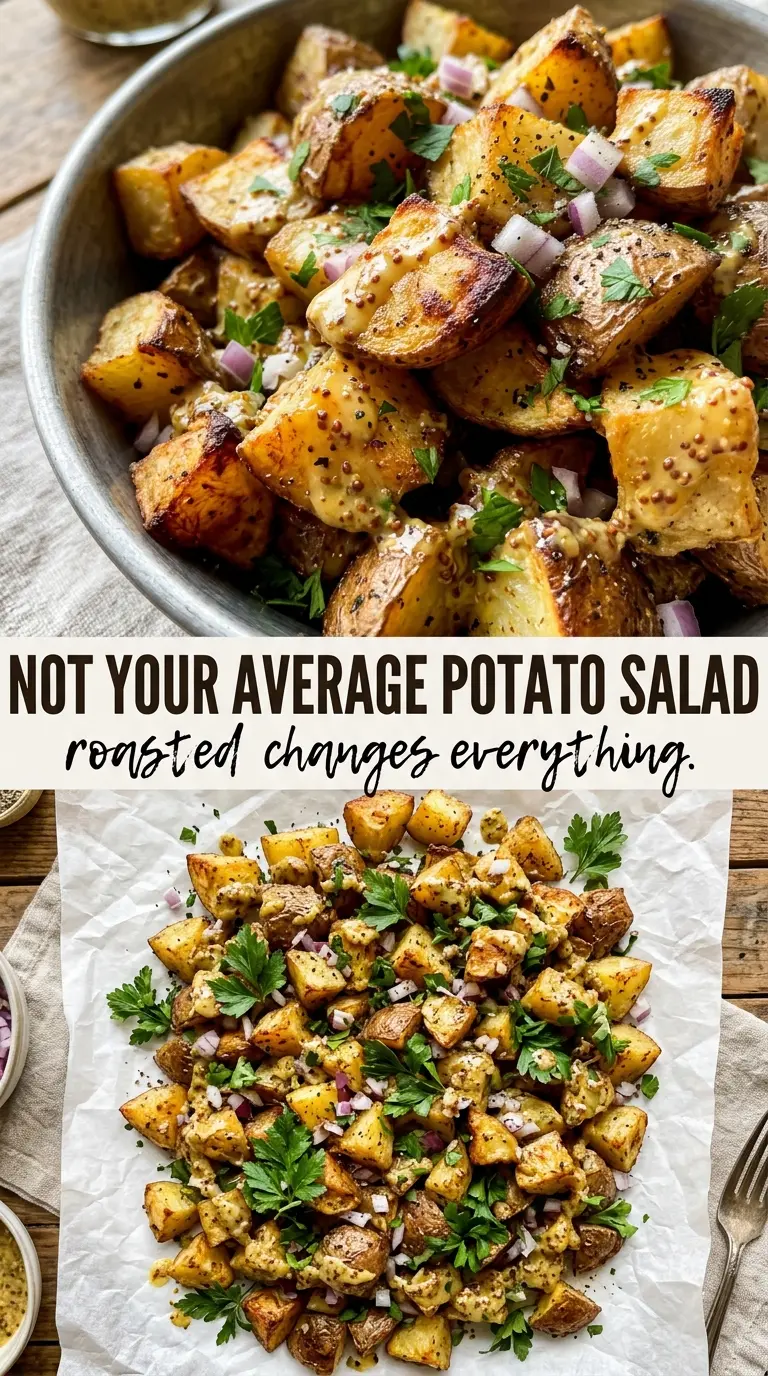
Golden, crispy-edged roasted potato salad is the kind of side dish that disappears before the main course settles in. The potatoes keep their shape, the cut sides go deeply browned, and the warm Dijon dressing clings to every nook instead of sliding off into the bowl. It eats like a potato salad with a little more backbone: tangy, herby, and built for people who like contrast in every bite.
The trick is roasting the potatoes cut-side down so they get that hard-edged sear before anything else touches them. Then the dressing goes on while they’re still warm, not piping hot, so the potatoes absorb the vinegar, mustard, and honey without turning soggy. Fresh herbs and a little red onion finish the job with brightness and crunch.
Below, I’ve included the small timing details that keep the potatoes crisp, plus a few swaps that make this work for different menus without losing what makes it good.
The potatoes stayed crisp on the edges even after I tossed them with the dressing, and the Dijon flavor soaked into every bite without making it heavy. I served it warm with grilled chicken, and my husband went back for seconds before the rest of the food was even out.
Like this roasted potato salad? Save it for cookouts and weeknights when you want crispy potatoes with a tangy Dijon herb finish.
The Cut-Side Down Trick That Gives You a Real Potato Salad Texture
Roasted potato salad falls apart when the potatoes steam instead of browning. If the pan is crowded, the cut faces soften before they can caramelize, and you end up with tender potatoes that taste fine but don’t hold dressing well. Spreading them in a single layer, cut-side down, gives you the dry, crisp surface that soaks up the Dijon dressing later without turning mushy.
The other mistake is dressing the potatoes too soon. Straight from the oven, they’re steamy enough to push the dressing away; after a short rest, they’re warm enough to absorb it. That’s the sweet spot here. You want the potatoes warm, not hot enough to make the herbs wilt into nothing or the onion taste harsh.
What Each Ingredient Is Actually Doing in This Salad
- Baby potatoes — Small potatoes hold their shape better than large russets and give you more cut surface area for browning. Halving them is important; whole potatoes won’t roast with the same crisp edges or pick up the dressing as well.
- Olive oil — You need enough oil to coat the cut faces so they fry in the oven instead of drying out. The extra oil in the dressing helps the mustard and vinegar emulsify and cling to the potatoes.
- Dijon mustard — This is the backbone of the dressing. Yellow mustard won’t give the same sharp, rounded bite or the same emulsifying power, so if you swap, the dressing turns thinner and less balanced.
- Apple cider vinegar and honey — The vinegar wakes up the potatoes and keeps the dressing from tasting flat; the honey rounds the edges without making it sweet. If you use another vinegar, keep it mild, or the salad will get sharp fast.
- Fresh parsley and chives — These are not garnish here; they’re part of the structure. Parsley adds clean freshness, and chives bring a mild onion note that works with the dressing instead of fighting it.
Roasting, Resting, and Dressing at the Right Moment
Seasoning the Potatoes for Maximum Browning
Toss the halved potatoes with oil, garlic powder, smoked paprika, salt, and pepper until every cut side looks lightly coated. The paprika adds color and a little depth, but it’s the oil that matters most for the crust. Lay the potatoes cut-side down on the sheet pan and don’t move them right away; that first uninterrupted stretch is what sets the crust.
Turning Once, Not Constantly
Roast the potatoes at 425°F until the bottoms are deep golden and the edges look a little rough and blistered. Flip them once around the 20-minute mark so the second side can finish without losing the crunch you already built. If they stick hard to the pan, they’re not ready yet — a properly browned potato releases more easily.
Whisking a Dressing That Stays Smooth
Whisk the dressing until it turns glossy and slightly thickened. Dijon helps it come together, but the oil has to go in evenly or the vinegar will sit in streaks and the salad will taste uneven. If it separates after sitting, whisk again for a few seconds before pouring it over the potatoes.
Tossing While Warm, Not Hot
Let the potatoes cool for about 10 minutes before dressing them. They should still feel warm when you pick one up, but not steaming hard. That’s when they absorb the dressing best. Add the onion, parsley, and chives after the first toss so the herbs stay bright and the onion keeps its crunch.
How to Adapt This for Different Plates and Pantries
Make it dairy-free and naturally vegan
This version is already dairy-free and vegan as written if you use a plant-based sweetener you trust. The dressing stays creamy from the mustard and oil, so you don’t need mayo or yogurt to get body. That keeps the potatoes bright and sharp instead of heavy.
Swap the herbs based on what’s in the fridge
Parsley and chives give the cleanest finish, but dill works if you want a more classic potato-salad edge. Use it sparingly; dill takes over fast. A little tarragon also works, though it shifts the salad toward a more aromatic, almost French-style profile.
Add extra texture for a bigger side dish
A handful of chopped celery or sliced radishes adds crunch if you want more contrast. Stir them in at the end so they stay crisp. If you add too much, the salad shifts away from the potatoes and starts to feel like a chopped vegetable bowl.
Storage and Reheating
- Refrigerator: Store in an airtight container for up to 4 days. The potatoes soften a bit, but the flavor stays strong.
- Freezer: I don’t recommend freezing this salad. Roasted potatoes turn grainy and mealy after thawing, and the herbs lose their freshness.
- Reheating: Warm leftovers in a skillet over medium-low heat or on a sheet pan in a 375°F oven. Microwave only if you’re in a hurry, and stop before the potatoes get hot enough to turn steamy and limp.
Answers to the Questions Worth Asking

Roasted Potato Salad
Ingredients
Equipment
Method
- Preheat oven to 425°F. Toss halved baby potatoes with olive oil, garlic powder, smoked paprika, salt, and cracked black pepper, then spread cut-side down on a large baking sheet.
- Roast for 30-35 minutes total, flipping once at 20 minutes, until golden brown and crispy on the cut sides.
- Whisk olive oil, Dijon mustard, apple cider vinegar, honey, and garlic powder until smooth and emulsified. Set aside while the potatoes finish roasting.
- Let roasted potatoes cool for 10 minutes until still warm but not hot, then transfer to a large bowl. (For the remaining rest time, you can cool to room temperature for about 10 more minutes before serving.)
- Pour dressing over the warm potatoes and toss to coat, letting the potatoes absorb the dressing. Toss until every crisped surface looks lightly glazed.
- Add very finely diced red onion, chopped parsley, and chopped chives, then toss again. Adjust with salt and pepper to taste, then serve warm or at room temperature.