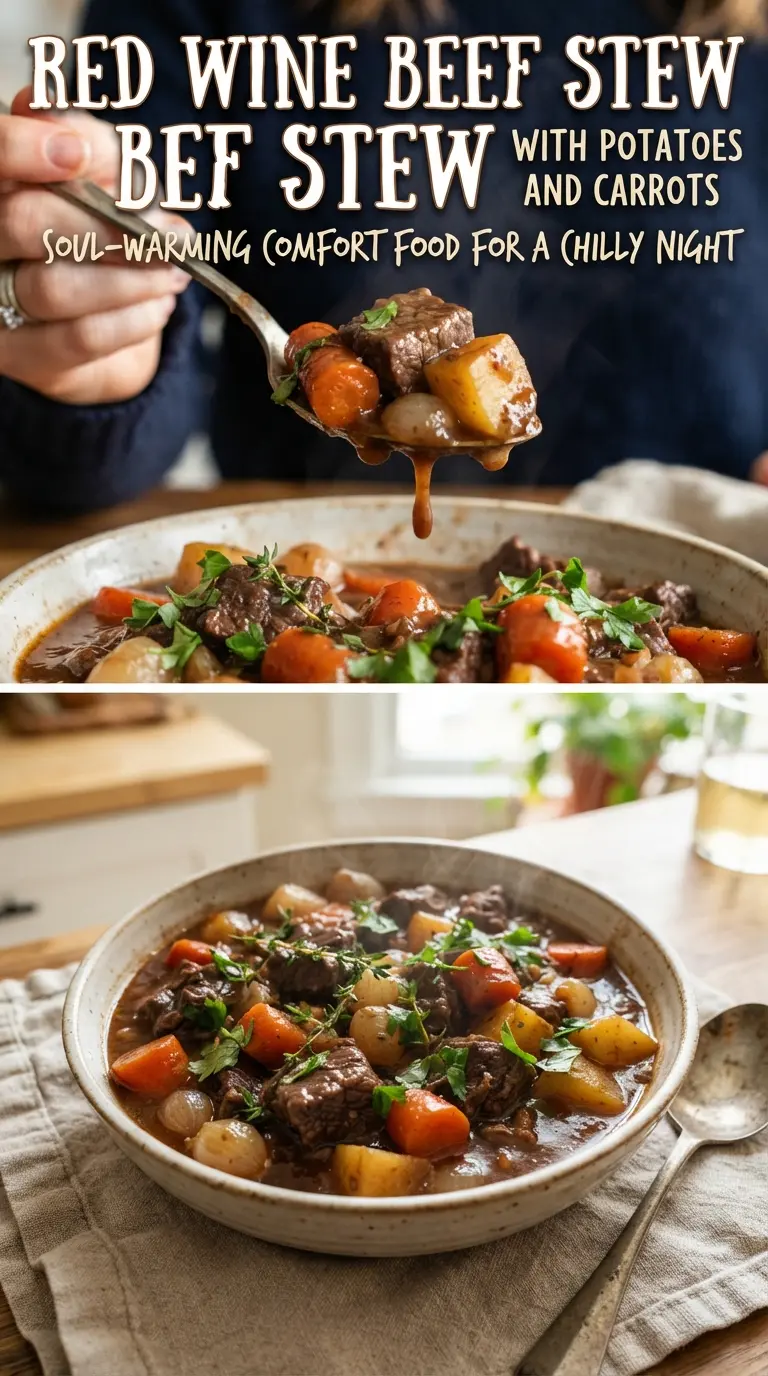
Deep, wine-dark beef stew is one of those meals that changes the whole mood of the table. The beef turns spoon-tender, the potatoes soak up the broth, and the carrots keep just enough shape to give every bite a little sweetness. What makes this version worth keeping is the balance: enough red wine to give the broth depth, enough tomato paste to round it out, and just enough balsamic to make the whole pot taste finished instead of flat.
The key is in the browning and the reduction. Coating the beef lightly in flour helps build a better crust and gives the stew a more natural body, but only if the meat actually has room in the pot to sear. The wine also needs a few minutes on the heat before the broth goes in. That step cooks off the sharp edge and pulls up all the browned bits from the bottom, which is where a lot of the flavor lives.
Below, I’ve included the details that matter most when making a stew like this at home: how to keep the sauce from tasting thin, when to add the vegetables so they stay intact, and what to do if you want to make it ahead.
The beef turned out fall-apart tender and the sauce had that deep, rich red wine flavor without tasting bitter. Adding the potatoes and carrots at the end kept them perfect, not mushy.
Like this red wine beef stew? Save it to Pinterest for a slow-braised dinner with tender beef, buttery potatoes, and carrots in a rich French-inspired sauce.
The Reason This Stew Gets Rich Instead of Thin
Most beef stews go bland when the liquid is added too quickly and the fond never gets a chance to dissolve into the sauce. Here, the wine goes into the pot after the onion, garlic, and tomato paste have cooked down, which gives you a concentrated base before the broth even enters the picture. That extra reduction matters. It keeps the stew tasting layered instead of watery.
The other thing that changes the result is patience with the braise. Chuck needs steady, low heat to break down; high heat tightens it up before it gets tender. If the stew looks a little loose at first, that’s normal. The sauce thickens as the flour blooms, the wine reduces, and the potatoes release just enough starch near the end.
What Each Ingredient Is Actually Doing In This Pot
- Beef chuck — This is the cut that turns silky after a long braise. Brisket can work in a pinch, but it changes the texture and cooks a little differently. Chuck gives you that classic stew bite that softens without falling apart too soon.
- Dry red wine — Use a wine you’d actually drink. It doesn’t need to be expensive, but it should taste clean and dry, not sweet or sharp. The wine is the backbone of the sauce, so this is where quality matters more than on almost any other ingredient.
- Tomato paste and balsamic vinegar — Tomato paste adds depth and color, while balsamic rounds the edges so the broth tastes fuller. Don’t skip the balsamic thinking it’s only for sweetness; it gives the stew a finish that plain broth can’t.
- Yukon gold potatoes — These hold their shape better than russets and bring a naturally buttery texture. Cut them into even chunks so they cook at the same pace as the carrots.
- Fresh thyme and bay leaves — Dried thyme can work, but use less because it’s stronger. Fresh herbs give the stew a cleaner, more balanced aroma, and the bay leaves add that background savory note people notice even if they can’t name it.
Building the Braise So the Beef Turns Spoon-Tender
Getting the sear in batches
Season the beef, toss it with flour, and brown it in a hot Dutch oven without crowding the pan. If the pieces sit too close together, they steam instead of sear, and you lose both flavor and color. Look for a deep brown crust on the outside before turning them. The flour should look lightly toasted, not pasty or burned.
Cooking the base until it smells sweet and savory
Once the beef is out, cook the onion until it softens and starts to turn translucent, then add the garlic and tomato paste. The tomato paste should darken a shade or two and smell a little sweet, not raw. That short minute of cooking takes away the canned taste and gives the stew a richer base. If it sticks a little, that’s fine; the wine will lift it.
Reducing the wine before the long braise
Pour in the wine and scrape the bottom until the browned bits dissolve. Let it simmer until it drops by about a third. This is the step that keeps the stew from tasting boozy. If you rush it, the finished pot can have a sharp edge that never cooks out.
Finishing low and slow
Add the broth, balsamic, thyme, bay leaves, and beef, then cover and braise until the meat starts to give when pressed with a spoon. Add the potatoes and carrots for the last hour so they stay intact and don’t collapse into the sauce. When it’s done, the beef should shred easily, the carrots should be tender at the center, and the broth should coat the back of a spoon instead of running off like soup.
Three Ways to Make This Stew Fit Your Kitchen
Make it gluten-free
Skip the all-purpose flour and dust the beef lightly with cornstarch right before browning, or leave the coating off entirely and let the stew reduce a little longer at the end. You’ll lose a bit of the early body from the flour, but the braise still comes out rich if you keep the simmer gentle.
Use a different cut of beef
Brisket or beef shoulder can stand in for chuck. Brisket gives a slightly firmer, meatier slice, while shoulder behaves closer to chuck and shreds beautifully after a long braise. Don’t swap in lean stew meat that’s already trimmed very tight; it usually dries out before it gets tender.
Make it dairy-free without changing the texture
This stew is naturally dairy-free as written, which is one reason it works so well for a crowd. Keep the broth and wine balanced, and don’t add butter at the end unless you want a softer, rounder finish. The olive oil is enough for the browning and keeps the flavor clean.
Storage and Reheating
- Refrigerator: Store in an airtight container for up to 4 days. The flavor deepens overnight, and the sauce thickens as it sits.
- Freezer: This freezes well for up to 3 months. Cool it completely first, then freeze in portions so the potatoes don’t get crushed when you thaw it.
- Reheating: Warm it gently on the stove over low heat with a splash of broth if needed. Fast boiling breaks down the potatoes and can make the beef stringy.
Questions I Get Asked About This Stew
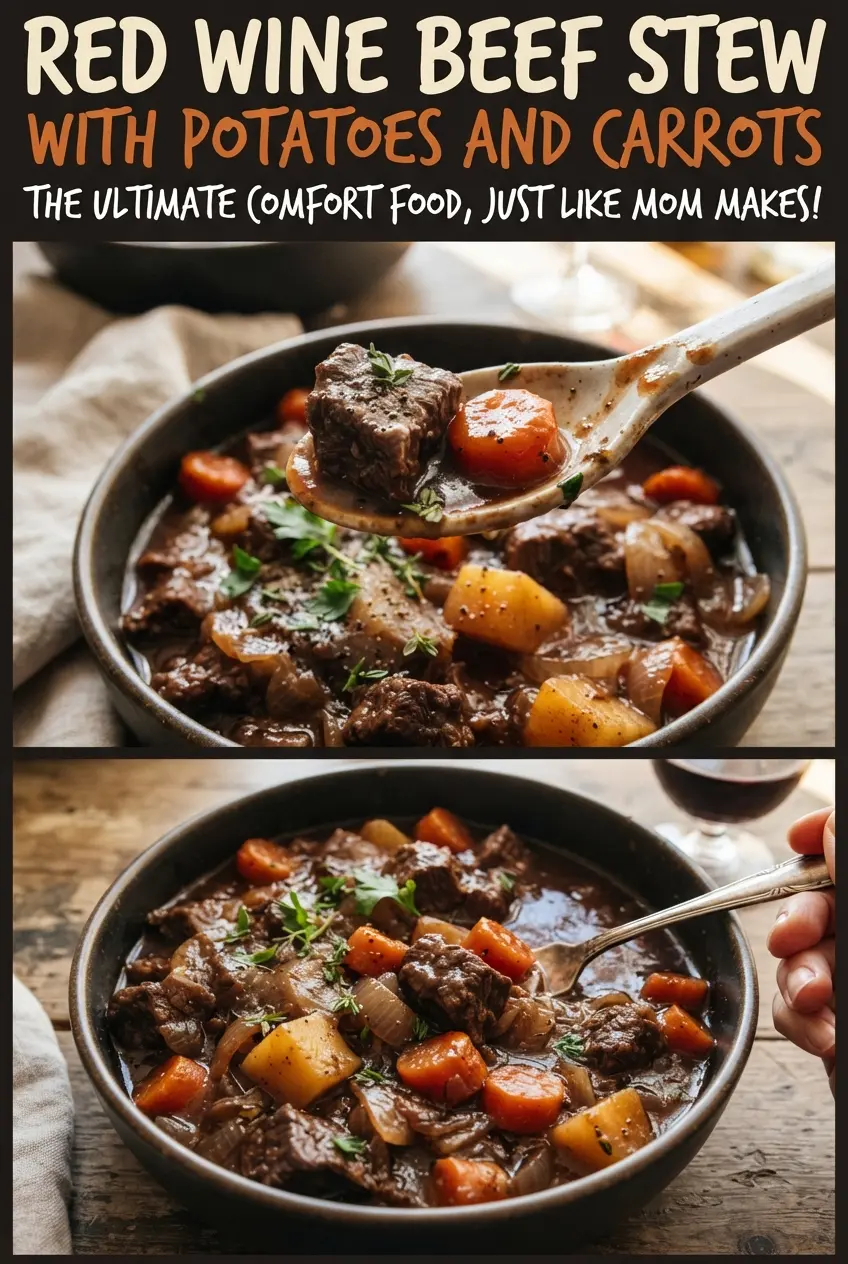
Red Wine Beef Stew with Potatoes and Carrots
Ingredients
Equipment
Method
- Preheat oven to 325F, then season the beef with salt and black pepper and toss with the flour until coated (save any excess flour that clings lightly).
- Heat the olive oil in a Dutch oven over medium-high heat; brown the beef in batches until deeply browned on the outside, adding more oil only if the pan looks dry (move pieces to keep browning consistent).
- Reduce heat to medium and cook the diced onion for 5 minutes until softened, then add the minced garlic and tomato paste and cook for 1 minute while fragrant.
- Pour in the dry red wine and simmer for 5 minutes, scraping the bottom of the Dutch oven, until reduced by about a third and the browned bits loosen.
- Add the beef broth, balsamic vinegar, fresh thyme, bay leaves, and browned beef; cover and braise in the oven for 2 hours until the beef is nearly tender.
- Uncover and add the Yukon gold potato chunks and carrot pieces, then cover again and braise for 1 hour more at 325F until everything is tender (sauce should look thick and cohesive).
- Remove the herbs and bay leaves, then top the stew with chopped fresh parsley right before serving for a bright green finish.