Steaming ramen cooked over a campfire hits the table fast, feeds a crowd without much fuss, and tastes like more than the sum of its parts when the broth is seasoned at the end. The noodles stay springy, the vegetables soften just enough, and the eggs turn the whole bowl into something satisfying instead of just cheap and fast.
The trick is holding the seasoning packets back until the noodles and vegetables are almost done. That keeps the broth from going too salty while the water is still reducing, and it gives you a little control over the final bowl. Cracking the eggs straight into the pot near the end turns them into soft poached eggs, which makes the ramen feel heartier without adding extra gear or a separate pan.
Below, I’m sharing the timing that keeps the noodles from going mushy over a camp stove or fire, plus a few swaps that work when your camp kitchen is built from whatever you packed in a cooler.
The eggs poached right in the broth and the ramen never got mushy, even after we ate outside with the pot sitting off to the side of the fire for a few minutes.
Campfire ramen with poached eggs is the kind of one-pot meal worth packing when you want fast noodles, a rich broth, and almost no cleanup.
Why the Eggs Go In After the Noodles Start Softening
The biggest mistake with camp ramen is cracking the eggs in too early. If they go in at the start, the whites overcook before the noodles have any chance to soften, and you end up with rubbery eggs and broken noodles. Waiting until the noodles have cooked for a few minutes gives the broth enough heat to poach the eggs gently while the yolks stay creamy.
This also helps the eggs hold their shape. Stir the pot once before adding them, then crack each egg into a small opening in the broth so the whites set in place instead of dispersing through the soup. If your fire is running hot, pull the pot slightly off the direct flame before you add them.
What Each Ingredient Is Actually Doing in This Bowl
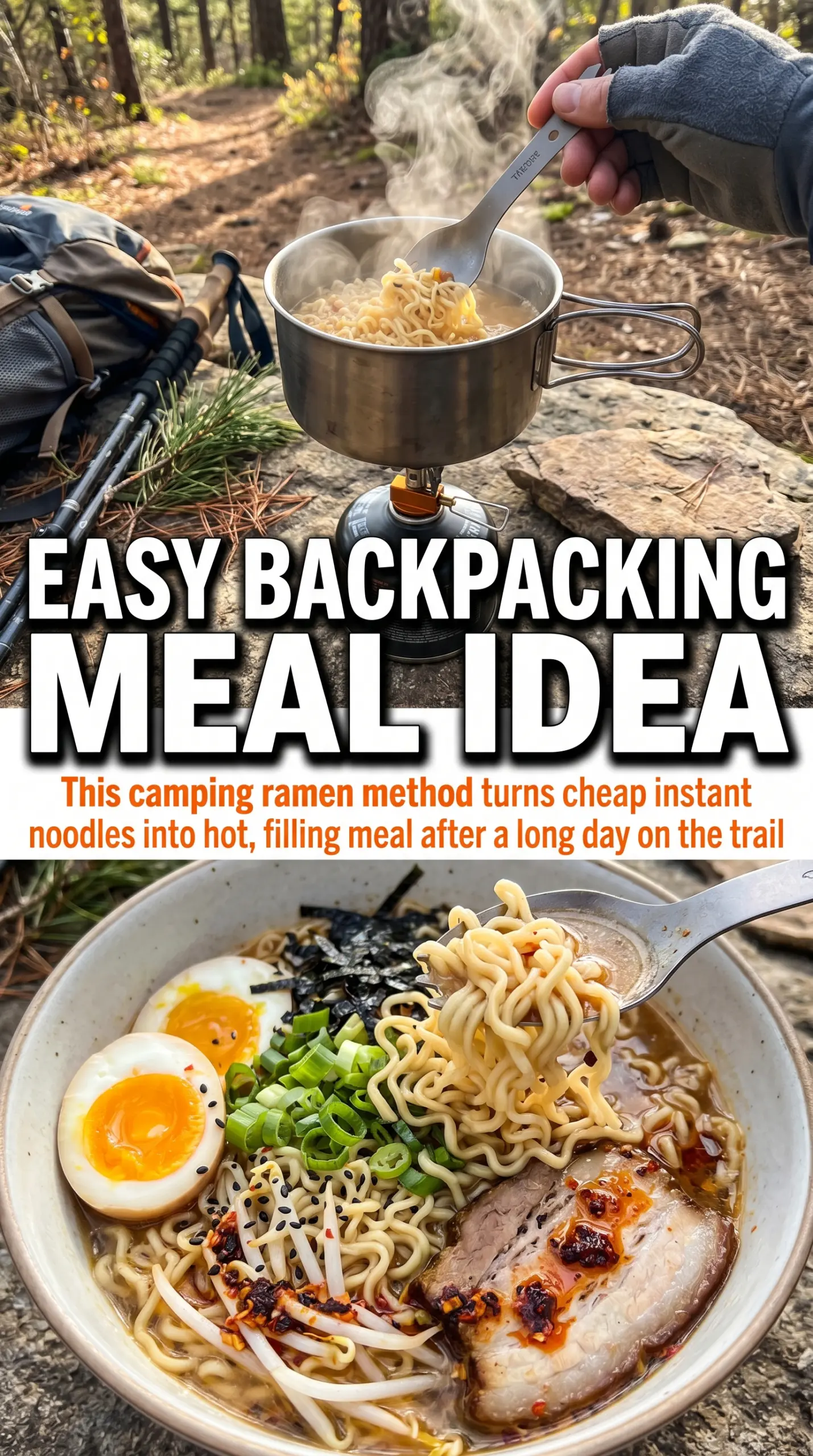
- Instant ramen noodles — These bring the whole dish together fast and hold up better than most quick noodles over a fire. Reserve the seasoning packets until the end so the broth doesn’t get overly salty as it reduces.
- Frozen mixed vegetables — Frozen vegetables are the easiest camp shortcut because they need no prep and they cool the broth down just enough to keep the noodles from overcooking too fast. Fresh vegetables work too, but they’ll need a little longer depending on what you bring.
- Eggs — The eggs add protein and make the bowl feel like a complete meal. Crack them in one at a time near the end for soft poached eggs; if you stir hard after adding them, you’ll break them up instead of getting those nice silky ribbons.
- Soy sauce and hot sauce — These are your final adjustments. Soy sauce deepens the broth if the seasoning packets don’t seem enough, and hot sauce adds sharpness at the end without muddying the broth while it cooks.
- Green onions — Add these after the heat is off so they stay fresh and snappy. They give the finished bowl a clean bite that balances the rich broth and eggs.
Keeping the Broth Hot Enough Without Overcooking the Noodles
Starting With a Full Boil
Get the water to a real boil before the noodles go in. A weak simmer just stretches the cooking time and gives you soft, bloated noodles by the time the eggs are ready. On a campfire, that means waiting for steady bubbling around the edges and across the surface, not just a few lazy pops.
Cooking the Noodles and Vegetables Together
Add the noodles and frozen vegetables at the same time, then stir once so the noodle block separates. The vegetables cool the broth a little, which is helpful if the fire is aggressive, but the noodles should still move around freely in the pot. If they clump, break them apart with tongs before they soften all the way.
Poaching the Eggs in the Last Few Minutes
Once the noodles are almost tender, crack in the eggs and leave them alone long enough for the whites to set. A lid helps if you have one, but it isn’t required. The broth should be hot enough to turn the whites opaque in a couple of minutes; if the eggs are still streaky and loose, the pot needs a little more heat. Add the seasoning packets after the eggs are mostly set so the broth stays balanced.
Finishing the Bowl
Stir in the seasoning, then taste before adding soy sauce. Some packets are saltier than others, and the broth can change depending on how much water evaporated over the fire. Top with green onions and hot sauce right before serving so the bowl stays bright and fresh.
How to Make This Bowl Work With What You Packed
Dairy-Free and Naturally Camp-Friendly
This recipe already fits a dairy-free plan as written. The only thing to watch is the ramen brand itself, since some seasoning packets include powdered milk or other dairy-based ingredients. Check the packet if that matters for your group.
Make It Vegetarian
Keep the eggs and vegetables, and use ramen seasoning that doesn’t rely on meat flavoring. The bowl stays satisfying because the eggs give it body, and the soy sauce adds enough depth to make up for the missing broth richness.
Swap in Fresh Vegetables
Thinly sliced mushrooms, spinach, shredded carrots, or snap peas all work well if you don’t have frozen vegetables. Add harder vegetables earlier and tender ones near the end so nothing turns limp before the noodles are ready.
Storage and Reheating
- Refrigerator: Store leftovers up to 2 days. The noodles will keep soaking up broth, so expect them to soften.
- Freezer: I don’t recommend freezing this. The noodles and eggs both change texture in a way that isn’t worth it.
- Reheating: Reheat gently in a pot with a splash of water or broth. If you boil it hard, the noodles break apart and the eggs get tough.
Answers to the Questions Worth Asking
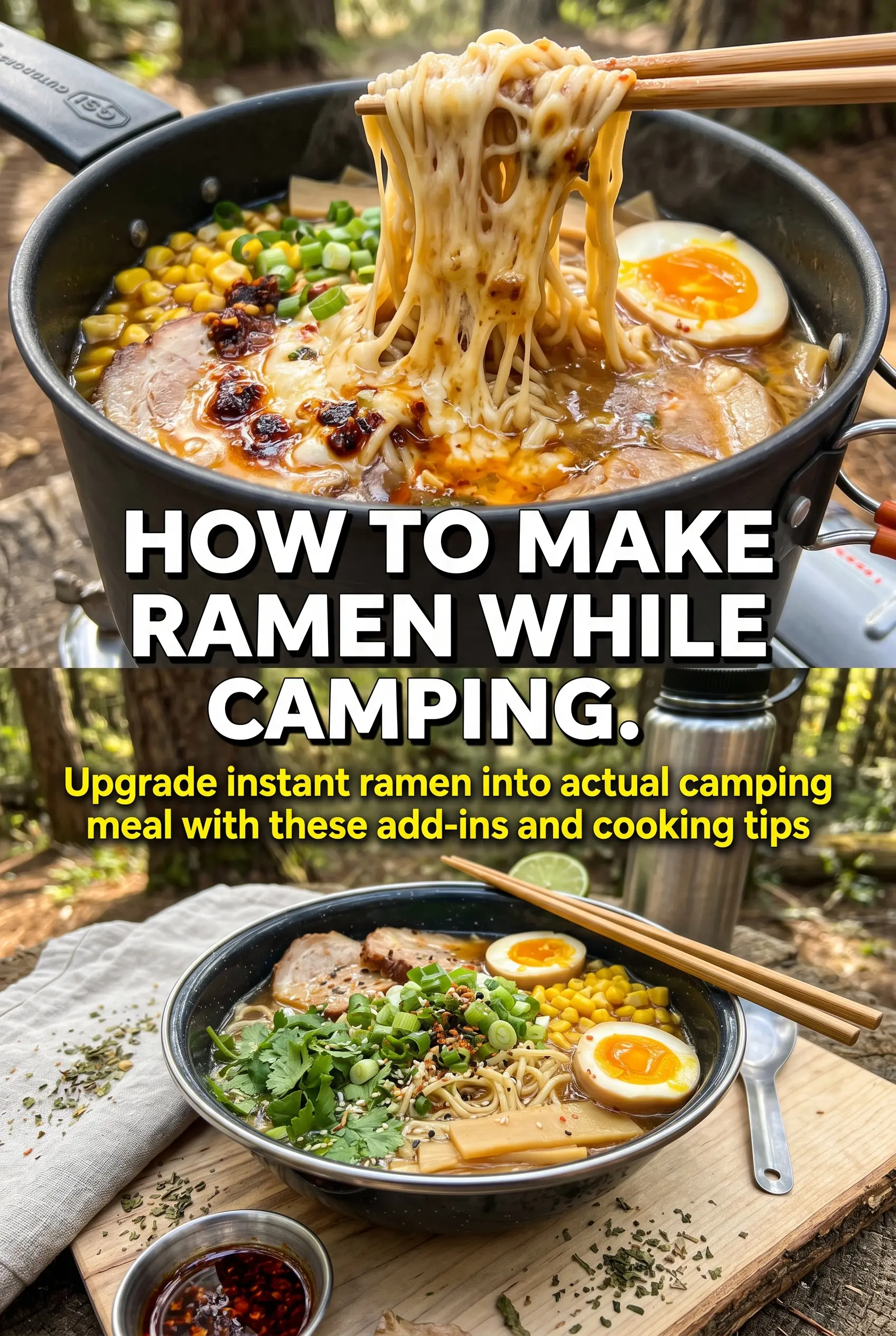
Ramen While Camping
Ingredients
Equipment
Method
- Bring 6 cups of water to a boil in a pot over the campfire until you see steady, rolling bubbles.
- Add the instant ramen noodles and frozen mixed vegetables, and stir to submerge everything in the boiling water.
- Cook for 3 minutes over the campfire, stirring occasionally, until the noodles begin to soften and the vegetables are hot.
- Crack the eggs directly into the pot, spacing them apart so the whites set as they fall into the simmering broth.
- Continue cooking for 3-4 minutes, until the eggs are poached and the noodles are tender.
- Stir in the reserved ramen seasoning packets until the broth turns evenly flavored and fragrant.
- Divide the ramen into bowls and top with sliced green onions, soy sauce to taste, and hot sauce if using.