Rainbow orzo salad earns its place when you need a side dish that looks bright on the table and still eats like a proper meal. The orzo catches the lemon herb dressing in every little curve, while the mix of crunchy cucumber, sweet corn, juicy tomatoes, and salty feta keeps each bite lively instead of muddy. Nothing here depends on one dominant ingredient carrying the whole bowl.
What makes this version work is balance: the pasta gets cooked until just tender, then cooled so it doesn’t soak up the dressing too fast and turn heavy. The dressing has enough acid from lemon juice and red wine vinegar to wake up the vegetables, but the olive oil, honey, and Dijon keep it rounded instead of sharp. Letting the salad chill for a short rest gives the flavors time to settle in without softening the vegetables into mush.
Below, you’ll find the small details that matter most, including the step that keeps the orzo from clumping and the swaps that still leave you with a colorful, crisp salad worth serving again.
The dressing coated everything without making the orzo soggy, and the feta stayed nice and distinct after chilling. I served it with grilled chicken and there wasn't a spoonful left.
Save this rainbow orzo salad for a colorful side dish with crisp vegetables, lemony dressing, and feta in every bite.
The Step That Keeps Orzo Salad Bright Instead of Heavy
The biggest mistake with pasta salads is dressing hot orzo and expecting it to stay light. Hot pasta drinks up the lemon dressing fast, which sounds good until the bowl turns soft and dull instead of fresh and distinct. Cook the orzo until tender, then spread it out or rinse it briefly and let it cool before mixing anything in. That one pause is what keeps the salad from collapsing into a starchy tangle.
Another thing that matters here is the order of assembly. The dressing goes on the orzo and vegetables together, but the feta should be folded in near the end so it stays in crumbles instead of dissolving into the dressing. Chilling for 30 minutes gives the lemon and herbs time to settle into the pasta without taking away the crunch from the cucumber, cabbage, and pepper.
What Each Ingredient Is Actually Doing in This Bowl
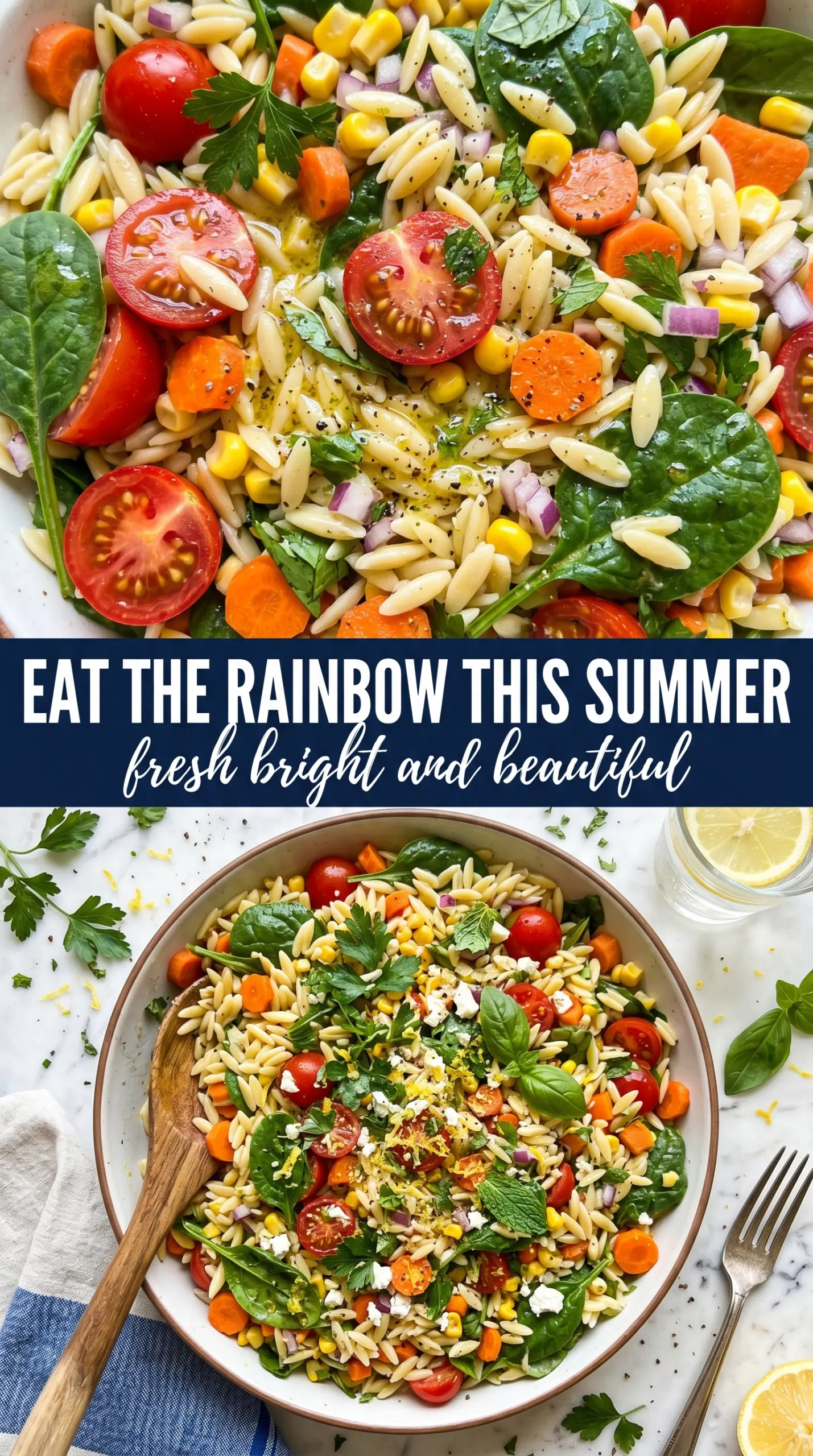
- Orzo — This is the base that carries the dressing. Regular orzo works best because its small shape tucks between the vegetables and gives you a little pasta in every forkful. If you swap in another small pasta, keep it similarly sized so the salad still feels balanced.
- Lemon juice, zest, and red wine vinegar — This is where the bright edge comes from. Juice gives freshness, zest adds aromatic lemon oil, and vinegar sharpens the dressing so it tastes complete instead of flat. If you only use lemon juice, the dressing will taste softer and less defined.
- Dijon mustard and honey — Dijon helps emulsify the dressing, which keeps the oil and acid from separating too quickly. Honey rounds out the sharpness so the salad tastes lively, not sour. That tiny bit of sweetness matters more than people expect.
- Cucumber, tomatoes, corn, bell pepper, cabbage, and red onion — These give the salad its color and crunch. Dice everything fairly small so the vegetables mix evenly with the orzo instead of sitting on top of it. If the onion tastes too strong, soak it in cold water for 10 minutes before adding it.
- Feta — Salty feta is the contrast that makes the whole bowl taste finished. Buy a block and crumble it yourself if you can; pre-crumbled feta is drier and doesn’t melt into the salad as nicely. Add most of it at the end, then finish with the rest on top.
- Parsley and basil — These herbs keep the salad from tasting one-note. Parsley gives clean freshness, while basil adds a sweeter, softer note that works well with the lemon dressing. Tear the basil instead of chopping it hard so it doesn’t bruise and darken.
Building the Salad So the Crunch Lasts
Whisking the Dressing Until It Stays Together
Start with the dressing before you touch the vegetables. Whisk the olive oil, lemon juice, zest, vinegar, Dijon, honey, garlic, salt, and pepper until it looks slightly thick and unified, not greasy and split. If the dressing tastes too sharp, a pinch more honey smooths it out; if it tastes flat, it needs salt before anything else. A properly emulsified dressing clings to the orzo instead of pooling in the bottom of the bowl.
Mixing the Vegetables With Cooled Orzo
Combine the cooled orzo with the tomatoes, pepper, corn, cucumber, cabbage, red onion, parsley, and basil in a big bowl so everything can move freely while you toss. If the orzo is even a little warm, it softens the cucumber and makes the herbs wilt faster. You want the bowl to look crowded before the dressing goes in, because the vegetables settle as soon as they get coated.
Finishing With Feta and the Chill Time
Pour the dressing over the salad and toss until every piece has a light sheen. Fold in most of the feta gently so you keep some larger crumbles, then chill the salad for at least 30 minutes. That rest gives the acid time to brighten the vegetables without making them watery. Taste again before serving; cold salads usually need one last hit of salt or lemon after they come out of the fridge.
How to Adapt This Bowl for Different Tables
Make It Dairy-Free Without Losing the Salty Finish
Leave out the feta and add a handful of chopped Kalamata olives or a sprinkle of capers for that salty pop. You lose the creamy crumble, but you keep the brightness and contrast that make the salad feel complete. If you want a little extra richness, add a spoonful more olive oil to the dressing.
Swap in a Gluten-Free Pasta That Still Holds Up
Use a gluten-free small pasta shape and cook it just until tender, then cool it quickly so it doesn’t go gummy. Some gluten-free pastas absorb dressing faster than wheat orzo, so add a small splash of olive oil right before serving if the salad tightens up in the fridge. Keep the pieces small and sturdy.
Turn It Into a Fuller Main Dish
Add chickpeas, grilled chicken, or shrimp for more protein. Chickpeas keep it vegetarian and soak up the lemon dressing nicely, while chicken and shrimp make the salad feel like lunch instead of just a side. Add the protein after the salad has chilled so it doesn’t get overhandled.
Storage and Reheating
- Refrigerator: Keeps well for 3 days. The vegetables soften a little, but the flavor stays bright.
- Freezer: I don’t recommend freezing this salad. The cucumber, tomatoes, and feta lose their texture once thawed.
- Reheating: This salad is meant to be served cold or at cool room temperature. If it has been chilled hard, let it sit out for 10 to 15 minutes and toss with a small splash of olive oil or lemon juice to wake it back up.
Answers to the Questions Worth Asking
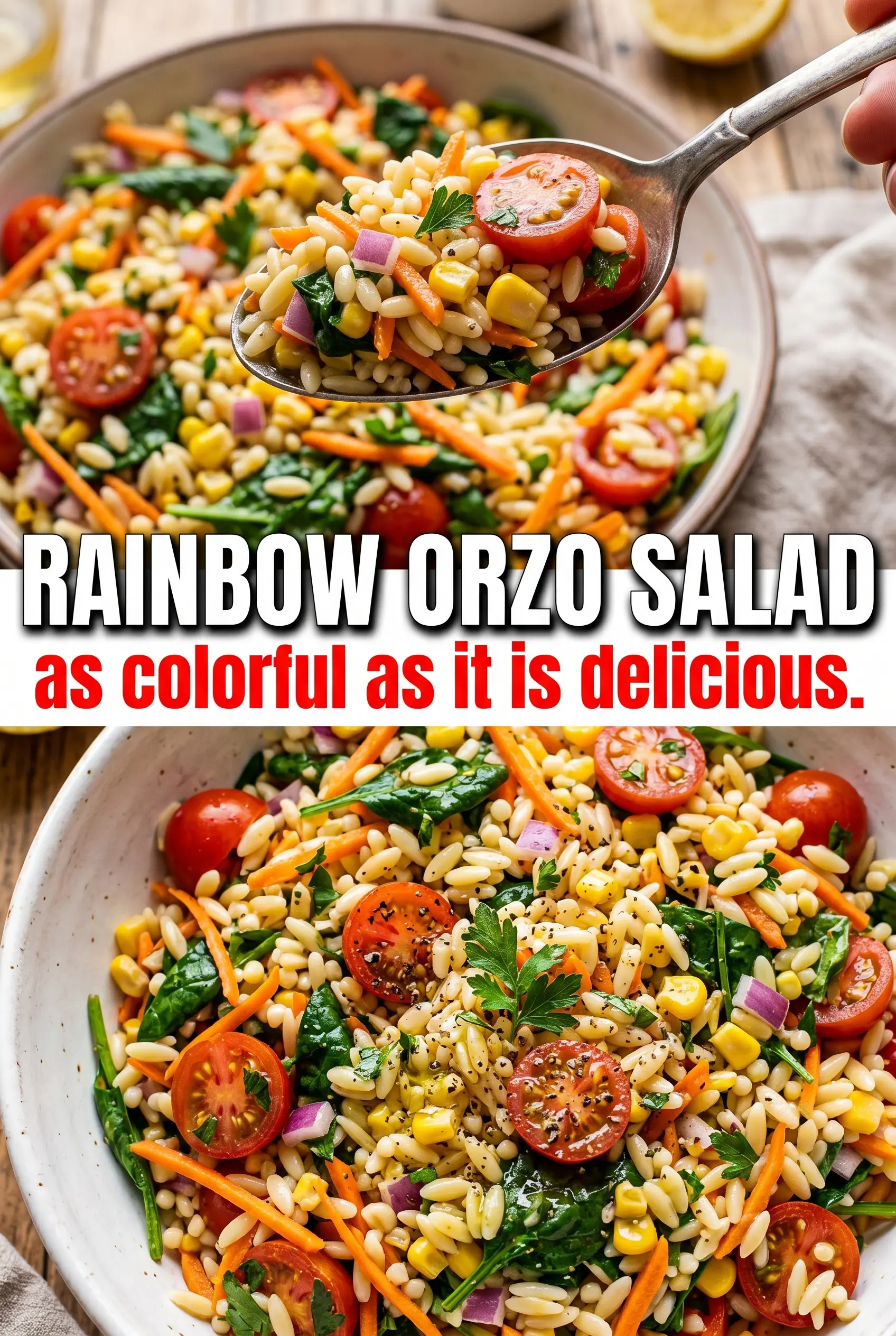
Rainbow Orzo Salad
Ingredients
Method
- Whisk together olive oil, fresh lemon juice, lemon zest, red wine vinegar, Dijon mustard, honey, minced garlic, and salt and pepper until emulsified.
- Combine cooled orzo pasta, cherry tomatoes, orange bell pepper, corn kernels, English cucumber, purple cabbage, red onion, chopped parsley, and torn basil in a large bowl.
- Pour the lemon herb dressing over the orzo salad and toss until evenly coated.
- Fold in most of the crumbled feta cheese so it disperses through the pasta.
- Refrigerate the salad for at least 30 minutes, then taste and adjust lemon or salt.
- Top with the remaining feta cheese and extra fresh herbs before serving.