Pumpkin spins into a silky sauce here that clings to every strand of spaghetti without feeling heavy, and the toasted walnuts bring the kind of crunch that keeps each bite interesting. The spinach disappears just enough to soften into the sauce, while the fried sage gives the whole bowl a crisp, almost sweet finish that tastes like it took more effort than it did.
What makes this version work is the order. The garlic goes into the sage oil so it picks up flavor without browning too fast, then the pumpkin simmers with cream before the parmesan goes in, which keeps the sauce smooth instead of grainy. Pasta water matters here too; it loosens the sauce only as much as the noodles need, so everything stays glossy and coated instead of clumpy.
Below you’ll find the trick to keeping the sauce velvety, plus a few smart swaps if you need to work with what’s in the pantry.
The pumpkin sauce turned out silky and coated the spaghetti perfectly, and the crispy sage with toasted walnuts made it taste restaurant-worthy.
Save this Pumpkin Spinach and Walnut Spaghetti for a creamy pasta night with crispy sage, toasted walnuts, and a sauce that clings beautifully to every bite.
The Part That Keeps Pumpkin Sauce Silky Instead of Gluey
Most pumpkin pasta goes wrong when the dairy and cheese are rushed. Pumpkin puree has a naturally thick, starchy texture, so if you add parmesan too early or crank the heat too high, the sauce can turn pasty instead of glossy. This version keeps the heat moderate and gives the pumpkin and cream a few minutes to come together before the cheese goes in.
The other thing that matters is the pasta water. It isn’t just there to thin the sauce; the starch in it helps the pumpkin and cream cling to the spaghetti. Add it a splash at a time until the strands look coated and the sauce moves lazily around the pan, not pooled at the bottom.
What Each Ingredient Is Actually Doing in This Bowl
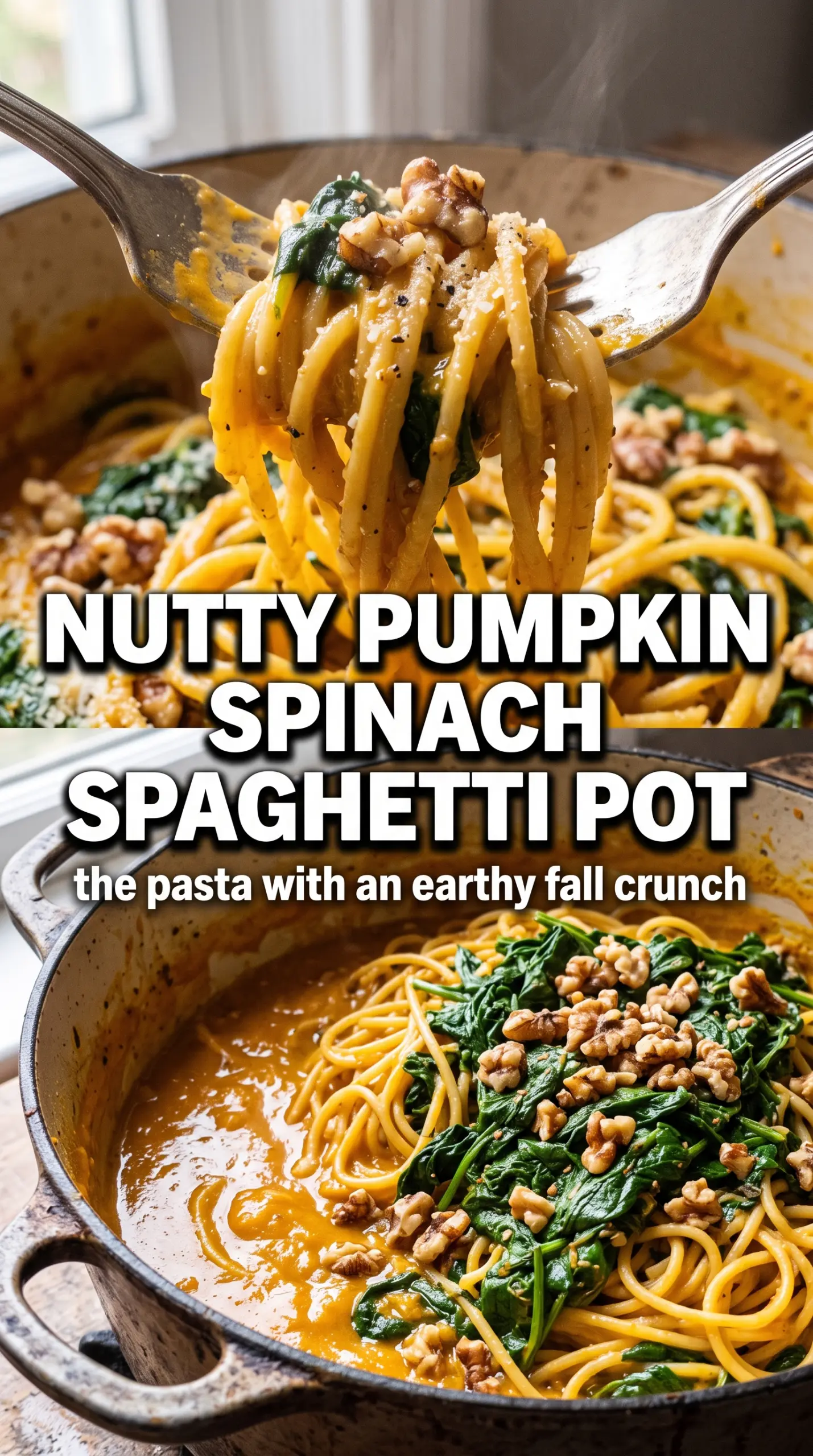
- Pumpkin puree — This is the body of the sauce. Use plain puree, not pumpkin pie filling, or you’ll end up with sugar and spice where you want a savory base.
- Heavy cream — Cream softens the pumpkin and gives the sauce its silky finish. Half-and-half can work in a pinch, but it won’t be quite as plush and it’s easier to over-reduce.
- Parmesan — Freshly grated parmesan melts into the sauce much more cleanly than the pre-shredded stuff. The bagged version often contains anti-caking agents that can make the sauce a little grainy.
- Sage leaves — Frying the sage in the olive oil perfumes the whole dish and gives you a crisp garnish that breaks up the creamy texture. Don’t skip this step if you want the full effect.
- Walnuts — Toasted walnuts bring the crunch this pasta needs. If they’re raw, they taste flat; if they’re roughly chopped after toasting, they land better in each bite.
- Spinach — Baby spinach wilts fast and folds into the sauce without turning stringy. Mature spinach works too, but chop it first and give it a little longer in the pan.
Building the Sauce Before the Pasta Joins In
Frying the Sage and Waking Up the Garlic
Start by frying the sage leaves in the olive oil until they look darker, curled at the edges, and crisp enough to shatter when touched. Pull them out right away so they don’t burn, then slide the garlic into the same oil and cook just until fragrant. If the garlic starts to brown, lower the heat immediately; browned garlic tastes harsh and will carry through the whole sauce.
Letting the Pumpkin and Cream Simmer Together
Stir in the pumpkin puree, cream, nutmeg, and red pepper flakes, then let the mixture bubble gently for about five minutes. You want it to look smooth and slightly thickened, not boiling hard. A hard simmer can make the cream tighten too fast and leave the sauce looking oily around the edges.
Melting in the Parmesan and Folding in the Spinach
Take the pan down to low before adding the parmesan. Stir until it disappears into the sauce, then add the spinach in handfuls so it wilts evenly without clumping. If the sauce looks too thick at this point, a spoonful or two of pasta water will loosen it without watering down the flavor.
Tossing the Pasta the Right Way
Add the spaghetti straight from the pot and toss it well so every strand gets coated. Use pasta water as needed, but add it gradually; too much at once can turn the sauce loose and dull. The finished bowl should look glossy, with the sauce hugging the noodles instead of sliding off them.
Dairy-Free Version With a Little More Body
Swap the heavy cream for full-fat coconut milk or an unsweetened oat cream, and leave out the parmesan or use a dairy-free parmesan-style topping. Coconut milk gives the sauce a softer, slightly sweeter finish, while oat cream keeps the flavor closer to the original. Either way, simmer gently so the sauce stays smooth.
Gluten-Free Pasta Swap
Use a sturdy gluten-free spaghetti made from brown rice or a rice-corn blend. Cook it just to al dente, because gluten-free pasta softens fast once it hits the sauce and can fall apart if it sits too long in the pan.
Make It Heartier With Sausage or Mushrooms
Brown sweet Italian sausage or sliced mushrooms before you start the sauce, then build everything in the same pan. Sausage makes it more substantial and salty, while mushrooms add a meaty texture without changing the pumpkin base much.
Storage and Reheating
- Refrigerator: Store leftovers in an airtight container for up to 3 days. The sauce will thicken as it chills.
- Freezer: It freezes, but the cream sauce can separate a little after thawing. Freeze in a shallow container for up to 1 month if needed, then reheat gently.
- Reheating: Warm the pasta slowly in a skillet with a splash of water or milk over low heat, stirring often. The biggest mistake is blasting it in the microwave, which dries out the noodles and can make the sauce look broken.
Answers to the Questions Worth Asking
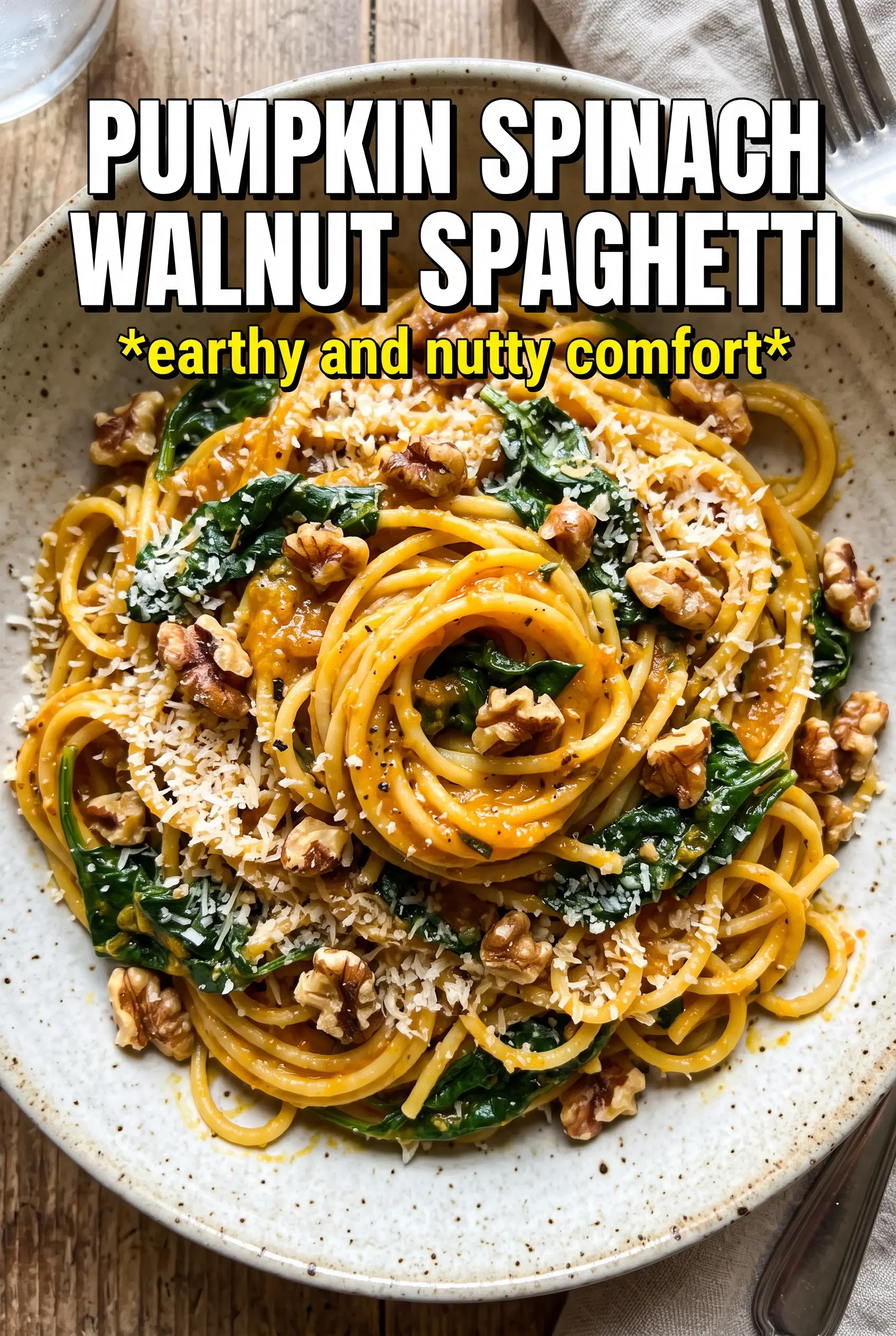
Pumpkin Spinach And Walnut Spaghetti
Ingredients
Equipment
Method
- Bring a large pot of salted water to a boil and cook the spaghetti until al dente, about 8–10 minutes. Reserve 1 cup pasta water, then drain the pasta and set aside.
- Heat 3 tablespoons olive oil in a Dutch oven over medium heat and fry the sage leaves until crisp, 30–60 seconds. Remove the crispy sage to a plate.
- Add the minced garlic to the hot oil and cook for 1 minute, stirring constantly until fragrant. Do not let it brown.
- Stir in the pumpkin puree, heavy cream, nutmeg, and red pepper flakes, then bring to a gentle simmer. Simmer for 5 minutes, stirring occasionally, until the sauce looks smooth and slightly thickened.
- Stir in the grated parmesan until melted and the sauce turns silky. It should look cohesive with no grainy bits.
- Add the baby spinach and toss in the sauce until wilted, about 1–2 minutes. You should see the spinach darken and collapse.
- Add the drained spaghetti to the sauce and toss to coat, adding pasta water as needed (start with about 1/4 cup). Continue tossing until the noodles look glossy rather than dry.
- Season with salt and pepper to taste, then top each bowl with the toasted chopped walnuts and crispy sage. Finish with any extra parmesan if desired.