Pumpkin risotto turns silky and rich when the rice is stirred patiently and the broth goes in hot, a ladle at a time. The pumpkin gives the pot a deep golden color and a gentle sweetness, while bacon and parmesan keep it grounded with salt, smoke, and enough savory depth to keep you going back for another spoonful. The texture matters here: it should spread slowly on the plate, not sit in a heavy mound or turn soupy.
What makes this version work is the order. Bacon gets crisp first, then the onion cooks in a little of that fat so the base starts with real flavor instead of just butter. The rice is toasted before any liquid goes in, which helps the grains stay distinct even as they release starch and turn creamy. Pumpkin and parmesan go in near the end, after the rice is already tender, so the risotto stays smooth instead of getting pasty.
Below, I’ve included the small details that matter most: how to keep the broth hot, when to stop stirring, and how to get the sage crisp without burning it. Those are the little things that separate a good bowl of risotto from one that tastes like it fought you the whole way.
The risotto stayed creamy without getting gluey, and the crispy sage on top made it taste like a restaurant dish. Even reheated the next day, it held onto that pumpkin-parmesan balance.
Save this pumpkin risotto with bacon and parmesan for the night you want creamy risotto, crisp sage, and a little smoky richness in one bowl.
The Trick to Risotto That Stays Creamy, Not Heavy
Risotto gets blamed for being fussy, but the real problem is usually heat. If the broth is cold, the rice stalls and cooks unevenly. If the heat is too high, the liquid disappears before the grains can release enough starch, and you end up with rice that tastes dry on the outside and raw in the center. Warm broth and steady stirring give you that glossy, spoonable finish without having to drown the pan.
Another common mistake is adding the pumpkin too early. Pumpkin puree brings body, but it also thickens fast, so folding it in before the rice is tender can make the whole pan feel pasty. Wait until the rice is just al dente, then stir in the pumpkin and parmesan so the final texture stays loose and creamy instead of turning thick like mash.
What Each Ingredient Is Actually Doing in This Bowl

- Arborio rice — This is the backbone of the dish. It has the starch needed for that creamy risotto texture, and long-grain rice won’t give the same body no matter how long you stir it.
- Warm chicken broth — Keeping it hot matters. Cold broth cools the pan every time you add it, which slows the cooking and makes the texture less even. Vegetable broth works if you need it, but chicken broth gives a fuller savory base that plays better with pumpkin.
- Pumpkin puree — Use plain puree, not pumpkin pie filling. The puree adds color, body, and a gentle sweetness that works with bacon and sage. If you use canned, stir it well before measuring so any separated liquid doesn’t throw off the texture.
- Bacon — It does more than garnish. The rendered fat becomes the first layer of flavor in the pan, and the crisp pieces on top give each bite a salty, crunchy contrast the risotto needs.
- Parmesan — Freshly grated parmesan melts smoothly into the rice. Pre-shredded cheese can stay grainy because of the anti-caking agents, especially in a dish this silky.
- Sage — Fry the leaves briefly in butter until they go dark green and crisp at the edges. That quick fry pulls out the herb’s earthy flavor and gives you a garnish that actually tastes like part of the dish, not decoration.
Building the Base and Finishing the Pot at the Right Moment
Crisping the Bacon First
Cook the bacon until it’s deeply browned and the fat has rendered out, then move it to a paper towel-lined plate. You want about 1 tablespoon of fat left in the pan, enough to coat the onions without making the risotto greasy. If the bacon is only lightly cooked, it turns chewy later instead of giving you that crisp contrast on top.
Softening the Onion and Garlic
Add the onion to the bacon fat and cook it until it turns soft and translucent, not browned. That takes the raw edge off and gives the risotto a sweeter base. Garlic goes in for just a minute at the end; if it darkens, it turns bitter fast and you’ll taste it in the finished bowl.
Toasting the Rice Before the First Ladle
Stir the arborio rice for about 2 minutes until the edges look slightly translucent and the grains smell nutty. This step helps the rice hold its shape a little better as it cooks, which keeps the risotto creamy instead of slack. When you add the wine, stir until it disappears into the rice before the broth goes in.
Adding the Broth Without Rushing It
Add the hot broth one ladle at a time, stirring often and waiting until the pan looks nearly dry before adding more. That slow build is what coaxes the starch out of the rice. If you dump all the liquid in at once, the rice boils instead of gently simmering, and the final texture loses that classic risotto finish.
Finishing With Pumpkin, Parmesan, and Butter
When the rice is tender with a little bite in the center, stir in the pumpkin and parmesan. Finish with the butter off the heat so the sauce turns glossy instead of breaking. If the risotto seems too thick, loosen it with a splash of hot broth right before serving; it should flow slowly, not sit stiffly in the bowl.
Crisping the Sage for the Top
Fry the sage leaves in a little butter just until they stiffen and turn crisp. They go from perfect to burnt in seconds, so keep the pan moving and pull them out as soon as they stop sizzling hard. That small step gives the dish a sharp, fragrant finish that cuts through the richness of the cheese and bacon.
How to Adapt This Pumpkin Risotto Without Losing the Creamy Texture
Make it dairy-free
Skip the parmesan and butter, then finish the risotto with olive oil and a spoonful of nutritional yeast if you want a little cheesy depth. The texture will still be creamy from the rice starch, but the flavor will be a little less round, so salt matters more at the end.
Make it gluten-free
This recipe is naturally gluten-free as long as your broth is certified gluten-free and your bacon doesn’t contain any added fillers. The method doesn’t change at all, which is one of the reasons risotto is such a reliable gluten-free main dish.
Make it vegetarian
Use vegetable broth instead of chicken broth and replace the bacon with olive oil and a pinch of smoked paprika, or sautéed mushrooms if you want more savory depth. You’ll lose the smoky crunch, so the fried sage becomes even more important as the finishing contrast.
Stretch it into a larger meal
Add roasted mushrooms or wilted spinach at the end if you want the bowl to feel more substantial. Stir them in after the rice is cooked so they don’t steal heat from the pan, and keep an eye on consistency because extra vegetables can loosen the texture a little.
Storage and Reheating
- Refrigerator: Store in an airtight container for up to 3 days. It will thicken as it sits, which is normal for risotto.
- Freezer: It freezes, but the texture won’t be as silky after thawing. If you do freeze it, portion it tightly and thaw overnight in the refrigerator before reheating.
- Reheating: Rewarm gently on the stove with a splash of broth or water, stirring until creamy again. The biggest mistake is blasting it in the microwave without liquid, which dries out the rice and makes the parmesan seize up.
Answers to the Questions Worth Asking
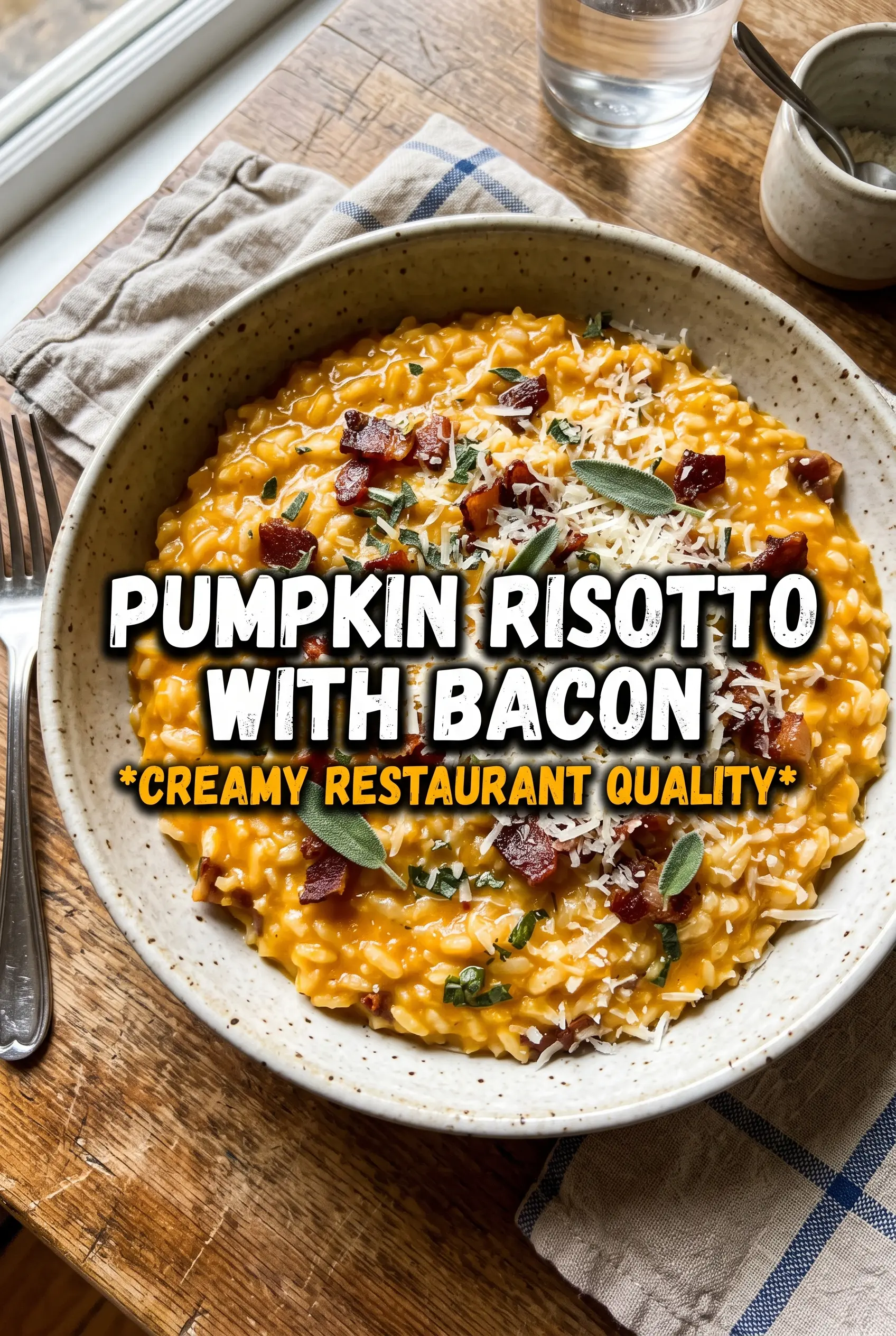
Pumpkin Risotto With Bacon And Parmesan
Ingredients
Equipment
Method
- Cook the bacon in a skillet over medium heat until crispy, then remove and drain, leaving about 1 tablespoon of bacon fat in the pan.
- Sauté the onion in the reserved bacon fat for 4 minutes, then add the garlic and cook for 1 minute.
- Add the arborio rice and toast for 2 minutes, then pour in the white wine and stir until it is absorbed.
- Add warm chicken broth one ladle at a time, stirring constantly and waiting until each addition is absorbed before adding the next, for about 20–25 minutes total.
- Stir in the pumpkin puree and grated parmesan, then finish with the butter until melted and the risotto is glossy.
- Fry the fresh sage leaves in extra butter until crispy.
- Serve the risotto topped with the crispy bacon and crispy sage leaves.