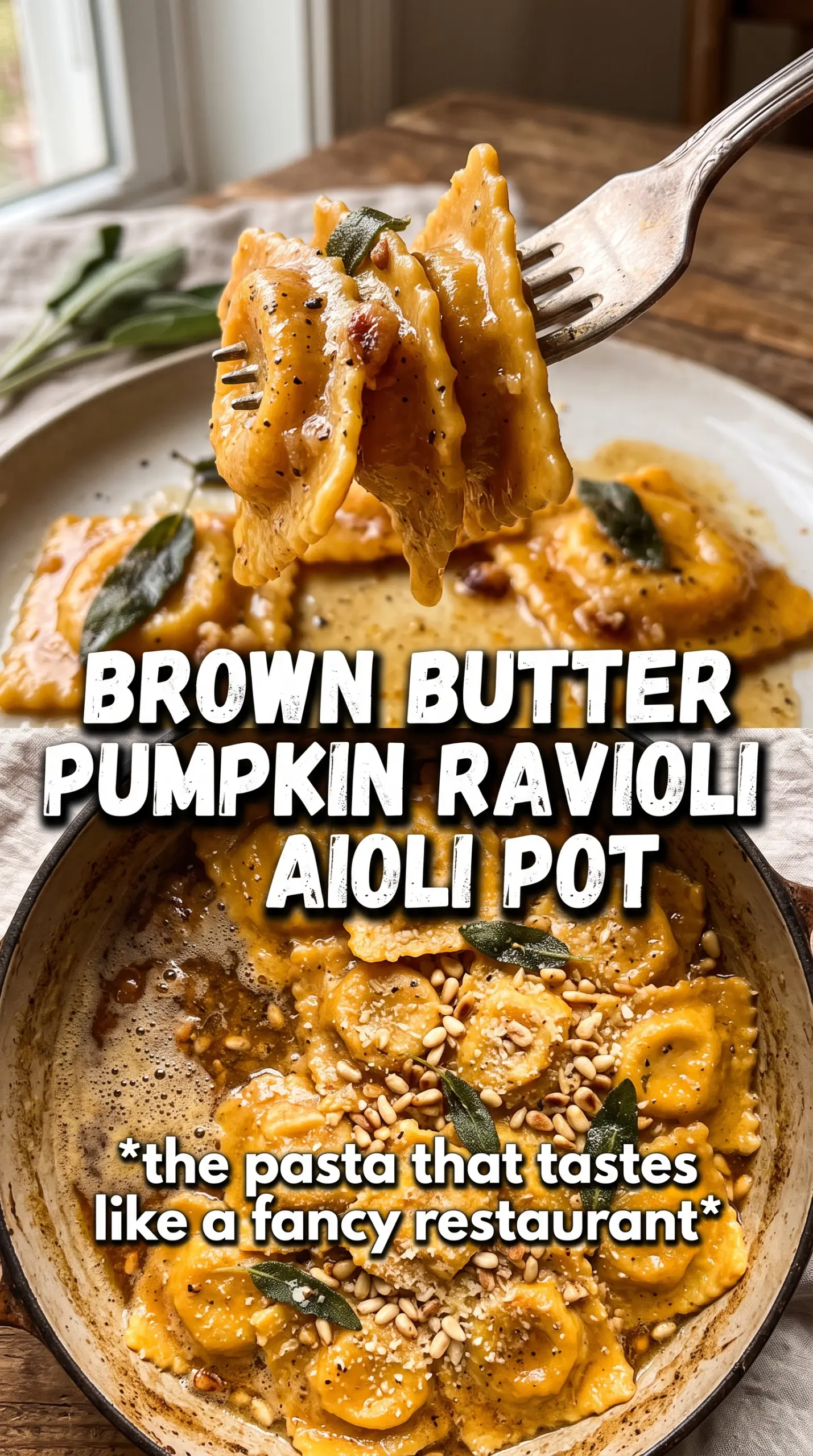
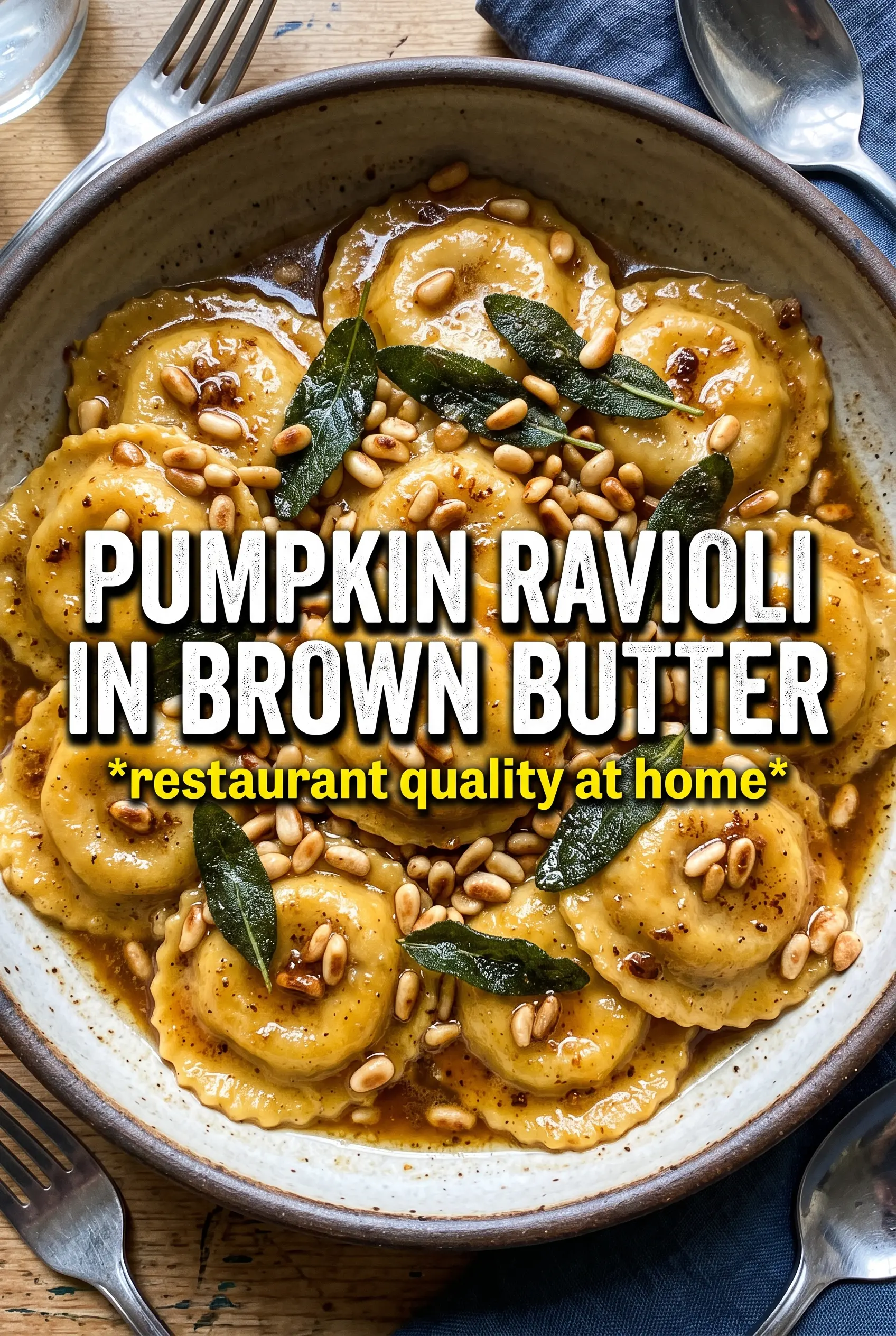
Pumpkin ravioli coated in garlic brown butter is the kind of plate that disappears fast because every part pulls its weight: tender pasta, a silky pumpkin filling, and a sauce that tastes nutty, savory, and just a little sweet from the browned butter. The sage goes crisp, the garlic turns fragrant instead of harsh, and the toasted pine nuts add the last bit of crunch that keeps the dish from feeling soft all the way through.
What makes this version work is starting with pumpkin puree that’s been blotted dry. Pumpkin carries a lot of moisture, and if you skip that step the filling can get loose and the wrappers can slip open when they hit the water. Ricotta and parmesan give the filling body and salt, while nutmeg and cinnamon keep the pumpkin warm without pushing it into dessert territory.
Below you’ll find the little things that make this dish hold together: how to seal the wontons cleanly, how to stop the butter at the right shade of amber, and what to do if you want to use store-bought ravioli instead of making your own.
The filling stayed put in the wrappers and the brown butter went perfectly nutty without burning the garlic. The crispy sage on top made it feel restaurant-level.
Save these pumpkin ravioli with garlic brown butter for the nights when you want a fast pasta that still feels special, with crispy sage and toasted pine nuts on top.
The Part Everyone Gets Wrong: Moist Filling vs. Sealed Ravioli
Pumpkin ravioli fails for one main reason: the filling is too wet. Pumpkin puree looks thick in the bowl, but it still carries enough moisture to make the wrappers slippery and hard to seal, and that extra water turns the filling gummy once it cooks. Blotting the puree before mixing takes a minute and changes everything.
The second trap is overfilling. One teaspoon per wrapper sounds small, but it’s the right amount here because the ravioli need room to seal flat and stay closed as they boil. If the edges are crowded with filling, the wrappers burst before the center has time to set.
- Blotted pumpkin puree — This is the difference between a filling that tastes rich and one that leaks into the pot. Press it between paper towels or a clean kitchen towel until it feels noticeably drier.
- Ricotta — It softens the pumpkin and gives the filling a creamy, cohesive texture. Whole-milk ricotta is best here because it’s less watery than low-fat versions.
- Parmesan — This does more than add flavor. It seasons the filling and helps it feel less loose.
- Wonton wrappers — They cook quickly and seal well, which makes them ideal for a shortcut version. Brush the edges lightly with water; too much water makes them slippery instead of sticky.
What the Pumpkin, Butter, and Sage Are Each Doing Here
- Pumpkin puree — Use plain pumpkin puree, not pumpkin pie filling. Pie filling is already sweetened and spiced, which throws off the balance of the dish. If the puree looks loose, drain it a bit before mixing.
- Ricotta — This gives the filling a smooth, almost fluffy texture. If you need a substitute, mascarpone works for richness, but it makes the filling heavier and softer.
- Butter — Unsalted butter gives you control while it browns. Salted butter can work, but it’s harder to judge the final seasoning once the garlic and parmesan go in.
- Garlic and sage — The garlic should be sliced thin so it perfumes the butter without taking over. Sage crisps in the hot fat and gives the sauce a toasted, earthy edge that cuts through the pumpkin.
- Toasted pine nuts — They’re not just garnish. Their buttery crunch keeps the ravioli from eating like a soft-only dish, which matters a lot with a filling this tender.
Building the Ravioli and Browning the Butter Without Rushing Either One
Mix the Filling Until It Holds Its Shape
Stir the pumpkin, ricotta, parmesan, nutmeg, cinnamon, salt, and white pepper together until the mixture looks smooth and thick enough to mound on a spoon. If it seems wet or slack, it needs more time blotted or a little more parmesan. The filling should sit on the wrapper without spreading fast, because a loose filling leaks once it hits boiling water.
Seal the Wrappers in Small, Clean Batches
Lay out only as many wrappers as you can fill and seal in a few minutes. Put a teaspoon of filling in the center, brush the edges lightly with water, then press out the air before sealing. Air pockets are what make ravioli burst, so flatten each one from the filling outward and keep the edges tight.
Cook Just Until They Float and Set
Drop the ravioli into well-salted boiling water and give them a gentle stir so they don’t cling to the bottom. They usually float in 3 to 4 minutes, and that’s your cue to check one before draining. If they boil too long, the wrappers turn fragile and the seams can split when you toss them in the sauce.
Brown the Butter Until It Smells Nutty
Melt the butter in a large skillet over medium heat and watch for the foam to settle and the milk solids at the bottom to turn golden. Add the garlic and sage once the butter is already brown, not before, or the garlic can burn while you’re waiting for the butter to develop flavor. The butter should smell toasted and nutty, with tiny browned bits at the bottom of the pan.
Toss and Serve While the Sauce Is Hot
Add the drained ravioli directly to the skillet and turn them gently in the brown butter so the sauce coats every side. Scatter in the pine nuts, then finish with parmesan while everything is still hot enough to melt the cheese lightly. If the pan cools too much before serving, the butter tightens up and loses that glossy finish.
How to Adapt This for Store-Bought Ravioli, Dairy-Free Swaps, or a Bigger Dinner
Use store-bought pumpkin ravioli
This is the fastest path to dinner and it still tastes finished and intentional. Keep the sauce exactly the same, but cook the ravioli just until tender because many packaged versions are thinner than homemade wontons and can split if they overcook.
Make it dairy-free
Use a dairy-free ricotta-style cheese for the filling and swap the butter for a plant-based butter that browns well. You won’t get the same deep nutty flavor from the sauce, but the sage and garlic still carry the dish if you let the butter substitute develop a little color.
Skip the wontons and use fresh pasta sheets
Fresh pasta gives you a more traditional bite and a slightly silkier finish, but you’ll need to cut and seal the ravioli carefully so they don’t open in the pot. The filling amount stays the same, though fresh pasta often needs an extra minute or so to cook through.
Scale it up for a crowd
Double the filling and sauce separately, but cook the ravioli in batches so the water stays at a hard boil. If you pile all the ravioli into the pot at once, the water cools down and the wrappers get sticky before they finish cooking.
Storage and Reheating
- Refrigerator: Store leftovers in an airtight container for up to 3 days. The ravioli will soften a little as they sit, but the flavor stays good.
- Freezer: Uncooked, filled ravioli freeze well on a tray, then move to a bag once solid. Cook from frozen and add about 1 minute to the boil time. Cooked ravioli don’t freeze as nicely because the wrappers can turn mushy.
- Reheating: Warm gently in a skillet with a splash of water over low heat, just until heated through. High heat will make the butter separate and can tear the delicate wrappers.
Questions I Get Asked About This Recipe
Pumpkin Ravioli With Garlic Brown Butter
Ingredients
Equipment
Method
- Mix the pumpkin filling by combining pumpkin puree, ricotta, parmesan, nutmeg, cinnamon, salt, and white pepper until smooth and cohesive.
- Place about 1 teaspoon filling in the center of each wonton wrapper (keep wrappers covered so they don’t dry out).
- Moisten the edges of each wrapper and press to seal, forming a tight, pillow-shaped ravioli.
- Arrange filled ravioli on a sheet pan in a single layer as you work to prevent sticking.
- Bring a pot of well-salted water to a rolling boil, then add ravioli and cook 3-4 minutes until they float.
- Drain the ravioli and immediately transfer them to a warm plate or bowl so they don’t overcook.
- Melt unsalted butter in a large skillet over medium heat until it turns golden and smells nutty.
- Add sliced garlic and fry 1-2 minutes until fragrant and lightly golden.
- Add sage leaves and fry until crisp, then remove from the heat to keep them from burning.
- Toss the drained ravioli in the brown butter until coated and glossy.
- Scatter toasted pine nuts over the ravioli and serve with generous parmesan.