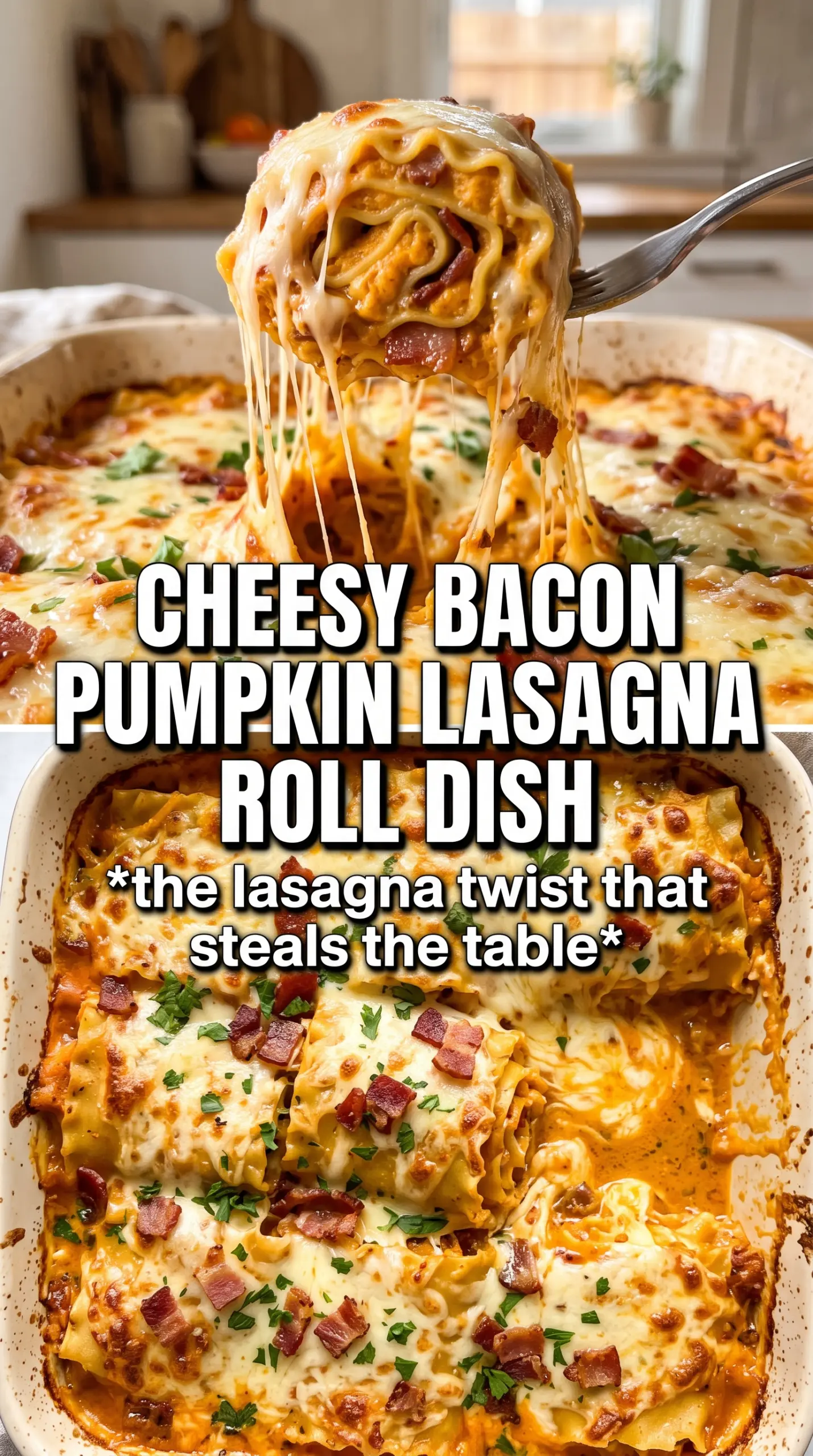
Pumpkin lasagna rolls with bacon bake up creamy, savory, and a little bit unexpected in the best way. The noodles hold tidy spirals of ricotta and pumpkin, the sauce turns silky in the oven, and the bacon brings enough salt and crunch to keep the whole pan from leaning sweet. What comes out is comfort food with shape to it — slices that look neat on the plate but eat like a rich baked pasta should.
This version works because the pumpkin isn’t treated like a dessert flavor. It’s folded into the ricotta for body and whisked into a garlic-parmesan cream sauce that bakes down into something velvety instead of watery. The bacon goes inside the rolls and on top, which means you get little hits of smoke in every bite, not just a garnish at the end. Letting the assembled dish rest before serving matters here, too. That short pause helps the sauce settle so the rolls hold together instead of collapsing when you scoop them.
Below you’ll find the small details that keep the filling from turning loose, the easiest way to fill and roll the noodles without tearing them, and a few smart variations if you want to change the richness, the cheese, or the meat.
The sauce baked up thick and creamy, and the bacon stayed crisp enough to give every bite some texture. I loved that the rolls held together after resting, so they sliced clean instead of turning into a pile.
Save these pumpkin lasagna rolls with bacon for a baked pasta that turns creamy pumpkin, ricotta, and crisp bacon into tidy, make-ahead-friendly rolls.
The Part Most Baked Pasta Recipes Miss: Keeping the Rolls Tight
Rolled lasagna sounds simple until the filling starts sliding, the noodles split, or the sauce turns thin and puddly under the cheese. The fix here is structure. The ricotta mixture needs enough pumpkin and parmesan to hold together, but not so much moisture that it runs off the noodles. The sauce also starts in the dish, not on the stove for long reduction, which gives it a looser texture going in and a thicker, more cohesive texture after baking.
What matters most is the assembly order. Sauce on the bottom keeps the noodles from sticking and helps the edges soften evenly. Seam-side down keeps each roll closed while it bakes. And the 10-minute rest at the end is not optional if you want clean portions; it gives the cheese and sauce time to settle so the first scoop doesn’t drag everything apart.
What Each Ingredient Is Actually Doing in These Pumpkin Lasagna Rolls
- Ricotta — This is the base of the filling, and it gives the rolls their soft, creamy center. Whole-milk ricotta works best because it stays rich instead of drying out in the oven. If yours looks wet in the tub, drain it in a fine mesh strainer for 10 to 15 minutes first.
- Pumpkin puree — Use plain pumpkin puree, not pumpkin pie filling. It adds body and a subtle earthiness, but it also brings moisture, so it’s there in a controlled amount inside the filling and the sauce rather than everywhere at once.
- Heavy cream — This is what turns the pumpkin sauce silky instead of grainy. Half-and-half can work in a pinch, but the sauce will be thinner and a little less stable in the oven.
- Parmesan — Parmesan gives both the filling and the sauce salt, depth, and a little grip. Freshly grated melts cleaner than the shelf-stable kind, which can make the sauce feel sandy.
- Bacon — Cook it until crisp enough to crumble, then drain it well. Soft bacon gets lost inside the rolls, while properly cooked bacon gives you smoky pockets and a little crunch even after baking.
- Sage and nutmeg — Sage leans savory and nutmeg rounds out the pumpkin without making the dish taste sweet. They’re small additions, but they’re what keep the filling from tasting flat.
- Mozzarella — This is the top layer that gives you those browned, stretchy spots people expect from baked pasta. Low-moisture shredded mozzarella melts best here; fresh mozzarella can release too much water.
Building the Rolls So the Sauce Stays Creamy
Start With a Wide, Shallow Sauce Bed
Pour most of the pumpkin cream sauce into the greased baking dish before the rolls go in. That lets the noodles nestle into the sauce and absorb flavor from underneath while they bake. If the layer is too thin, the bottom edges dry out before the cheese on top browns. You want a visible blanket of sauce, not just a slick on the pan.
Mix the Filling Until It Holds Its Shape
Stir the ricotta, egg, parmesan, pumpkin, sage, salt, and pepper until the mixture looks thick and spreadable. If it’s loose enough to slump off a spoon, the rolls will leak. Cold ricotta usually mixes more cleanly than room-temperature ricotta, and a quick stir is enough — overmixing makes the filling looser, not smoother.
Roll From the Short End and Keep the Seam Down
Spread the filling in a thin layer along each noodle, scatter the bacon over the top, then roll each noodle up snugly from one end. A tight roll is important, but don’t squeeze so hard that the filling squeezes out the sides. Place each roll seam-side down in the sauce so it stays closed while the cheese melts and the noodles finish softening.
Finish With Cheese and Bake Until the Edges Bubble
Spoon the remaining sauce over the rolls, then cover the top with mozzarella. Bake until the cheese is melted, the edges are bubbling, and the top has golden spots. If the center still looks pale and loose when the top is browning, give it a few more minutes; the dish is done when the sauce around the edges is actively simmering.
Make It Without Bacon
Leave the bacon out and add a little extra parmesan plus a pinch of smoked paprika if you want some of that savory depth back. The rolls will be softer and a little richer, with pumpkin and sage taking the lead instead of smoke.
Gluten-Free with the Right Pasta
Use gluten-free lasagna noodles that hold their shape after boiling, then handle them gently because they can tear more easily when rolled. The sauce and filling work exactly the same, but the noodles need a little extra care when you spread and roll them.
Lighter Dairy Swap
You can use part-skim ricotta and half-and-half, but the sauce won’t be as plush and it’s more likely to seem thin before baking. If you go this route, don’t skip the rest time at the end; the dish needs that pause to set up properly.
Storage and Reheating
- Refrigerator: Store leftovers covered for up to 4 days. The sauce thickens as it chills, but the flavor holds up well.
- Freezer: Freeze baked rolls in a tightly wrapped dish or in portions for up to 2 months. The texture is best if you freeze them before the final mozzarella browning, then bake after thawing.
- Reheating: Reheat covered at 350F until hot in the center. If you microwave, use medium power and short bursts so the ricotta filling doesn’t turn rubbery while the sauce separates.
Questions I Get Asked About This Recipe
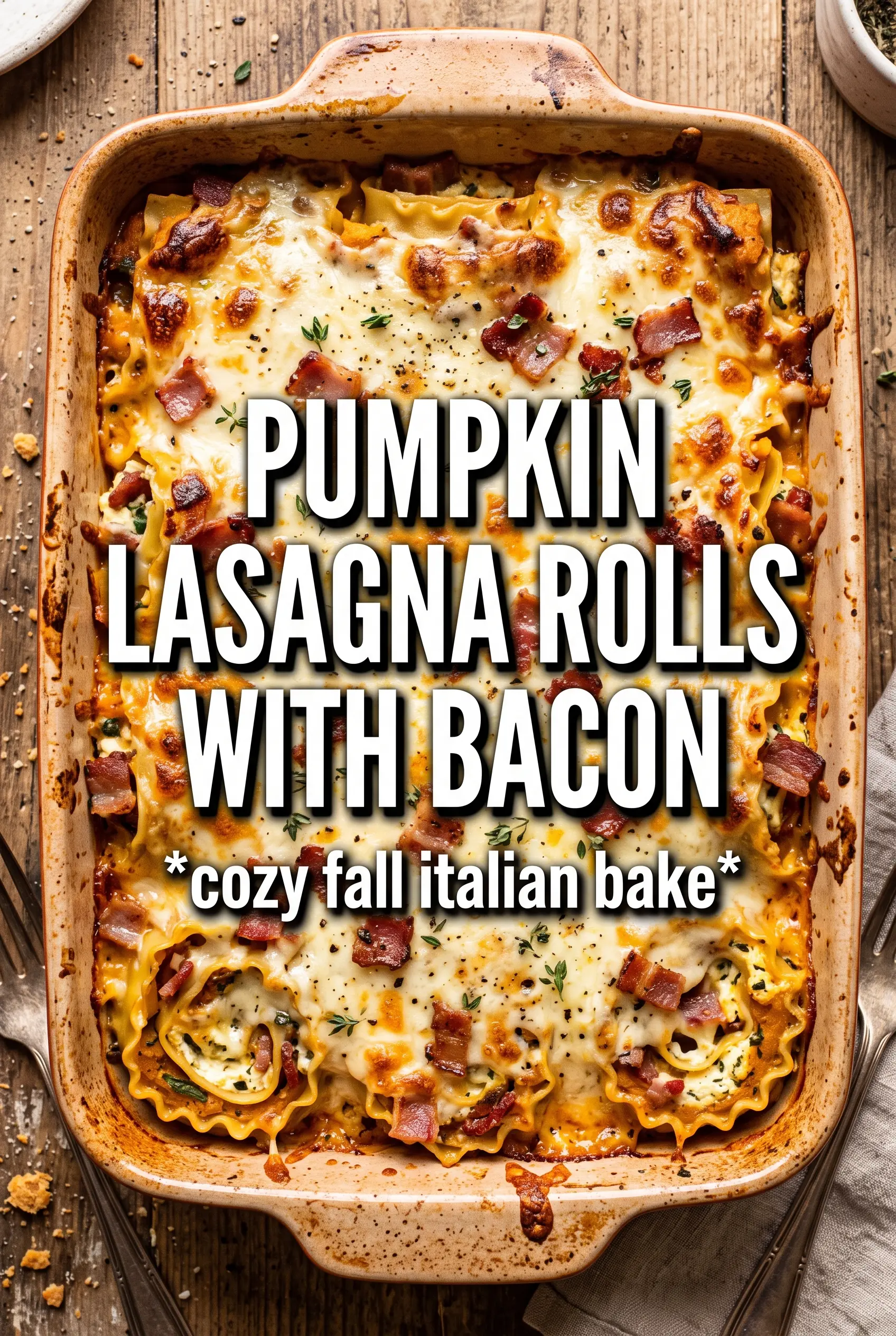
Pumpkin Lasagna Rolls With Bacon
Ingredients
Equipment
Method
- Preheat the oven to 375F and grease a 9x13 dish.
- Cook the lasagna noodles, then drain and set aside.
- Pour most of the pumpkin cream sauce into the greased 9x13 dish.
- In a bowl, mix ricotta, egg, parmesan, pumpkin puree, sage, salt, and pepper until evenly combined.
- Lay out the cooked lasagna noodles and spread ricotta filling on each noodle.
- Scatter the cooked and crumbled bacon over the ricotta-filled noodles.
- Roll each noodle up tightly and place seam-side down in the sauce.
- Pour the remaining sauce over the rolls, then scatter shredded mozzarella on top.
- Bake at 375F for 35-40 minutes, until the sauce is bubbly and the top is golden.
- Rest for 10 minutes before serving to help the rolls set.