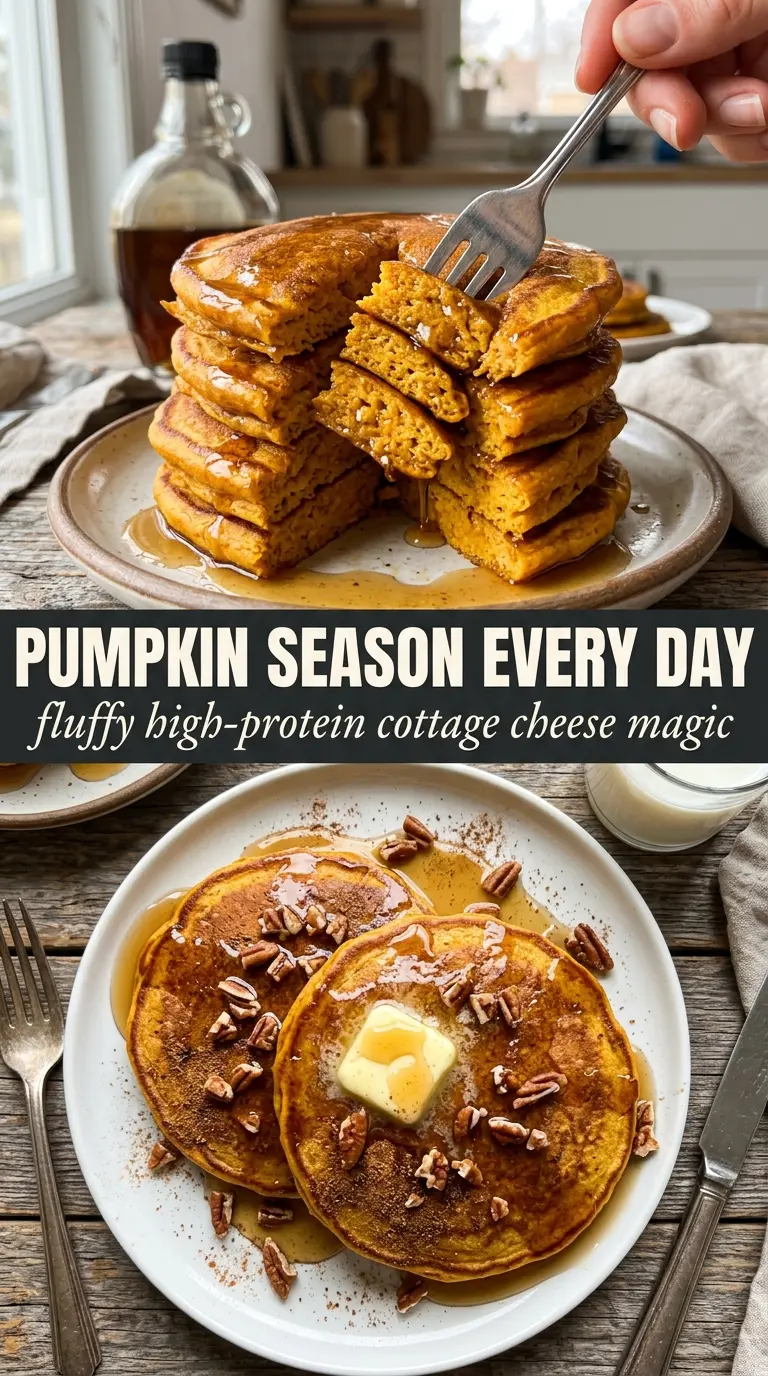
Thick, fluffy pumpkin cottage cheese pancakes land on the plate with a golden crust and a soft, tender middle that tastes like a proper breakfast, not a compromise. The pumpkin brings warmth and color, the cottage cheese keeps the texture moist and substantial, and the oats give the batter enough body to flip cleanly without turning heavy.
What makes this version work is the blender batter. The cottage cheese disappears into the mix, so you get protein and richness without curds showing up in the finished pancake. A short rest gives the oats time to hydrate, which helps the batter thicken and prevents that thin, spread-out pancake shape that so often happens with pumpkin batters.
Below, I’ll show you how to keep the pancakes tall, how to judge the griddle temperature before the first batch burns, and what to change if you want a gluten-free version that still holds together well.
The batter thickened after a few minutes and the pancakes cooked up fluffy instead of gummy. I loved that the cottage cheese didn’t leave any texture behind, and the maple syrup on top made them taste like fall breakfast heaven.
Save these fluffy pumpkin cottage cheese pancakes for the mornings when you want a tall stack with cinnamon, maple syrup, and almost no fuss.
The Batter Needs Time to Thicken Before It Hits the Pan
Pumpkin batters often fail for one simple reason: they go straight from the bowl to the griddle while still too loose. That gives you wide, fragile pancakes that never build height. The rest period here matters because the oats absorb moisture and the batter tightens just enough to pour into neat rounds.
The other thing that changes the outcome is heat. Medium-low gives the batter time to set through the center before the outside over-browns. If the pancakes are dark before the bubbles appear and the edges lose their shine, the griddle is too hot and the middle will stay soft and heavy.
- Full-fat cottage cheese — This is what keeps the pancakes rich and tender. Low-fat works, but the batter can taste a little leaner and the pancakes won’t feel quite as plush.
- Rolled oats or oat flour — Oat flour gives the smoothest texture. Rolled oats blended well are fine if you want to use what’s in the pantry, but stop blending when the batter is smooth, not foamy.
- Pumpkin puree — Use plain canned pumpkin, not pumpkin pie filling. Pie filling already contains sugar and spices, which throws off the balance and can make the pancakes too sweet.
- Butter for the pan — Butter gives the edges that browned, slightly crisp finish. If you need a dairy-free swap, use a neutral oil, but you’ll lose a little flavor and color.
What Each Ingredient Is Actually Doing in This Breakfast Dish
- Eggs (the binder and richness) — These create structure and add richness. Room temperature eggs incorporate better.
- Flour or base (the structure) — This holds everything together. Don’t overmix or the dish becomes tough.
- Butter or oil (the richness) — This creates tender texture and carries flavors. Room temperature butter creams better.
- Sugar or sweetener (the sweetness) — This adds flavor and helps create browning. Adjust based on other ingredients.
- Leavening (baking powder or soda) — This creates rise and light texture. Too much makes it taste bitter.
- Dairy (milk, yogurt, or cottage cheese) — This adds moisture and protein. Choose based on desired texture.
- Flavorings (vanilla, cinnamon, fruit, or savory elements) — These define the personality. Use quality flavorings.
- Proper baking temperature and time — This creates the right texture without burning. Use a thermometer or toothpick test.
Blending, Resting, and Flipping Without Losing the Fluff
Build the Batter Until It’s Completely Smooth
Add the pumpkin, cottage cheese, eggs, vanilla, oats, pumpkin pie spice, cinnamon, baking powder, maple syrup, and salt to a blender and run it until the batter looks uniform and creamy. You shouldn’t see cottage cheese curds or dry oat flecks. If the batter seems loose at first, let it sit for a minute before judging it; oats keep absorbing liquid after blending stops.
Let the Griddle Settle to Medium-Low
Preheat your griddle or skillet over medium-low until a drop of water sizzles gently, not violently. Grease it lightly with butter and wipe away any puddles so the pancakes brown instead of fry. If the pan is too hot, the outside will set before the batter has a chance to rise, which gives you dense pancakes with a wet center.
Watch for the Edges, Not Just the Timer
Use about 1/4 cup batter for each pancake and leave space between them so they cook evenly. After 3 to 4 minutes, the top should lose its wet sheen, the edges should look set, and bubbles should start to break across the surface. Flip with a wide spatula and cook the second side until it’s deeply golden and springs back when touched, usually another 2 to 3 minutes.
Serve Them While the Steam Is Still Rising
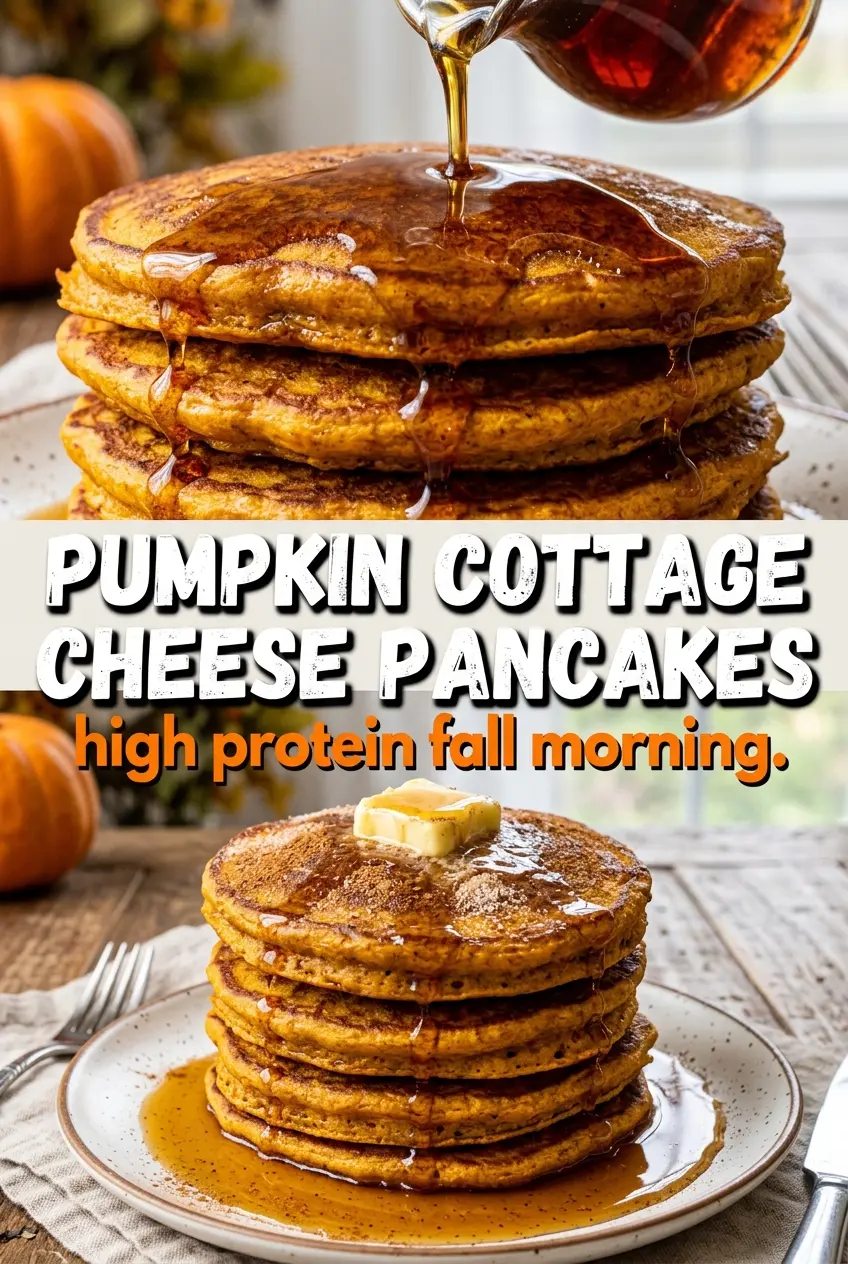
Stack the pancakes high, then add butter right away so it melts into the ridges. Maple syrup and chopped pecans work best here because they echo the pumpkin spice without making the plate feel heavy. If you wait too long to serve them, the crust softens; that’s still good, but the contrast isn’t as strong.
Ways to Adjust These Pancakes Without Losing Their Structure
Gluten-Free With Oat Flour
Use oat flour instead of rolled oats for the smoothest, most reliable batter. The pancakes will still be tender and fluffy, and they’ll hold together better than most gluten-free pancake batters because the eggs and cottage cheese give them extra structure.
Dairy-Free Pancakes
Swap the cottage cheese for a thick, unsweetened dairy-free yogurt with some body, then expect a softer pancake and a slightly less rich finish. The batter may need an extra tablespoon or two of oats if it looks too loose after blending, because dairy-free yogurts vary a lot in thickness.
Less Sweet, More Breakfast-Forward
Leave the maple syrup in the batter out if you want a more savory edge. The pancakes still brown beautifully, and you can keep the sweetness on top where the syrup, butter, and pecans do the job without making the batter itself taste dessert-like.
Storage and Reheating
- Refrigerator: Store leftovers in an airtight container for up to 4 days. They’ll soften a little as they sit, but the flavor stays good.
- Freezer: These freeze well. Layer parchment between cooled pancakes and freeze in a sealed bag or container for up to 2 months.
- Reheating: Warm them in a toaster oven or skillet over low heat until heated through. The common mistake is microwaving them too long, which makes the texture rubbery instead of fluffy.
Answers to the Questions Worth Asking
Pumpkin Cottage Cheese Pancakes
Ingredients
Equipment
Method
- Add pumpkin puree, cottage cheese, eggs, vanilla, rolled oats (or oat flour), pumpkin pie spice, cinnamon, baking powder, maple syrup, and salt to a blender and blend until smooth.
- Let the batter rest for 5 minutes while you preheat a griddle over medium-low heat until it feels evenly hot when you hold your palm a few inches above the surface.
- Grease the griddle with butter, then pour 1/4 cup batter per pancake to form thick rounds.
- Cook 3–4 minutes until bubbles form across the surface and the edges look set.
- Flip and cook 2–3 more minutes until golden on both sides, using butter again between batches if needed.
- Stack the pancakes tall and top with maple syrup, a pat of butter, and chopped pecans.