Pumpkin chia seed pudding turns into a thick, spoonable breakfast with the warm spice of pumpkin pie filling and the clean, nutty texture chia seeds do best. The pudding sets up soft but substantial, with enough body to eat from a jar and enough creaminess to feel like an actual treat. It’s the kind of breakfast that tastes like you planned ahead, even when you mixed it together in ten minutes the night before.
This version works because the pumpkin puree and milk are whisked smooth before the chia seeds go in, which keeps the final texture even instead of streaky. Maple syrup gives the pudding a rounded sweetness that plays well with pumpkin pie spice, and a little cinnamon pushes the flavor toward dessert without making it heavy. The second whisk after a few minutes matters too. Chia seeds love to settle and clump at the bottom if you walk away too soon.
Below, I’ll walk through the texture cues that tell you it’s setting properly, the ingredient swaps that still give you a good chill-and-eat breakfast, and a few ways to serve it so it doesn’t feel repetitive by day three.
I usually end up with chia pudding that’s either too thin or full of little clumps, but this one set up perfectly after the second whisk. The pumpkin flavor was warm and balanced, and the gingersnap on top was such a good touch.
Save this pumpkin chia seed pudding for an overnight breakfast with a thick, spiced set and a crunchy gingersnap finish.
The Fix for Clumpy Chia Pudding That Sets Unevenly
Chia pudding fails in two common ways: the seeds sink in a soggy layer, or they clump into little gel pockets that never break up. The cure is simple, but it has to happen in the right order. First, whisk the pumpkin, milk, sweetener, spice, vanilla, and salt until the mixture looks completely smooth. That base needs to be uniform before the seeds go in, because pumpkin puree can hide pockets of thicker liquid that throw off the set.
The second whisk is the part most people skip. After you stir in the chia seeds, wait about five minutes, then whisk again. By then the seeds have started to absorb liquid and are just beginning to settle, so a second stir redistributes everything before the pudding locks in place. If you want a pudding that eats like a creamy spoonful instead of a seed-packed gel, that extra whisk does the work.
- Pumpkin puree — Use pure pumpkin, not pumpkin pie filling. Pie filling already has sugar and spices mixed in, which throws off both the sweetness and the texture.
- Almond milk or coconut milk — Almond milk gives a lighter, cleaner pudding. Coconut milk makes it richer and more dessert-like. Either works, but canned coconut milk will need a splash more liquid because it sets thicker.
- Chia seeds — Whole chia seeds are what make this recipe set. Black or white seeds both work, and there’s no real difference in flavor. Don’t grind them; you’ll lose the pudding texture.
- Maple syrup — This sweetens the pudding without making it taste flat. Honey works in a pinch, but maple fits the pumpkin spice better and stays softer after chilling.
- Pumpkin pie spice and cinnamon — Pumpkin pie spice gives the familiar warm base, while cinnamon sharpens it a little. If you’re out of pumpkin pie spice, use extra cinnamon plus a pinch of ginger and nutmeg.
- Whipped cream and gingersnaps — These aren’t just garnish. The whipped cream softens the spice, and the cookies bring the crunch this pudding needs if you want it to feel complete.
What Each Ingredient Is Actually Doing in This Recipe

- Primary ingredient (the star) — Quality matters most. Choose the best you can find.
- Cooking medium (oil, butter, or broth) — This carries flavors and prevents dryness.
- Seasonings (salt, pepper, spices, herbs) — Layer flavors so nothing overpowers. Build depth gradually.
- Aromatics (garlic, onion, herbs) — Cook with fat to bloom flavors. Become the foundation.
- Supporting ingredients — Complement the main ingredient without overpowering it.
- Sauce or liquid (if applicable) — Brings flavors together. Balance richness with acid.
- Acid (lemon, vinegar, wine, or other) — Brightens and prevents flat-tasting results.
- Final finish (garnish, glaze, or sauce) — Prevents one-dimensional taste and adds visual appeal.
How to Build the Pudding So It Sets Thick and Creamy
Whisk the base until it looks silky
Start by mixing the pumpkin puree, milk, maple syrup, pumpkin pie spice, cinnamon, vanilla, and salt until the color is completely even and there are no orange streaks left. If the pumpkin isn’t fully broken up here, you’ll taste little dense pockets later. A balloon whisk works better than a spoon because it pulls the puree into the liquid instead of smearing it around the bowl.
Stir in the chia seeds, then come back for the second whisk
Add the chia seeds and stir until they’re suspended throughout the mixture. Let the bowl sit for five minutes, then whisk again and scrape the bottom well. That’s the point where the seeds begin to swell, and if you skip it, they settle into a heavy layer at the bottom of the jar.
Chill until the spoon leaves a clean trail
Divide the mixture into jars or bowls, cover, and refrigerate for at least four hours, or overnight if you want the thickest set. The pudding is ready when it holds its shape but still moves a little when you tilt the jar. If it looks loose after chilling, give it more time before adding extra seeds, since the texture keeps firming as it sits.
Loosen and finish right before serving
Stir the pudding before eating so the top and bottom match in texture. If it’s thicker than you like, add a splash of milk and stir again until it loosens. Top with whipped cream, a light dusting of pumpkin pie spice, and a gingersnap on the side for dipping.
How to Adapt It Without Losing the Texture
Dairy-Free and Naturally Creamy
Use almond milk or coconut milk and skip the whipped cream, or top with a coconut-based whipped topping. Coconut milk gives the richest result, while almond milk keeps the flavor lighter and more pumpkin-forward. Both versions stay fully dairy-free without changing the set.
Less Sweet, More Breakfast-Like
Cut the maple syrup back to 2 tablespoons if you want a more restrained breakfast bowl. The pumpkin and spice still come through, but the pudding reads more like a make-ahead meal than dessert. Add sweetness at the end with a drizzle of maple if you change your mind.
Extra-Thick Jar Pudding
For a denser texture, use 5 tablespoons of chia seeds instead of 4. That makes the pudding stand up more firmly in jars, which is great if you want a layered look with whipped cream on top. Don’t go much further than that unless you want it closer to paste than pudding.
Storage and Reheating
- Refrigerator: Store covered for up to 4 days. It thickens a little more each day, so stir in a splash of milk before serving if needed.
- Freezer: I don’t recommend freezing chia pudding. The texture gets grainy and the liquid separates after thawing.
- Reheating: This is meant to be served cold. If it tastes too firm straight from the fridge, loosen it with milk rather than warming it, since heat changes the set and makes it loose in a strange way.
Answers to the Questions Worth Asking
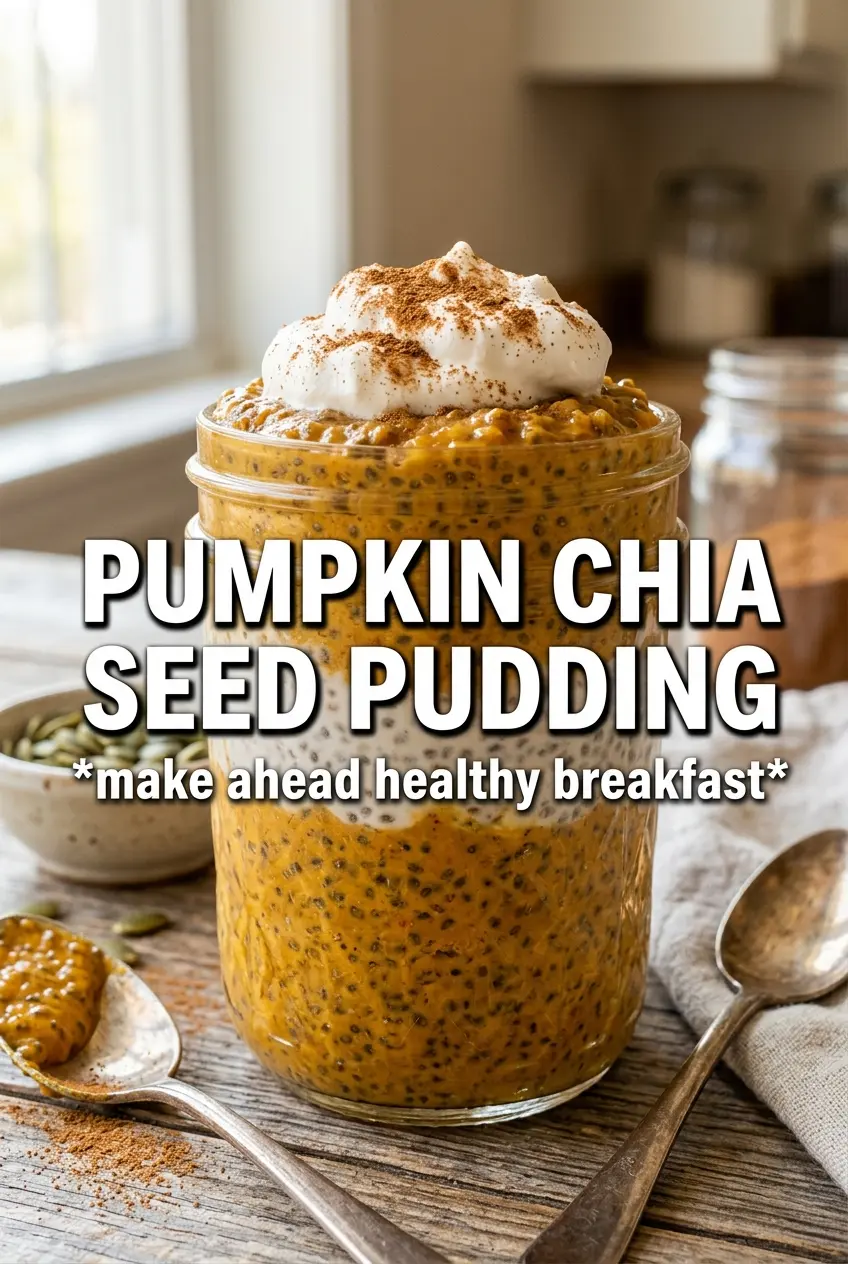
Pumpkin Chia Seed Pudding
Ingredients
Method
- Whisk pumpkin puree, almond milk or coconut milk, maple syrup, 1-1/2 teaspoons pumpkin pie spice, cinnamon, vanilla extract, and salt until smooth.
- Stir in chia seeds and whisk again after 5 minutes to prevent clumping.
- Divide into jars or bowls, cover, and refrigerate for 4 hours or overnight until set.
- Stir before serving; if the pudding is too thick, add a splash of milk to loosen.
- Top with whipped cream and dust with pumpkin pie spice.
- Serve with gingersnap cookies for dipping.