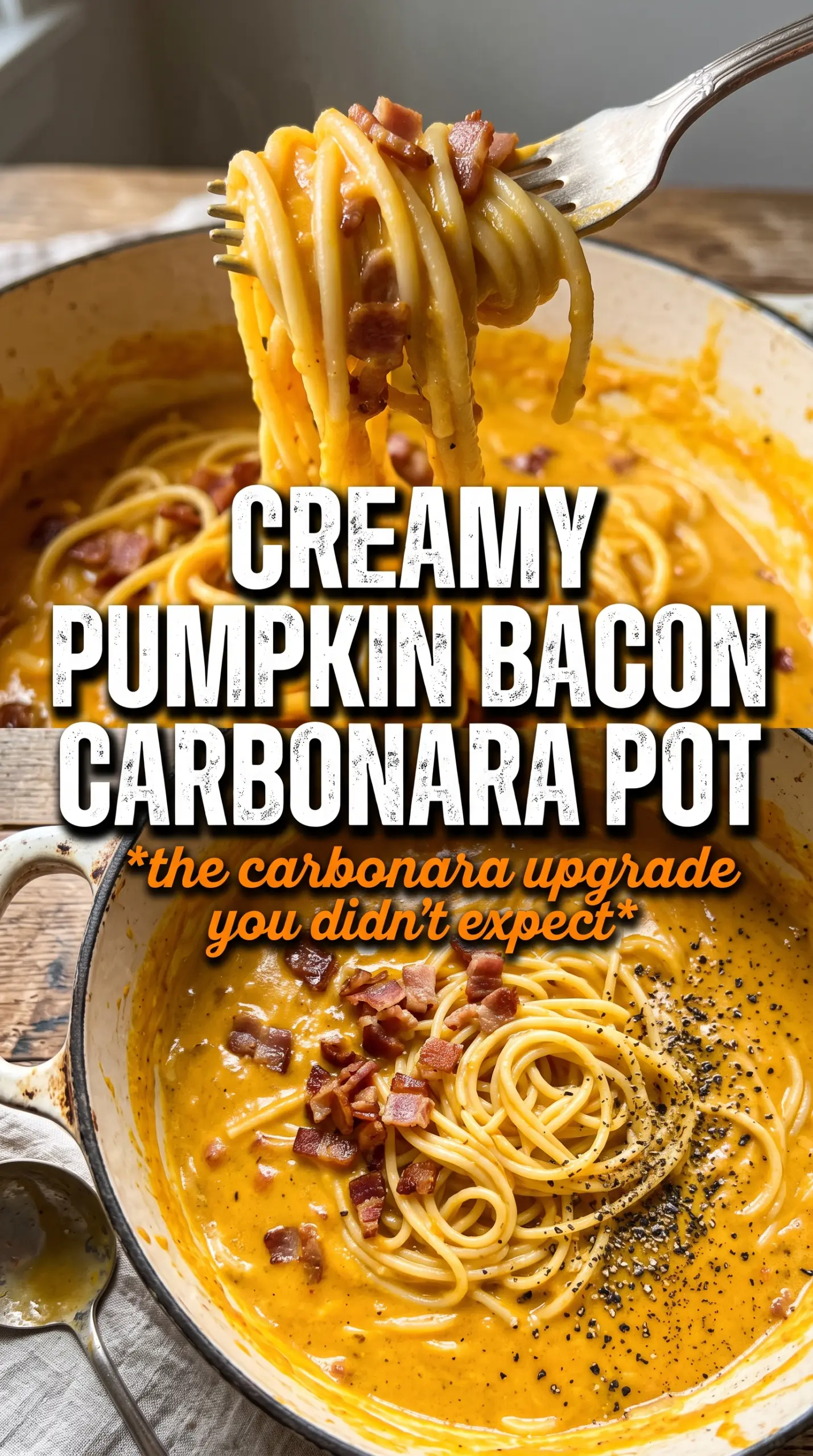
Silky pumpkin carbonara lands in that sweet spot between cozy and elegant: the sauce clings to every strand of pasta, the pancetta brings salty crunch, and the parmesan gives it that sharp, savory finish that keeps you coming back for another forkful. The pumpkin doesn’t make this taste like pie; it softens the egg-and-cheese sauce into something rounder and a little richer, with just enough nutmeg to warm everything up without turning it sweet.
The key here is heat control. Carbonara only works when the eggs thicken from the residual heat of the pasta and pan, not from direct flame. Pumpkin puree helps the sauce stay plush and stable, but you still need to pull the skillet off the burner before adding the yolk mixture. A splash of pasta water loosens everything into a glossy sauce that coats instead of clumping.
Below you’ll find the exact moment to add the sauce, why finely grated parmesan matters more than you might think, and a few smart swaps if you want to make this with bacon instead of pancetta or keep it a little lighter.
The sauce turned out silky instead of scrambled, and the pumpkin made it taste extra creamy without getting heavy. I added the pasta water a little at a time and it coated the spaghetti perfectly.
Save this pumpkin carbonara for the night you want a silky pasta sauce with pancetta, parmesan, and just enough pumpkin to make it extra plush.
The Trickiest Part Is Keeping the Eggs Silky
Carbonara fails for one reason more than any other: the pan is too hot when the egg mixture goes in. Pumpkin gives this version a little extra insurance, but it doesn’t change the rule. If the eggs hit direct heat, you get little bits of scrambled yolk instead of a smooth sauce. The pasta should be piping hot, the skillet should be off the burner, and the sauce should be tossed fast enough that it thickens evenly before it has a chance to set in patches.
The other thing people miss is the pasta water. It’s not just there to thin the sauce; it carries starch, which helps the pumpkin, cheese, and egg blend into one glossy emulsion. Add it a splash at a time. If you pour too much in at once, the sauce turns loose before it has a chance to tighten back up around the pasta.
What Each Ingredient Is Actually Doing in This Dish
- Egg yolks — These build the classic carbonara body. Whole eggs will work in a pinch, but yolks give you a richer sauce that thickens faster and stays creamier.
- Pumpkin puree — Use plain puree, not pumpkin pie filling. It softens the sauce and adds body without needing cream, which is what makes this feel plush instead of heavy.
- Parmesan — Finely grated parmesan melts into the sauce much better than coarse shreds. If you want the smoothest result, grate it fresh off the block; pre-shredded cheese can leave the sauce grainy.
- Pancetta or thick-cut bacon — Pancetta gives the cleanest salty pork flavor, while bacon adds a smokier edge. Either one works, but cook it until the fat renders and the edges crisp so you get texture in every bite.
- Nutmeg and black pepper — Nutmeg pulls the pumpkin toward savory territory, and generous black pepper keeps the dish tasting like carbonara instead of pumpkin pasta. Don’t skip either one.
- Pasta water — This is what turns the mixture from thick paste into sauce. Reserve more than you think you need, because you’ll want control over the texture at the end.
Building the Sauce Before It Has a Chance to Break
Render the pancetta first
Cook the pancetta in a large skillet until the fat has rendered and the pieces are crisp at the edges. That rendered fat is part of the sauce, so don’t drain the pan dry. When you add the garlic, give it only about a minute; garlic burns fast in hot pork fat and turns bitter before you even notice it happening.
Whisk the pumpkin base separately
In a bowl, whisk the yolks, pumpkin puree, parmesan, nutmeg, and black pepper until the mixture looks thick and smooth. This is the point where the sauce is built, not later in the pan. If the cheese looks clumpy here, keep whisking until it loosens up, because those little dry pockets are harder to fix once the pasta is added.
Use the pan heat that is already there
Add the hot pasta to the skillet, then take the pan off the burner completely before the egg mixture goes in. Toss immediately so the noodles start carrying the heat through the sauce. Add pasta water a splash at a time while stirring, and stop as soon as the sauce turns glossy and clings to the pasta in a creamy layer. If it looks tight or dry, it needs a little more water; if it looks soupy, keep tossing for another few seconds and it will settle.
Serve it right away
Carbonara waits for no one. Once the sauce is silky, plate it immediately and finish with more parmesan and a heavy grind of black pepper. If it sits in the pan, the sauce keeps thickening and can turn sticky instead of glossy.
How to Adjust Pumpkin Carbonara Without Losing the Point
Make it with bacon instead of pancetta
Bacon works well here and gives the dish a smokier finish. Use thick-cut if you can, and keep an eye on the salt because bacon can push the dish in a saltier direction than pancetta.
Skip the pork and keep it vegetarian
Leave out the pancetta and cook the garlic in olive oil instead, then add a handful of sautéed mushrooms if you want something savory in its place. You lose the salty crisp bits, so finish with a little extra parmesan and black pepper to keep the dish balanced.
Make it gluten-free
Use your favorite gluten-free spaghetti or rigatoni and cook it just to al dente, since overcooked GF pasta turns soft fast once the sauce goes on. Save a little extra pasta water because some gluten-free shapes absorb more liquid before the sauce fully comes together.
Storage and Reheating
- Refrigerator: Store leftovers in an airtight container for up to 3 days. The sauce will thicken and tighten as it chills.
- Freezer: I don’t recommend freezing this dish. Egg-based sauces tend to separate after thawing, and the pasta texture suffers.
- Reheating: Warm it gently in a skillet over low heat with a splash of water to loosen the sauce. High heat will push the eggs over the edge and make the sauce grainy.
Answers to the Questions Worth Asking
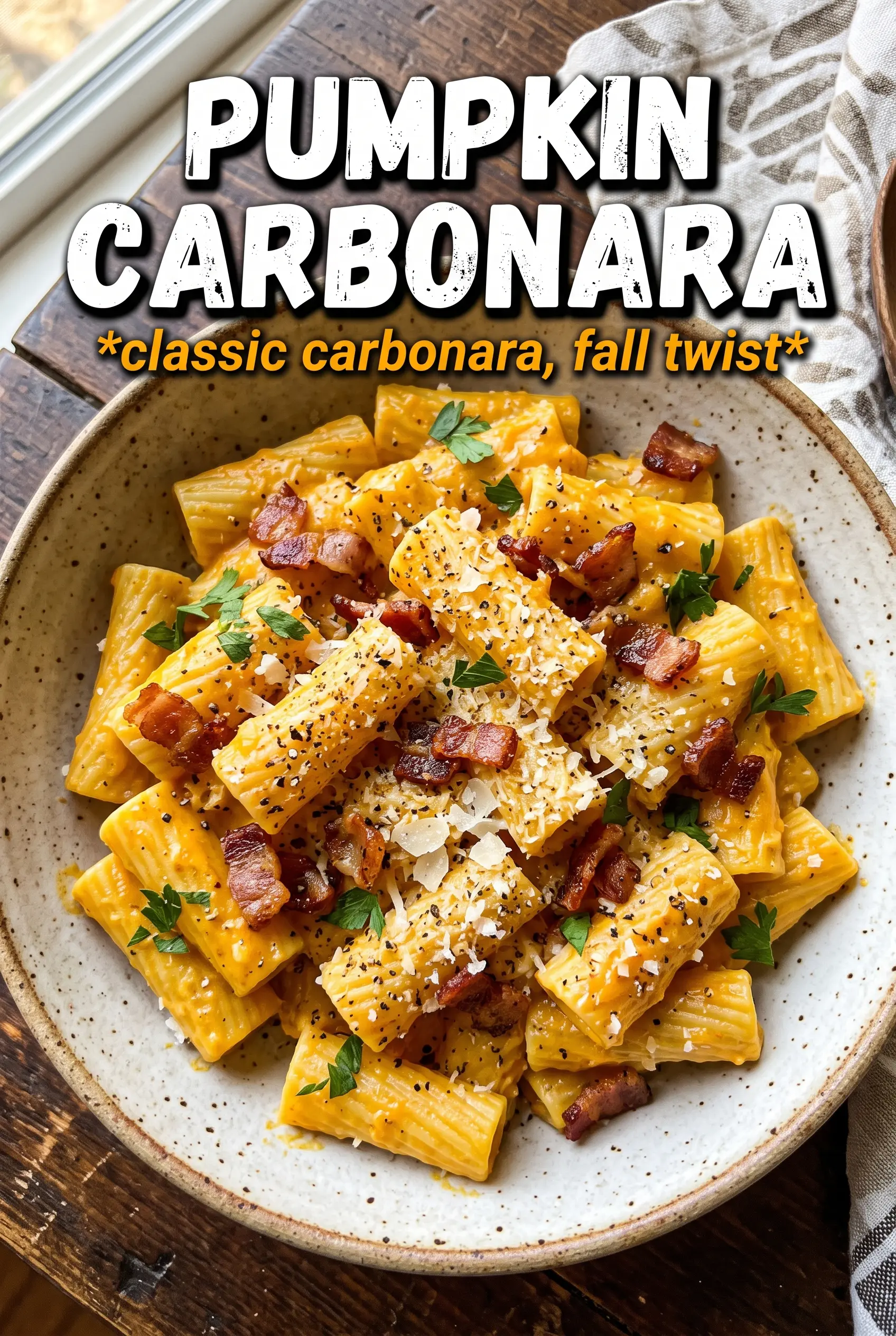
Pumpkin Carbonara
Ingredients
Equipment
Method
- Bring a large pot of water to a boil, then add salt until it tastes very well-seasoned. Cook the spaghetti or rigatoni until al dente, and reserve 1 cup pasta cooking water before draining.
- In a large skillet over medium heat, cook the pancetta (or thick-cut bacon) until crispy, stirring as needed for even browning. Add the minced garlic and cook for 1 minute, then remove the skillet from heat completely.
- In a bowl, whisk the egg yolks, pumpkin puree, finely grated parmesan, nutmeg, and black pepper until smooth and thick.
- Add the hot drained pasta to the pancetta pan and remove from heat completely to prevent scrambling. Quickly add the egg mixture and toss vigorously, adding reserved pasta cooking water a splash at a time until a silky sauce forms.
- Plate immediately and finish with extra parmesan and black pepper to taste for maximum richness and contrast.