Golden Puerto Rican fried pork chops hit the plate with a crisp, seasoned crust and a juicy center that stays tender even after a hard fry. The adobo and sazon bring that deep savory color and familiar Latin kitchen aroma, while a short marinade gives the seasoning time to cling to the meat instead of falling off in the pan.
What makes this version worth keeping in rotation is the balance: enough vinegar to wake up the pork, enough oil in the marinade to help the spices spread evenly, and thin chops that cook fast before the coating or meat has a chance to dry out. Bone-in chops work especially well here because they stay a little juicier and hold up to the heat.
Below, I’m breaking down the one frying mistake that ruins the crust, the ingredient choices that matter most, and a few easy ways to adjust these chuletas fritas for your kitchen without losing what makes them special.
The chops came out with a crisp crust that stayed on, and the vinegar in the marinade kept the pork juicy without tasting sour. I served them with rice and beans, and the whole pan disappeared fast.
Save these crispy Puerto Rican fried pork chops for the night you want adobo-seasoned pork with a crunchy crust and fast cleanup.
The Crust Falls Apart When the Pan Isn’t Ready
With thin pork chops, the biggest mistake is rushing the oil. If the oil isn’t hot enough, the chops soak instead of sear, and the spice paste softens before it can set into a crust. You want the oil shimmering and the first edge of the chop sizzling the second it hits the skillet.
The other thing that matters is not crowding the pan. Give each chop enough space for the moisture to evaporate; otherwise the steam traps itself under the meat and the crust goes patchy. A heavy skillet helps hold heat steady, which matters even more once you add cold pork and the temperature drops.
- Thin bone-in pork chops — These cook fast and stay juicy. Bone-in chops handle the high heat better than thick boneless chops here, which can dry out before the coating browns.
- Adobo seasoning — This does the heavy lifting for salt, garlic, and savory depth. If you swap it, you’ll need to rebuild that base flavor yourself, and the chops won’t taste quite as distinctly Puerto Rican.
- Sazon — This adds color and that familiar seasoned pork look. If you don’t have it, a little extra garlic powder plus a pinch of annatto or turmeric can get you close, but the color and aroma won’t be exact.
- White vinegar — The vinegar helps the seasoning penetrate and brightens the pork. Lemon juice works in a pinch, but it tastes sharper and less rounded.
- Olive oil in the marinade — It helps the spices spread and stick to the meat. A neutral oil also works, but olive oil gives a little more richness to the surface seasoning.
Getting the Seasoning to Stick Before the Fry
Mixing the Marinade
Stir the adobo, sazon, garlic powder, oregano, vinegar, and olive oil into a thick paste, then coat both sides of the pork chops until every surface looks evenly stained. Thin chops don’t need a long soak, but they do need enough time for the salt and spices to settle in. Thirty minutes is the sweet spot if you’re in a hurry; a couple of hours gives a deeper seasoning without changing the texture.
Heating the Oil
Use just enough oil to cover the bottom of the skillet by about a quarter inch, then heat it over medium-high until it shimmers. If you drop in a tiny bit of marinade and it barely moves, the oil is too cool; if it smokes aggressively, it’s too hot and the spices will scorch. The goal is a steady, lively sizzle from the moment the chops go in.
Frying Until the Crust Sets
Lay the chops in the pan without overlapping them and let the first side brown undisturbed for 4 to 5 minutes. If you start moving them too soon, the seasoning can tear off before it has time to crust. Flip once, then cook the second side until it’s deep golden brown and the pork feels firm but not hard when pressed in the center.
Draining and Serving Hot
Set the cooked chops on paper towels for a brief drain, just long enough to catch excess oil. Don’t let them sit too long before serving or the crust will soften from trapped steam. A squeeze of lime over the top wakes up the fried seasoning, and white rice with pink beans gives you the plate these chops were built for.
What to Change When You Need a Different Finish
Use boneless chops for a quicker dinner
Boneless chops work if that’s what you have, but they cook faster and dry out sooner, so keep them thin and watch the pan closely. Pull them as soon as the center is cooked through and the crust is deep gold.
Make it gluten-free without changing the method
This recipe is naturally gluten-free as long as your adobo and sazon are certified gluten-free. The frying and seasoning method stays exactly the same, so you won’t lose any of the crunch or flavor.
Skip the deep fry and use a shallow skillet
A shallow layer of oil is all you need here. The chops still get crisp as long as the oil stays hot and you don’t crowd the pan, and the finished pork tastes lighter without losing that fried edge.
Storage and Reheating
- Refrigerator: Store leftovers in an airtight container for up to 3 days. The crust softens a bit in the fridge, but the flavor holds up well.
- Freezer: These freeze better than most fried chops if you cool them completely first and wrap them well. Freeze for up to 2 months and thaw in the fridge before reheating.
- Reheating: Warm them in a 375°F oven or air fryer until heated through and the outside crisps again. The common mistake is microwaving them straight from cold, which makes the coating limp and the pork rubbery.
Answers to the Questions Worth Asking
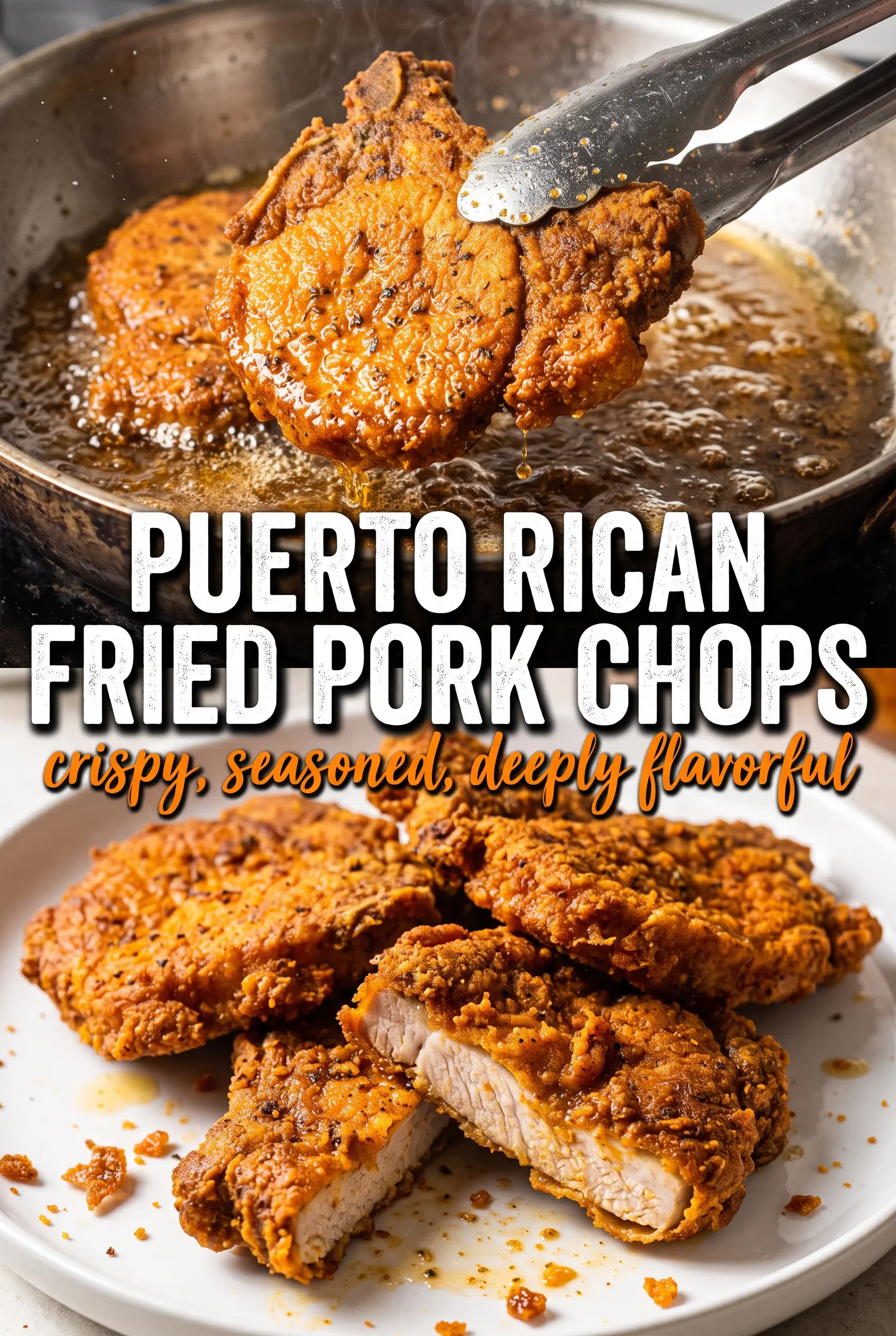
Puerto Rican Fried Pork Chops (Chuletas Fritas)
Ingredients
Equipment
Method
- In a mixing bowl, combine adobo seasoning, sazon seasoning, garlic powder, dried oregano, white vinegar, and olive oil until evenly mixed, then coat the thin pork chops thoroughly. Marinate for 30 minutes to 2 hours so the pork absorbs the seasonings and stays flavorful after frying.
- Heat 1/4 inch of oil in a heavy skillet over medium-high heat until shimmering, indicating it’s hot enough for frying. Keep the oil at a steady sizzling level for consistent browning.
- Fry pork chops 4–5 minutes per side until deep golden brown and cooked through, flipping once for even color. The crust should look crisp and the interior should be fully cooked through.
- Drain the fried pork chops briefly on paper towels to remove excess oil and keep the crust crisp. Serve right away for the best crunch.
- Serve the Puerto Rican fried pork chops with white rice, pink beans, and lime wedges. Squeeze lime over the chops to brighten the adobo-and-sazon flavors.