Pot roast twice baked potatoes turn leftover beef into a full-on dinner with crisp potato skins, a creamy filling, and a savory gravy finish that makes every bite feel loaded in the best way. The shells stay sturdy enough to hold the filling, while the mashed potato center gets rich from butter, sour cream, and cheddar before the shredded roast goes in. It’s the kind of meal that tastes like you planned ahead, even when you’re just using what was already in the fridge.
This version works because the roast gets folded in after the potatoes are mashed, so the beef stays tender instead of drying out in the oven. A little gravy or broth loosens the filling just enough to keep it fluffy, and the broiler at the end gives the cheese those browned spots that make the whole pan smell incredible. If your leftover roast is a little lean, the gravy matters even more — it keeps everything savory and prevents the filling from turning pasty.
Below you’ll find the little details that matter here: how to keep the skins from collapsing, what to do if your filling feels too thick, and a few smart swaps if you’re working with what you have on hand.
The filling stayed creamy and the potato skins held up perfectly. I added a little extra gravy over the top and my husband said it tasted like a steakhouse baked potato with pot roast inside.
Save these pot roast twice baked potatoes for the night when you want leftover roast to taste brand new.
The Part That Keeps the Filling Creamy Instead of Heavy
The biggest mistake with twice baked potatoes is overworking the filling after the roast goes in. Once the potatoes are mashed smooth, stop beating them into a paste. You want a filling that looks fluffy and spoonable, not gluey, because the cheese and beef will tighten it up again in the oven.
The other detail that matters is moisture. Leftover pot roast can vary a lot depending on how it was cooked, so the gravy does more than add flavor. It keeps the mashed potatoes from drying out during the second bake and helps the shredded beef settle into the filling instead of sitting in dry pockets.
- Russet potatoes — These are the right choice because the skins get sturdy and the insides mash up light and airy. Waxy potatoes hold too much moisture and make the filling dense.
- Leftover pot roast — Shred it finely so it blends into the filling instead of cutting into it in big chunks. If the roast is very lean, add a little extra gravy or broth so it stays juicy.
- Gravy — This is the ingredient that keeps everything tasting like pot roast, not just potato and cheese. Beef broth works in a pinch, but gravy gives you body and a deeper finish.
- Sharp cheddar — Sharp cheddar cuts through the richness. Mild cheddar melts fine, but it won’t give the same savory edge.
- Sour cream and butter — These build the creamy base. If you swap in Greek yogurt, the filling gets tangier and a little looser, which can work if you like a brighter taste.
What Each Ingredient Is Actually Doing in This Recipe

- Primary ingredient (the star) — Quality matters most. Choose the best you can find.
- Cooking medium (oil, butter, or broth) — This carries flavors and prevents dryness.
- Seasonings (salt, pepper, spices, herbs) — Layer flavors so nothing overpowers. Build depth gradually.
- Aromatics (garlic, onion, herbs) — Cook with fat to bloom flavors. Become the foundation.
- Supporting ingredients — Complement the main ingredient without overpowering it.
- Sauce or liquid (if applicable) — Brings flavors together. Balance richness with acid.
- Acid (lemon, vinegar, wine, or other) — Brightens and prevents flat-tasting results.
- Final finish (garnish, glaze, or sauce) — Prevents one-dimensional taste and adds visual appeal.
Building the Shell, Filling the Potatoes, and Finishing on Broil
Getting the Potato Shells Ready
Cut the baked potatoes in half lengthwise and scoop out most of the flesh, leaving about a 1/4-inch shell so the skins can stand up to the filling. If you scrape them too thin, they collapse once the beef mixture goes back in. A sturdy shell also crisps better around the edges, which is part of what makes the final bite so good.
Making the Filling Smooth
Mash the hot potato flesh with butter, sour cream, milk, and most of the cheddar until it looks smooth and fluffy. The potatoes should still hold soft ridges when you stir them; if they turn shiny and stretchy, they’ve been worked too long. Season now, before the roast goes in, so the filling tastes balanced all the way through.
Adding the Beef Without Drying It Out
Warm the shredded pot roast in the gravy first, then fold it into the potato mixture. That step keeps the meat from tasting like it came straight out of the fridge and helps the gravy distribute evenly. If your filling feels stiff, add a splash more broth or gravy until it mounds softly in a spoon.
Broiling to Finish
Spoon the filling back into the shells, top with the remaining cheddar, and bake until the potatoes are hot through and the cheese is melted. The final broil is short, usually just a couple of minutes, and it’s only there to brown the cheese. Stay close to the oven, because cheese can go from golden to burnt faster than you expect. Finish with green onions and extra gravy while the tops are still hot and glossy.
Three Ways to Work With What’s in Your Fridge
Use braised beef instead of pot roast
Any shredded braised beef works here as long as it has some sauce or juices with it. If the beef is plain, add a few spoonfuls of broth and a pinch of salt so the filling doesn’t taste flat.
Make it gluten-free without changing the texture
This is naturally gluten-free if your leftover gravy was thickened without flour. If you need to replace gravy, use a gluten-free beef broth and thicken it lightly with cornstarch before folding it into the filling.
Go lighter on dairy
Swap the sour cream for plain Greek yogurt and use a little less butter. The filling will be slightly tangier and a touch looser, but it still bakes up well and keeps the beef front and center.
Turn it into smaller party portions
Use medium potatoes and fill them a little less generously for appetizer-sized halves. They bake faster, but the broil time stays short, so watch the cheese closely.
Storage and Reheating
- Refrigerator: Store leftovers in an airtight container for up to 4 days. The skins soften a little, but the flavor holds up well.
- Freezer: Freeze assembled potatoes before the final bake for best results. Wrap them tightly and thaw in the fridge overnight before baking; fully baked potatoes can be frozen, but the filling gets a little grainy.
- Reheating: Reheat in a 350F oven until hot in the center, then broil briefly to refresh the cheese. The microwave works in a pinch, but it softens the skins and makes the filling a little uneven.
Answers to the Questions Worth Asking
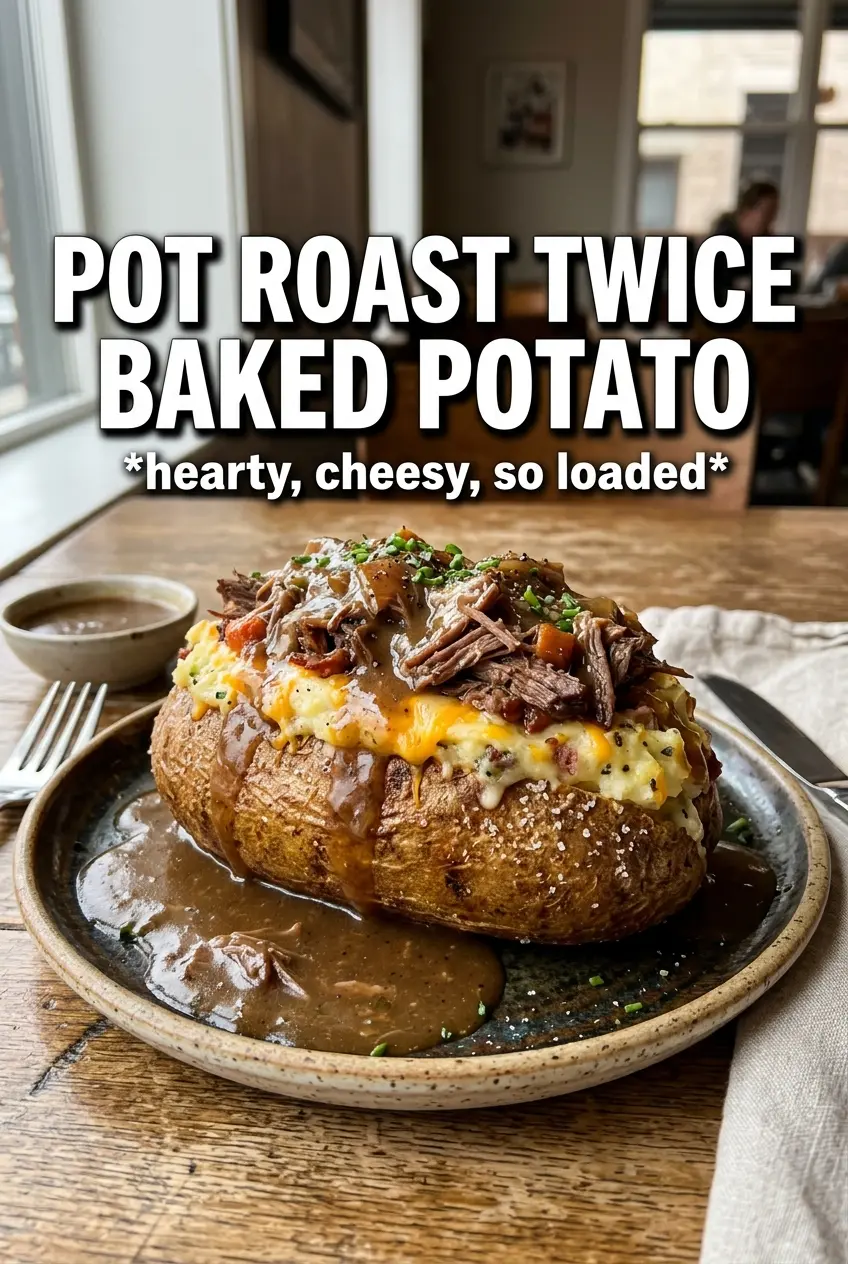
Pot Roast Twice Baked Potatoes
Ingredients
Equipment
Method
- Preheat the oven to 400F, then halve the baked russet potatoes lengthwise and scoop out the flesh, leaving about a 1/4-inch shell.
- Mash the potato flesh with butter, sour cream, milk, 1 cup cheddar, salt, and pepper until smooth, with no large lumps visible.
- Warm the pot roast in the gravy until steamy, then fold the shredded meat into the mashed potato mixture until evenly distributed.
- Fill each potato shell with the pot roast mixture and top with the remaining cheddar so the surface is covered.
- Bake for 15 to 18 minutes, until the potatoes are heated through and the cheese is visibly bubbly at the edges.
- Broil for 2 minutes until the tops look golden, then top with green onions and drizzle with extra gravy before serving.