Poor Mans Stew is the kind of dinner that fills the kitchen with the smell of browned beef, soft onions, and a tomato-rich broth that tastes like it simmered all afternoon. It lands somewhere between soup and stew: thick enough to eat with a spoon, loose enough to soak into a hunk of bread, and hearty enough that nobody leaves the table looking for a snack an hour later.
The trick here is building flavor in layers without making the pot fussy. Browning the beef with the onion first gives the broth a deeper, meaty base, and the tomato soup adds body that plain broth can’t give on its own. Potatoes and carrots go in early so they have time to turn tender without falling apart, while the frozen vegetables wait until the end so they stay bright instead of soft and dull.
Below you’ll find the small details that matter most: how to keep the broth from turning flat, what to do if your potatoes are cooking unevenly, and a few easy ways to stretch this stew with what’s already in the pantry.
The broth got rich and savory, and the potatoes were tender without turning mushy. I added a little bread on the side and my husband went back for a second bowl before I even sat down.
Save this hearty Poor Mans Stew for a budget-friendly pot of beef, potatoes, and tomato broth that eats like a full meal.
The Trick to Keeping This Stew Thick, Not Watery
The biggest mistake with a budget stew like this is adding everything at once and hoping the pot sorts itself out. It doesn’t. The beef and onion need a good browning first, because that’s where the savory depth starts, and the tomato soup needs enough simmer time to melt into the broth instead of floating around as a separate layer. If the heat stays too high after the boil, the potatoes can break on the outside while the center stays firm, and the broth can taste thin instead of settled.
Let the pot come to a real simmer, then lower the heat until you see gentle bubbles breaking the surface. That slower movement keeps the potatoes intact and gives the starch in the broth time to thicken everything naturally. If your stew looks loose near the end, leave the lid off for the last few minutes. That little bit of evaporation makes a bigger difference than adding extra seasoning.
What Each Ingredient Is Doing in the Pot
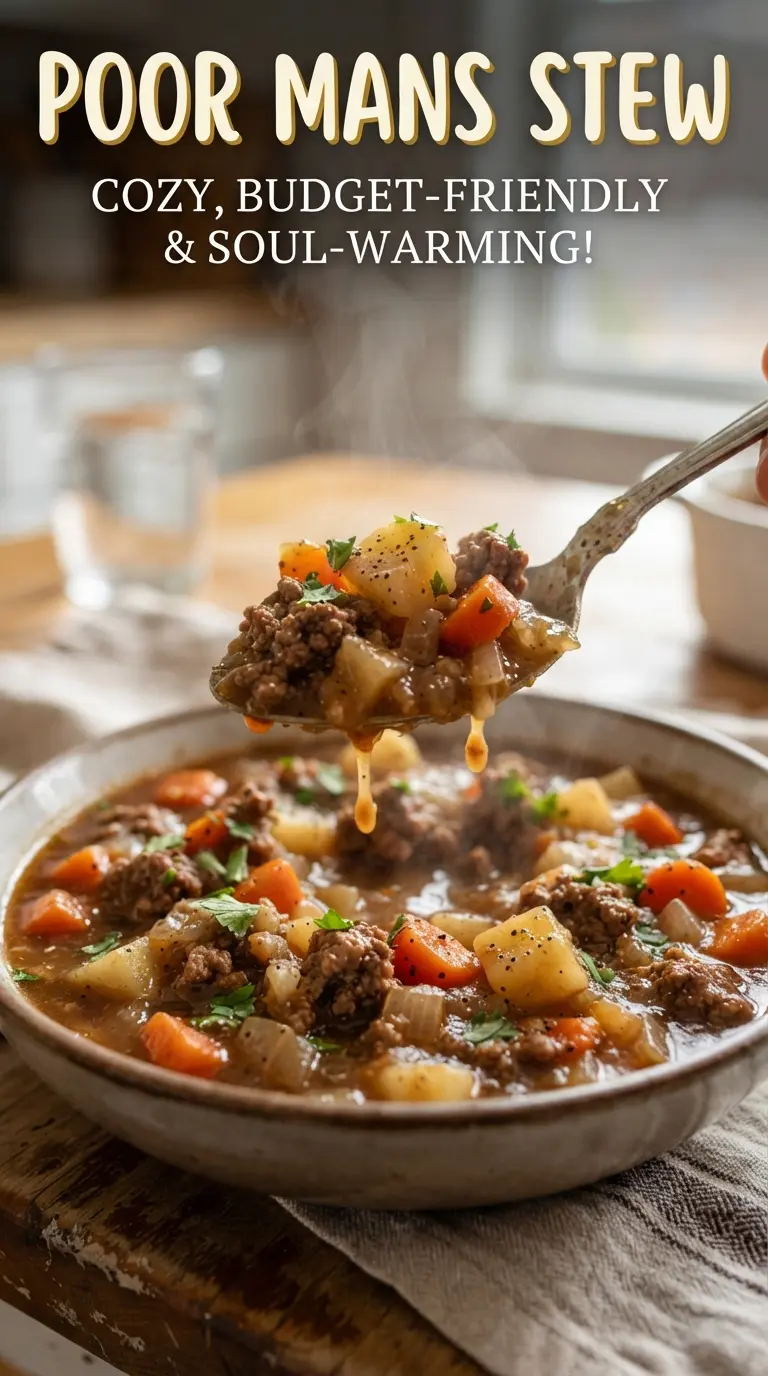
- Ground beef — This gives the stew its main body and rich flavor. An 80/20 blend works best because a little fat helps the onions brown and gives the broth more depth. If you use lean beef, keep a tablespoon of drippings in the pot or the stew can taste flat.
- Onion and garlic — The onion cooks with the beef so it softens in the meat juices instead of steaming separately. Garlic goes in after draining because it burns fast, and burnt garlic will make the whole pot taste harsh.
- Potatoes and carrots — These are the stew’s structure. Yukon Golds hold their shape a little better than russets, but any waxy or all-purpose potato works. Cut them into even cubes so they cook at the same pace; uneven pieces are the usual reason some potatoes are mushy while others are hard.
- Diced tomatoes and tomato soup — The diced tomatoes bring brightness and a little texture, while the tomato soup thickens the broth and gives it that old-fashioned, cozy stew feel. If you swap out the tomato soup, the stew will be thinner and less rounded.
- Worcestershire sauce and thyme — These don’t make the stew taste fancy; they make it taste finished. Worcestershire adds savory backbone, and thyme keeps the tomato broth from tasting one-note. That tiny amount matters more than it looks like it should.
- Frozen mixed vegetables — These go in at the end so they stay colorful and don’t turn soft and bland. Fresh peas, corn, or green beans can work too, but they’ll need different timing depending on how firm they are.
Building the Stew in the Right Order
Browning the Beef and Onion
Cook the ground beef and onion together in a large pot over medium heat until the meat loses its pink color and the onion turns soft and translucent. Don’t rush this stage by cranking the heat high; you want browning, not scorching. If there’s a lot of grease in the pot after cooking, drain it off before adding the garlic so the broth doesn’t end up greasy. Stir the garlic in at the very end of this stage and cook just until fragrant, about 30 seconds.
Building the Broth
Add the potatoes, carrots, diced tomatoes, tomato soup, beef broth, Worcestershire, thyme, salt, and pepper straight into the same pot. Scrape up anything stuck to the bottom as you stir, because those browned bits are part of the flavor. Bring the pot to a boil, then immediately reduce it to a gentle simmer and cover it. If the boil stays too hard, the vegetables can break apart before the center softens.
Finishing with the Frozen Vegetables
Simmer the stew until the potatoes are tender when pierced with a fork, usually 20 to 25 minutes depending on how big you cut them. Stir in the frozen mixed vegetables only at the end and let them cook for about 5 minutes. That keeps their color brighter and stops them from turning soft and tired. Taste the broth before serving and adjust the salt at the end, because the beef broth and tomato soup already bring some salt of their own.
Ways to Stretch or Change the Pot Without Losing What Makes It Work
Swap the Beef for Ground Turkey
Ground turkey works if you want a lighter stew, but it needs a little help. Use the same method, then add an extra splash of Worcestershire or a pinch more thyme because turkey doesn’t bring the same deep flavor that beef does. If the turkey is very lean, leave a spoonful of fat in the pot or stir in a little butter with the garlic.
Make It Gluten-Free
This stew is naturally close to gluten-free, but check the labels on the tomato soup and Worcestershire sauce because those are the two places gluten can hide. If your Worcestershire isn’t gluten-free, use a certified version or a small splash of tamari for a similar savory edge. The texture stays the same.
Add Extra Vegetables Without Watering It Down
Celery, green beans, corn, or peas all fit right in. Add harder vegetables with the potatoes and carrots, then wait on quick-cooking vegetables until the last few minutes. If you pile in too many watery vegetables all at once, the broth can lose its body, so keep the add-ins balanced.
Storage and Reheating
- Refrigerator: Store covered for up to 4 days. The broth thickens as it sits, and the potatoes will absorb some liquid.
- Freezer: It freezes well for up to 3 months, but the potatoes soften a bit after thawing. Cool it fully first, then freeze in airtight containers with room for expansion.
- Reheating: Warm it gently on the stove over medium-low heat with a splash of broth or water if needed. A hard boil can break down the potatoes and make the stew grainy, so keep the heat steady and low.
Answers to the Questions Worth Asking
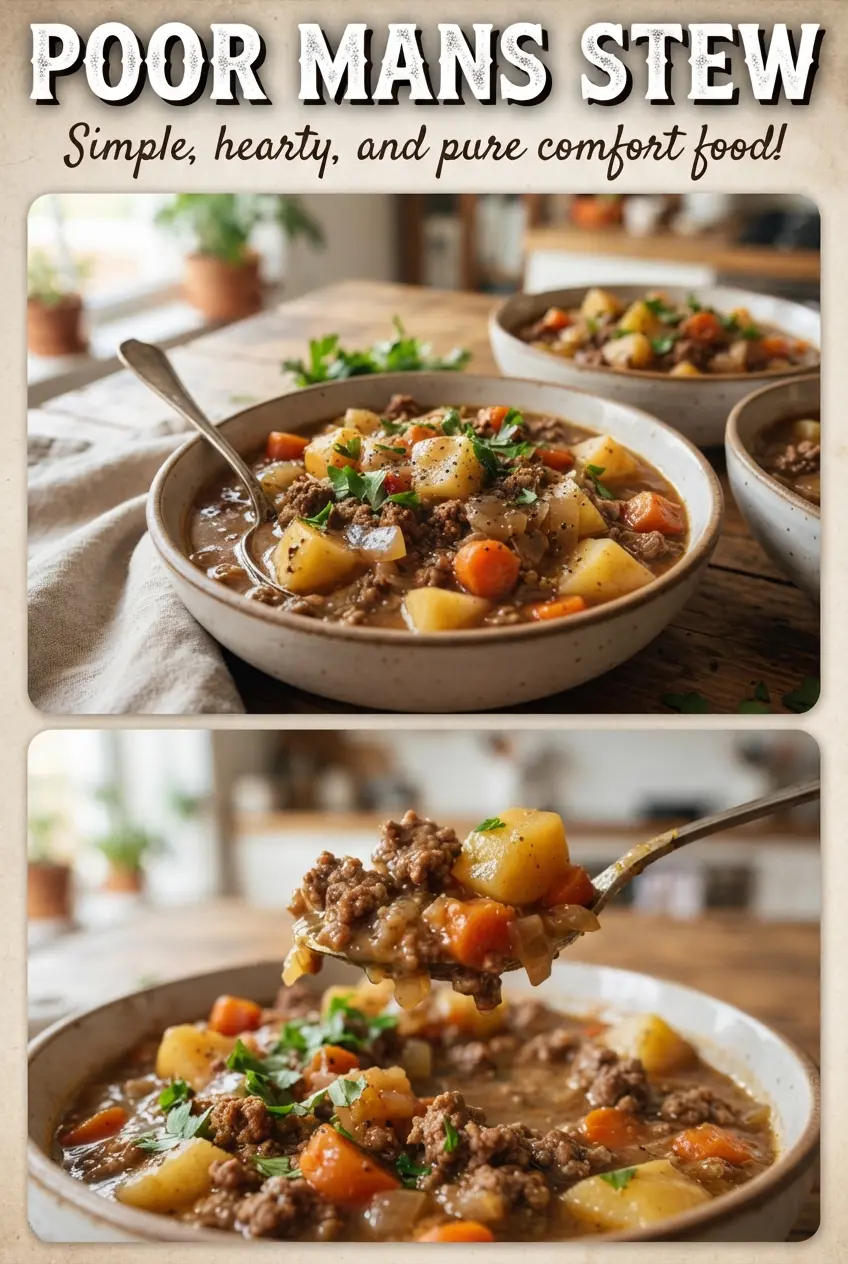
Poor Man's Stew
Ingredients
Equipment
Method
- Brown the ground beef and diced onion in a large Dutch oven for 8 minutes, stirring until the beef is browned. Drain excess fat if needed, then add the minced garlic and cook for 30 seconds with the aroma blooming.
- Add the cubed potatoes, sliced carrots, diced tomatoes, tomato soup, beef broth, Worcestershire sauce, dried thyme, salt, and black pepper to the pot and stir to combine. Bring everything to a boil, then keep it actively bubbling with the broth starting to look glossy.
- Reduce heat to maintain a gentle simmer and cover the pot, then cook for 20-25 minutes until the potatoes are tender. You should see steady bubbles around the edges and the potatoes yield when pierced.
- Stir in the frozen mixed vegetables and simmer uncovered for 5 minutes. The vegetables should look bright and warmed through as the stew thickens slightly.
- Taste and adjust seasoning with more salt and black pepper if needed, then serve hot. Keep the ladle moving to show the potato-and-vegetable texture in every bowl.