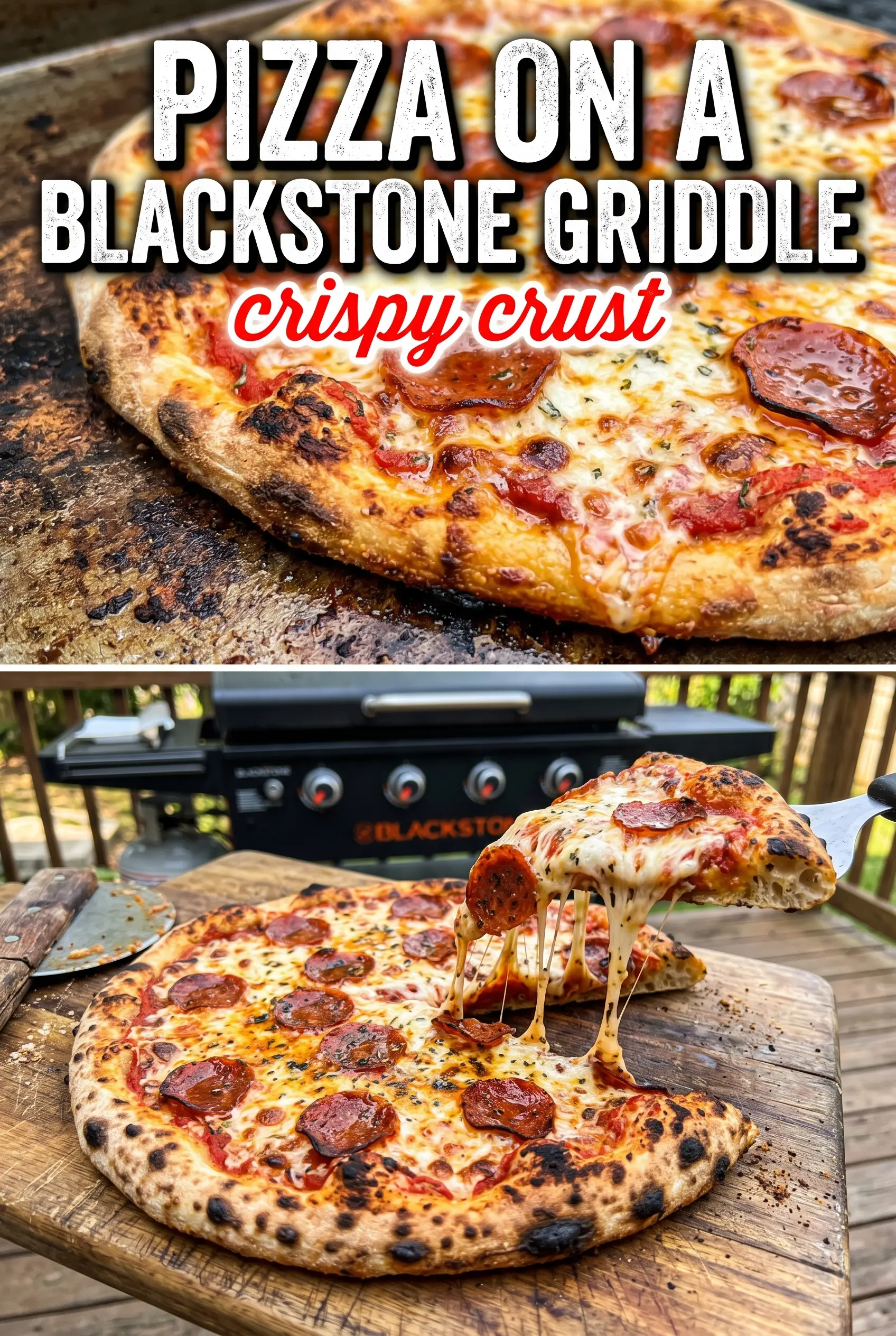
Pizza on a Blackstone griddle gives you the kind of crust that crackles at the edge, stays tender in the middle, and picks up those dark toasted spots that taste like a proper pizzeria pie. The cheese melts fast, the bottom cooks directly on the hot surface, and the whole thing comes together with a little more control than an oven pizza, especially when you want a crisp crust without waiting around for a stone to preheat.
The trick is cooking the dough first on one side before you load it. That first flip keeps the toppings off the raw dough long enough for the crust to set, which is what keeps the center from turning gummy. I also keep the sauce light and the cheese shredded fresh, because too much moisture or pre-shredded starch-coated cheese can slow the melt and soften the crust.
Below, I’ve laid out the small details that matter most, from stretching the dough evenly to trapping enough heat under the dome so the cheese melts before the crust overcooks. There’s also a simple way to handle toppings without ending up with a pizza that’s overloaded in the middle and raw at the edges.
The crust got those perfect charred spots and the cheese melted all the way under the dome without the bottom burning. My kids thought it tasted like a restaurant pizza off the griddle.
Save this Blackstone griddle pizza for the nights when you want crisp crust, bubbling cheese, and fast toppings with almost no cleanup.
The One Thing That Keeps Blackstone Pizza Crisp Instead of Soggy
The biggest mistake with griddle pizza is trying to build it like an oven pizza. On a Blackstone, the bottom cooks fast and the toppings need a head start in the right order. If you put sauce and cheese onto raw dough before it’s set, the weight and moisture can drag the center down and leave you with a soft, pale crust.
Cooking the dough on one side first changes everything. It creates a stable base that can handle sauce, cheese, and toppings without collapsing, and it gives you enough structure to slide, flip, and finish the pizza confidently. The griddle’s even heat also helps the crust brown quickly, but that only works if the dough is rolled or stretched thin enough to cook through before the toppings overdo it.
- Medium heat matters. Too hot and the bottom scorches before the cheese melts. Too low and the dough dries out before it browns.
- A light hand with sauce keeps the crust crisp. A thin layer spreads flavor without soaking the dough.
- Dome heat finishes the top. Trapping heat over the pizza melts the cheese fast without forcing you to leave it on the griddle too long.
What the Dough, Sauce, and Cheese Are Each Doing Here

Pizza dough gives you the structure that makes this work, and a dough with decent stretch is worth more than a fancy topping list. Store-bought dough is fine here if that’s what you’ve got, but let it sit at room temperature long enough to relax or it’ll fight you and spring back when you try to stretch it.
Mozzarella is the cheese that gives you that classic pull and melt. Shredding it yourself helps it melt more cleanly than bagged cheese, which often has anti-caking agents that can slow the melt and leave a slightly dusty texture.
Pizza sauce should be thick, not watery. A thin sauce runs fast on the griddle heat and can soften the center before the crust has a chance to finish. If your sauce is loose, simmer it for a few minutes first or use less than you think you need.
Flour for dusting is there to help with handling, but don’t bury the dough in it. Too much flour clings to the bottom and can taste raw or bitter when it hits the griddle. A light dusting is enough to keep the dough from sticking while you stretch and move it.
How to Move Fast Without Burning the Bottom
Heating the Griddle
Bring the Blackstone to medium heat and spread the oil across the surface before the dough goes down. You want a surface that sizzles when the dough hits it, not one that smokes right away. If the griddle is scorching hot, the crust will darken before the dough has time to set, and you’ll lose control of the finish.
Stretching and Setting the Dough
Divide the dough into four portions and stretch each one thin and even. Uneven thickness is where pizza on a griddle goes wrong, because the thin spots burn and the thick spots stay doughy. If the dough keeps snapping back, let it rest for a few minutes and try again; that usually means the gluten needs time to relax.
Flipping and Topping Quickly
Once the bottom turns golden, flip the crust and work fast on the cooked side. Add the sauce, cheese, and toppings in a thin layer so the middle doesn’t get weighed down. The cooked side should already feel sturdy enough to support the toppings; if it still feels flimsy, give it a little more time before adding anything.
Melting Under the Dome
Cover the pizza with a dome or large pan to trap heat and melt the cheese. This is the part that keeps you from overcooking the crust while waiting for the top to finish. When the cheese is fully melted and bubbling and the edges look browned underneath, pull it off right away and finish with basil and Parmesan.
How to Change This Blackstone Pizza for Different Eaters and Different Nights
Dairy-Free Pizza on the Griddle
Use a good melting dairy-free mozzarella and keep the layer a little thinner than you would with regular cheese. Some alternatives brown less and melt slower, so the dome step matters even more. The crust still gets the same char and crispness, but the finish will be a little softer on top.
Gluten-Free Dough Swap
Use a gluten-free pizza dough that’s made for stretching or pressing into rounds. It won’t behave exactly like wheat dough, so handle it gently and expect a more delicate flip. The payoff is still a crisp base, but you may need to work with slightly smaller pizzas for better control.
Meat Lover’s Version
Add cooked sausage, pepperoni, or pre-cooked bacon after the flip and before the dome goes on. Raw meat needs more time than this quick method gives, so pre-cook anything that needs to be fully cooked through. The result is richer and heavier, so keep the sauce and cheese a little lighter.
Make It a White Pizza
Skip the red sauce and brush the cooked side with olive oil, then add mozzarella, Parmesan, and basil. Without tomato sauce, the crust stays a little drier and the dairy flavor comes forward more clearly. It’s a smart move when you want the griddle char to be the main event.
Storage and Reheating
- Refrigerator: Store leftovers in an airtight container for up to 3 days. The crust softens a bit as it sits, but it still reheats well.
- Freezer: Freeze slices wrapped tightly for up to 2 months. Freeze them flat first if you can, so the toppings stay in place and the slices don’t stick together.
- Reheating: Reheat in a skillet, on the griddle, or in a hot oven until the bottom crisps back up. Skip the microwave if you want the crust to stay crisp, because it turns the dough soft and rubbery fast.
Questions I Get Asked About This Recipe
Pizza on a Blackstone Griddle
Ingredients
Equipment
Method
- Heat the Blackstone griddle to medium heat and oil the surface with the olive oil until lightly glossy.
- Divide the pizza dough into 4 portions and stretch each into thin rounds, dusting with flour as needed to prevent sticking.
- Place the dough rounds directly on the griddle and cook for 2-3 minutes, until the bottom is golden and set.
- Flip the crust and quickly add the pizza sauce, mozzarella cheese, and your choice of toppings to the cooked side.
- Cover with a dome or large pan and cook for 3-5 minutes until the cheese melts completely and the edges start to char.
- Remove the pizzas from the griddle and top with fresh basil leaves and grated Parmesan cheese.
- Slice and serve immediately while the cheese is bubbling.