These mashed potatoes land in that sweet spot between plush and sturdy, with enough body to mound on a plate but still soft enough to soak up gravy. The cream cheese gives them a faint tang and a velvety finish, while the baked top turns the whole dish into something that feels a little more special than a standard pot of mash.
The trick is draining the potatoes well before you mash them. Russets hold plenty of moisture, and if you skip that step the potatoes go loose and gluey instead of fluffy and rich. Warm butter, softened cream cheese, and half-and-half melt in smoothly and keep the texture silky without turning heavy.
Below, you’ll find the small details that make these potatoes dependable for a holiday table or a regular Sunday supper, including the best way to reheat them without drying out the edges.
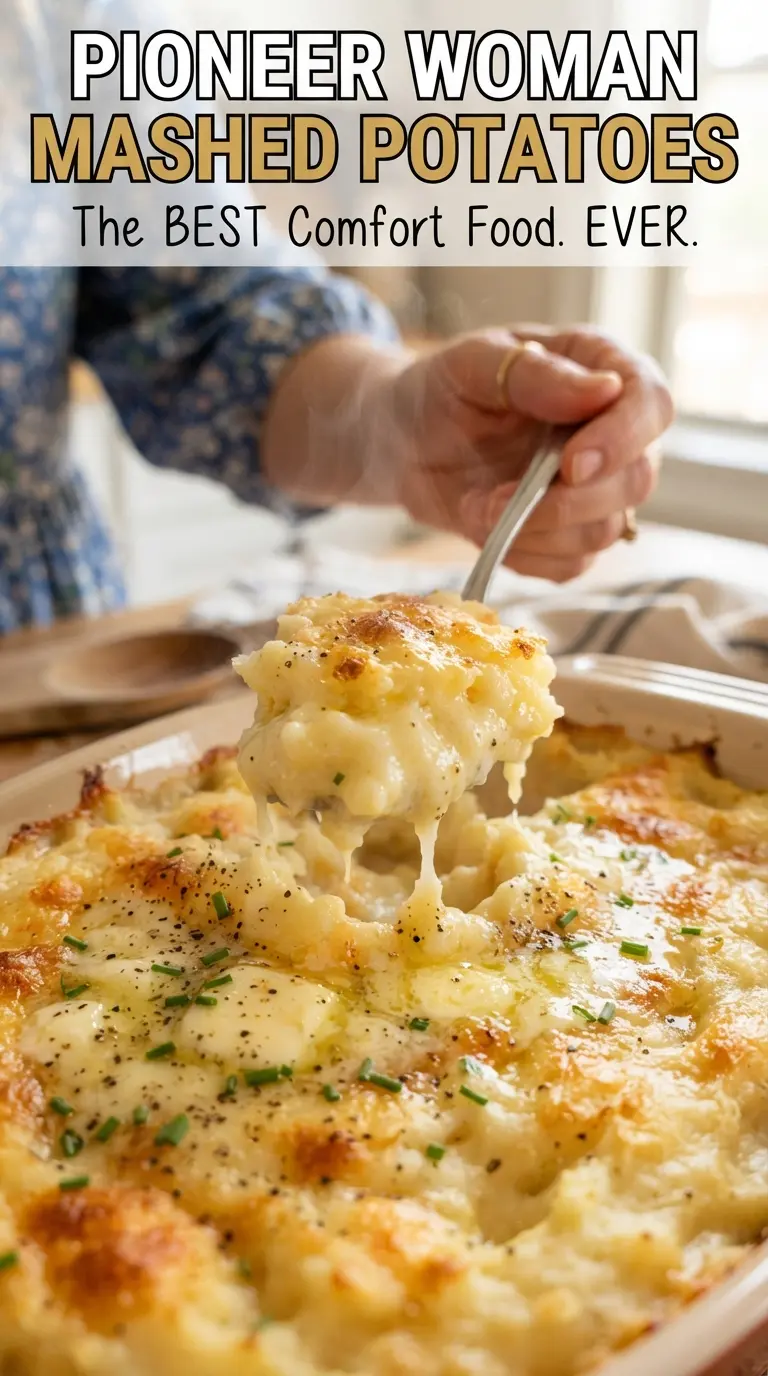
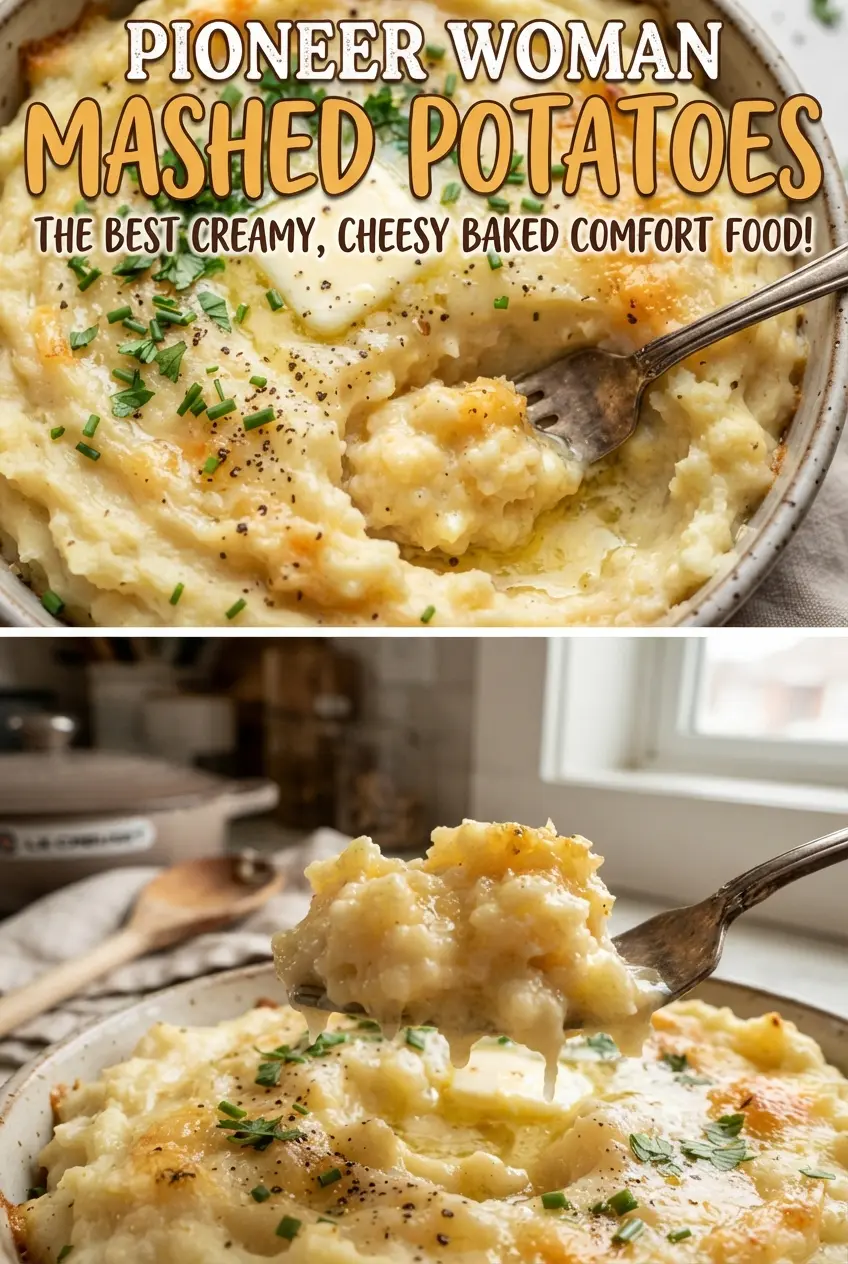
The potatoes came out creamy but still held their shape after baking, and the butter melted into those little golden pools on top just like I hoped.
Save these Pioneer Woman Mashed Potatoes for the buttery, creamy side dish with golden baked tops and zero gummy texture.
The Difference Between Fluffy Potatoes and Gluey Ones Starts Before the Mash
Mashed potatoes go wrong when they hold onto too much water or get worked too hard. Russets help because their starch breaks down into a light, fluffy mash, but that only works if they’re drained thoroughly and mashed while still hot. If the potatoes sit around after draining, the surface dries out before the dairy goes in, and the texture turns pasty instead of creamy.
The other thing that matters here is the order. Butter and cream cheese go in first so they melt into the potato structure, and the half-and-half loosens everything just enough to make the mash smooth without turning it soupy. If you use cold dairy, the mixture cools down too fast and you end up stirring longer than you should, which is how potatoes turn gummy.
What the Butter, Cream Cheese, and Half-and-Half Are Doing Here
- Russet potatoes — These are the right potato for a fluffy, bakery-style mash. Waxy potatoes stay too dense and can turn slick when beaten, so don’t swap those in unless you want a heavier texture.
- Cream cheese — This is what gives the potatoes their body and that faint tang. Neufchâtel works if you want a lighter version, but regular cream cheese gives the most stable, rich finish.
- Butter — Use unsalted butter so you can control the seasoning. Melted or very soft butter blends in faster and coats the potatoes evenly, which helps keep the mash from tasting flat.
- Half-and-half — This keeps the potatoes creamy without thinning them out as much as milk would. If that’s what you have, whole milk works in a pinch, but the potatoes won’t taste as lush.
- Seasoned salt — This does more than plain salt here because it gives the potatoes a rounder, slightly savory finish. If you skip it, the mash tastes cleaner but less complete.
Building the Creamy Bake Without Losing the Texture
Boiling Until the Centers Give Cleanly
Start the potatoes in well-salted water and cook them until a knife slides through with no resistance. If they’re undercooked, you’ll end up with tiny hard bits that show up after mashing, no matter how long you stir. Drain them well and let the steam escape for a minute or two; that little pause matters because extra surface water is what waters down the finished dish.
Mashing While the Potatoes Are Still Hot
Work the butter, cream cheese, and half-and-half into the potatoes while they’re still hot enough to melt everything smoothly. A hand masher gives you the best control here, because it breaks the potatoes down without overworking the starch. If you use a mixer, stop as soon as the potatoes look smooth; overmixing is the fastest way to get a paste-like texture.
Baking Until the Butter Melts Into the Top
Spread the mash into the buttered baking dish and dot the top with the remaining butter before it goes into the oven. You’re not trying to brown it; you’re heating it through and letting those butter pats pool into the surface. Pull it when the center is hot and the top looks glossy, not dry, because an overbaked dish loses the creamy edges that make it worth serving.
Ways to Adjust These Potatoes Without Ruining the Creaminess
Lighter But Still Rich
Swap the cream cheese for Neufchâtel and use whole milk in place of half-and-half. The potatoes will still be creamy, but the finish is a little less dense and a touch less tangy.
Garlic Mashed Potatoes
Simmer a few peeled garlic cloves with the potatoes, then mash them right in. The garlic turns sweet and mellow in the pot instead of sharp, which fits the creamy base without making the potatoes taste punchy.
Make-Ahead for a Crowd
Assemble the potatoes in the baking dish, cover them tightly, and refrigerate them up to 2 days ahead. Bring the dish toward room temperature before baking so the center heats evenly; otherwise the edges are hot before the middle catches up.
Dairy-Free Version
Use plant-based butter, an unsweetened oat or soy cream, and a dairy-free cream cheese that melts smoothly. The texture stays close to the original, though the flavor will be a little less tangy and less buttery.
Storage and Reheating
- Refrigerator: Store covered for up to 4 days. The texture firms up as it chills, which is normal.
- Freezer: They freeze well for up to 2 months if packed tightly. Thaw overnight in the refrigerator before reheating so the center doesn’t heat unevenly.
- Reheating: Cover and warm in a 325F oven until hot, then stir once before serving. If they look stiff, add a splash of half-and-half; dry reheating is the main reason leftover mashed potatoes turn crumbly.
Answers to the Questions Worth Asking
Pioneer Woman Mashed Potatoes
Ingredients
Equipment
Method
- Preheat the oven to 350F and butter a large baking dish so the potatoes won’t stick.
- Boil the cubed russet potatoes in salted water for 20 minutes, until fork-tender.
- Drain the potatoes well so the mash stays creamy instead of watery.
- Mash the potatoes with 1/2 cup butter, the softened cream cheese, and the half-and-half until creamy.
- Stir in the seasoned salt, salt, and black pepper until evenly distributed.
- Spread the mashed potatoes into the buttered baking dish and top with pats of the remaining butter.
- Bake for 20-25 minutes at 350F, until heated through and the butter melts into golden pools.