Golden roasted chicken pieces over deeply savory rice is the kind of casserole that earns a permanent spot in the rotation because every bite tastes like it came from the best part of Sunday dinner. The rice cooks right in the pan juices, so it ends up rich and fluffy instead of dry, and the chicken skin turns bronzed and crisp once the foil comes off. It’s old-fashioned comfort food, but it lands with real depth.
What makes this version work is the layering. The condensed soups build a creamy base without needing a separate sauce, and the onion soup mix seasons both the rice and the chicken as they bake together. Long-grain white rice is the right choice here because it holds its shape through the long cook; short-grain rice tends to go too soft in a dish like this.
Below, I’ve included the one step that keeps the rice from turning gummy, along with a few smart swaps if you need to adjust the pantry lineup. If you’ve had chicken-and-rice casseroles come out uneven or bland before, this one fixes both problems.
The rice came out fluffy and full of flavor, and the chicken skin on top got golden even after baking under foil for an hour. My husband went back for seconds before I’d even sat down.
Like this Pioneer Woman chicken rice bake? Save it for the nights when you want tender chicken, creamy rice, and one pan doing all the work.
The Rice Needs Enough Liquid to Bake, Not Steam
The most common mistake in a chicken and rice casserole is treating the rice like it’s cooking on the stovetop. It isn’t. In the oven, the rice needs enough liquid to absorb slowly while the dish stays tightly covered for the first stretch of baking. If the foil isn’t sealed well, the rice loses moisture before it has a chance to soften, and you end up with hard grains at the edges and mush in the center.
Here the soups and broth work together as the cooking liquid, and they need to be whisked evenly into the dish before the chicken goes on top. That gives the rice a seasoned bath from the start instead of leaving it to rely only on drippings from above. When the foil comes off near the end, the top dries just enough to let the chicken color and the rice finish without getting soupy.
What Each Pantry Ingredient Is Doing Here
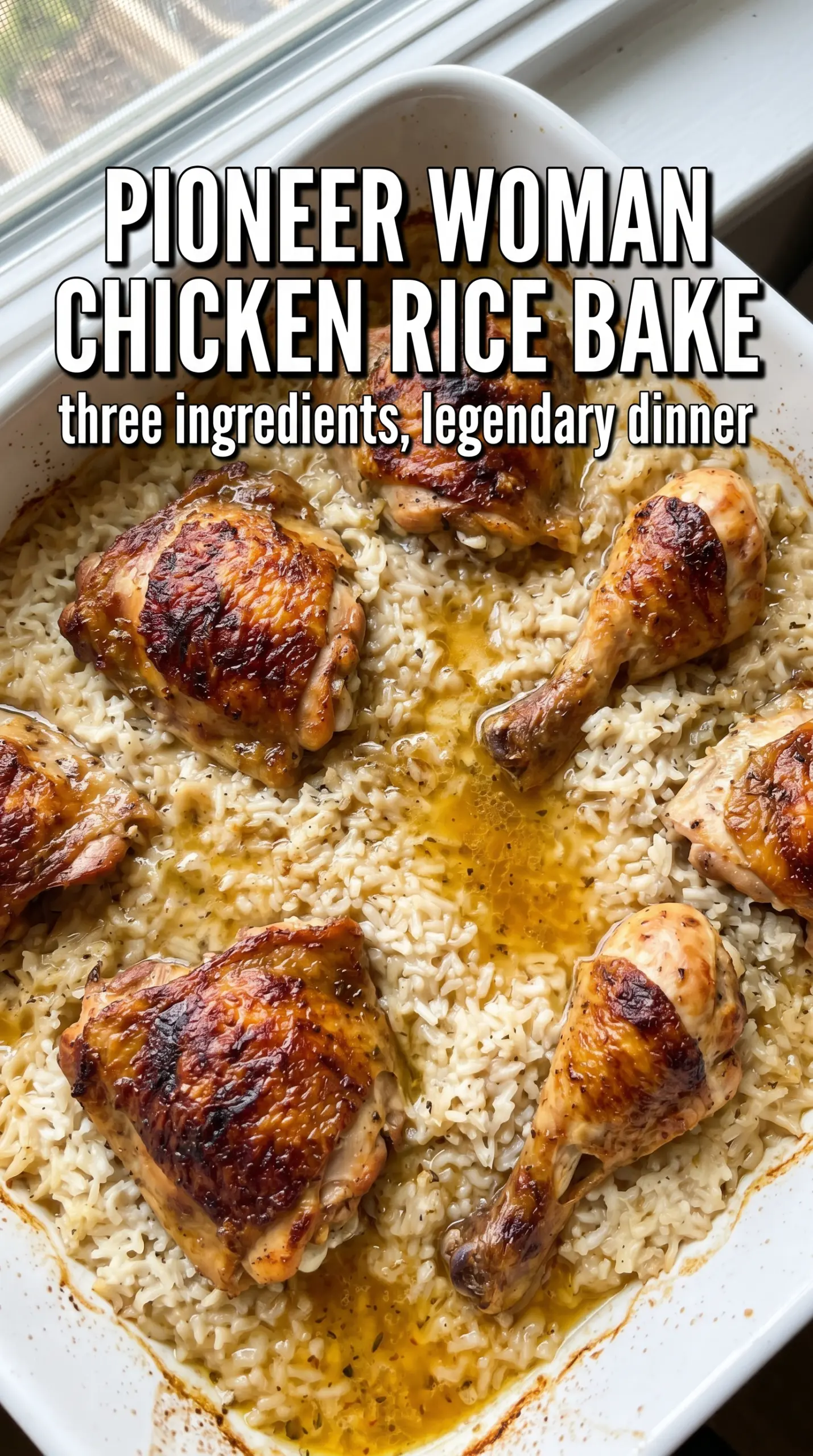
- Long-grain white rice — This is the structure of the dish. It stays separate and tender after a long bake, which is why it works here better than jasmine, brown rice, or instant rice. If you substitute brown rice, the timing changes enough that the chicken can overcook before the rice is done.
- All three condensed soups — They make the rice creamy and seasoned without requiring a separate sauce. Mushroom gives body, chicken brings savory depth, and celery adds a softer, aromatic note. You can swap one can for another if that’s what you have, but keeping all three gives the classic casserole flavor and the right texture.
- Onion soup mix — This is the shortcut seasoning that makes the whole pan taste baked, not bland. It’s salty, so season the chicken with a light hand first, then taste the finished rice before adding any extra salt at the table.
- Bone-in chicken pieces — The bones protect the meat during the long bake and help flavor the rice as the drippings run down. Thighs give you the juiciest result, but a mix of thighs, drumsticks, and breasts is fine as long as the pieces are similar in size so they finish together.
Getting the Chicken Brown and the Rice Tender at the Same Time
Mix the base until every grain is coated
Whisk the soups, rice, and liquid right in the baking dish until the mixture looks even and glossy. Dry patches in the rice turn into hard spots later, so scrape the corners and edges of the pan before you add the chicken. The soup mixture should look loose and creamy, not paste-thick; if it looks too stiff, the rice won’t have enough room to absorb liquid properly.
Season the chicken more than you think you need to
Bone-in chicken needs a full hand with salt, pepper, garlic powder, and paprika because the rice takes on a lot of that seasoning as it bakes. Place the pieces skin-side up so the skin can render and brown once the foil comes off. If the chicken is buried too deeply, the skin stays pale and the top of the dish never gets that roasted look.
Bake covered first, then uncover for color
The foil does the heavy lifting early on by trapping steam and softening the rice. After about an hour, the rice should be close to tender and the chicken should look mostly cooked through. Pull the foil off for the last stretch so the surface dries out, the skin crisps, and the liquid finishes absorbing instead of pooling at the bottom of the pan.
Make It with Thighs Only
Chicken thighs are the safest cut for this bake if you want maximum juiciness. They hold up to the long cooking time better than breasts and leave enough drippings to season the rice without drying out. Use pieces that are similar in size so they finish at the same time.
Dairy-Free Version
This dish is easiest to make dairy-free by checking the condensed soups and onion soup mix labels carefully, since some brands include milk ingredients. If you find dairy-free condensed soup, the texture stays the same and the casserole still tastes rich because the rice absorbs all the seasoned liquid as it bakes.
Using Leftover Rotisserie Chicken
You can use cooked chicken, but the timing changes. Bake the rice mixture until it’s nearly tender first, then add shredded or chopped chicken near the end just long enough to heat through. That keeps the meat from turning stringy while the rice finishes.
What to Do When You Want a Stronger Onion Flavor
If you like the onion soup mix flavor to stand out more, add a few thin slices of fresh onion under the chicken pieces. They soften in the oven and give the rice an extra layer of sweetness and depth without changing the structure of the casserole.
Storage and Reheating
- Refrigerator: Store leftovers in an airtight container for up to 4 days. The rice tightens a little as it chills, but it stays flavorful.
- Freezer: This freezes fairly well in individual portions. Cool it completely, wrap it tightly, and freeze for up to 2 months. The rice will be a touch softer after thawing, but it still works for a second meal.
- Reheating: Reheat covered in a 325°F oven with a splash of broth or water to loosen the rice. The biggest mistake is blasting it in the microwave without any moisture, which dries out the chicken and makes the rice chewy.
Answers to the Questions Worth Asking

Pioneer Woman Chicken Rice Bake
Ingredients
Equipment
Method
- Preheat oven to 350°F and grease a large 9x13 baking dish until lightly coated.
- Whisk together all three soups, rice, and water in the prepared dish until combined and evenly moistened.
- Sprinkle half the onion soup mix into the rice and stir to distribute throughout the pan.
- Season chicken pieces generously with salt, pepper, garlic powder, and paprika; nestle skin-side up into the rice so the pieces are partly embedded.
- Sprinkle remaining onion soup mix over the chicken for visible seasoning.
- Cover tightly with foil and bake 1 hour, until rice looks set around the edges and chicken begins cooking through (visual cue: bubbling beneath foil).
- Remove foil and bake 25-30 minutes more at 350°F until chicken is golden and the rice has absorbed all liquid (visual cue: no pooling in the corners; caramelized skin on top).