Bright pineapple salsa hits the table with a crisp, juicy bite and a little heat at the back of each scoop. The pineapple stays front and center, but the lime, jalapeño, and red onion keep it from tasting flat or candy-sweet. After a short chill, the juices pull together and the bowl turns glossy and spoonable, which is exactly what you want for chips, tacos, or grilled fish.
The trick is cutting the pineapple small enough that it mingles with the tomatoes instead of sitting in big chunks, then letting the salsa rest just long enough for the salt and lime to wake everything up. Fresh pineapple matters here because canned pineapple brings a softer texture and a more syrupy sweetness that throws off the balance. I also like using just a little honey, not enough to make it dessert-like, but enough to round out the sharp edges of the lime and onion.
Below, I’ve included the one resting step that makes the flavor click, plus a few smart swaps if you want to make it milder, hotter, or a little more tropical.
The 20-minute chill made all the difference. The pineapple stayed bright, the onions mellowed out, and it was perfect with grilled shrimp tacos.
Save this pineapple salsa for taco night, chip dipping, or the next time you want a sweet-spicy topping that comes together in minutes.
The Step That Keeps Pineapple Salsa Crisp Instead of Watery
Fresh fruit salsa can go soggy fast if the cut is too rough or the salt goes in too early. Pineapple and tomatoes both release juice, so the goal is to control that moisture, not fight it after the bowl has already turned loose and sloppy. Finely dicing the pineapple helps it hold the rest of the ingredients in place, and a short chill gives the lime and salt time to season the fruit without pulling everything apart.
If your salsa looks soupy, it usually means the pineapple was extra juicy or the tomatoes were overripe. That’s not a dealbreaker, but it does mean you’ll want a smaller dice and a quick drain of any excess liquid before serving. The final taste should be bright, balanced, and spoonable, with each bite holding its shape on a chip.
What Each Ingredient Is Actually Doing in This Bowl
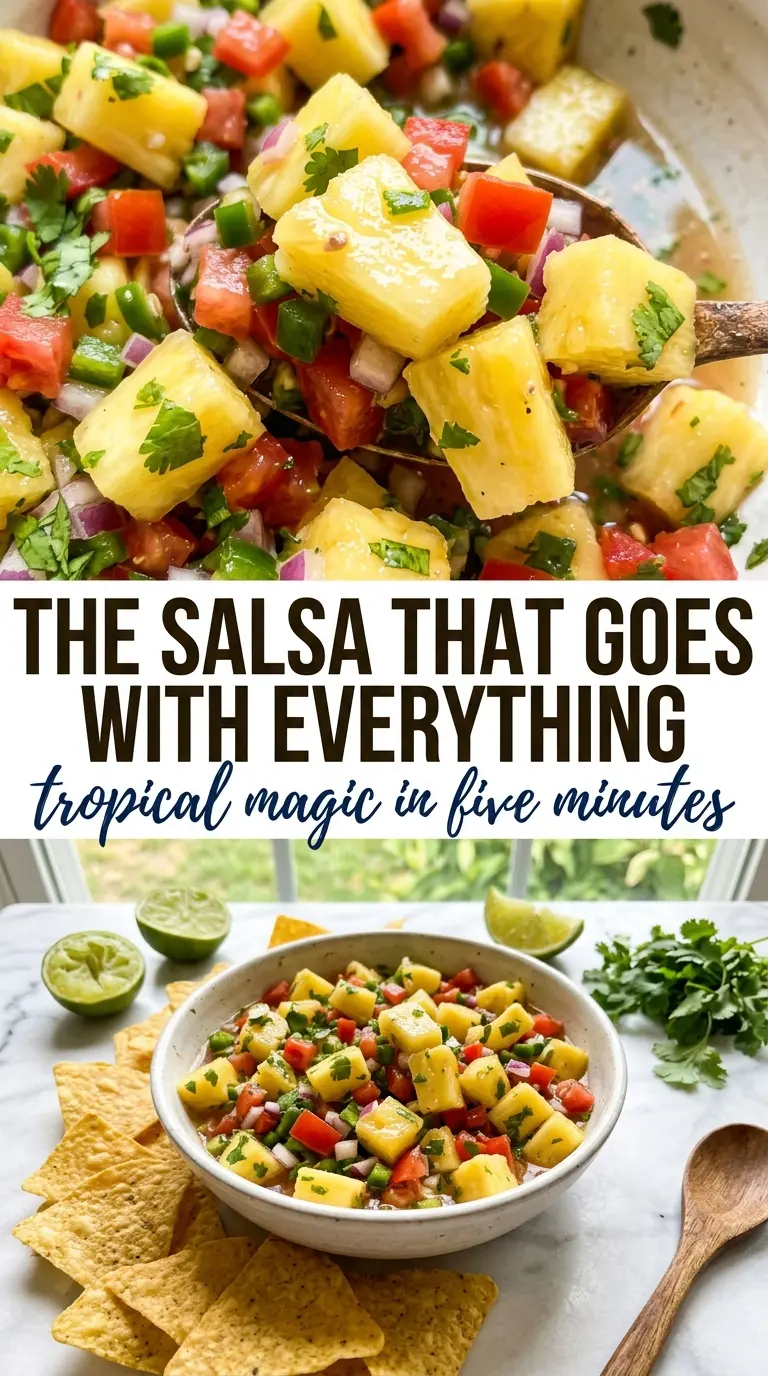
- Fresh pineapple — This is the backbone of the salsa, so use ripe fruit with a clean sweet smell and a firm bite. Frozen pineapple turns soft as it thaws and gives you a looser, wetter salsa.
- Cherry tomatoes — They add color, acidity, and a little savory depth. If your tomatoes are very juicy, scoop out some of the seeds before chopping so the salsa doesn’t pool at the bottom of the bowl.
- Red onion — Raw onion gives the salsa sharpness and crunch. If you want a gentler bite, rinse the diced onion under cold water and pat it dry before mixing it in.
- Jalapeños — Seed them for a moderate heat level, or leave a few seeds in if you want the salsa to lean spicier. The pepper’s freshness matters more than size here; older peppers can taste grassy instead of bright.
- Lime juice and zest — Juice brings the acid, but the zest carries the citrus aroma that makes the salsa taste fresh instead of just sour. Don’t skip the zest if you want the whole bowl to smell as good as it tastes.
- Honey — This smooths out the acidity and sharp onion bite without making the salsa syrupy. If your pineapple is very ripe, start with less and add only after tasting.
Building the Salsa So the Flavors Meld, Not Muddle
Cut the fruit small and even
Dice the pineapple finely enough that each chip can pick up several ingredients in one scoop. Big chunks taste good, but they slide off tortilla chips and make the salsa harder to balance. Keep the tomato pieces in the same general size so the bowl eats evenly instead of separating by ingredient.
Mix the acid and sweetness into the fruit
Stir in the lime juice, zest, and honey after the pineapple, tomatoes, onion, jalapeño, and cilantro are in the bowl. The liquid coats the ingredients more evenly that way, and the honey won’t cling in one sticky spot. If you add salt right at the beginning, the pineapple starts giving up juice too soon and the texture loosens before it’s had a chance to chill.
Chill long enough for the edges to soften
Let the salsa rest in the refrigerator for at least 20 minutes. That’s the window where the onion loses its raw bite and the lime settles into the fruit without dulling it. Stir once before serving and taste again; cold salsa often needs one last pinch of salt to wake it back up.
How to Adapt This for Milder Chips, Taco Night, or a Bigger Batch
Make it milder for kids or heat-sensitive guests
Use one seeded jalapeño or swap it for a small amount of finely diced green bell pepper. You’ll lose some heat and a little peppery edge, but the salsa keeps its crunch and freshness.
Make it hotter without throwing off the balance
Leave some jalapeño seeds in, or add a minced serrano for a sharper finish. Add heat gradually and taste after the chill, because cold salsa reads a little less spicy than it does at room temperature.
Make it dairy-free, gluten-free, and still party-friendly
This recipe already fits both naturally, as long as you serve it with gluten-free tortilla chips if needed. The salsa itself is all fresh produce, lime, and honey, so there’s nothing to change for those diets.
Turn it into a pineapple mango salsa
Replace up to half the pineapple with ripe mango for a softer, rounder sweetness. Mango makes the salsa silkier and less sharp, which works especially well next to grilled shrimp or blackened fish.
Storage and Reheating
- Refrigerator: Store covered for up to 2 days. The salsa gets juicier as it sits, so drain a little liquid before serving if needed.
- Freezer: I don’t recommend freezing it. The pineapple and tomatoes lose their crisp texture and turn mushy when thawed.
- Reheating: No reheating needed. Serve it cold, and give it a stir right before serving so the juices are redistributed evenly.
Answers to the Questions Worth Asking
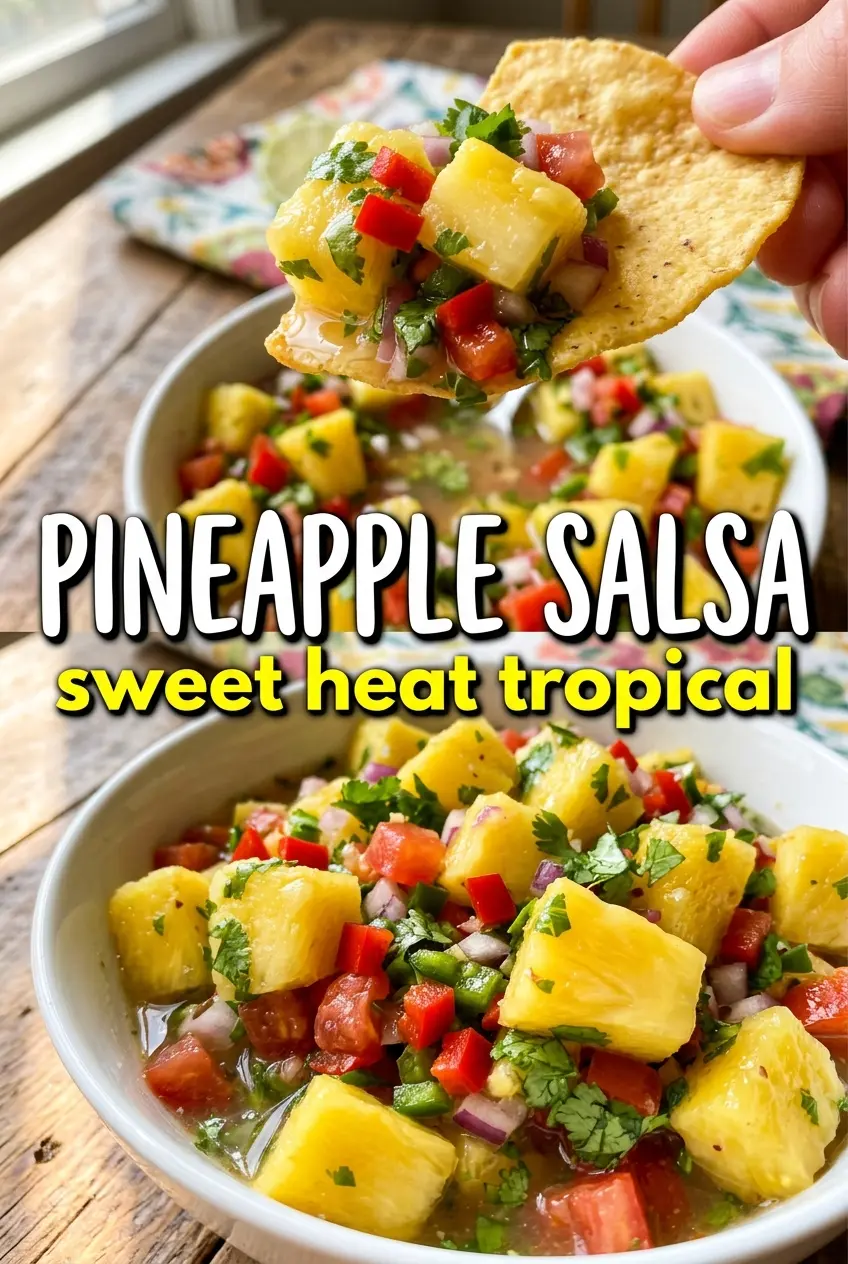
Pineapple Salsa
Ingredients
Method
- Add the finely diced fresh pineapple, quartered cherry tomatoes, finely diced red onion, minced jalapeños, and chopped fresh cilantro to a medium bowl.
- Stir in the fresh lime juice, lime zest, and honey until everything is evenly coated and glossy.
- Season with salt to taste, then taste and add more jalapeño for heat or more honey for sweetness as desired.
- Cover and refrigerate for at least 20 minutes so the flavors meld and the salsa tastes fully combined, with no extra cooking needed.
- Taste again and adjust seasoning before serving.
- Serve chilled with tortilla chips or alongside grilled fish, chicken, or tacos.