Parmesan baked potatoes turn into the kind of side dish people keep reaching for before the main plate is even settled. The cut side bakes into a crisp, lacy crust that tastes nutty and salty, while the inside stays soft and fluffy enough to mash with a fork. The best part is the contrast: one side crackly and golden, the other side tender and steaming.
This version works because the potatoes go cut-side down into melted butter, olive oil, and Parmesan from the start. That means the cheese has direct contact with the hot pan and the potato surface, so it browns into a crust instead of drying out on top. Russets are the right choice here because they have enough starch to go fluffy inside without falling apart before the crust sets.
Below, I’ve laid out the small details that matter most, from how to keep the cheese from burning before the potatoes are tender to what to do if you want to serve these with dinner later in the week.
The Parmesan crust came out crisp instead of greasy, and the potatoes lifted cleanly from the pan after just a few minutes. My husband kept sneaking the edge pieces because they were so crunchy.
Save these Parmesan baked potatoes for a crisp, golden side dish with a lacy cheese crust and fluffy centers.
The Trick to a Crust That Stays on the Potato
The biggest mistake with Parmesan potatoes is treating the cheese like a topping instead of the crust itself. If the potatoes go onto a dry pan, the cheese won’t fuse to the cut side; it will scorch in patches and leave you with bare spots when you lift them out. The butter and olive oil need to coat the pan first so the cheese melts into a thin, even layer before the potatoes settle on top.
Timing matters here too. You want the potatoes pressed firmly into the cheese mixture so the cut surface makes full contact, then you leave them alone until the edges are deep gold and the potatoes give easily when pierced. If you flip too early, the crust tears. If you bake too hot, the cheese darkens before the centers are tender.
What the Potatoes and Cheese Are Each Doing Here
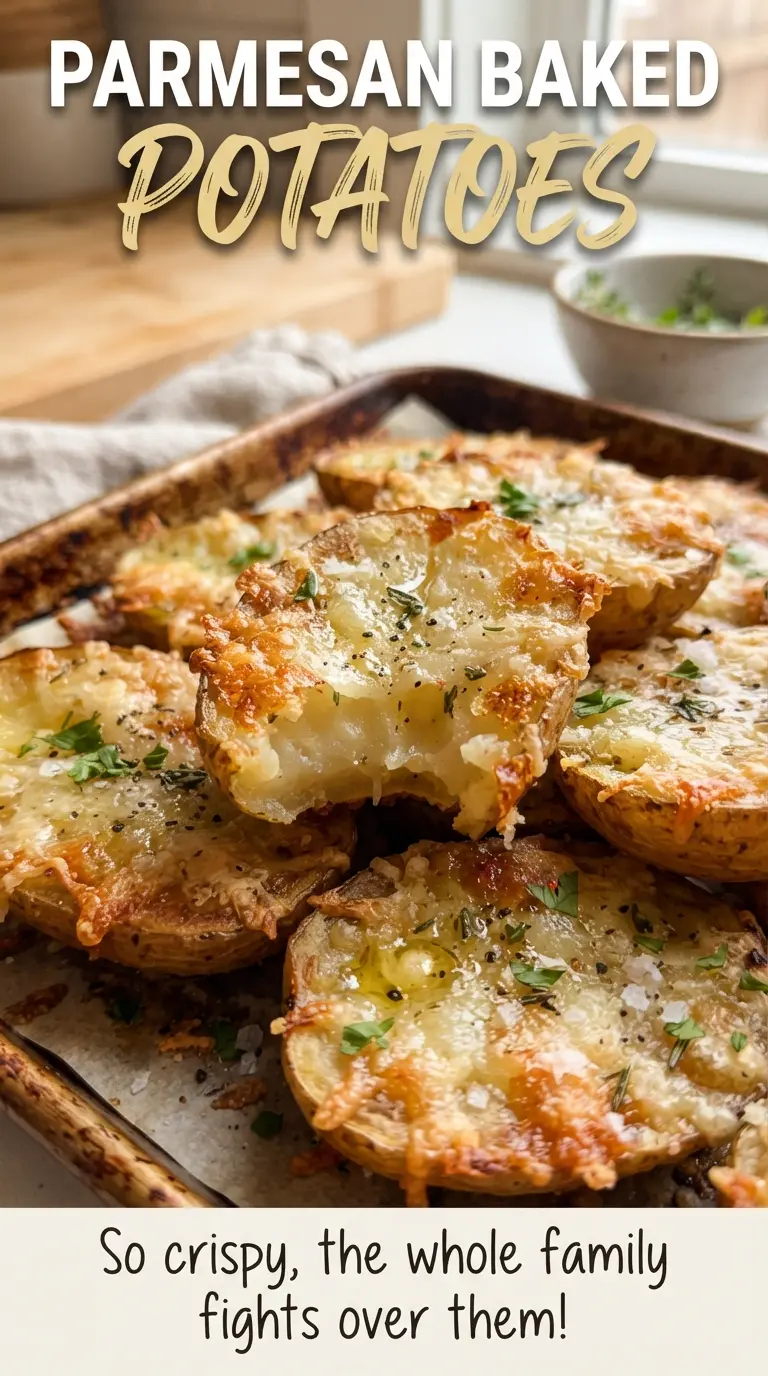
- Russet potatoes — These are the right potato for this method because their starch turns fluffy inside while the cut side firms up enough to hold the crust. Waxy potatoes stay denser and don’t give you the same contrast. If you only have Yukon Golds, they’ll work, but the centers will be creamier and the crust a little less dramatic.
- Parmesan — Grated Parmesan is what makes the lacy crust. Use the finer side of a grater or a finely grated packaged Parmesan if that’s what you have; larger shreds don’t melt evenly. Freshly grated cheese tastes better, but this is one place where convenience Parmesan still does the job if it’s not overly dry.
- Butter and olive oil — Butter brings flavor and helps the cheese brown, while olive oil keeps the butter from scorching. That combo gives you a crisp crust with less risk of bitter spots. Don’t skip the oil unless you’re using a clarified fat, or the butter alone can go too dark before the potatoes finish.
- Garlic powder and Italian seasoning — These season the crust itself, which matters because the potato insides stay fairly mild. Garlic powder is better than fresh garlic here because fresh garlic can burn in the hot pan. Italian seasoning adds enough herbiness to keep the potatoes from tasting flat.
Building the Pan So the Cheese Browns, Not Burns
Start with a slick, even layer in the pan
Pour the melted butter and olive oil straight into the baking pan and spread them around so the bottom is coated from corner to corner. Sprinkle the Parmesan mixture evenly over that layer, not in piles, or the cheese will brown unevenly. You want a thin carpet of seasoning and cheese that looks almost like wet sand across the pan.
Press the potatoes into the crust and leave them there
Set each potato half cut-side down and press gently so the whole surface makes contact with the cheese. Don’t move them once they’re in place. The crust forms best when it stays undisturbed, and every time you lift one to check it, you risk tearing the cheese before it has set.
Bake until the centers are tender and the edges are deeply golden
At 400°F, the potatoes usually need 40 to 45 minutes, but the real test is the knife point. It should slide through the center without resistance, and the cheese around the edges should be a deep gold with a few darker spots. If the tops are browning too fast, the oven is too hot or the pan is set too high; move the rack one level lower and keep baking until the potatoes are soft.
Let the crust set before lifting
Give the potatoes about 3 minutes out of the oven before you lift them with a spatula. That short rest helps the cheese tighten onto the potato instead of sticking to the pan. If you try to move them immediately, the crust can slip off in pieces, especially along the edges.
Three Ways to Make These Parmesan Potatoes Fit the Meal
Dairy-free version with a crisp edge
Use a dairy-free butter and a Parmesan-style vegan cheese that melts well. The crust won’t taste exactly the same, but you’ll still get a browned, savory bottom if the substitute actually melts instead of drying out. Keep the layer thin, because some vegan cheeses burn faster than real Parmesan.
Extra-herby potatoes for roasted chicken or fish
Add 1 teaspoon of chopped rosemary or thyme to the Parmesan mixture if you want a sharper herb note. Rosemary gives the potatoes a woodsy edge, while thyme stays softer and more delicate. Keep the amount modest so the crust still tastes like cheese first, herbs second.
Lighter olive oil version
Replace half the butter with more olive oil if you want a slightly cleaner, less rich finish. The crust will still brown well, but it won’t taste quite as buttery or taste as deeply caramelized. This is the version I’d use next to something already rich, like lasagna or creamy chicken.
Storage and Reheating
- Refrigerator: Store leftovers in an airtight container for up to 4 days. The crust will soften as it sits, but the flavor holds up well.
- Freezer: These freeze better than you might expect. Freeze on a sheet pan first, then transfer to a bag or container for up to 2 months.
- Reheating: Reheat in a 400°F oven or air fryer until the bottoms crisp back up. The mistake to avoid is microwaving them first, which steams the crust and makes the cheese rubbery.
Answers to the Questions Worth Asking
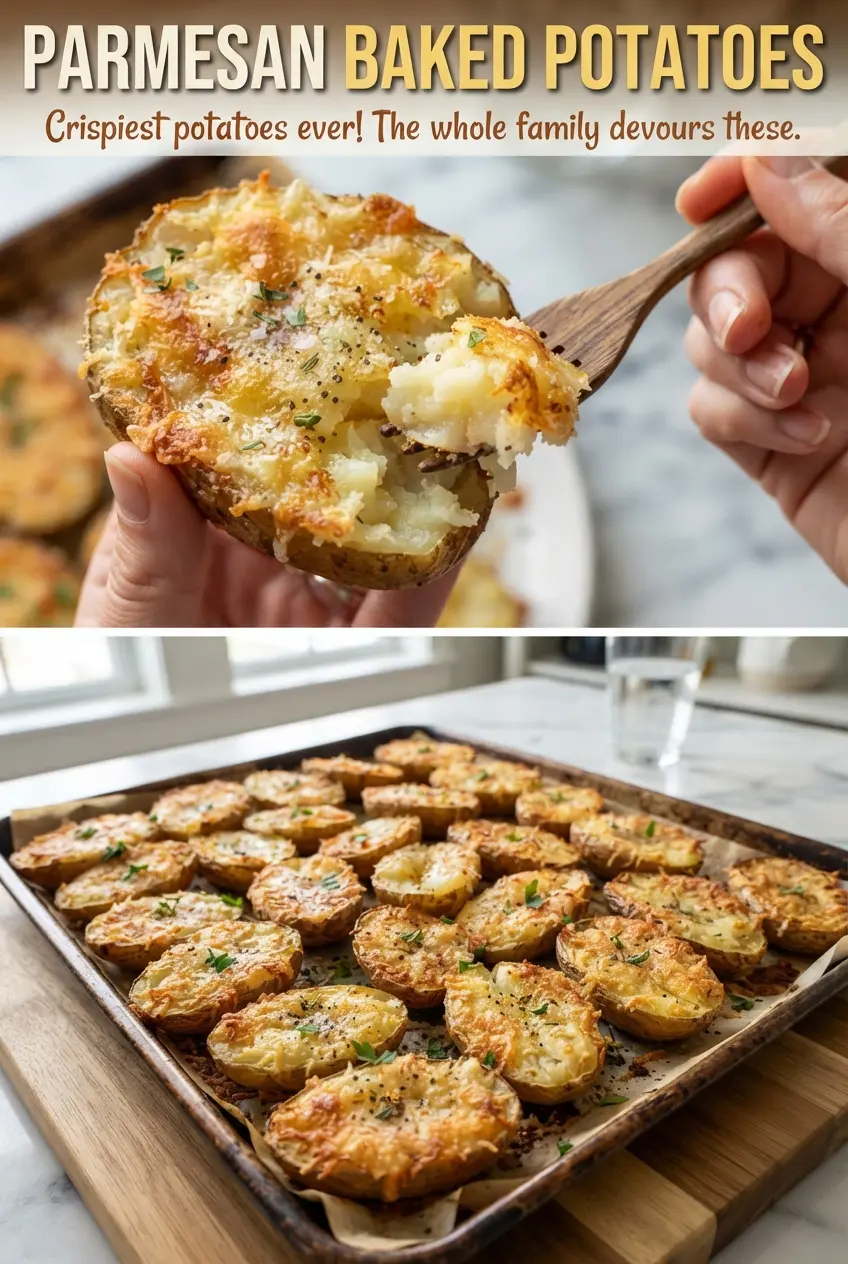
Parmesan Baked Potatoes
Ingredients
Equipment
Method
- Preheat the oven to 400°F. Pour the melted butter and olive oil onto a 9x13-inch baking pan.
- In a bowl, mix the grated Parmesan, garlic powder, Italian seasoning, salt, and black pepper until evenly combined. Sprinkle the mixture evenly over the butter.
- Press the potatoes cut-side down into the Parmesan mixture. Arrange them so cut sides stay in contact with the topping.
- Bake for 40-45 minutes at 400°F until the potatoes are tender and the cheese forms a golden crust. Look for deep golden color on the cut sides.
- Let the pan sit for 3 minutes. This helps the crust set before lifting.
- Lift the potatoes out with a spatula and place them crust side up. Keep them flat so the lacy crust stays intact.
- Sprinkle with chopped fresh parsley. Serve warm.