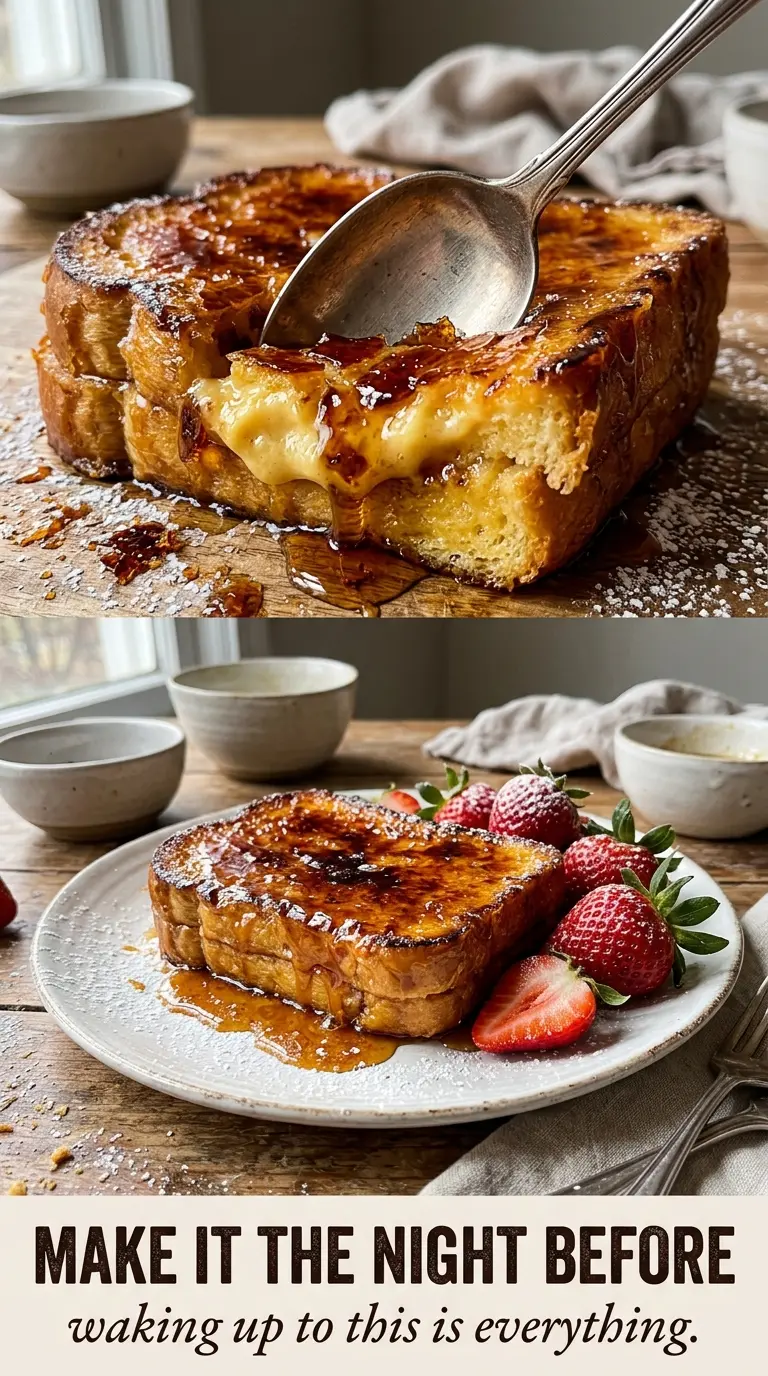
Thick brioche, a bubbling caramel base, and a custardy middle make this overnight crème brûlée French toast the kind of brunch dish people remember. The top bakes into a golden, lightly crisped surface while the sauce underneath turns into a glossy layer that runs down the sides when you flip it onto the plate. It eats like something from a café, but the work happens the night before when the bread gets time to soak up every bit of the custard.
The trick is balancing richness with structure. Brioche holds up better than soft sandwich bread, so it stays plush instead of collapsing into mush. Brown sugar and a little corn syrup create the caramel layer, which gives you that crème brûlée-style finish without needing a torch. The custard stays simple on purpose: eggs, cream, vanilla, and cinnamon are enough when the bread is good and the soak is long.
Below, you’ll find the one detail that keeps the caramel from sticking, why the bread arrangement matters, and how to handle leftovers without losing that gooey bottom layer.
The caramel set up underneath overnight and baked into the bread instead of pooling on the plate. We served it with berries and everyone asked if there was more.
Save this overnight crème brûlée French toast for a make-ahead brunch with caramel bubbling through every slice.
The Caramel Layer Has to Go in First, Not Last
The bottom layer is what makes this dish different from standard baked French toast. Butter, brown sugar, and corn syrup cook together into a smooth caramel that turns into a sauce as it bakes, but it also needs to stay fluid enough to soak lightly into the bread instead of hardening into candy. If the sugar looks grainy when you pour it into the dish, it needs another minute on the heat.
The other mistake is using bread that’s too soft or slicing it too thin. Brioche gives you enough richness for the custard to feel luxurious, and thick slices keep the texture intact after an overnight soak. Overlapping the slices helps the casserole hold together, but leave them in a single layer of bread, not stacked randomly, so the custard cooks evenly.
What the Brioche, Eggs, and Corn Syrup Are Doing Here
- Brioche bread — This is the backbone of the dish. Its buttery structure soaks up the custard without turning soggy, and thick slices help the top bake up with a tender center instead of a collapsed one. Challah works too if that’s what you have.
- Brown sugar — This gives the caramel its deeper, almost toffee-like note. Light brown sugar is fine, but dark brown sugar will push the result sweeter and a little more molasses-heavy.
- Corn syrup — This keeps the caramel smooth and helps it stay glossy after baking. It’s not there for sweetness alone. If you skip it, the sauce is more likely to crystallize, especially once it cools.
- Heavy cream — Cream makes the custard rich enough to taste like dessert for breakfast. Half-and-half will work in a pinch, but the filling won’t be as plush.
- Eggs — The eggs set the custard around the bread. Whisk them well enough that the mixture looks uniform before it goes over the brioche, or you’ll get streaks of cooked egg in the finished dish.
Building the Custard So It Soaks Overnight Without Turning Heavy
Cooking the Caramel Base
Melt the butter, brown sugar, and corn syrup together until the mixture looks smooth and glossy, with no visible sugar granules. Pour it straight into a greased 9×13 dish and spread it into the corners before it cools. If it sits too long in the pan, it starts to thicken and won’t spread as evenly under the bread.
Arranging the Bread
Lay the brioche over the caramel in an overlapping layer so every slice has some contact with the sauce underneath. Don’t leave big gaps, because those spaces can bake dry while the rest of the dish turns custardy. Press the bread down gently once it’s in place so it starts soaking from the bottom immediately.
Whisking and Pouring the Custard
Whisk the eggs, cream, sugar, vanilla, and cinnamon until the mixture looks fully blended and a little frothy on top. Pour it slowly over the bread, aiming for the gaps first so the custard reaches every layer. If a few spots look dry after a minute, spoon some of the liquid from the dish over them instead of adding more custard.
The Overnight Rest and Final Bake
Cover the dish and refrigerate it overnight so the bread fully hydrates. The next morning, bake it until the top is puffed and deeply golden, and the center looks set with just a slight give when you nudge the pan. If the top browns too fast before the middle is done, tent it loosely with foil for the last part of baking.
How to Adjust This for a Smaller Crowd, a Different Bread, or a Dairy-Free Table
Use challah instead of brioche
Challah gives you a slightly less rich result, but it still holds the custard well and bakes up with a soft, custardy center. It’s the best swap if brioche isn’t available and you still want a bread with enough structure to survive the overnight soak.
Make it dairy-free
Use a full-fat canned coconut milk or a rich dairy-free creamer in place of the heavy cream, and expect a faint coconut note in the finished dish. Swap the butter for a good plant-based butter that melts cleanly. The caramel still works, but it won’t taste quite as buttery or finish quite as glossy.
Scale it for a smaller pan
Cut everything in half for an 8×8 or similar baking dish, but keep the same soaking and baking logic. The dish will bake a little faster because it’s thinner, so start checking early for a golden top and a set center.
Storage and Reheating
- Refrigerator: Store leftovers covered for up to 3 days. The bread stays soft, but the caramel will thicken as it chills.
- Freezer: It freezes best in individual portions wrapped tightly, though the texture softens a bit after thawing. Freeze after baking, then thaw in the fridge before reheating.
- Reheating: Warm in a 325°F oven until heated through. Microwave reheating works for a single serving, but it softens the caramel and can make the bread rubbery if you go too far.
Answers to the Questions Worth Asking

Overnight Crème Brûlée French Toast
Ingredients
Equipment
Method
- Melt the butter with the brown sugar and corn syrup in a saucepan over medium heat until smooth and glossy, 3–5 minutes. Watch for the mixture to fully dissolve with no grainy bits as it thickens slightly.
- Grease a 9x13 dish and pour the caramel into the bottom. Spread it evenly so it forms a continuous layer.
- Arrange the brioche slices over the caramel in a single overlapping layer. Press down lightly so the bread sits snugly in the caramel.
- Whisk the eggs, heavy cream, sugar, vanilla extract, and cinnamon until uniform, about 30 seconds. Stop when the mixture is smooth and evenly colored.
- Pour the custard over the bread, ensuring every piece is soaked. Use a spoon to nudge bread so the top areas are moistened.
- Cover and refrigerate overnight (soaking). Chill until the bread looks saturated and the custard has set around the slices.
- Bake at 350°F for 40–45 minutes until the top is golden and puffed. Look for bubbling caramel edges that rise up through the bread.
- Let the casserole rest 5 minutes, then dust with powdered sugar and serve with maple syrup. Slice and flip each portion so the caramel sauce runs down the sides.