Glossy cranberry sauce with orange and amaretto has a brighter, deeper flavor than the usual holiday jar of red. The cranberries keep their pop, the orange lifts the whole pot, and the amaretto leaves a soft almond note that makes the sauce taste polished instead of one-note. It’s the kind of side that gets spooned next to everything on the plate, then quietly disappears before the meal is over.
The trick is cooking the cranberries just until most of them burst and the mixture turns thick and jammy. If you cook it down too far, it sets up stiff once chilled. The amaretto goes in off the heat so its flavor stays rounded and fragrant instead of boiling off, and the toasted almonds go on at the end so they keep their crunch.
Below, I’ve included the small details that matter most here: when to stop cooking, how to keep the sauce from turning syrupy, and what to swap if you want a version without alcohol.
The cranberries burst right on time and the amaretto came through without tasting boozy. I chilled it overnight and the texture was perfect the next day, not runny at all.
Save this orange amaretto cranberry sauce for the glossy, citrusy side dish that tastes even better after chilling.
The Part That Keeps Cranberry Sauce From Turning Jammy and Flat
Cranberry sauce goes wrong when it’s cooked until every berry has collapsed and the liquid has reduced too far. At that point, the sauce tastes cooked-out and the texture turns gluey after chilling. Here, the goal is a loose simmer that lets most of the berries pop while a few stay intact, because that mix gives you body without losing the fresh cranberry bite.
The other mistake is adding the amaretto too early. Alcohol carries aroma, and if it boils for the full cook time, the almond note fades into the background. Stirring it in at the end keeps the flavor clean and noticeable, which is what makes this version taste a little more layered than standard cranberry sauce.
What Each Ingredient Is Doing in This Sauce
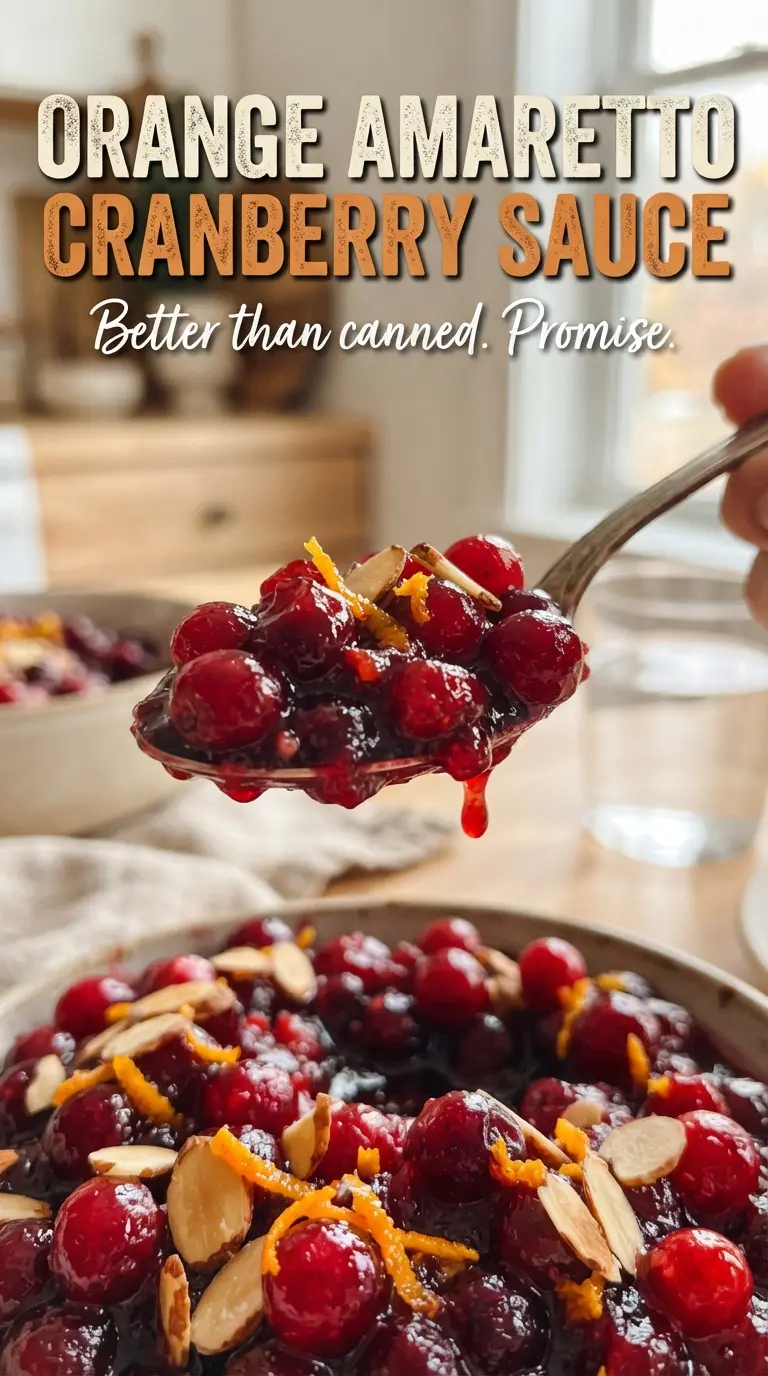
- Fresh cranberries — These are the backbone of the sauce. Frozen cranberries work too, and there’s no need to thaw them first; they’ll just need a minute or two longer before they burst.
- Orange juice — This gives the sauce sweetness and brightness at the same time. Fresh-squeezed tastes best here because the flavor is clean, but bottled juice is fine if that’s what you have.
- Amaretto — This is the signature flavor, with a warm almond note that plays well with cranberry and orange. If you need to skip the alcohol, add a splash of almond extract instead, but use it sparingly because it’s much stronger than amaretto.
- Orange zest — Zest gives you the fragrant top note that juice alone can’t deliver. Add it off the heat so it stays bright instead of turning dull and bitter.
- Toasted sliced almonds — These are for texture and a little nuttiness. Don’t stir them in until serving, or they’ll soften and lose the contrast that makes the garnish worth having.
Building the Sauce So the Berries Burst at the Right Time
Starting With the Syrup Base
Bring the sugar, orange juice, water, and salt to a real boil before the cranberries go in. That step dissolves the sugar fully and gives the berries a hot, sweet bath from the start, which helps them break down evenly instead of sitting in a grainy liquid. Once the mixture is boiling, keep the heat high enough to maintain steady bubbling but not so high that it splashes and evaporates too fast.
Cooking Until Thick but Still Spoonable
After the cranberries go in, the pot should sound lively and the berries will begin to split within a few minutes. Stir occasionally and watch for the moment when most of the berries have burst and the liquid looks slightly syrupy around the edges. Pull it sooner than you think you need to, because the sauce thickens a lot as it cools.
Finishing With Amaretto and Zest
Take the pan off the heat before stirring in the amaretto and orange zest. The sauce should smell fragrant right away, with the almond note sitting on top instead of disappearing into the pot. Let it cool in the pan for a few minutes, then transfer it to a bowl so it chills evenly and sets into that glossy, scoopable texture.
How to Adjust This for Different Tables and Diets
Alcohol-Free Cranberry Sauce
Skip the amaretto and stir in 1/2 teaspoon almond extract after cooking instead. That keeps the almond character in the sauce without the alcohol, but don’t overdo it or the flavor turns sharp fast.
Lower-Sugar Version
Reduce the sugar to 1/2 cup if you want a tarter sauce. The texture will still thicken, but it won’t be quite as glossy or jammy, so expect a sharper cranberry finish.
Bourbon Swap for a Different Finish
Replace the amaretto with an equal amount of bourbon if you want a deeper, oakier note. You’ll lose the almond aroma, but the sauce will taste warmer and less sweet, which works well alongside richer main dishes.
Storage and Reheating
- Refrigerator: Store covered for up to 5 days. It thickens as it chills, so it may look firmer than it did in the pot.
- Freezer: It freezes well for up to 2 months. Leave a little space at the top of the container because the sauce expands as it freezes.
- Reheating: Warm it gently on low heat or let it come to room temperature. High heat can make the sauce loosen too much and dull the fresh orange flavor.
Answers to the Questions Worth Asking
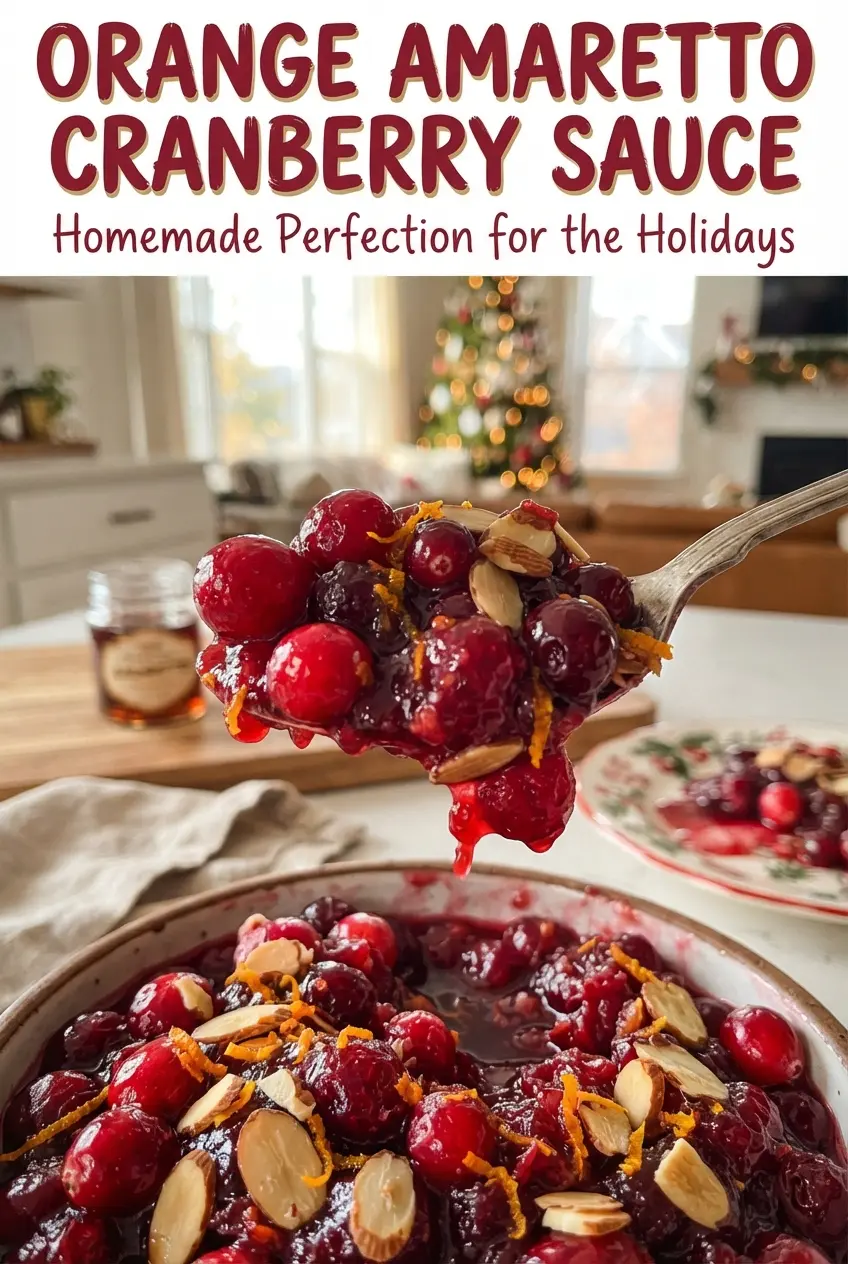
Orange Amaretto Cranberry Sauce
Ingredients
Equipment
Method
- Bring the sugar, orange juice, water, and salt to a boil in a saucepan over medium-high heat; you should see rapid bubbling around the edges.
- Add the fresh cranberries and simmer for 10-12 minutes until the berries burst and the sauce thickens, with a glossy look that coats the back of a spoon.
- Remove the saucepan from the heat and stir in the amaretto and orange zest; the mixture will look slightly looser at first then settle.
- Cool the sauce to room temperature, then chill until firm enough to spoon, about 20 minutes, before serving.
- Spoon the chilled cranberry sauce into a serving bowl and top with the toasted sliced almonds just before serving for crunch and visual contrast.