Old fashioned beef stew earns its place in the rotation because it turns a modest cut of beef into something spoon-tender, rich, and deeply savory. The broth gets thick enough to cling to the potatoes and carrots, and the pearl onions melt into the gravy instead of disappearing into it. Every bite tastes like it had time to develop.
The key is patience in two places: browning the beef hard enough to build a dark fond, then simmering it gently enough that the meat softens without shredding apart. Flour on the beef does double duty here. It helps with browning and gives the stew a little body later, which is why the broth ends up silky instead of thin.
Below, I’ll walk through the part that matters most — how to keep the stew flavorful instead of flat, and how to get the vegetables tender without letting the potatoes collapse.
The gravy thickened up beautifully and the beef was fall-apart tender after the full simmer. I loved that the potatoes held their shape and didn’t turn to mush.
Save this old fashioned beef stew for a slow simmered dinner with tender chuck, thick gravy, and potatoes that hold their shape.
The Browning Step That Gives This Stew Its Depth
The biggest mistake with beef stew is crowding the pan and rushing the meat. If the beef steams, you lose the dark crust that gives the broth its backbone. Brown it in batches and wait for a deep mahogany color before turning it; pale edges won’t carry the same flavor into the pot.
The flour on the beef helps the surface develop that crust, but it only works if the pieces have room. Once the onions go in, scrape up every browned bit from the bottom of the pot. That fond is where the stew gets its roasted, long-cooked taste without needing extra ingredients.
What Each Ingredient Is Doing in the Pot
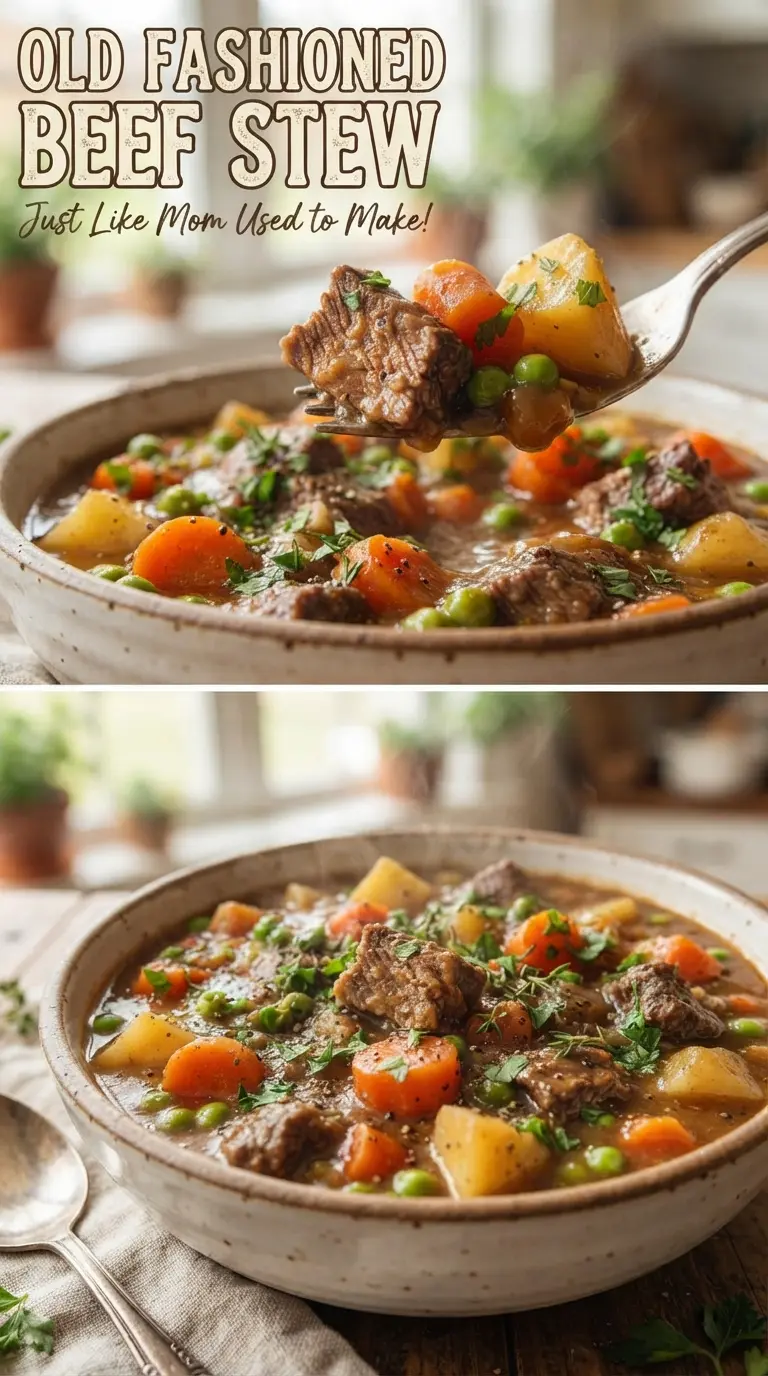
- Beef chuck — This is the cut that turns silky after a long simmer. Leaner beef won’t give you the same tender texture, and it can dry out before the stew is done.
- Flour — It coats the beef, helps with browning, and thickens the broth as the stew cooks. If you skip it, the stew will taste thinner and the gravy won’t cling the same way.
- Tomato paste — A small amount adds color and a savory edge that keeps the broth from tasting flat. Cook it for a minute with the onion and garlic so it loses the raw tomato taste.
- Worcestershire sauce and beef broth — These do the heavy lifting in the liquid base. Use a broth you’d actually drink on its own; weak broth makes weak stew.
- Russet potatoes, carrots, and pearl onions — These go in later so they keep their shape. The pearl onions add sweetness, while the potatoes thicken the stew naturally as they simmer.
Building the Stew So the Beef Turns Tender, Not Dry
Coating and Browning the Beef
Toss the beef with the flour, salt, and pepper until every piece is lightly dusted, then brown it in hot oil in batches. You want the outside to look dark and crusty, not gray, and there should be browned bits left behind in the pot after each batch. If the pan looks wet, it’s too crowded, and the beef won’t brown properly.
Cooking the Aromatics and Tomato Paste
Once the beef is out, add the onion and cook it until it softens and starts to pick up color from the pan. Stir in the garlic and tomato paste for about a minute; the paste should darken slightly and smell richer, not raw. This is the point where the stew base starts tasting like something that’s been cooking for hours.
Gentle Simmering and Vegetable Finish
After the broth, water, Worcestershire, sugar, paprika, thyme, and bay leaves go in, return the beef and keep the pot at a low simmer. A hard boil will tighten the meat and muddy the broth, so look for only a few lazy bubbles breaking the surface. Add the potatoes, carrots, and pearl onions near the end, then cook until the carrots are tender and the gravy has thickened around the spoon.
How to Make This Stew Fit Your Table
Gluten-Free Version
Swap the all-purpose flour for a gluten-free flour blend that’s meant for 1:1 baking and browning. The stew will still thicken, but the gravy may settle a little looser than the original, so let it simmer uncovered for a few extra minutes at the end if needed.
Root Vegetable Swap
Replace some or all of the potatoes with parsnips or turnips if you want a slightly earthier stew. Parsnips bring sweetness, while turnips stay firmer and give the broth a little more bite.
Using a Different Cut of Beef
Beef round will work in a pinch, but it won’t get as tender or flavorful as chuck. If that’s what you have, keep the simmer very gentle and watch it closely so it doesn’t turn stringy before the vegetables are done.
Make It Dairy-Free Without Losing Body
This stew is naturally dairy-free as written. The thickness comes from the flour and the potatoes, so you don’t need cream or butter to get a full, hearty texture.
Storage and Reheating
- Refrigerator: Store in an airtight container for up to 4 days. The broth thickens as it chills, and the potatoes soften a bit more overnight.
- Freezer: This freezes well for up to 3 months, though the potatoes may get a little softer after thawing. Cool it completely before freezing, and leave a little space in the container for expansion.
- Reheating: Reheat gently on the stove over low heat, stirring now and then until hot. Don’t boil it hard or the beef can tighten up and the potatoes can break apart.
Answers to the Questions Worth Asking
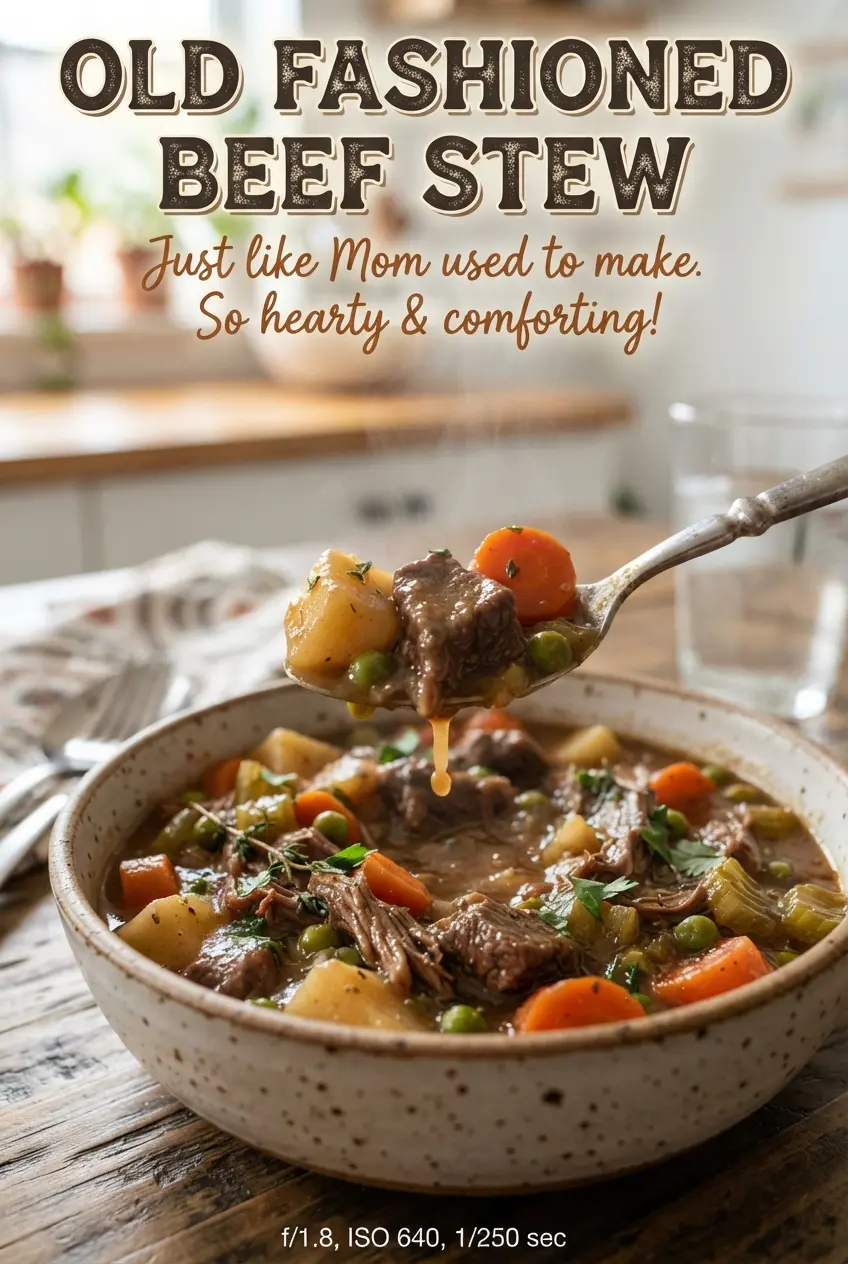
Old Fashioned Beef Stew
Ingredients
Equipment
Method
- Toss the beef with flour, salt, and black pepper until evenly coated, with the flour clinging to the cubes (visual cue: dry flour film on the meat). Heat the vegetable oil in a hot Dutch oven and brown the beef in batches until deep brown on all sides, then transfer to a plate (time and temperature: 3-5 minutes per batch at high heat; visual cue: browned crust forming as you turn).
- Cook the chopped onion in the Dutch oven for 5 minutes, stirring, until softened (visual cue: translucent edges). Stir in the minced garlic and tomato paste for 1 minute until fragrant (visual cue: tomato paste darkens slightly).
- Add beef broth, water, Worcestershire sauce, sugar, paprika, dried thyme, and bay leaves, then scrape up the browned bits from the bottom of the pot (visual cue: dark fond loosens into the liquid). Return the browned beef, cover, and simmer gently for 2 hours (time and temperature: 2 hours at a gentle simmer just below boiling; visual cue: small bubbles and steady simmering).
- Add the potato chunks, carrot pieces, and frozen pearl onions, then simmer for 45 minutes until the vegetables are tender (time and temperature: 45 minutes at a gentle simmer; visual cue: potatoes can be pierced with a fork). Continue simmering until the gravy thickens to a hearty coating consistency (visual cue: sauce clings to the back of a spoon).
- Remove the bay leaves and season the stew to taste with additional salt and black pepper if needed (visual cue: final seasoning balanced and flavors bright). Serve hot from the Dutch oven (visual cue: thick, steaming stew with big beef chunks).