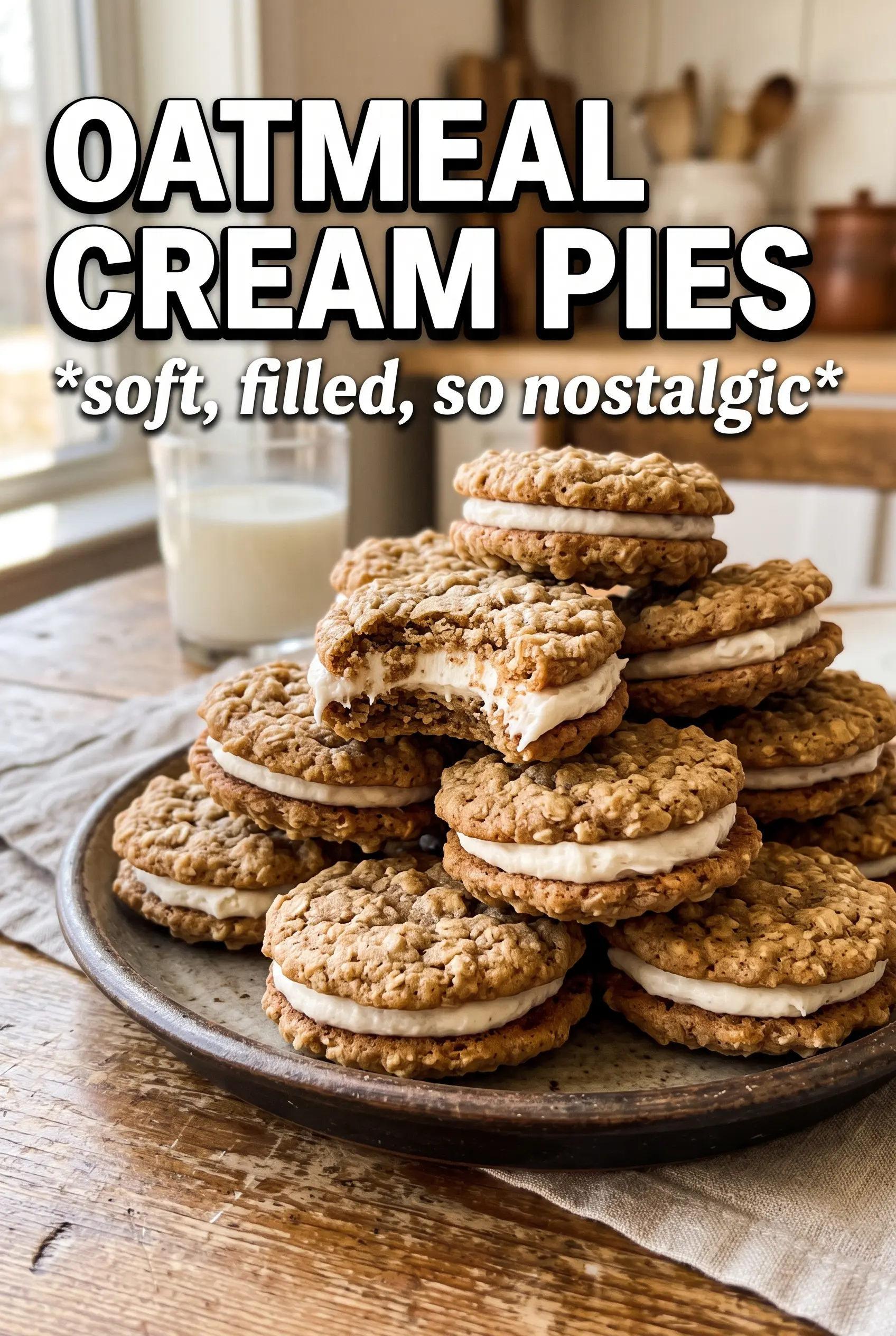
Soft oatmeal cookies with a thick marshmallow cream center hit that perfect middle ground between nostalgic and homemade. The cookies stay chewy at the edges and tender in the middle, and the filling gives you that sweet, fluffy bite you remember from the packaged version, only fresher and a lot more generous. These are the kind of sandwich cookies that disappear fast because one just doesn’t feel like enough.
What makes this version work is the balance of brown sugar, molasses, and oats. The molasses deepens the flavor without making the cookies taste like gingerbread, and the rolled oats keep the texture hearty instead of cakey. The filling uses both butter and cream cheese, which keeps it rich but not cloying, and a little cinnamon ties the whole cookie together without taking over.
If you’ve ever had oatmeal cream pies turn dry, flat, or greasy, the little details below will help. I’ve also included the one thing that makes the filling spread cleanly instead of slipping out the sides when you bite in.
The cookies stayed soft for days and the filling whipped up thick enough that it didn’t squish out when I stacked them. My kids said they tasted better than the store-bought ones.
Save these Oatmeal Cream Pies for when you want soft chewy cookies with a thick marshmallow cream filling and that classic homemade bakery-style look.
The Trick to Keeping Oatmeal Cream Pies Soft Instead of Crumbly
The biggest mistake with oatmeal cream pies is baking the cookies until they look fully done. They keep cooking on the hot pan, and if you wait for a deep golden color, they’ll dry out before they ever get sandwiched together. Pull them when the edges look set and the centers still look a little underdone in the middle.
Molasses helps with softness, but the real insurance is in the balance of oats and flour. Too much flour makes these cakey and dry. Too many oats, especially if they’re quick oats, make the cookies dense and loose. Old-fashioned rolled oats give you that recognizable chew without turning the dough into a rough, broken mess.
- Butter — Softened butter creams with the sugars and traps air, which gives the cookies a lighter bite. Melted butter makes them spread too much and bake up greasy.
- Brown sugar — This is what keeps the cookies moist and chewy. Pack it firmly so you get the right amount of moisture and caramel depth.
- Molasses — Just two tablespoons deepen the flavor and help the cookies stay tender. Don’t skip it unless you’re fine with a flatter, less nostalgic taste.
- Old-fashioned rolled oats — These hold their shape and give the cookies their signature texture. Quick oats will work in a pinch, but the cookies won’t have the same hearty chew.
What Each Ingredient Is Actually Doing in the Filling

The filling should taste fluffy and sweet with just enough tang to keep it from feeling one-note. Cream cheese is what keeps it from becoming straight sugar paste. It also helps the filling hold its shape when you press the cookies together. If you leave it too cold, it stays lumpy; if it gets too warm, it turns soft and hard to pipe or spread.
Marshmallow creme gives that classic center you expect from oatmeal cream pies, and powdered sugar thickens everything into a spreadable frosting. Vanilla rounds out the sweetness, and the tiny bit of cinnamon in the filling makes the whole cookie taste more finished. You can use an electric mixer for the filling, but it has to be beaten until completely smooth before you start assembling.
- Cream cheese — This adds body and a slight tang that cuts the sweetness. Full-fat cream cheese gives the best texture.
- Marshmallow creme — This is the ingredient that makes the filling taste like an oatmeal cream pie instead of a basic frosting.
- Powdered sugar — It sweetens and thickens the filling at the same time. Add it gradually so the mixer doesn’t throw it all over the counter.
- Vanilla and cinnamon — These sharpen the flavor and make the filling taste more intentional. The cinnamon should stay in the background.
Building the Cookies So They Stay Chewy After They Cool
Creaming the Butter and Sugar
Beat the butter with both sugars until it looks fluffy and a little paler in color. That step adds air, which helps the cookies bake up soft instead of dense. Once the eggs, molasses, and vanilla go in, scrape the bowl well so you don’t end up with streaks of butter at the bottom. If the mixture looks separated, keep beating for another minute before adding the dry ingredients.
Adding the Dry Ingredients and Oats
Stir in the flour, baking soda, cinnamon, nutmeg, and salt just until the flour disappears, then fold in the oats. Overmixing here tightens the dough and makes the cookies tough. The dough should look thick and scoopable, not wet or runny. If it seems sticky, chill it for 10 to 15 minutes before scooping so the cookies hold their shape better in the oven.
Baking to the Right Set
Scoop 2-tablespoon portions and space them far enough apart that they can spread a little. Bake at 350°F until the edges look set and the centers still look soft, usually 10 to 12 minutes. They’ll finish on the sheet pan as they cool, which is what keeps them chewy instead of dry. If they look fully baked in the oven, they’re probably already overdone.
Whipping and Sandwiching
Beat the filling until smooth, fluffy, and thick enough to hold a swirl. Let the cookies cool completely before filling them, or the cream will melt and slide out the sides. Pair the cookies by size so the sandwiches look neat, then spread a generous layer on the flat side of one cookie and press the second cookie on top. A little filling squish at the edge is good; a full collapse means the cookies were still warm.
Three Good Ways to Adapt These Oatmeal Cream Pies
Gluten-Free Version
Use a 1:1 gluten-free all-purpose flour blend in place of the regular flour. The cookies will still be chewy, but they may spread a touch less, so flatten the dough balls slightly before baking. Check that your oats are certified gluten-free if that matters for your kitchen.
Dairy-Free Filling
Swap the butter for a plant-based stick butter and use a dairy-free cream cheese that’s firm, not whipped. The filling will still be smooth, but it may be a little softer, so chill it for 10 minutes before assembling if needed. The cookie base still contains butter unless you also replace it there.
Less Sweet, More Spiced
Cut the powdered sugar in the filling by 1/2 cup and add an extra pinch of cinnamon. The filling will be a little softer and less marshmallow-sweet, which works nicely if you want the cookie flavor to come forward more. Don’t cut the sugar much farther or the filling won’t hold together well.
Storage and Reheating
- Refrigerator: Store in an airtight container for up to 5 days. The filling firms up in the fridge, but the cookies stay soft.
- Freezer: Freeze assembled pies for up to 2 months, wrapped well and placed in a freezer bag. Thaw in the refrigerator so the filling doesn’t sweat.
- Reheating: These are best eaten at room temperature. If they’ve been chilled, let them sit out for 15 to 20 minutes so the filling softens again. Microwaving makes the filling melt and can turn the cookies greasy.
Answers to the Questions Worth Asking
Oatmeal Cream Pies
Ingredients
Equipment
Method
- Beat the softened unsalted butter with both brown sugar and granulated sugar until fluffy, about 2 minutes, and the mixture looks lighter in color. Scrape the bowl as needed so everything creams evenly.
- Add the eggs, molasses, and vanilla, then beat until smooth and glossy with no streaks. Stop when combined to avoid overmixing.
- Fold in all-purpose flour, baking soda, cinnamon, nutmeg, salt, and old-fashioned rolled oats until a thick dough forms. Mix only until the dry ingredients disappear.
- Scoop 2-tablespoon ovals onto a sheet pan, leaving space between them. Shape each mound so it bakes into a cookie with a similar size.
- Bake at 350°F for 10-12 minutes, until the edges look set and the centers no longer look wet. Use a visual cue of lightly golden tops and firming around the perimeter.
- Cool the cookies completely before filling. Let them sit until they are fully room temperature so the marshmallow cream doesn’t melt.
- Beat the softened unsalted butter and cream cheese until smooth and lump-free. The texture should be silky before you add the rest.
- Beat in marshmallow creme, powdered sugar, vanilla, and cinnamon until very smooth and fluffy. Mix until the filling holds shape and looks thick and spreadable.
- Match cookies in pairs by size so the sandwiches look even. Keep the flattest sides facing up for cleaner filling coverage.
- Spread a generous layer of marshmallow cream filling onto one cookie of each pair, then press together with the matched cookie. Press gently until the filling reaches close to the edges without squeezing out too far.