Mulligan stew is the kind of pot that gets better as it goes, with tender beef, smoky sausage, and a broth that turns rich and satisfying without turning heavy. The vegetables hold their shape, the potatoes soak up the broth, and the beans give it that old-fashioned, feed-a-crowd heartiness that makes a second bowl feel inevitable.
What makes this version work is the layering. Browning the beef and sausage first builds a deep base before any liquid goes in, and the tomatoes, Worcestershire, and thyme add enough backbone to keep the stew from tasting flat. The potatoes, carrots, and cabbage go in later on purpose so they soften without collapsing, and the corn and kidney beans finish the pot with sweetness and body.
Below, I’ll walk through the little timing details that keep the stew from getting muddy or overcooked, plus a few smart swaps if you want to work with what’s in the pantry.
The beef came out tender, the cabbage stayed intact, and the broth had this smoky depth from the sausage that made the whole pot taste like it simmered all day.
Save this Mulligan Stew for the kind of night when you want a smoky, beefy one-pot dinner with tender vegetables and a broth that tastes like it’s been simmering for hours.
The Browning Stage That Gives Mulligan Stew Its Backbone
The biggest mistake in a stew like this is rushing past the browning. If the beef and sausage go into the pot and only steam, the broth ends up tasting thin no matter how long it simmers. You want actual color on the meat and sausage before the onions go in, because those browned bits dissolve into the broth and carry the whole pot.
Use a heavy pot and give the meat room. Crowding traps moisture, and moisture is the enemy of a good sear. Once the beef is browned, the sausage gets a little color too, and that mix of beef drippings and smoky sausage fat is what gives this stew its old-school depth.
What Each Ingredient Is Doing in the Pot
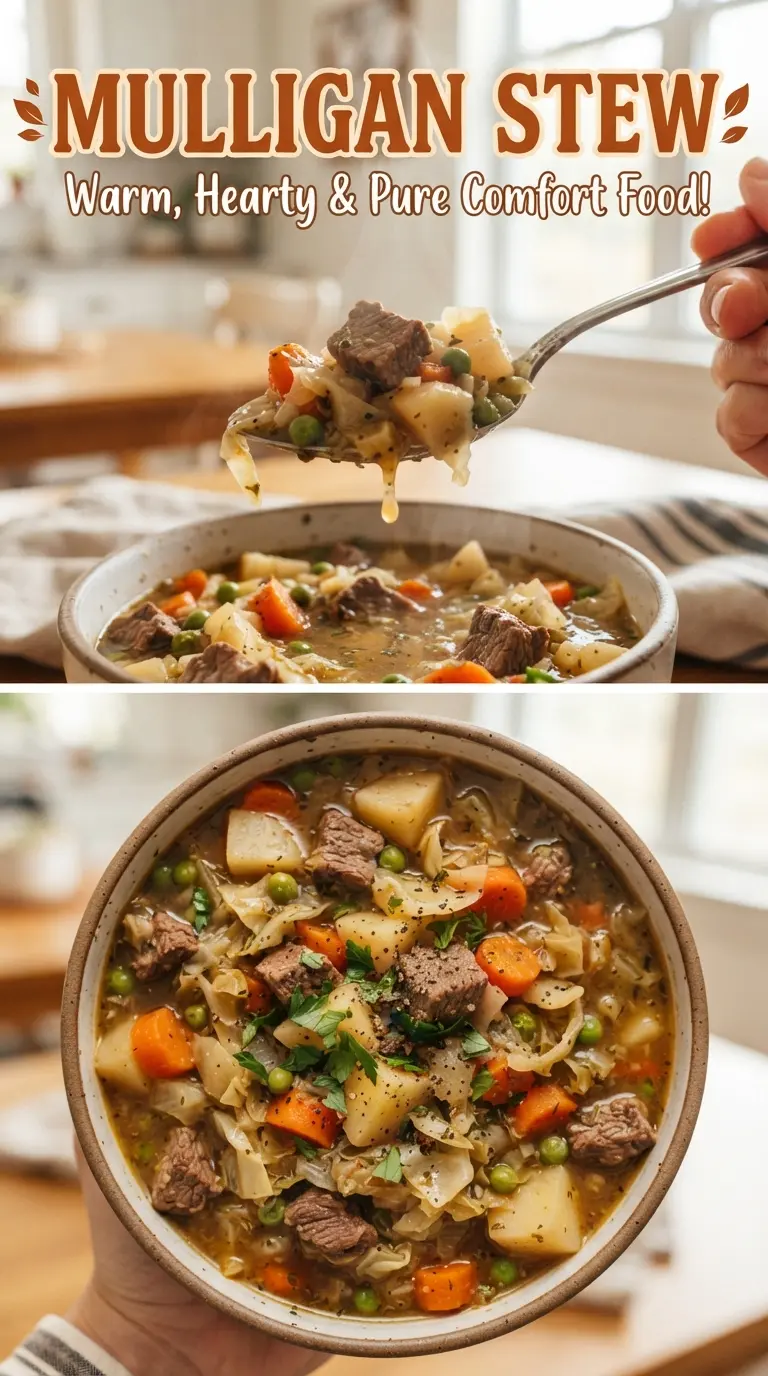
- Beef chuck — This is the right cut because it has enough connective tissue to turn tender during the long simmer. Lean stew meat can work, but it won’t give you the same rich texture. Cut it into even chunks so it finishes at the same time.
- Smoked sausage — This adds salt, smoke, and fat in one ingredient, which is why the stew tastes like more than just beef and vegetables. Kielbasa is the easiest swap and works well. If you use a milder sausage, the broth will need a little more help from Worcestershire and black pepper.
- Diced tomatoes and Worcestershire — The tomatoes brighten the broth, and Worcestershire brings the savory depth that keeps the stew from tasting one-note. Tomato paste can stand in if that’s what you have, but the flavor will be a little more concentrated and less brothy.
- Potatoes, carrots, and cabbage — These go in later because they cook at different speeds. Potatoes absorb the broth, carrots keep a little bite, and cabbage softens into the pot without disappearing. Add them too early and they’ll lose shape before the stew is done.
- Corn and kidney beans — These are the finishing ingredients, not the base. They add sweetness, body, and a little starch that thickens the broth naturally in the last few minutes. If you add them too soon, the beans break down and the corn gets dull.
Building the Stew So the Vegetables Stay Tasty, Not Mushy
Start with the meat and keep the heat honest
Brown the beef and sausage in the oil until the surfaces are deeply colored, then pull them out before you cook the onion. The pot should have browned bits stuck to the bottom, not black scorch marks. If the meat starts to steam in its own liquid, lower the heat and work in batches.
Cook the onion until it smells sweet, then move fast with the garlic
The onion needs a few minutes to soften and pick up some color from the fond in the pot. Garlic only needs about 30 seconds; any longer and it turns sharp and bitter, especially once the broth goes in. This is the point where the base starts to taste like stew instead of browned meat in liquid.
Let the long simmer do the heavy lifting
Once the broth, tomatoes, Worcestershire, thyme, beef, and sausage go back in, cover the pot and simmer until the beef is nearly tender. Keep the heat low enough that you see a gentle bubble, not a hard boil. A hard boil tightens the beef and clouds the broth instead of keeping it clear and rich.
Add the quick-cooking vegetables at the end
Potatoes, carrots, and cabbage need enough time to soften, but not enough time to break apart. The cabbage should be silky at the edges and still have shape, and the potatoes should give easily when pierced. Corn and beans go in for the final stretch so they stay intact and keep the stew from turning pasty.
How to Adapt This Stew for What’s in Your Kitchen
Make It Gluten-Free
This stew is naturally close to gluten-free as written, but you still need to check the sausage and Worcestershire sauce. Some brands sneak in wheat-based fillers or malt vinegar. Use certified gluten-free versions and the texture and flavor stay the same.
Swap the Sausage When You Want a Different Smoke Level
Kielbasa, andouille, or even a good smoked turkey sausage all work here. Andouille brings more heat, while smoked turkey keeps the stew lighter but still savory. If you use a very lean sausage, add a small drizzle of oil when browning so you don’t lose that flavor-building fat.
Make It Heartier with Extra Vegetables
Turnips, celery, or green beans can slide in with the potatoes and carrots without changing the character of the stew. Just keep the total vegetable volume reasonable so the broth still has room to taste meaty and balanced. If you pile in too much, the stew turns thick and the seasoning gets spread too thin.
Storage and Reheating
- Refrigerator: Keeps well for 4 days. The broth thickens as it sits, and the potatoes soften a little more overnight.
- Freezer: Freezes well for up to 3 months. Cool it completely first and leave a little space in the container for expansion. The potatoes may soften slightly after thawing, but the flavor holds up.
- Reheating: Warm it gently on the stove over medium-low heat until hot all the way through. Don’t boil it hard or the beef can tighten and the vegetables can fall apart.
Answers to the Questions Worth Asking
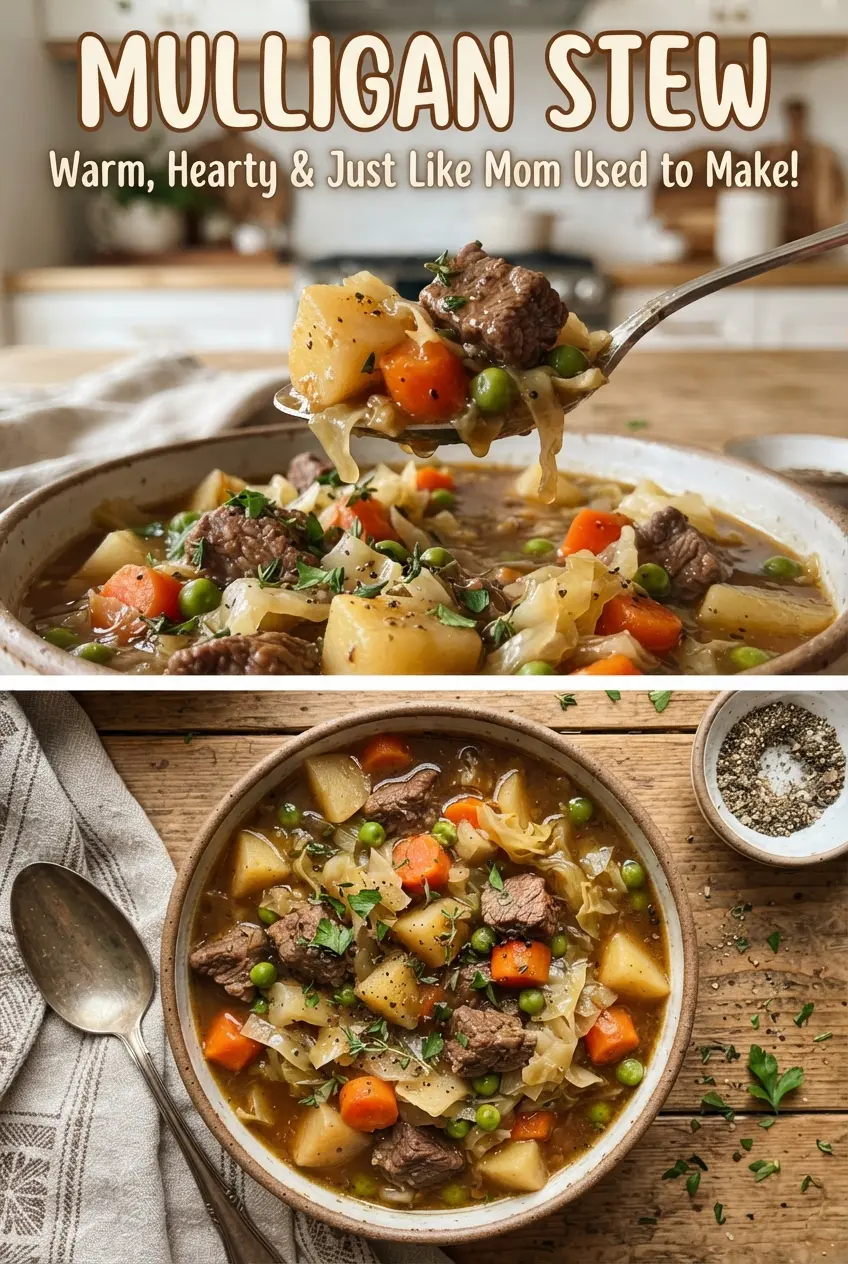
Mulligan Stew
Ingredients
Equipment
Method
- Season the beef chuck with salt and black pepper, then heat the vegetable oil in a Dutch oven over medium-high heat.
- Brown the beef in the oil, then add the sliced smoked sausage and cook just until browned; transfer everything to a plate and set aside.
- In the same Dutch oven, cook the diced onion for 4 minutes, stirring occasionally, until softened.
- Add the minced garlic and cook for 30 seconds, just until fragrant.
- Stir in the diced tomatoes, beef broth, Worcestershire sauce, and dried thyme, then add the reserved beef and sausage.
- Cover and bring the stew to a simmer, then simmer for 1 1/4 hours, keeping the surface at a gentle bubble.
- Add the cubed potatoes, sliced carrots, and chopped cabbage, then return to a simmer and cook for 30 minutes.
- Stir in the corn kernels and drained kidney beans, then simmer for 10 minutes more.
- Taste the stew and season to taste, then serve hot.