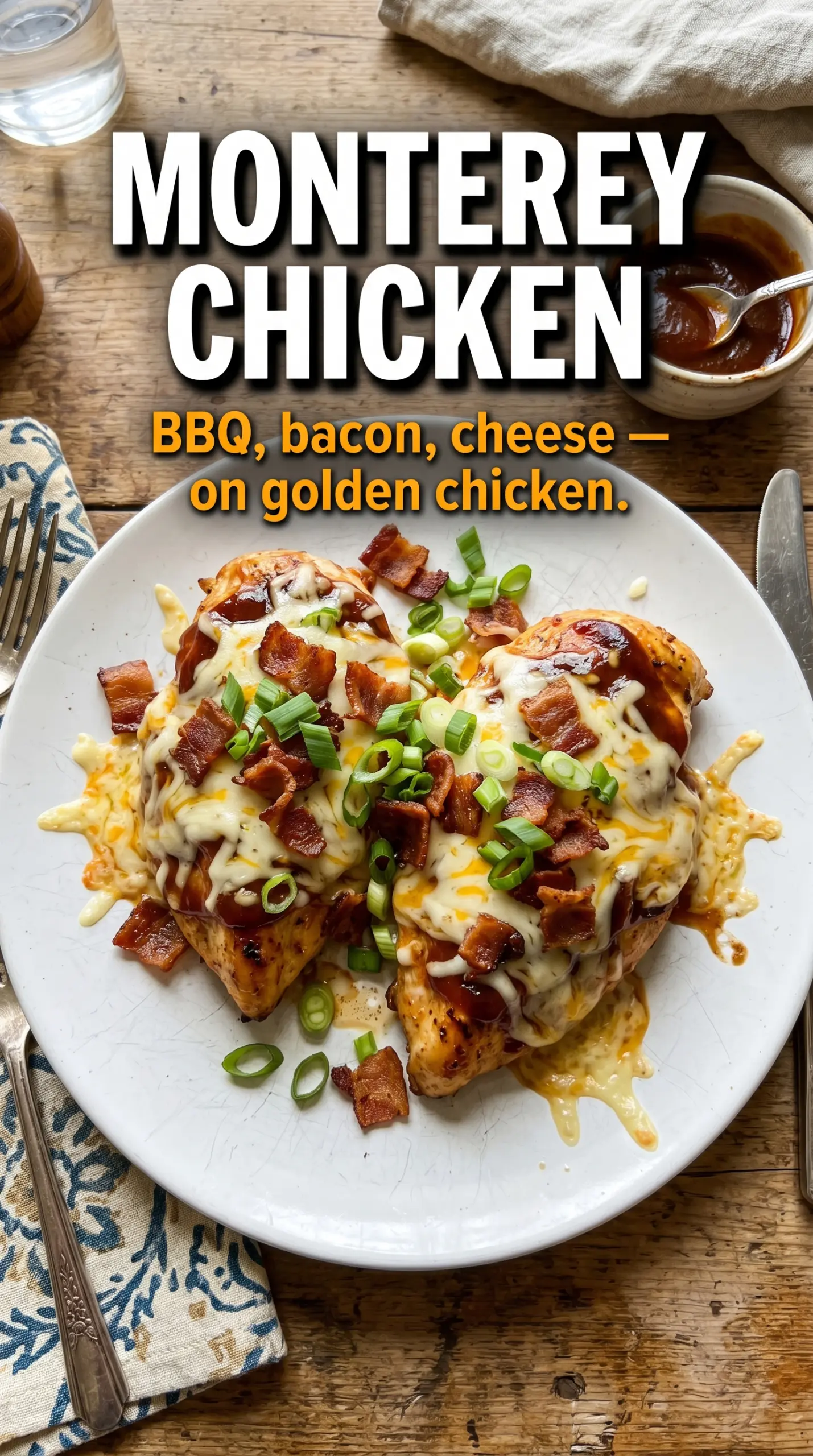
Golden grilled chicken breasts covered in tangy BBQ sauce, smoky bacon, sweet caramelized onions, and melted Monterey Jack cheese hit that sweet spot between weeknight practical and restaurant-style comfort food. The cheese melts into the sauce instead of sitting on top like a separate layer, and that makes every bite feel rich without turning heavy.
What makes this version work is the sequence. The chicken gets a fast seasoning and short sauce rest before it ever hits the pan, which helps the surface pick up color without drying out the meat. Then the skillet does double duty: first it builds a deep sear, then it carries the dish under the broiler so the cheese can melt fast while the chicken stays juicy. That little bit of caramelized onion under the bacon matters too; it keeps the toppings from tasting flat and gives the BBQ sauce something sweet to cling to.
Below, I’ve included the small details that keep the chicken from going pale or soggy, plus a few useful swaps if you want to work with what’s already in your kitchen.
The chicken stayed juicy, the BBQ sauce caramelized at the edges, and the cheese browned just enough under the broiler. I used thick-cut bacon and the whole thing tasted like a steakhouse dinner at home.
Save this Monterey Chicken for a cheesy BBQ dinner with crispy bacon and golden melted Monterey Jack.
The Trick to Keeping Monterey Chicken Juicy Under the Broiler
The biggest mistake with Monterey chicken is treating the broiler like it’s doing all the cooking. It isn’t. The chicken needs to be fully cooked in the skillet first, because the broiler is only there to melt the cheese and finish the toppings. If you skip the sear or pull the chicken too early, you end up with pale meat and toppings that never quite catch up.
The other place people go wrong is loading on the cheese too soon. Monterey Jack melts quickly, but if it sits under direct heat for too long, the bacon can dry out and the cheese can start to separate instead of turning silky and glossy. The sweet spot is a hot skillet, a quick broil, and a direct eye on the oven door the entire time.
- Boneless skinless chicken breasts — Pound them lightly if one end is much thicker than the other. Even thickness matters more than size here, because it keeps the chicken from drying out before the center reaches 165°F.
- BBQ sauce — Use a sauce you already like eating on its own. A thinner sauce will brush on more easily and caramelize better; a very thick sauce can turn sticky before it spreads evenly.
- Caramelized onions — These add sweetness that balances the smoky bacon and tangy sauce. If you’re short on time, you can sauté sliced onions until soft and lightly golden, but you’ll lose some of the deep sweetness that makes the dish taste finished.
- Monterey Jack cheese — This is the ingredient that gives the dish its signature pull. Pre-shredded cheese works, but freshly shredded melts smoother because it doesn’t have the anti-caking starch that can make the top look a little dusty.
- Bacon — Cook it crisp enough to hold its shape under the cheese. Soft bacon turns chewy once it’s warmed again, and that texture doesn’t work nearly as well here.
What Each Ingredient Is Actually Doing in This Chicken
- Chicken (the protein star) — Choose the right cut for the method. Pat dry before cooking so it browns instead of steams.
- Oil or butter (the browning medium) — This helps develop flavor through browning. High-heat oil is essential.
- Seasonings (salt, pepper, spices, herbs) — Don’t hold back. The chicken carries the entire flavor profile.
- Aromatics (garlic, onion, herbs) — Cook with fat to bloom the flavors. They become part of the dish foundation.
- Sauce or liquid (the moisture keeper) — This prevents the chicken from drying and adds flavor. Balance richness with acid.
- Acid (lemon, vinegar, wine, or tomato) — This brightens and prevents one-dimensional flavor.
- Optional vegetables — Layer by cooking time so everything finishes together. Hard vegetables first.
- Proper doneness (165°F internal temperature) — Use a thermometer. Overcooked chicken is dry; undercooked is unsafe.
Building the Layers So the Toppings Don’t Slide Off
Seasoning and Short Rest
Season the chicken with salt, pepper, garlic powder, and smoked paprika, then brush it with half the BBQ sauce and let it sit for about 10 minutes. That short rest gives the sauce time to cling, but not long enough to pull moisture out of the chicken the way a heavy marinade can. If the sauce looks like it’s beading up, that’s fine; it will tighten up when it hits the hot skillet.
Getting the Sear Right
Heat the olive oil in an oven-safe skillet over medium-high heat and lay the chicken in once the oil shimmers. You want a deep golden crust before you flip, which usually takes 4 to 5 minutes per side depending on thickness. If the pan is too cool, the chicken steams and the sauce slides around instead of browning into the meat.
Stacking the Toppings in Order
Once the chicken reaches 165°F, brush on the remaining BBQ sauce, then add the caramelized onions and bacon before the cheese. That order matters because the onions need to sit closest to the chicken, where they can stay soft and sweet, while the bacon stays on top and keeps its texture. Piling the cheese over everything helps lock the toppings in place.
Broiling for the Finish
Set the skillet under the broiler for 2 to 3 minutes and watch closely. The cheese should melt into glossy bubbles with a few golden spots, not turn dark or separate. If your broiler runs hot, move the pan down a rack or start checking at the 90-second mark, because this last step goes from perfect to burnt fast.
How to Make Monterey Chicken Fit Your Table
Make it gluten-free without changing the texture
The recipe is naturally gluten-free as long as your BBQ sauce is. Check the label for wheat-based thickeners or malt vinegar if that matters for your kitchen. The rest of the dish keeps the same crispy, saucy, cheesy balance.
Swap in chicken thighs for richer flavor
Boneless thighs work well if you want a juicier, slightly richer result. They usually need a few extra minutes in the skillet, but they’re more forgiving than breasts and stay tender even if they cook a minute past the mark.
Use turkey bacon or skip the bacon entirely
Turkey bacon gives you the smoky note with less fat, but it won’t crisp quite the same way under the cheese. If you leave it out, add an extra pinch of smoked paprika to the chicken so the dish still has that savory, grilled edge.
Storage and Reheating
- Refrigerator: Store leftovers for up to 3 days. The cheese will firm up and the bacon will soften a little, but the flavor holds well.
- Freezer: It freezes, but the cheese and onions change texture after thawing. If you do freeze it, wrap portions tightly and thaw in the fridge before reheating.
- Reheating: Reheat covered in a 325°F oven until warmed through, or use a skillet over low heat with a splash of water and a lid. The common mistake is blasting it in the microwave, which makes the chicken rubbery and the cheese greasy.
Questions I Get Asked About This Recipe

Monterey Chicken
Ingredients
Equipment
Method
- Season the chicken breasts with salt, pepper, garlic powder, and smoked paprika, then brush with half the BBQ sauce. Marinate for 10 minutes so the surface flavors cling to the meat.
- Heat olive oil in an oven-safe skillet over medium-high heat, then sear the chicken for 4-5 minutes per side until golden and cooked through to 165°F. The browned crust should develop before you add the toppings.
- Brush each breast with the remaining BBQ sauce. Add a layer of caramelized onions over the sauce to keep every bite tangy.
- Top each breast with 2 strips of cooked crispy bacon after the onions. Arrange it so the bacon sits under the cheese rather than sliding off.
- Pile shredded Monterey Jack cheese generously over each breast. Cover the surface completely so it melts into a thick, bubbly layer.
- Broil for 2-3 minutes until the cheese is fully melted, bubbly, and golden in spots. Watch closely so the cheese toasts without burning.
- Garnish the Monterey chicken with diced tomatoes and fresh chives. Serve immediately for the best melty-cheese texture.