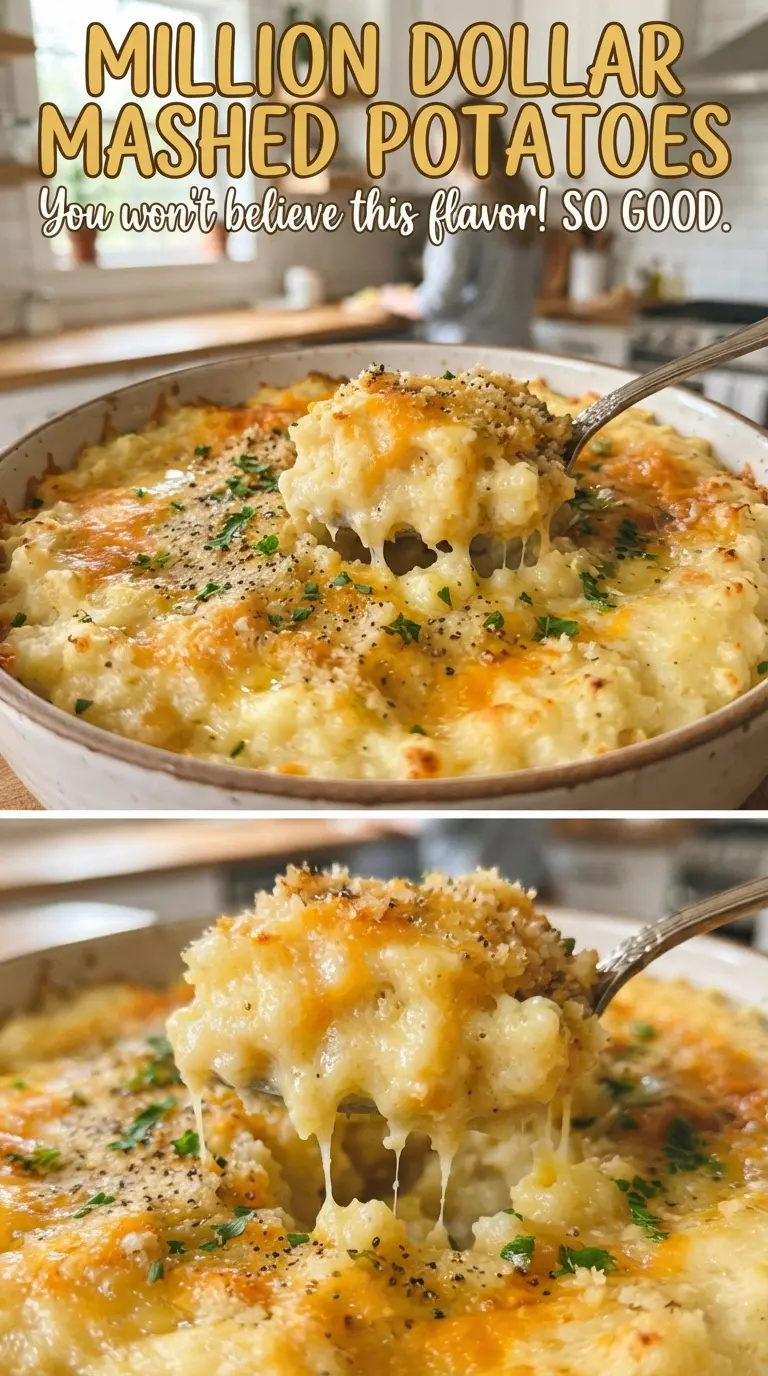
Million Dollar Mashed Potatoes are the kind of side dish that disappears fast and gets talked about long after dinner is over. They’re ultra creamy, rich without tasting heavy, and baked just long enough to pick up a buttery golden top while the center stays soft and velvety. Every spoonful lands with that mix of tang, salt, and comfort that makes plain mashed potatoes feel a little special.
The reason this version works is the combination of cream cheese, sour cream, and heavy cream. Cream cheese gives body, sour cream adds a little sharpness so the potatoes don’t taste flat, and heavy cream loosens everything into that plush texture you want in a baked mash. Yukon gold potatoes matter here too because they mash up naturally buttery and smooth, with less chance of turning gluey than starchy russets if you work them gently.
Below, I’ll walk through the part that makes or breaks this dish: how to keep the potatoes fluffy before they go into the oven, plus the small finishing details that give you a top that looks as good as it tastes.
The potatoes stayed fluffy but still baked up creamy, and the Parmesan on top gave them this salty crust that my family kept scooping straight from the dish.
Save these Million Dollar Mashed Potatoes for the buttery, creamy side dish with a golden baked top.
The Detail That Keeps These Potatoes Creamy Instead of Heavy
The mistake most people make with baked mashed potatoes is treating them like a casserole from the start. If you overwork the potatoes after they’re cooked, they turn paste-like fast, and once that happens no amount of butter can bring back the texture. The goal here is smooth and rich, not elastic.
The second trap is adding cold dairy to hot potatoes and expecting everything to blend evenly. Softened cream cheese and room-temperature sour cream spread through the potatoes much more cleanly, which means less stirring and less chance of a gummy finish. The oven does the last bit of work by melting everything together and setting that top layer without drying out the center.
- Yukon gold potatoes — These have enough starch to mash beautifully but stay naturally buttery. Russets will work in a pinch, but they dry out faster and need a gentler hand.
- Cream cheese — This is what gives the mash its dense, luxurious body. Use full-fat cream cheese for the best texture; low-fat versions can turn thin once baked.
- Sour cream — It adds tang and keeps the flavor from tasting flat. Greek yogurt can stand in, but the finish will be a little sharper and less rich.
- Parmesan — This brings salt and a savory edge that makes the potatoes taste more layered. Freshly grated Parmesan melts in more smoothly than the shelf-stable kind.
What Each Ingredient Is Actually Doing in This Recipe
- Primary ingredient (the star) — Quality matters most. Choose the best you can find.
- Cooking medium (oil, butter, or broth) — This carries flavors and prevents dryness.
- Seasonings (salt, pepper, spices, herbs) — Layer flavors so nothing overpowers. Build depth gradually.
- Aromatics (garlic, onion, herbs) — Cook with fat to bloom flavors. Become the foundation.
- Supporting ingredients — Complement the main ingredient without overpowering it.
- Sauce or liquid (if applicable) — Brings flavors together. Balance richness with acid.
- Acid (lemon, vinegar, wine, or other) — Brightens and prevents flat-tasting results.
- Final finish (garnish, glaze, or sauce) — Prevents one-dimensional taste and adds visual appeal.
Building the Mash So the Oven Can Finish the Job
Start With Well-Drained Potatoes
Boil the potatoes until they’re tender all the way through, then drain them well before mashing. Any extra water left in the pot ends up in the mash and makes the finished dish loose. Letting them sit in the hot colander for a minute or two helps steam escape, which keeps the texture thicker.
Mash While the Potatoes Are Still Hot
Hot potatoes absorb the butter, cream cheese, and sour cream more evenly than lukewarm ones. Mash until smooth, but stop as soon as the texture looks creamy and unified. If you keep going after that point, especially with an electric mixer, the starches can tighten up and turn gluey.
Fold in the Flavor Before Baking
Stir in the Parmesan, garlic powder, salt, and pepper after the dairy is fully mixed in. That order helps everything distribute evenly without requiring extra mixing. The mixture should look thick, soft, and spoonable before it goes into the baking dish; if it seems stiff, add a splash more cream rather than pressing harder with the masher.
Bake Until the Top Looks Rich and Set
Spread the potatoes in a buttered 9×13-inch dish, dot the top with the remaining butter, and bake until the surface looks lightly golden and the edges are bubbling. The top should hold its shape when touched with a spoon, but the center should still feel plush. Finish with chives after baking so they stay bright instead of dull and wilted.
How to Adapt These Mashed Potatoes for Different Tables
Make-Ahead Thanksgiving Side
Assemble the potatoes in the baking dish, cover tightly, and refrigerate for up to 2 days before baking. Let the dish sit on the counter while the oven preheats so it doesn’t go in ice-cold. The bake time may need an extra 10 to 15 minutes if the mixture is straight from the fridge.
Dairy-Free Version That Still Tastes Rich
Use dairy-free cream cheese, unsweetened plant-based sour cream, and a rich oat or cashew cream in place of the heavy cream. The texture will still be creamy, but the flavor will be a little less tangy and more neutral, so add an extra pinch of salt to wake it up. Skip the Parmesan or replace it with a dairy-free hard cheese if you use one that melts well.
Smaller Batch for a Weeknight Dinner
Cut everything in half and bake it in an 8×8-inch dish. The potatoes will heat through a little faster, so start checking them early for a golden top and bubbling edges. This version keeps the same texture and flavor, just in a more manageable amount.
Storage and Reheating
- Refrigerator: Store covered for up to 4 days. The potatoes will firm up as they chill, which is normal.
- Freezer: They freeze well for up to 1 month. Wrap tightly and thaw in the refrigerator before reheating for the smoothest texture.
- Reheating: Cover and warm in a 325F oven until heated through, adding a splash of cream if the potatoes seem dry. The biggest mistake is blasting them uncovered at high heat, which dries the edges before the center is hot.
Answers to the Questions Worth Asking

Million Dollar Mashed Potatoes
Ingredients
Equipment
Method
- Preheat the oven to 350F. Butter a 9x13-inch baking dish so the mashed potatoes release easily.
- Boil the potatoes in salted water for 15-18 minutes, until tender. Drain the potatoes completely so the mash turns creamy instead of watery.
- Mash the hot potatoes with the softened cream cheese, sour cream, 6 tablespoons butter, and the heavy cream until very smooth. Keep mashing until no lumps remain.
- Stir in the Parmesan, garlic powder, salt, and black pepper. Mix just until evenly distributed so the flavor stays balanced.
- Spread the mashed potatoes into the buttered baking dish and dot with the remaining butter. Make the top level for even browning.
- Bake at 350F for 25-30 minutes, until the top is golden. Look for a browned surface that still looks creamy at the edges.
- Sprinkle the baked mashed potatoes with the chopped chives. Serve while hot for the creamiest texture.