Mexican chorizo rice lands somewhere between a side dish and the thing everyone starts eating straight from the pot. The rice comes out fluffy and separate, but every grain carries those smoky, spiced chorizo drippings, softened onion, and a bright finish of lime. It’s the kind of pan of rice that quietly steals the plate from whatever it’s sitting next to.
The trick is building flavor in layers instead of dumping everything in at once. Browning the chorizo first gives you seasoned fat in the pot, and that’s where the onion and rice pick up depth before any broth goes in. Toasting the rice for a couple of minutes matters too, because it helps the grains stay distinct instead of turning soft and sticky. The tomatoes add body and color, but the lime and cilantro at the end keep the whole dish from tasting heavy.
Below, I’ll walk through the one-pan method, the ingredient swaps that still keep the texture right, and the small timing details that keep the rice from going mushy.
The rice stayed fluffy and the chorizo drippings gave it so much flavor. I loved that the lime went in at the end because it kept everything bright instead of greasy.
Pin this Mexican chorizo rice for a one-pan side with smoky drippings, fluffy grains, and a fresh lime finish.
Why Toasting the Rice in Chorizo Drippings Changes Everything
The biggest mistake with rice like this is rushing straight to the liquid. If the grains go into the pot before they’ve been coated in fat and lightly toasted, they soften unevenly and turn a little gummy at the edges. Toasting the rice in the onion, garlic, and chorizo drippings gives each grain a thin protective layer, which helps it stay fluffy after simmering.
Chorizo also brings its own salt, spice, and rendered fat, so the pot already has seasoning before the broth goes in. That means you don’t need aggressive extra spices to force the flavor. The tomatoes add moisture and a little tang, but they also count as part of the liquid balance, so the broth-to-rice ratio matters more here than in plain white rice.
What Each Ingredient Is Actually Doing in This Pot
- Chorizo — This is the backbone of the dish. It seasons the oil as it browns, which is why the rice tastes rich without needing a long list of extras. Fresh Mexican chorizo works best here; if you use a firmer cured style, the texture and fat release will be different and the rice won’t pick up the same depth.
- Long-grain white rice — Long-grain rice stays separate and fluffy, which is exactly what you want once it’s simmered with tomatoes and broth. Short-grain rice tends to clump and turn softer. If all you have is jasmine rice, it works well, but watch the simmer closely because it can soften a little faster.
- Chicken broth and canned tomatoes — These do the heavy lifting for both moisture and flavor. Use canned tomatoes with their juice; draining them would throw off the liquid balance and leave the rice under-seasoned. If your broth is salty, ease up on the added salt because chorizo already brings plenty.
- Lime and cilantro — Don’t treat these as garnish-only ingredients. They wake up the whole pot at the end and cut through the richness so the rice tastes finished instead of heavy. Add them after the heat is off so the cilantro stays fresh and the lime tastes bright, not flat.
Building the Rice Without Turning It Mushy
Brown the Chorizo First
Cook the chorizo over medium heat until it loses its raw look and starts to leave reddish-orange fat in the pot. You want some browning on the meat, not just a pale crumble. If it starts spattering a lot, lower the heat a touch; chorizo cooks fast and can go from flavorful to dry if you push it too hard. Remove it with a slotted spoon so the drippings stay behind for the rice.
Toast the Rice in the Fat
Add the onion, then garlic, then rice, and stir until the grains look glossy and a little translucent at the edges. This stage is what keeps the finished rice from collapsing into a soft mass. If the pan looks dry before the rice goes in, use the olive oil as written rather than adding broth early. Broth belongs later, once the grains have had time to toast.
Let the Simmer Stay Gentle
Once the broth, tomatoes, and seasonings go in, bring the pot to a simmer and then cover it right away. Keep the heat low enough that you hear a soft bubble, not a furious boil. If the liquid boils too hard, the bottom layer cooks before the top layer catches up, and you end up with uneven rice. After 15 minutes, check for tenderness only at the edge of the pot; if the surface still looks wet, give it a couple more minutes instead of lifting the lid every minute.
Finish with the Chorizo, Lime, and Resting Time
Stir the cooked chorizo back in after the rice is tender, then add cilantro and lime juice off the heat. That order keeps the herbs fresh and prevents the lime from tasting dull. The final 5-minute rest matters more than it looks like it should; it gives the steam time to settle and the grains time to firm up. If you serve it immediately, the rice can seem wetter than it really is.
Three Smart Ways to Adapt This Mexican Chorizo Rice
Make It Gluten-Free
This recipe is naturally gluten-free as long as your chorizo and broth are certified gluten-free. Some packaged broths and sausages use thickeners or fillers, so check the labels if you’re cooking for someone sensitive. The texture stays exactly the same because the rice does all the work here.
Turn It Into a Lighter Vegetarian Side
Swap the chorizo for browned mushrooms or plant-based chorizo and use vegetable broth instead of chicken broth. You’ll lose the pork fat and some of the deeper savoriness, so add a little extra olive oil and don’t skip the toasted rice step. The dish still tastes bold, but it leans more smoky and tomato-forward than rich.
Use Brown Rice When You Have More Time
Brown rice works, but it needs more liquid and a much longer simmer than white rice. Start with about 4 cups of broth and plan on closer to 40 to 45 minutes of covered cooking, checking for tenderness near the end. The flavor is still excellent, but the texture becomes nuttier and a little chewier.
Storage and Reheating
- Refrigerator: Store in an airtight container for up to 4 days. The rice firms up as it chills, which actually helps it reheat cleanly.
- Freezer: It freezes well for up to 2 months. Cool it completely, pack it in a flat freezer bag or container, and press out as much air as you can.
- Reheating: Reheat covered with a splash of water or broth over low heat on the stove, or in the microwave with a damp paper towel on top. The common mistake is blasting it dry, which leaves the rice hard on the outside and cold in the middle.
Questions I Get Asked About This Recipe
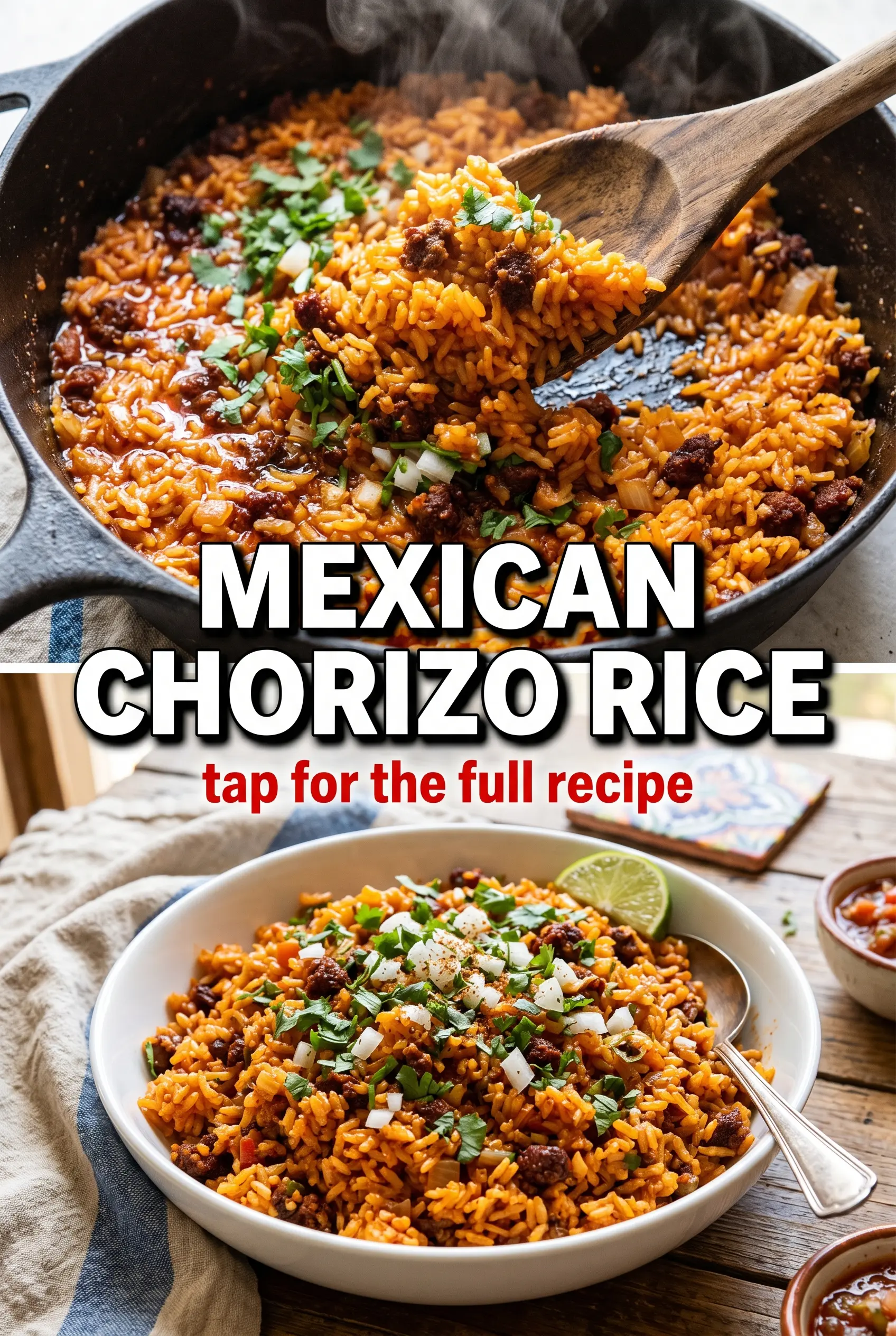
Mexican Chorizo Rice
Ingredients
Equipment
Method
- Crumble the chorizo into a large pot and cook over medium heat until browned, about 5 minutes, stirring occasionally until you see golden drippings.
- Remove the browned chorizo with a slotted spoon and leave the drippings in the pot so the rice cooks in the fat.
- Add the olive oil and sauté the diced onion over medium heat until softened, about 3 minutes, until it looks translucent.
- Add the minced garlic and cook for 1 minute, stirring constantly until fragrant and lightly golden.
- Stir in the long-grain white rice and toast for 2–3 minutes, stirring frequently, until the grains look slightly opaque.
- Pour in the chicken broth, diced tomatoes with their juice, cumin, chili powder, and salt, then stir to combine.
- Bring to a simmer, cover, and cook for 15 minutes until the liquid is absorbed and the rice is tender, with a gentle bubbling visible under the lid.
- Fluff the rice with a fork to aerate the grains, then stir in the cooked chorizo, chopped cilantro, and lime juice.
- Let the rice rest for 5 minutes before serving, covered or off-heat, so the texture settles into fluffy grains.