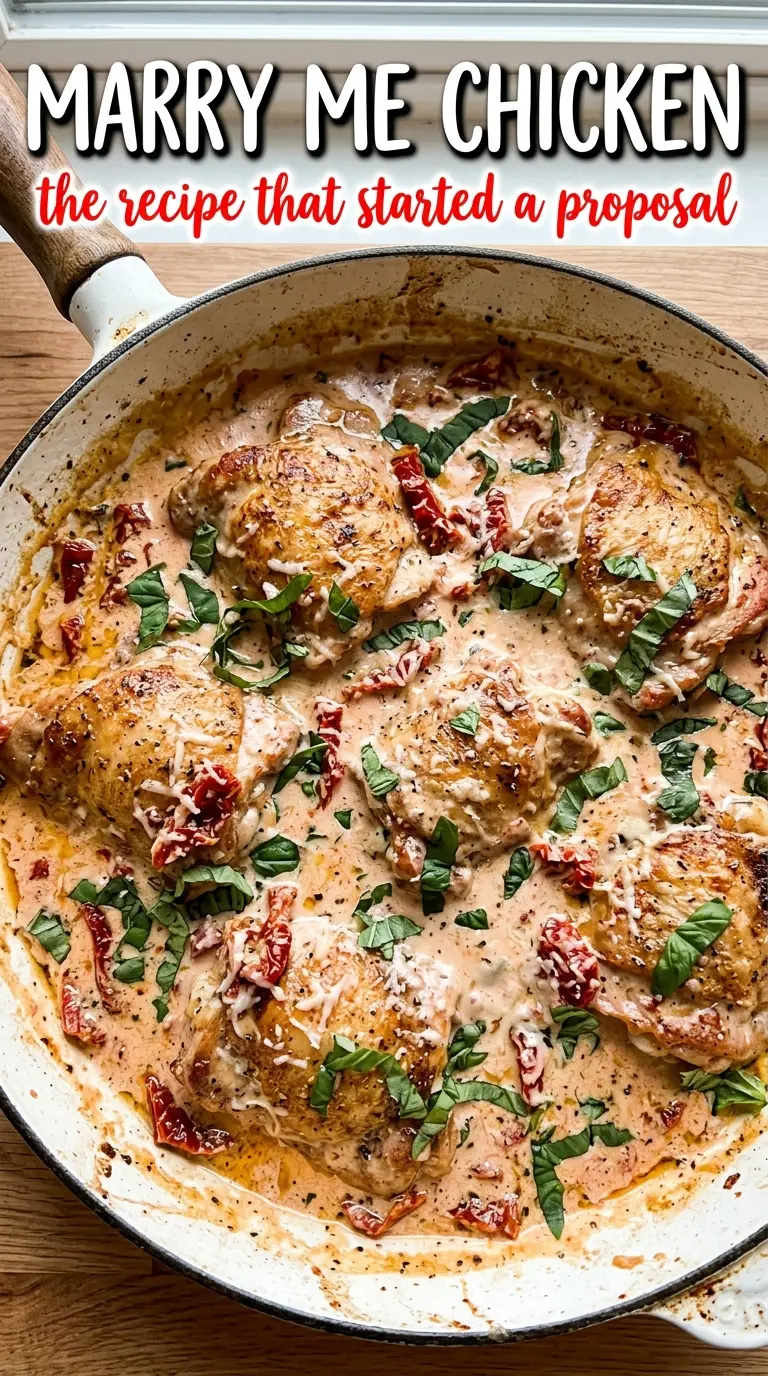
Golden seared chicken breasts in a sun-dried tomato cream sauce earn their reputation fast. The sauce turns glossy and spoon-coating, the chicken stays juicy, and the whole skillet smells like garlic, basil, and Parmesan the second the cream hits the pan. It’s the kind of dinner that looks restaurant-level without asking you to juggle five pans or babysit a fussy technique.
What makes this version work is balance. The sun-dried tomatoes bring concentrated sweetness and a little tang, the broth loosens the pan and grabs all the browned bits, and the cream gets just enough time to tighten without boiling itself into a broken mess. Searing the chicken first builds flavor in the pan, and finishing it in the sauce keeps every bite tender instead of dry.
Below, I’ve broken down the one pan detail that keeps the sauce smooth, the ingredient swap that matters most, and a few ways to adapt the dish without losing what makes it special. If you’ve had creamy chicken sauces split on you before, this version fixes the problem at the source.
The sauce thickened up beautifully and never broke, even after I put the chicken back in. My husband kept saying the sun-dried tomatoes made it taste like something from a good restaurant.
Like this Marry Me Chicken? Save it for the nights when you want a silky sun-dried tomato cream sauce and barely any cleanup.
The Pan Sauce Falls Apart When You Rush the Cream
Most creamy chicken recipes go wrong for one of two reasons: the pan is too hot when the dairy goes in, or the cook skips the deglazing step and loses the flavor stuck to the skillet. This dish depends on both the browned chicken bits and the low, steady simmer that turns cream, broth, and Parmesan into a sauce that clings instead of curdling.
Once the chicken is out of the pan, the garlic and sun-dried tomatoes only need about a minute to bloom in the residual oil. After that, the broth lifts the browned bits off the bottom, which keeps the sauce from tasting flat. When the cream and cheese go in, the heat should be gentle enough that the sauce bubbles lazily, not aggressively.
- Searing first builds the fond that gives the sauce its deep, savory base.
- Broth second deglazes the pan and keeps the sauce from tasting heavy.
- Low simmer is what thickens the cream without splitting it.
- Chicken resting in the sauce finishes the meat without drying it out.
What Each Ingredient Is Actually Doing in This Dish
- Chicken breasts stay elegant and slice cleanly, but they can dry out if they’re thick on one end. If yours are uneven, pound them lightly so they cook at the same pace.
- Sun-dried tomatoes in oil matter here because they bring both concentrated tomato flavor and some of the oil that helps the sauce taste rounder. Dry-packed tomatoes work in a pinch, but they need a quick soak in hot water and a little extra olive oil.
- Heavy cream is the part that gives you that lush, restaurant-style finish. Half-and-half can work, but the sauce will be thinner and more likely to separate if it boils.
- Parmesan should be grated finely so it melts into the sauce instead of turning grainy. Pre-shredded cheese often has anti-caking agents that make the sauce less smooth.
- Chicken broth loosens the pan juices without dulling the flavor. Water won’t give you the same depth.
- Basil isn’t just garnish here. It lifts the richness at the end and makes the whole skillet taste fresher.
Getting the Sauce Thick, Glossy, and Spoonable
Seasoning and Searing the Chicken
Season the chicken generously before it hits the pan. The surface should look lightly coated, not crusted with spices, and the skillet needs to be hot enough that the chicken sizzles the second it lands. Give it time to develop a deep golden crust before turning it; if it sticks hard, it’s not ready yet. Pull it off when the center reaches 165°F, then let it sit while you build the sauce.
Waking Up the Garlic and Tomatoes
Use the same pan and don’t wipe it clean. The browned bits left behind are the backbone of the sauce. Garlic only needs a short cook here, just until fragrant, because burned garlic will turn bitter fast. The sun-dried tomatoes soften in that oil and start releasing their concentrated sweetness right away.
Building the Cream Sauce
Pour in the broth and scrape the bottom of the skillet until the pan looks clean. That’s where the flavor lives. Add the cream, Parmesan, Italian seasoning, and red pepper flakes, then keep the heat low enough that the sauce simmers gently. If it boils hard, the cheese can turn grainy and the cream can separate.
Finishing the Chicken in the Skillet
Return the chicken to the pan and spoon the sauce over the top so every piece gets coated. Let it simmer just long enough for the sauce to cling and the chicken to pick up the tomato-garlic flavor, about two minutes. The sauce should look glossy and coat the back of a spoon, not run off like soup. Basil goes on at the end so it stays bright.
How to Adapt This Without Losing the Creamy Finish
Make It Dairy-Free with Coconut Cream
Use full-fat coconut cream instead of heavy cream and skip the Parmesan, then finish with a little extra salt and a squeeze of lemon to keep the sauce from tasting flat. The sauce will be a touch sweeter and less classic, but it still turns silky and coats the chicken well.
Swap in Chicken Thighs for a Richer Result
Boneless skinless thighs give you more forgiveness and a deeper chicken flavor. They need a little longer in the pan, but they stay juicier if you’re nervous about overcooking.
Make It Gluten-Free Without Changing the Dish
This recipe is naturally gluten-free as written, as long as your broth and Parmesan are certified gluten-free. That keeps the texture and flavor intact without any special substitutions.
Stretch It with Pasta or Mashed Potatoes
Serving it over pasta or mashed potatoes turns the sauce into the main event and makes the dish feed more people. The sauce is rich enough to coat both without needing to be thinned out, which is exactly what you want here.
Storage and Reheating
- Refrigerator: Store leftovers in an airtight container for up to 3 days. The sauce will thicken as it chills.
- Freezer: It can be frozen, but the cream sauce may separate a little when thawed. Freeze in a sealed container for up to 2 months if you don’t mind a less silky texture.
- Reheating: Warm it slowly in a covered skillet over low heat with a splash of broth or cream. High heat is what breaks the sauce and dries out the chicken.
Answers to the Questions Worth Asking

Marry Me Chicken
Ingredients
Equipment
Method
- Season the chicken breasts generously on both sides with salt, pepper, garlic powder, Italian seasoning, and smoked paprika.
- Heat the olive oil in a large cast iron skillet over medium-high heat, then sear the chicken for 5-6 minutes per side until golden and the internal temperature reaches 165°F; remove to a plate.
- In the same pan, cook the minced garlic and sliced sun-dried tomatoes for 1 minute.
- Pour in the chicken broth and deglaze the pan, scraping up the browned bits.
- Stir in the heavy cream, Parmesan, dried Italian seasoning, and red pepper flakes, then simmer for 4-5 minutes until the sauce thickens.
- Return the chicken to the pan, spoon sauce over each breast, and simmer for 2 more minutes.
- Garnish with fresh basil and serve over pasta or mashed potatoes.