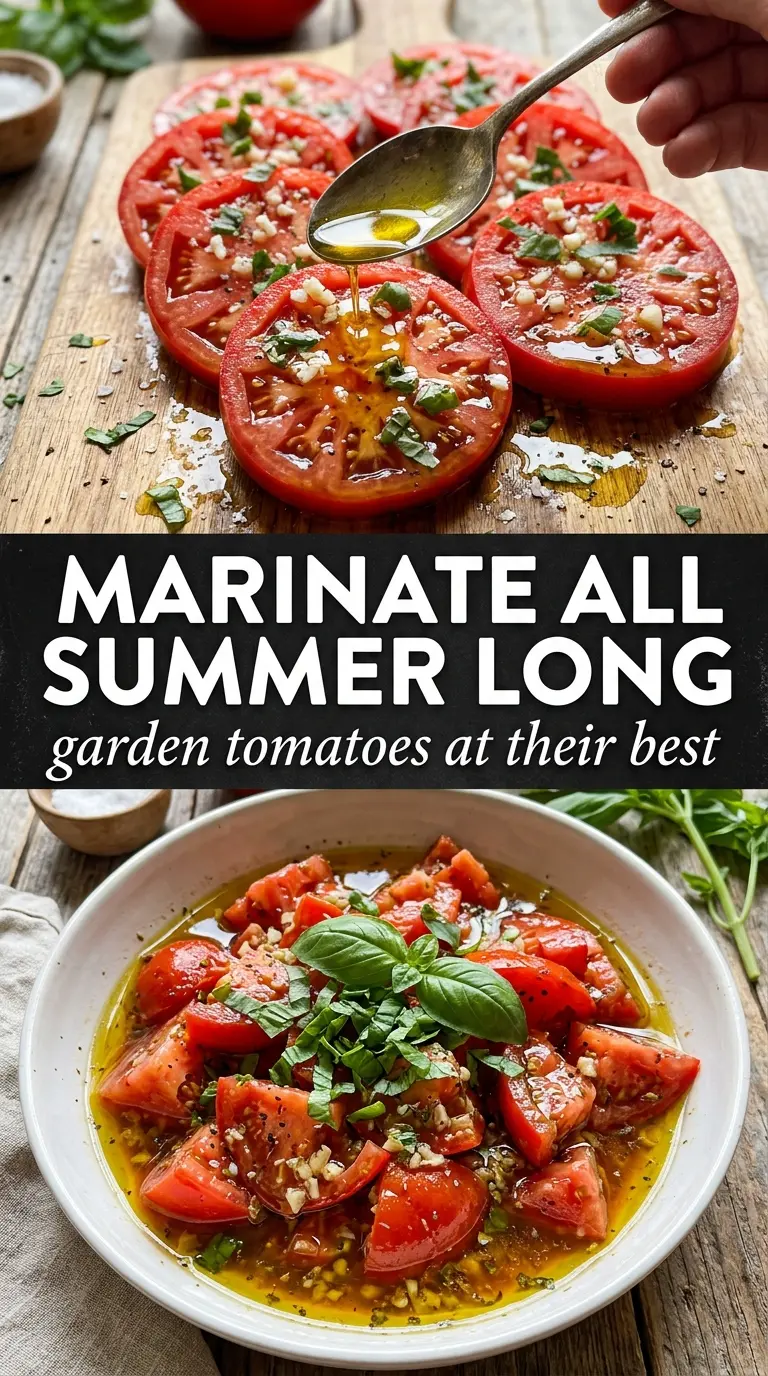
Marinated tomatoes are at their best when the slices stay juicy but pick up just enough tang from the vinaigrette to taste brighter, richer, and more tomato-forward than they did raw. The garlic softens in the dressing, the basil perfumes the bowl, and the juices that collect underneath turn into a spoonable sauce that’s just as good as the tomatoes themselves.
What makes this version work is balance. A mix of red wine vinegar and balsamic keeps the marinade sharp without making it muddy, while a little honey rounds out the acidity so the tomatoes taste seasoned instead of pickled. Using both sliced heirlooms and cherry tomatoes gives you contrast: the heirlooms bring meaty texture, and the cherries burst into the dressing and help build that glossy, flavorful puddle at the bottom of the dish.
Below, I’ll show you why the rest time matters, which tomatoes hold their shape best, and how to serve these so none of that garlicky herb vinaigrette goes to waste.
The tomatoes held their shape beautifully, and after an hour the juices turned into the best balsamic dressing for crusty bread. I used a mix of heirlooms and cherry tomatoes and the texture was perfect.
Save these marinated tomatoes for the nights when you want a fresh side dish that turns into the best bread-dipping juices on the table.
The Part Most Tomato Salads Get Wrong: Marinating Too Long
The mistake with marinated tomatoes is treating them like a make-ahead salad that can sit all afternoon. Tomatoes start giving up juice fast, and once they’ve sat too long, the slices can turn floppy and the dressing loses its brightness. One hour is the sweet spot here: long enough for the garlic, herbs, and vinegar to sink in, short enough that the tomatoes still taste fresh.
The other key is the bowl. Use a shallow serving dish instead of piling everything into a deep bowl. That keeps more surface area exposed to the marinade, so the tomatoes season evenly instead of steaming under their own juice.
- Heirloom tomatoes — These give you the best texture and the prettiest slices. If yours are very juicy, slice them a little thicker so they don’t collapse in the marinade.
- Cherry tomatoes — These add sweetness and burst into the dressing as they sit. They’re the reason the juices at the bottom taste full-bodied instead of thin.
- Red wine vinegar and balsamic vinegar — This pair gives the marinade both lift and depth. If you only use balsamic, the dish can taste heavy; if you only use red wine vinegar, it can taste sharp.
- Fresh garlic — Thin slices mellow as they sit and perfume the oil without turning harsh. Minced garlic works, but it can dominate fast and leave the marinade gritty.
What Each Ingredient Is Doing in the Bowl
- Olive oil — It carries the flavor of the herbs and garlic and gives the final juices a silky finish. Use extra-virgin oil with a flavor you like because you’ll taste it plainly here.
- Honey — Just enough to soften the vinegar and pull the tomatoes toward savory-sweet instead of sharp. If your tomatoes are extra ripe and sweet, keep the honey at the stated amount; don’t add more or the marinade can get syrupy.
- Oregano — Dried oregano stands up to the acid and gives the dish that classic tomato-salad backbone. Fresh oregano can work, but it’s louder and can take over the basil.
- Basil and parsley — Basil brings the familiar tomato-salad aroma, and parsley keeps the flavor from feeling one-note. Tear the basil instead of chopping it so it bruises less and stays fragrant.
Let the Tomatoes Season Themselves
Whisk the marinade until it looks unified
Start by whisking the olive oil, vinegars, honey, oregano, salt, and pepper until the dressing looks slightly thick and glossy. You’re not trying to make it creamy, just combined enough that the honey disappears and the oil won’t separate instantly when it hits the tomatoes. If the honey sits in streaks at the bottom of the bowl, keep whisking for another few seconds.
Arrange the tomatoes so the dressing can reach every cut surface
Lay the sliced and halved tomatoes in a shallow dish rather than tossing them in a deep bowl. That keeps the pieces from crushing under their own weight and makes it easier for the marinade to coat every exposed edge. Scatter the garlic and herbs over the top so they fall into the gaps instead of clumping in one spot.
Give the tomatoes time to release their juice
Pour the marinade over the tomatoes and toss them gently with your hands or a spoon, just until everything is lightly coated. Let them sit at room temperature for at least an hour. By the end, the tomatoes should look glossy and slightly softened, with a pool of red-gold juices collecting underneath; that liquid is the whole point, so don’t drain it.
Serve while the flavors are still bright
Spoon the tomatoes into a serving bowl and ladle some of the marinade over the top. Serve them at room temperature with crusty bread, grilled chicken, or anything that can catch the dressing. If they’ve been chilled, let them sit out for 20 to 30 minutes first, because cold tomatoes taste flat and the olive oil turns dull.
Three Ways to Work This Recipe Into Your Dinner Plan
Make it dairy-free and gluten-free by default
This recipe already fits both of those needs without any changes, which is part of why it lands on the table so often. Serve it with grilled fish, roast chicken, or gluten-free toast, and the marinated tomato juices still carry the meal without needing any extra sauce.
Swap in sherry vinegar for a softer finish
If you want a gentler edge, replace the red wine vinegar with sherry vinegar. The result is less sharp and a little rounder, which works well when the tomatoes are peak-ripe and already sweet. Keep the balsamic in place so the marinade still has enough depth.
Turn it into a bruschetta topping
Chop the marinated tomatoes a little smaller after they’ve rested, then pile them onto toasted bread. The juices soak into the toast, so use a sturdy slice that can handle the moisture without falling apart. A little fresh basil on top makes it feel like bruschetta without any extra work.
Add mozzarella when you want it to become the main event
Toss in torn fresh mozzarella right before serving if you want a more substantial salad. The cheese softens in the marinade but doesn’t hold it as well as bread does, so add it at the end and serve right away. The result is closer to a caprese-style side with extra punch from the garlic and vinegar.
Storage and Reheating
- Refrigerator: Store leftovers in a covered container for up to 2 days. The tomatoes will soften and the herbs will darken, but the flavor stays good.
- Freezer: Don’t freeze this dish. The tomatoes turn watery and mealy once thawed, and the fresh herbs lose their texture completely.
- Reheating: No reheating needed. Bring chilled leftovers back to room temperature before serving so the olive oil loosens and the tomato flavor wakes up again.
Answers to the Questions Worth Asking
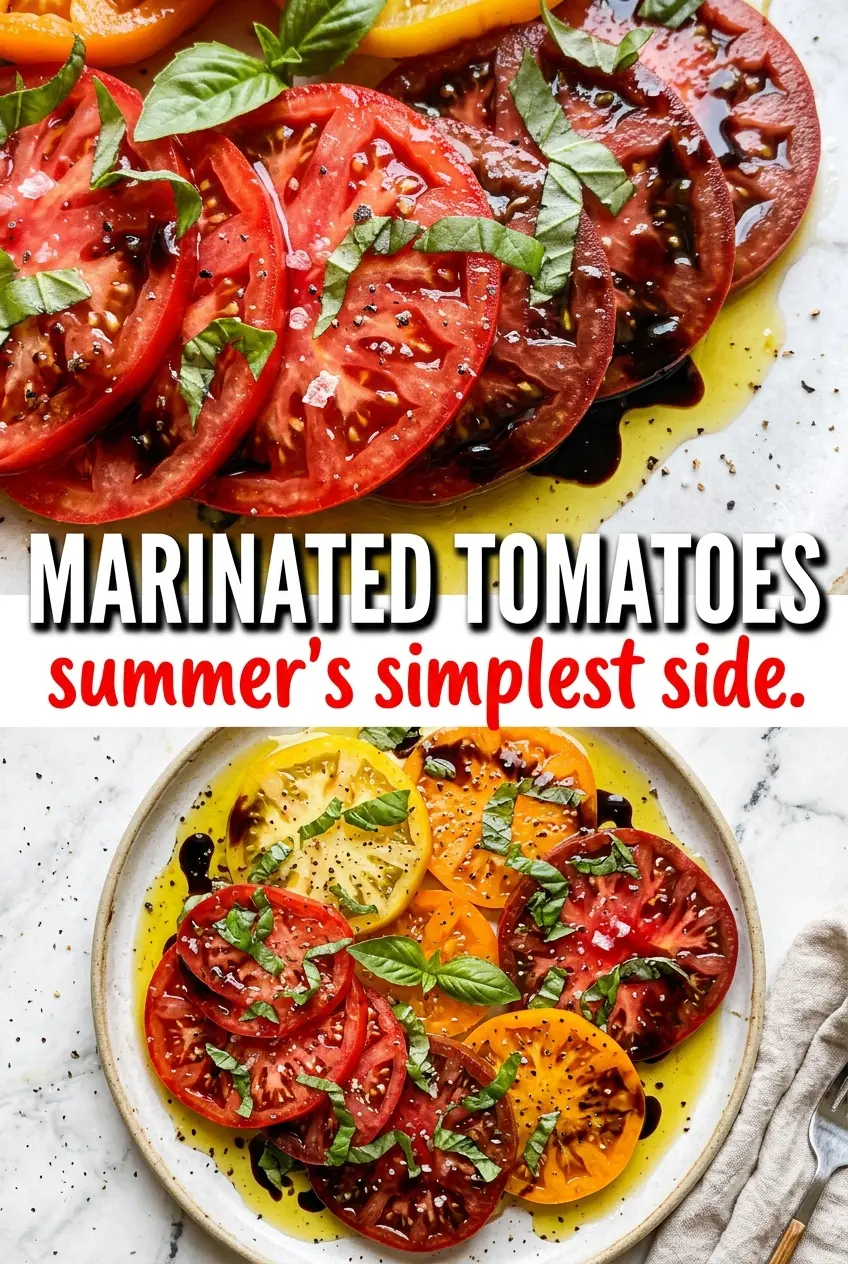
Marinated Tomatoes
Ingredients
Method
- Whisk extra-virgin olive oil, red wine vinegar, balsamic vinegar, honey, and dried oregano until emulsified, then season generously with salt and cracked black pepper to taste.
- Slice tomatoes and arrange them in a shallow serving dish so the cut sides face up for maximum juice contact.
- Scatter thinly sliced garlic, torn basil leaves, and chopped parsley over the tomatoes to distribute the aromatics throughout.
- Pour the marinade over everything and toss gently to coat, leaving some juices pooling at the bottom.
- Let marinate at room temperature for at least 1 hour so the tomatoes release juices and absorb the flavors.
- Serve at room temperature with crusty bread for dipping into the flavorful juices.