Sticky maple glazed pork chops are the kind of dinner that look like you put in a lot more effort than you did. The glaze clings to the seared pork in a shiny amber layer, with just enough Dijon and soy sauce to keep the sweetness in check. When the chops are cooked right, you get browned edges, juicy meat, and a sauce that tastes like it belongs on a plate with nothing else at all.
The trick here is timing. Pork chops need enough heat to brown fast, but the glaze needs a gentler simmer so the maple syrup thickens without burning. I also like to build the glaze in the same skillet because those browned bits from the pork give the sauce a deeper, savory edge that balances the sweetness.
Below, I’ll show you how to get the chops browned without drying them out, how to know when the glaze is ready, and a few smart swaps if you want to work with what’s already in your kitchen.
The glaze thickened up in just a couple minutes and coated the chops like lacquer. My husband kept saying the Dijon kept it from being too sweet.
Save these maple glazed pork chops for the night you want a fast skillet dinner with a glossy, caramelized finish.
The Secret to a Glossy Glaze Without Burnt Sugar
Maple syrup can go from glossy to scorched faster than most people expect, and that’s the main thing to respect in this dish. The chops need a hard sear first, then the glaze gets a short simmer over medium heat, just long enough to thicken slightly before the pork goes back in. If the pan is too hot when the maple mixture hits it, the sugar grabs the skillet and turns bitter instead of shiny.
Dijon mustard matters more than it looks like it should. It doesn’t make the pork taste mustardy; it sharpens the glaze and keeps the maple from tasting flat. Soy sauce does the same job on the savory side, and together they give the glaze enough depth that it tastes finished, not like maple syrup poured over meat.
What Each Ingredient Is Actually Doing In This Dish
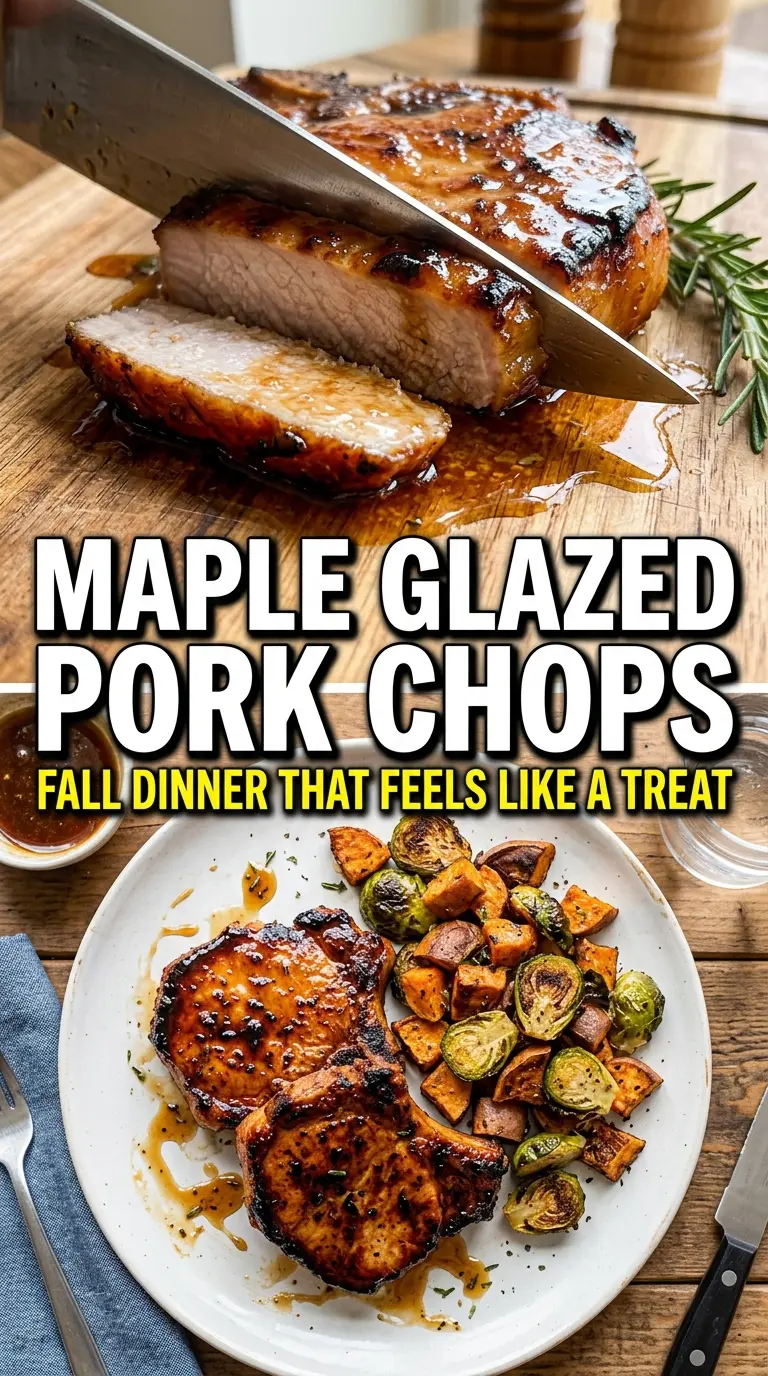
- Boneless pork chops — Thick, one-inch chops stay juicy long enough to take a good sear and a short finish in the glaze. Thin chops dry out before the sauce can cling, so don’t swap in cutlets unless you cut the cook time way down.
- Pure maple syrup — This is the backbone of the glaze, and the real stuff gives you a cleaner, deeper sweetness than pancake syrup ever will. Grade A amber works beautifully here because it has enough maple character without tasting heavy.
- Dijon mustard — This keeps the glaze from reading as candy-like and helps it emulsify a little as it simmers. Whole-grain mustard can work in a pinch, but it changes the texture and makes the glaze look a little rougher.
- Soy sauce — A small amount adds salt and umami, which is what makes the maple taste richer instead of just sweeter. Use tamari if you need a gluten-free version; the flavor stays close enough for this dish.
- Garlic and rosemary — Garlic gives the glaze a savory base, and rosemary makes the whole pan smell like something worth serving right away. Fresh rosemary is worth using here because dried rosemary can turn dusty and loud in a quick glaze.
- Olive oil — This helps the chops brown evenly and keeps the skillet from grabbing before a crust forms. A neutral oil works too, but olive oil adds a little more flavor under the glaze.
How to Keep the Pork Juicy While the Glaze Clings
Seasoning and Searing the Chops
Pat the pork chops dry before they hit the skillet. Moisture on the surface creates steam, and steam is the enemy of a good crust. Season both sides well with salt and pepper, then lay them into hot oil and leave them alone long enough to brown. If you move them too early, they’ll stick and tear before the sear sets.
Building the Glaze in the Same Pan
Once the chops are out, pour off excess fat only if the pan looks greasy; you want the browned bits left behind. Stir the maple, Dijon, soy sauce, garlic, rosemary, and pepper together, then add the mixture to the warm skillet and let it bubble gently. The glaze should look slightly thicker and glossy, not like a hard-cooked candy coating. If it starts darkening too fast, lower the heat immediately.
Finishing the Pork Without Overcooking It
Return the chops to the pan and spoon the glaze over them constantly for the last couple of minutes. That repeated basting is what gives the meat its lacquered finish. Pull the pork as soon as it reaches 145°F in the thickest part; if you wait for the glaze to look perfect before checking temperature, the chops can overshoot and turn dry.
Make It Spicier With a Little Heat
Stir in a pinch of red pepper flakes or a small squeeze of hot sauce when you mix the glaze. It cuts the sweetness and gives the finish a little bite without turning the dish into something completely different.
Gluten-Free Without Losing the Balance
Use tamari instead of soy sauce and check that your Dijon is gluten-free if that matters for your kitchen. The glaze still reduces and clings the same way, so you won’t lose that sticky finish.
Bone-In Chops Need a Longer Finish
Bone-in chops bring a little more flavor, but they need extra time in the skillet and often a lower finish heat so the center cooks through. Watch the temperature more closely, because the glaze can be ready before the meat is.
Swap In Chicken Thighs for a Different Dinner
The same glaze works on boneless chicken thighs, but they need a longer cook time and a little more patience before the sauce goes on. You’ll get a richer, darker finish, and the fat in the thighs stands up well to the sweet-savory glaze.
Storage and Reheating
- Refrigerator: Store leftovers in an airtight container for up to 3 days. The glaze will thicken and set in the fridge, which is normal.
- Freezer: You can freeze the cooked chops for up to 2 months, but the glaze loses a little shine after thawing. Wrap them well and freeze with a little extra sauce if you can.
- Reheating: Warm them gently in a covered skillet over low heat with a splash of water or broth. High heat dries out the pork and can make the glaze stick and scorch before the center warms through.
Questions I Get Asked About This Recipe

Maple Glazed Pork Chops
Ingredients
Equipment
Method
- Season the pork chops with salt and pepper.
- Heat olive oil in a skillet over medium-high heat and sear the pork chops 4 minutes per side until golden, then set aside.
- Mix the pure maple syrup, Dijon mustard, soy sauce, minced garlic, minced rosemary, and black pepper together until combined.
- Pour the glaze into the same pan over medium heat and simmer 1–2 minutes until slightly thickened, watching for amber color.
- Return the pork chops to the pan and cook 2–3 minutes, spooning the glaze over constantly so the surface turns lacquered and glossy.
- Continue until the internal temperature reaches 145°F, then remove from heat.
- Garnish with fresh rosemary and serve immediately.