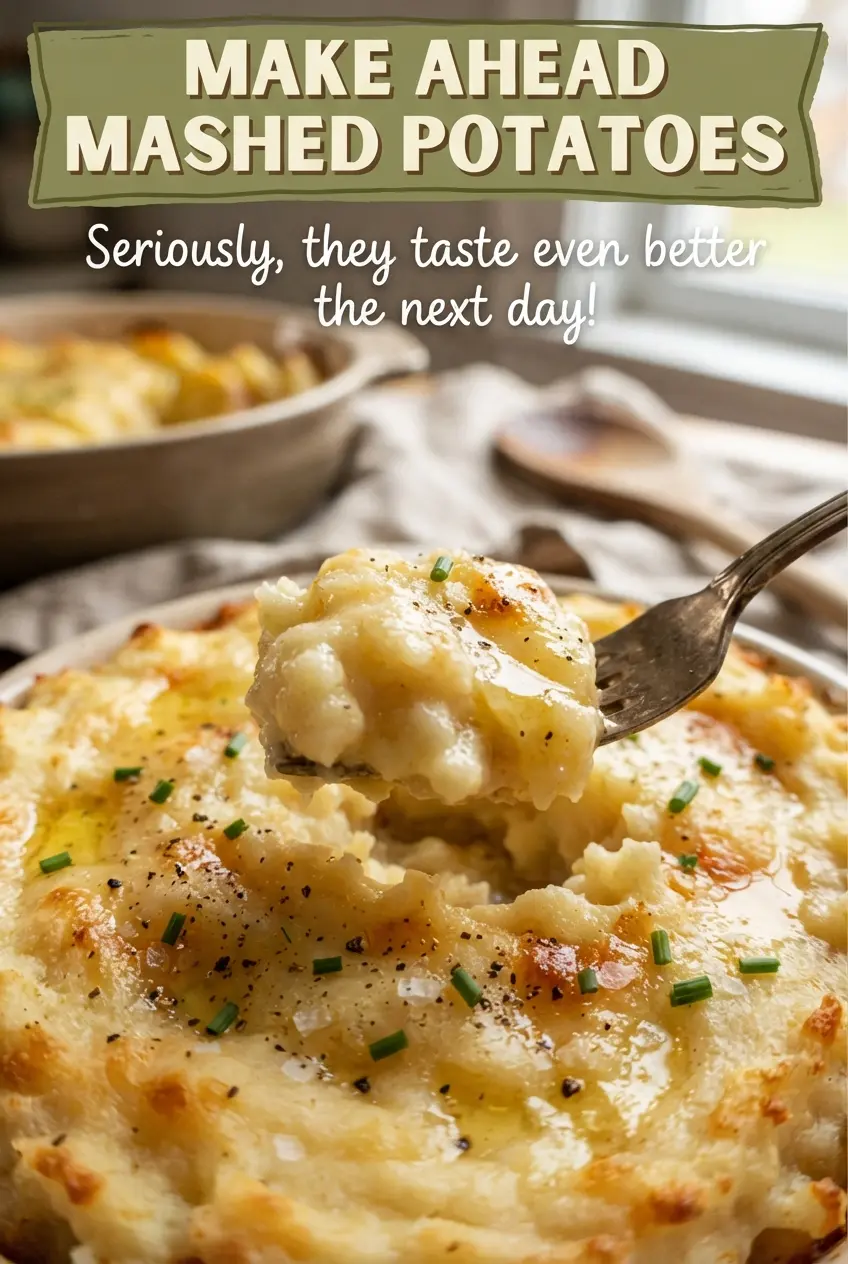
Creamy make ahead mashed potatoes earn their spot on the table because they hold up in the fridge without turning gluey, then bake into a casserole with a soft, fluffy center and a buttery top. The texture stays rich instead of stiff, and the edges pick up just enough color in the oven to make the whole pan feel special.
The trick is in the balance: Yukon Gold potatoes bring a naturally buttery flavor, cream cheese gives body, and sour cream keeps the mash from tasting heavy. Warm milk blends in more smoothly than cold milk, and the potatoes get mashed while they’re still hot enough to absorb everything evenly. That keeps the texture velvety instead of grainy or gummy.
Below you’ll find the exact timing for making these ahead, plus the reason the bake starts covered before it finishes uncovered. There’s also a useful note on what to do if you want them extra rich for a holiday meal or a little lighter for a weeknight dinner.
I made these the day before Thanksgiving and they baked up perfectly creamy. The top got golden and the butter melted right into it, but the center was still light instead of dense.
Save these make ahead mashed potatoes for the holiday menu when you want a creamy bake that can be prepped early and finished with a golden top.
The Part That Keeps Make Ahead Mashed Potatoes Creamy After Chilling
Most mashed potatoes turn dense after a night in the fridge because the starch tightens up and the butter separates when the mix is too lean. This version avoids that by building in enough fat and moisture up front, then baking gently so the potatoes warm through before the top dries out. If you rush the bake uncovered from the start, the edges can crust before the center loosens again.
Yukon Gold potatoes matter here. They’re naturally creamy and less watery than russets, which means they reheat into a smoother bake instead of a fluffy pile that falls apart. Cream cheese adds structure, sour cream adds tang and helps the potatoes stay supple, and the warm milk keeps the mixture easy to spread without thinning it out.
- Yukon Gold potatoes — These hold their shape just enough to mash cleanly, and they bring a buttery flavor that doesn’t need much help. Russets can work, but they dry out faster and need a little extra milk to stay soft after baking.
- Cream cheese — This is the insurance policy. It gives the mashed potatoes body so they slice and scoop neatly after chilling, rather than turning loose or watery in the dish.
- Sour cream — The tang cuts through the richness and keeps the finished potatoes from tasting flat. Full-fat sour cream gives the best texture; lower-fat versions can work, but they make the mash a little less plush.
- Warm milk — Cold milk can make the potatoes seize up and cool the mixture too fast. Warm it just until it’s no longer cold to the touch.
What Each Ingredient Is Actually Doing in This Recipe

- Primary ingredient (the star) — Quality matters most. Choose the best you can find.
- Cooking medium (oil, butter, or broth) — This carries flavors and prevents dryness.
- Seasonings (salt, pepper, spices, herbs) — Layer flavors so nothing overpowers. Build depth gradually.
- Aromatics (garlic, onion, herbs) — Cook with fat to bloom flavors. Become the foundation.
- Supporting ingredients — Complement the main ingredient without overpowering it.
- Sauce or liquid (if applicable) — Brings flavors together. Balance richness with acid.
- Acid (lemon, vinegar, wine, or other) — Brightens and prevents flat-tasting results.
- Final finish (garnish, glaze, or sauce) — Prevents one-dimensional taste and adds visual appeal.
How to Build the Mash So It Bakes Up Smooth, Not Gluey
Boiling the potatoes all the way through
Cook the potatoes in salted water until a fork slides through with no resistance and the edges are just starting to break apart. Undercooked potatoes leave tiny hard bits that stay firm after baking, while overcooked ones soak up too much water and turn gummy. Drain them well and let the steam escape for a minute before mashing so the finished texture stays creamy instead of wet.
Mashing with the dairy while the potatoes are hot
Add the cream cheese, sour cream, butter, and warm milk while the potatoes are still hot enough to soften everything easily. That’s what gives you a smooth mash without having to overwork it. Stop mashing as soon as the mixture is cohesive and fluffy; if you keep going, especially with a heavy mixer, the potatoes can turn stretchy.
Baking covered first, then uncovered
Spread the potatoes in a buttered 9×13-inch dish and dot the top with the remaining butter so the surface starts with extra richness. The covered bake traps steam and reheats the center evenly. Uncovering for the last 15 to 20 minutes lets the top brown lightly and absorb that butter into a soft golden crust instead of drying into a hard lid.
How to Adapt These Potatoes for a Smaller Crowd or a Different Table
Gluten-Free Without Any Changes
These potatoes are naturally gluten-free as written, so there’s nothing to swap. Just check your cream cheese and sour cream labels if you’re cooking for someone with a serious sensitivity, since flavored or specialty brands can sometimes include additives you don’t expect.
Lighter But Still Creamy
You can reduce the butter a little and use full-fat Greek yogurt in place of part of the sour cream, but the potatoes won’t be quite as plush. The flavor turns a little tangier and the texture firms up more after chilling, so this works best if you want a lighter side for an everyday dinner.
Garlic Herb Version
Add a little finely chopped chive, parsley, or roasted garlic to the mash before baking if you want more savory depth. Keep the garlic modest if you’re also serving a rich main dish; too much can fight with gravy or roasted meat instead of supporting it.
Storage and Reheating
- Refrigerator: Store covered for up to 3 days. The surface may firm up a little, but the texture loosens again once heated.
- Freezer: These freeze well for up to 1 month if packed tightly and wrapped well. Thaw overnight in the refrigerator before baking so the center heats evenly.
- Reheating: Bake covered at 350F until hot through, then uncover at the end to refresh the top. The biggest mistake is blasting them uncovered too early, which dries out the edges before the middle warms.
Questions I Get Asked About This Recipe
Make Ahead Mashed Potatoes
Ingredients
Equipment
Method
- Bring a Dutch oven of salted water to a boil, then add the peeled, cubed Yukon gold potatoes and boil for 15-18 minutes until tender.
- Drain the potatoes thoroughly and return them to the Dutch oven to steam off excess moisture.
- Mash the hot potatoes with softened cream cheese, sour cream, 6 tablespoons of the butter, and warmed whole milk until smooth.
- Season the mash with garlic powder, salt, and black pepper, then mix until evenly combined and glossy.
- Spread the mashed potatoes into a buttered 9x13-inch baking dish and dot with the remaining butter.
- Cover tightly and refrigerate up to 2 days so the potatoes set for clean reheating.
- Let the covered baking dish sit at room temperature for 30 minutes before baking.
- Bake covered at 350°F for 30 minutes until hot throughout, watching for steam at the edges as a visual cue.
- Remove the cover and bake uncovered for 15-20 minutes until hot and golden on top.
- Sprinkle with paprika and chives, then serve right away for the best color contrast.