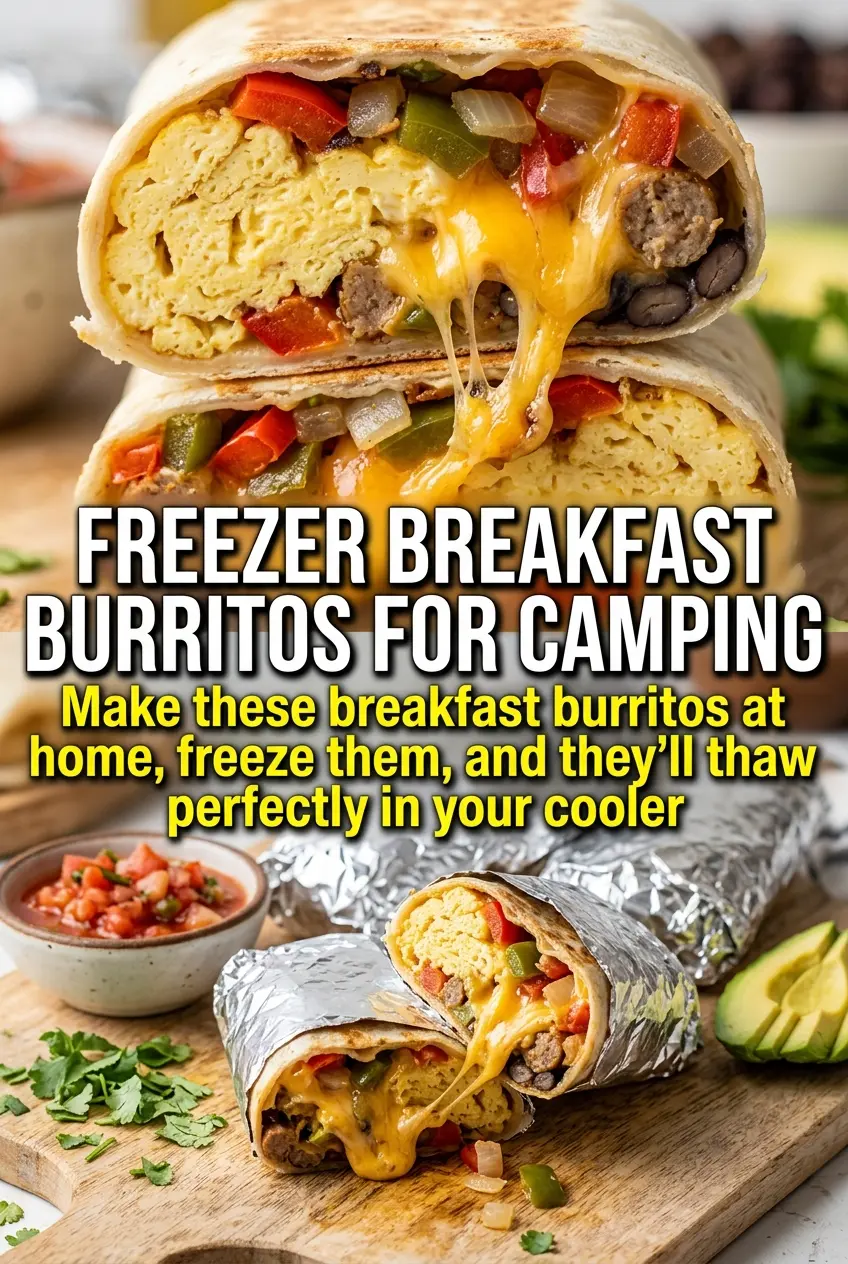
Make ahead breakfast burritos earn their place in the freezer because they reheat into a hot, sturdy breakfast that doesn’t fall apart in your hands. The best ones hold onto fluffy eggs, savory sausage, and melted cheese without turning soggy, which means a little extra care during assembly pays off every single time.
The trick is balance. The eggs should be just set, the hash browns should be cooked enough to stay pleasant after freezing, and the salsa needs to be used with a light hand so it flavors the filling without soaking the tortilla. Warm tortillas roll tighter, and a tight roll is what keeps these burritos from splitting open in the freezer or on the grill.
Below, I’m walking through the part that matters most: how to keep the filling compact, how to wrap them for freezing, and how to reheat them at camp without ending up with a cold center and scorched tortilla.
I made these for a camping trip and they reheated perfectly on the grill. The tortillas stayed intact, and the eggs were still fluffy instead of rubbery.
These make ahead breakfast burritos freeze beautifully and reheat with a fluffy egg center and crisp-edged tortilla.
The Burrito Filling That Won’t Turn Watery in the Freezer
The biggest mistake with freezer burritos is packing them with ingredients that leak moisture after thawing. Soft scrambled eggs, cooked sausage, and hash browns hold up well, but salsa needs restraint because it can soak into the tortilla and make the whole burrito slump. A small amount adds flavor; a heavy pour turns the filling muddy.
Warm tortillas matter just as much. Cold tortillas crack at the fold and split later in the freezer, which is how you end up with busted seams and filling on the foil. Use enough cheese to bind the filling, not bury it, because melted cheese helps the burrito stay cohesive once it reheats.
What Each Part Is Doing Inside the Burrito
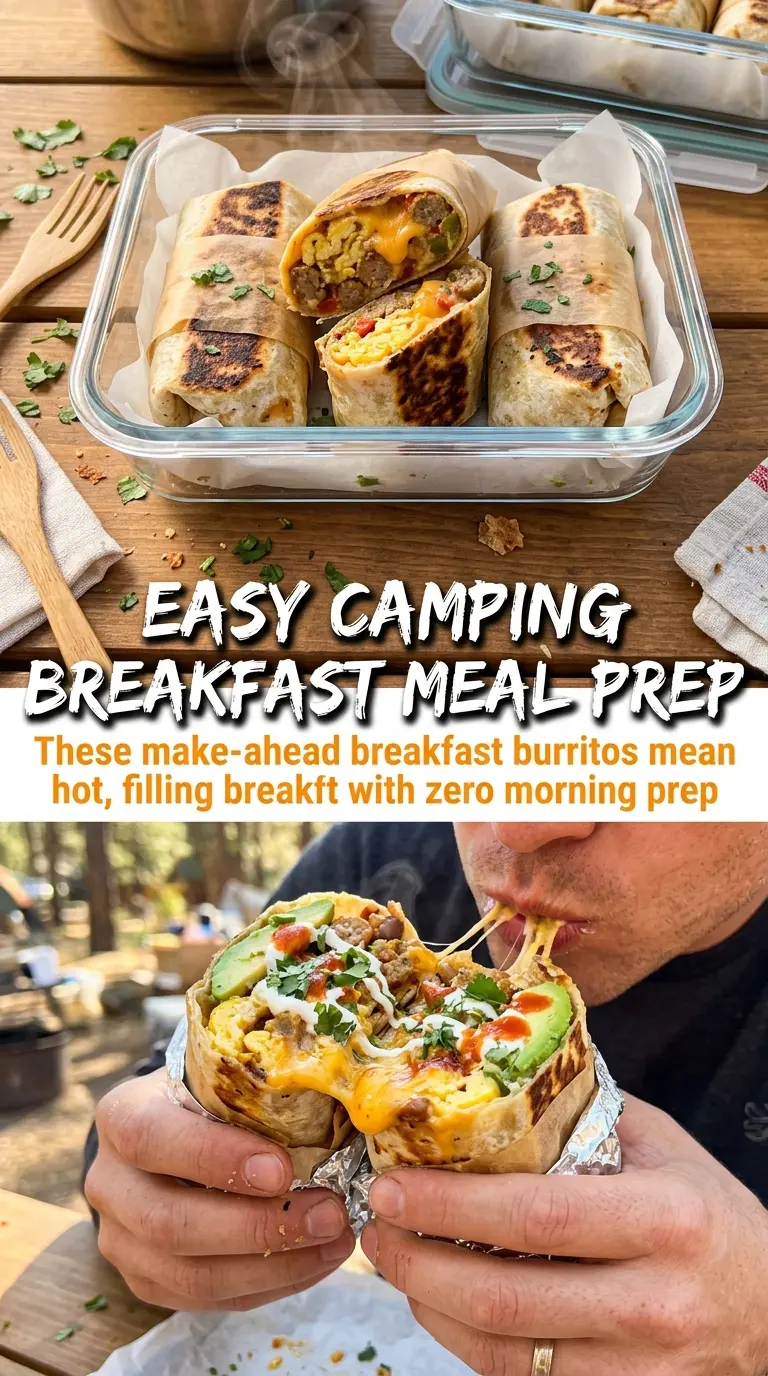
- Large flour tortillas — Soft, flexible flour tortillas are the only wrapper that really works here. Smaller tortillas overfill fast, and thin ones tear when you roll tightly. Warm them briefly so they bend instead of cracking.
- Eggs — Scramble the eggs until just set. They finish reheating later, so if you cook them until dry now, they’ll come back rubbery. Slightly soft eggs give you the best texture after freezing.
- Breakfast sausage — The sausage brings the main savory flavor and helps the filling feel substantial. Drain off excess grease after cooking, or the burritos can turn greasy and heavy once chilled.
- Hash browns — These add body and keep the burrito from feeling like pure eggs and cheese. Cook them enough to lose raw potato moisture before they go in, or they can make the center wet after freezing.
- Mexican cheese blend — The cheese helps bind everything together and melts back into the filling during reheating. Pre-shredded cheese works fine here; just don’t skimp, because it’s part of what keeps each burrito compact.
- Salsa — Use it sparingly for flavor, not as a sauce. A little goes a long way, and too much is the fastest path to soggy tortillas.
Rolling, Wrapping, and Freezing Them So They Reheat Cleanly
Warming the Tortillas First
Stack the tortillas and warm them just until they’re soft and pliable. A quick microwave burst under a damp towel or a few seconds in a dry skillet does the job. If the tortilla still feels stiff when you fold it, it’ll crack at the seam and leak filling later.
Keeping the Filling Tight
Spoon the filling into the lower third of each tortilla and keep the portions compact. You want a firm line of filling, not a mound, because a mound makes rolling nearly impossible. Fold in the sides first, then roll upward with steady pressure so the burrito holds its shape.
Wrapping for the Freezer
Wrap each burrito individually in foil or plastic wrap as soon as it’s rolled. That keeps freezer burn down and stops the burritos from sticking together. If you’re using foil for camp reheating, wrap it snugly, but not so tight that it tears the tortilla when you unwrap it later.
Reheating Over Camp Heat
For camp reheating, unwrap the foil only if your cooking setup requires it, then place the burrito on a grill grate over medium heat. Turn it occasionally so the outside doesn’t scorch before the center warms through. The burrito is ready when the tortilla feels hot and lightly crisped and the middle gives a little when pressed.
How to Adjust These Burritos for Different Mornings
Dairy-Free Burritos
Leave out the cheese or use a meltable dairy-free shreds option if that fits your brand. The burritos will be a little less cohesive without cheese, so keep the filling tightly packed and don’t overdo the salsa.
Vegetarian Breakfast Burritos
Swap the sausage for sautéed peppers, onions, mushrooms, or a plant-based breakfast crumble. You’ll lose some richness, so add a little extra cheese or another spoonful of hash browns to keep the filling satisfying.
Gluten-Free Version
Use certified gluten-free tortillas that are large enough to roll without cracking. They’re usually a little more delicate than standard flour tortillas, so warm them thoroughly and handle them gently when folding.
Storage and Reheating
- Refrigerator: Store for up to 4 days. The tortilla stays soft, but the filling is best reheated before the cheese fully firms up.
- Freezer: Freeze for up to 3 months. Wrap individually so they don’t dry out and so you can grab one at a time.
- Reheating: Reheat from frozen over medium heat on a grill, in a skillet with a lid, or in foil near camp heat until the center is hot. The most common mistake is blasting them over high heat, which burns the tortilla before the middle thaws.