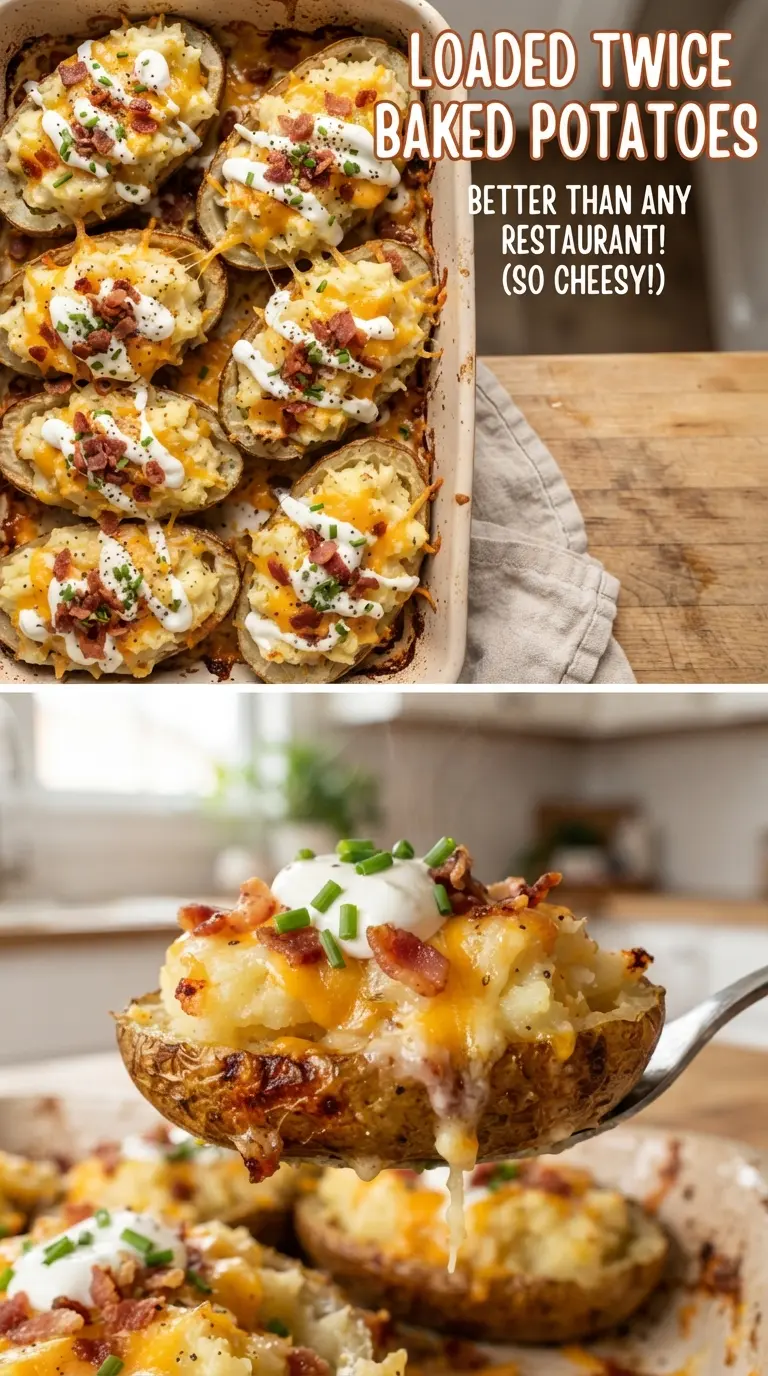
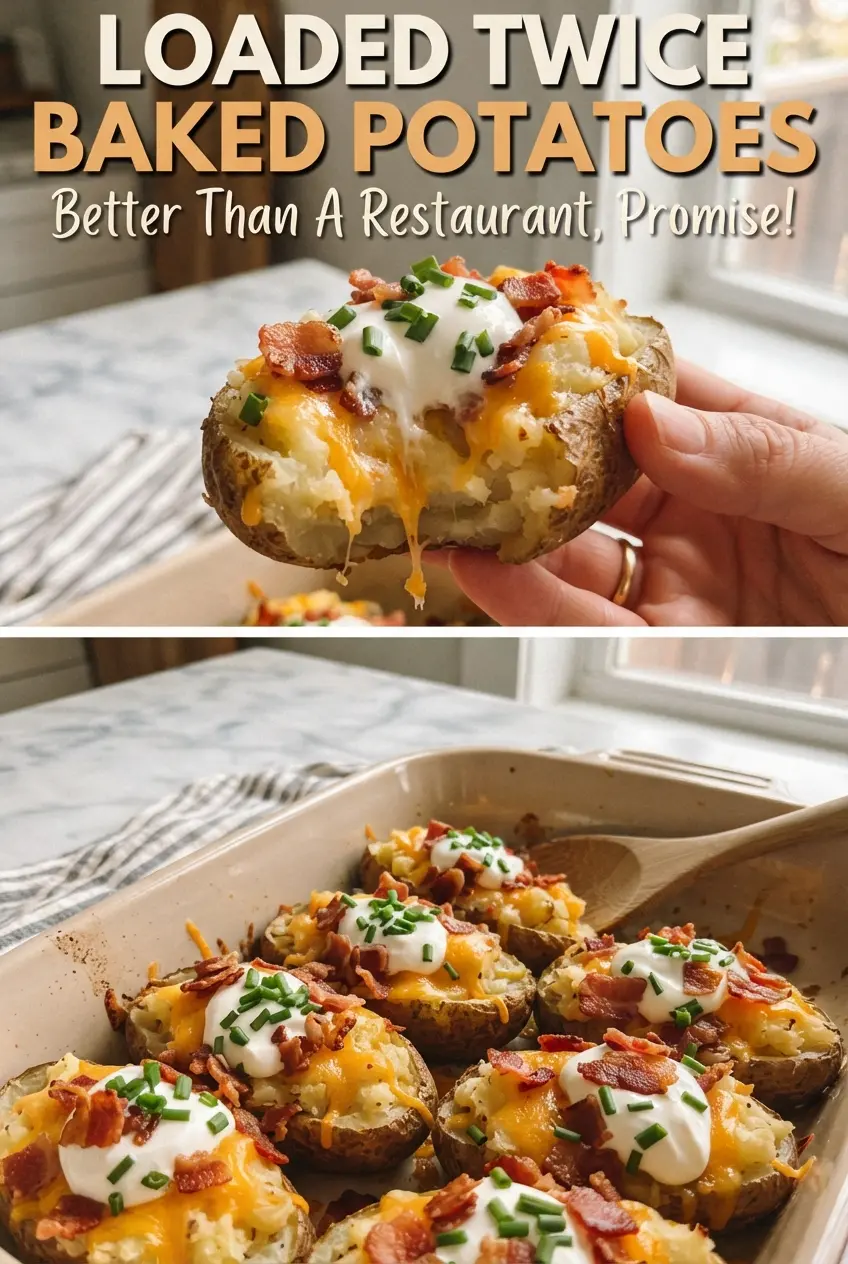
Loaded twice baked potatoes come out with everything people love about a baked potato, but better. The skins turn crisp at the edges, the filling gets rich and fluffy, and the top bakes into a bubbling blanket of cheddar and bacon. Each bite gives you contrast: salty, creamy, smoky, and just a little sharp from the pepper jack.
The trick is treating the potato shell and the filling as two different jobs. Russets are the right choice because they bake up dry and starchy, which gives you a light mash instead of a gluey one. The cream cheese, sour cream, and butter need to go into warm potato flesh so they melt in smoothly, while the bacon, green onions, and garlic powder keep the filling from tasting flat.
Below, I’ve included the part that matters most: how to keep the shells sturdy, not flimsy, and how to get the top browned without drying out the filling. There’s also a simple way to adjust the mix if you want them a little tangier, cheesier, or spicier.
The filling stayed fluffy instead of dense, and the shells held up beautifully after the second bake. I added the jalapeño on top and it gave just enough heat without taking over.
Save these loaded twice baked potatoes for the nights when you want crispy skins, creamy filling, and plenty of bacon and cheese in every bite.
The Shell Matters More Than People Think
Twice baked potatoes fall apart when the shell gets treated like an afterthought. The first bake has to dry the skins enough that they can hold the filling without collapsing, and the little bit of oil and salt on the outside helps that process along. If the potatoes come out underbaked, the inside turns pasty and the shells tear when you scoop them.
Leaving about a 1/4-inch border is the difference between neat potato boats and a pile of mashed potatoes on a tray. Scoop too aggressively and the skins won’t survive the second bake; leave too much flesh behind and the filling gets heavy instead of light. You want a shell that’s sturdy enough to hold its shape but thin enough that every bite still tastes like potato, not just topping.
What Each Ingredient Is Doing in the Filling
- Russet potatoes — These are the best choice because their dry, starchy flesh mashes up light instead of gummy. Waxy potatoes won’t give you the same fluffy texture.
- Cream cheese, sour cream, and butter — This trio gives the filling its body and tang. If you swap in milk alone, the potatoes taste looser and less rich.
- Cheddar and pepper jack — Cheddar gives the familiar loaded-potato flavor, while pepper jack adds a little heat and better melt. If you only use cheddar, the result is milder but still works.
- Bacon and green onions — Bacon adds salt and smoke; green onions keep the filling from feeling heavy. Cook the bacon until crisp so it stays distinct after baking.
- Jalapeño — Optional, but it wakes up the whole tray. Add it fresh on top so you get brightness and a little bite instead of muted heat.
Building the Filling So It Stays Fluffy
Start with the hot potato flesh
Halve the potatoes while they’re still warm and scoop the flesh into a bowl before it cools completely. Warm potato mashes more smoothly with the dairy, which keeps the filling from turning grainy. If the potatoes sit too long, the butter and cream cheese won’t melt in as cleanly and you’ll have to overmix to smooth them out.
Mash gently, then stop
Add the cream cheese, sour cream, butter, half the cheddar, pepper jack, half the bacon, green onions, and garlic powder, then mash just until the mixture looks combined. Overworking potatoes is what makes them gluey, especially once the starch has been stirred around too much. A few small lumps are fine; they bake out, and they help the filling stay light.
Load the shells and finish hot
Mound the filling generously back into the shells, then top with the remaining cheddar and bacon. Bake until the cheese is melted and the edges are browned in spots, not just warmed through. The goal is a hot center and a browned top, so don’t pull them early because the cheese looks melted at the edges; the middle needs those extra minutes to set.
Make them a little lighter
Use reduced-fat sour cream and a little less butter, but keep the cream cheese. That keeps the filling creamy enough to hold together, while the texture stays close to the original instead of turning loose and watery.
Turn them into a vegetarian side
Skip the bacon and add extra green onion, a pinch more salt, and a little smoked paprika if you want that savory edge back. You’ll lose the smoke from the bacon, but the potatoes still taste full and satisfying.
Make them ahead for a crowd
Assemble the potatoes through the stuffing step, then cover and refrigerate before the final bake. Add a few extra minutes in the oven since they’ll go in cold, and wait to add the sour cream dollops and jalapeños until serving.
Storage and Reheating
- Refrigerator: Store leftovers in an airtight container for up to 4 days. The skins soften a little, but the filling stays creamy.
- Freezer: Freeze without the sour cream topping. Wrap each potato tightly and freeze for up to 2 months; thaw in the fridge before reheating for the best texture.
- Reheating: Reheat at 350F in the oven until hot in the center, about 20 to 25 minutes. Microwaving works in a pinch, but it softens the skin and can make the filling unevenly hot.
Questions I Get Asked About This Recipe
Loaded Twice Baked Potatoes
Ingredients
Equipment
Method
- Preheat oven to 400F. Rub potatoes with olive oil and coarse salt, then bake 55-60 minutes until fully tender, with wrinkled, crisp skin.
- Halve potatoes lengthwise and scoop out the flesh, leaving a 1/4-inch shell. Mash the potato flesh with cream cheese, sour cream, butter, 1/2 cup cheddar, pepper jack, half the bacon, green onions, and garlic powder until creamy and smooth.
- Mound the filling back into the shells. Top with remaining cheddar and bacon, then bake 15-20 minutes at 400F until the cheese is melted and the tops turn golden.
- Add sour cream dollops and jalapeno slices. Serve right away while hot and creamy, with visible bacon bits and jalapeño on top.