Crispy loaded potato skins land in that sweet spot between snack food and crowd-pleasing appetizer: shatteringly crisp edges, fluffy centers, melted cheddar, and bacon in every bite. The best ones aren’t greasy or limp. They hold their shape, stay sturdy enough to pile high, and still taste like the inside of a great baked potato.
The trick is treating the potato shells like their own recipe instead of an afterthought. First the potatoes bake until the insides are fully tender, then the scooped shells go back into the oven with fat on both sides so the cut edges dry out and crisp up. Leaving a thin layer of potato inside matters too — go too far and the skins collapse, but leave too much and they turn soft and heavy.
Below, I’ve included the step that keeps them crisp, the best way to load them without sogging them out, and a few swaps that still give you that classic diner-style result.
The skins turned out crisp all the way through, and the cheese melted into the bacon without making them soggy. I loved that the potato edges held up after baking — even the leftovers stayed good the next day.
Crispy loaded potato skins with melted cheddar and bacon — save this one for game day or any night that needs a no-fuss crowd favorite.
The Crispiest Part Happens Before You Add the Toppings
Most soggy potato skins happen because the potatoes never get dry enough before they’re filled. The first bake cooks the potato through, but the second bake is what turns the shell into something sturdy. Once you scoop out the flesh, the inside surface needs fat and another pass in the oven so it dries out and crisps instead of steaming under the cheese.
The other mistake is over-scooping. Leave about a quarter-inch of potato in the shell so the skins have structure and a little soft potato still clings to the crisp edges. That small layer helps the shells hold the filling without cracking, and it gives each bite the baked-potato flavor people expect.
What Each Ingredient Is Actually Doing in This Dish
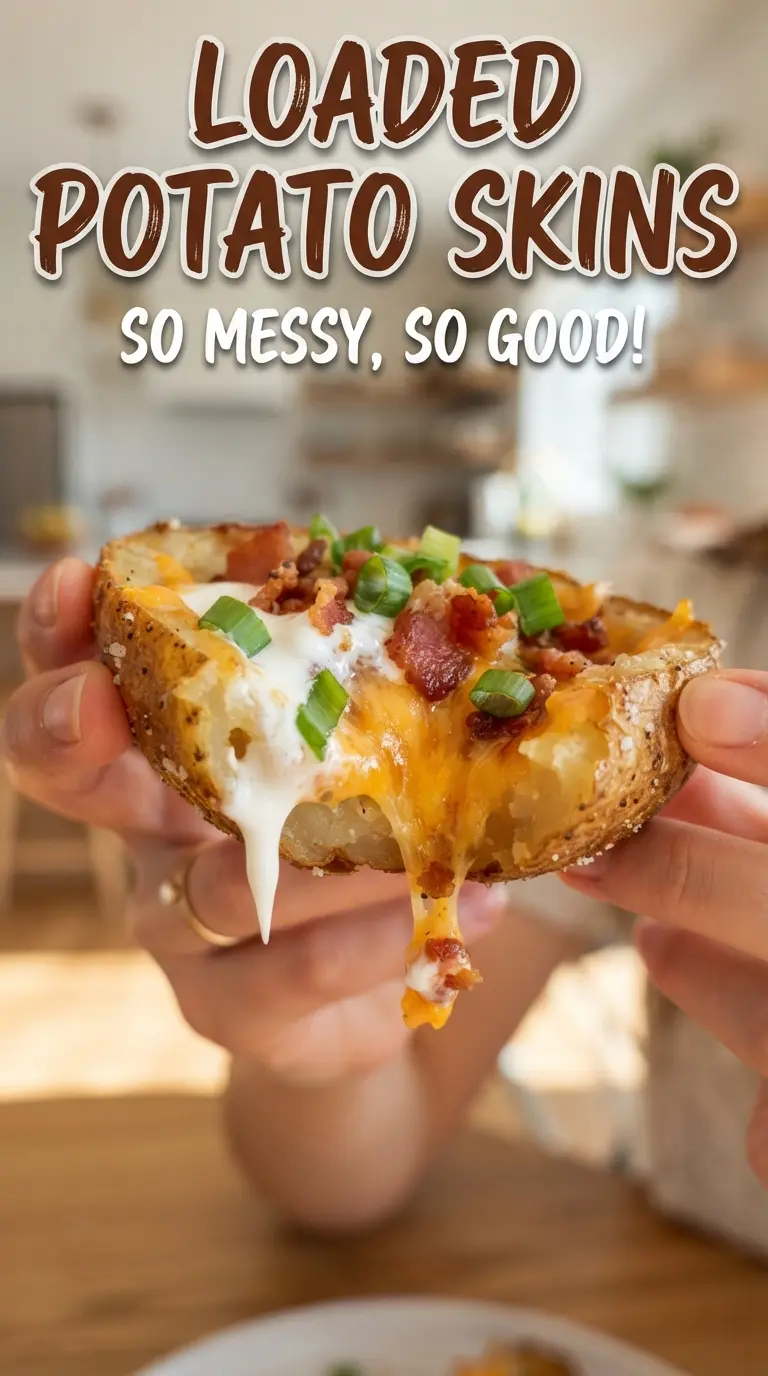
- Russet potatoes — These are the right choice because the skins are thick and the inside bakes up fluffy. Waxy potatoes stay too dense and give you a smaller, less dramatic shell.
- Olive oil and butter — The oil helps the skin crisp, while the butter adds flavor and helps the garlic powder cling. Don’t skip the fat on the cut sides; that’s what keeps the shells from tasting dry after the second bake.
- Cheddar — Sharp cheddar gives you the best contrast against the potato and bacon. Pre-shredded works, but freshly shredded melts more smoothly because it doesn’t have the anti-caking coating.
- Bacon — Cook it until crisp enough to crumble, not soft and chewy. If it’s greasy, blot it before adding it to the skins so the filling stays balanced instead of heavy.
- Sour cream and green onions — These go on at the end for coolness and brightness. If you add them before baking, the sour cream loses its fresh tang and the onions turn dull.
Building the Shells So They Stay Crisp Under the Filling
Baking the Potatoes Until the Centers Collapse
Start with dry potatoes and rub them with oil and salt before they go into the oven. Bake until a knife slips in easily and the skins feel a little taut, not wrinkled and shriveled. If the potatoes are underbaked, they’re harder to scoop cleanly and the shells won’t crisp properly later.
Scooping with Structure, Not Aggression
Let the potatoes cool just enough to handle, then halve them lengthwise and scoop out most of the flesh. Leave a thin, even shell all the way around. If the walls are too thin, the skins collapse in the oven; if they’re too thick, the finished appetizer tastes heavy and bread-like instead of crisp.
Drying the Shells Before the Final Fill
Brush the inside and outside with the butter, remaining oil, and garlic powder, then bake them cut-side down first. That gives the exposed potato surface a chance to dry out. Flip them only after that first crisping round, because turning too early leaves you with a soft underside and less crunch where it matters.
Melting the Cheese at the End
Add the cheddar and bacon only after the shells are already crisp. The final bake should be just long enough to melt the cheese and warm the filling, not long enough to soften the skins again. Pull them as soon as the cheese is glossy and bubbling at the edges.
How to Adapt These for Different Crowds and Diets
Make-ahead game day potatoes
Bake and scoop the potatoes earlier in the day, then hold the shells covered in the fridge. Crisp them in the oven just before serving and add the cheese and bacon at the very end so they stay crunchy instead of softening while they sit.
Dairy-free version
Use a dairy-free butter and swap in a good melting vegan cheddar. The texture stays close, but the flavor will be a little less sharp, so season the potatoes well and keep the bacon or another salty topping in the mix.
Vegetarian loaded potato skins
Skip the bacon and add chopped sautéed mushrooms, roasted peppers, or extra cheese. You lose the smoky snap bacon brings, so a pinch of smoked paprika in the shells helps bridge that gap.
Gluten-free without changing a thing
This recipe is naturally gluten-free as written, as long as your bacon and seasonings are certified gluten-free. It’s one of the rare appetizers that doesn’t need a separate flour-based workaround to taste complete.
Storage and Reheating
- Refrigerator: Store leftovers in an airtight container for up to 3 days. The shells soften a little, but they still reheat well.
- Freezer: Freeze the baked shells without the sour cream topping for up to 2 months. Thaw in the fridge before reheating so the centers don’t turn wet.
- Reheating: Reheat on a baking sheet in a 375F oven until the cheese is melted and the skins crisp back up. The microwave makes them limp, which is the fastest way to lose the texture you worked for.
Answers to the Questions Worth Asking
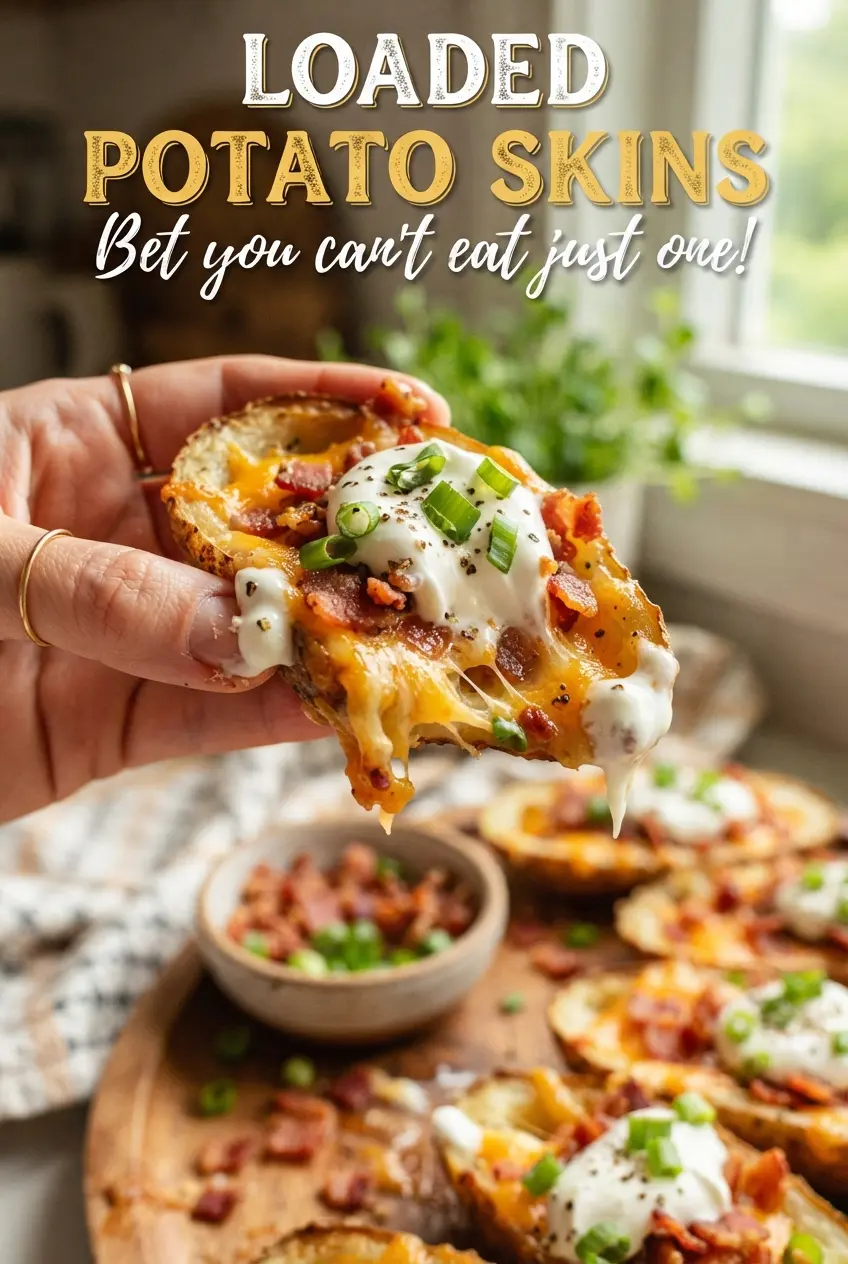
Loaded Potato Skins
Ingredients
Equipment
Method
- Preheat your oven to 400F. Rub the russet potatoes with 1 tablespoon olive oil and coarse salt, then bake for 50–55 minutes until tender.
- Cool the baked potatoes, then halve them lengthwise and scoop out most of the flesh, leaving about a 1/4-inch shell. Save the potato flesh for another use.
- Brush the potato skins inside and out with melted butter, the remaining olive oil, and garlic powder. Make sure the surfaces look lightly coated.
- Place the skins cut-side down on a sheet pan and bake for 10 minutes at 400F. Flip and bake 5 minutes more until the edges look crisp and golden.
- Fill each skin with shredded cheddar and crumbled bacon, then return to the oven at 400F. Bake for 3–5 minutes until the cheese is melted.
- Top with sour cream and sliced green onions right after baking, so the toppings stay fresh and the skins stay warm. Serve immediately.