Loaded mashed potato casserole lands on the table with the kind of comfort that makes people hover near the oven for the first scoop. The potatoes stay fluffy under a blanket of melted cheddar, crisp bacon, and fresh green onions, and the top gets that bubbling, browned edge that turns a simple side into the thing everyone remembers. It’s hearty enough for a holiday spread, but easy enough to pull together on a weeknight when you want something that feels a little extra without adding much work.
The texture depends on two things: getting the potatoes fully tender before mashing, and mixing the dairy in while they’re still hot. That’s what gives you a smooth base instead of a gluey one. Cream cheese and sour cream bring tang and body, while a little whole milk loosens everything just enough so the casserole bakes up creamy instead of dense.
Below, I’ve included the small details that keep this casserole from turning heavy, plus the best way to make it ahead if you’re feeding a crowd.
I loved how the top got browned and bubbly while the middle stayed creamy. I made it a day ahead and it reheated beautifully without drying out.
Save this loaded mashed potato casserole for the nights when you need creamy potatoes, bacon, and cheddar in one bubbling pan.
The Shortcut That Keeps Mashed Potatoes Creamy After Baking
Most baked mashed potato casseroles turn gluey because the potatoes get overworked once the dairy goes in. Russets help here because they mash up light and fluffy, but they still need a gentle hand. Stop mashing as soon as the mixture is smooth and the ingredients are combined. The oven will finish the job. If you keep stirring after that point, the starches tighten up and the casserole loses that soft, cloudlike texture.
The other mistake is baking a loose mash that hasn’t been seasoned enough. Once the bacon, cheese, and green onions go in, the potatoes need to taste a little more seasoned than you think, because the toppings mellow everything out. Salt the cooking water, season the mash, and taste before it goes into the pan. That’s what keeps every bite from tasting flat under all that rich dairy.
What Each Ingredient Is Doing in the Pan
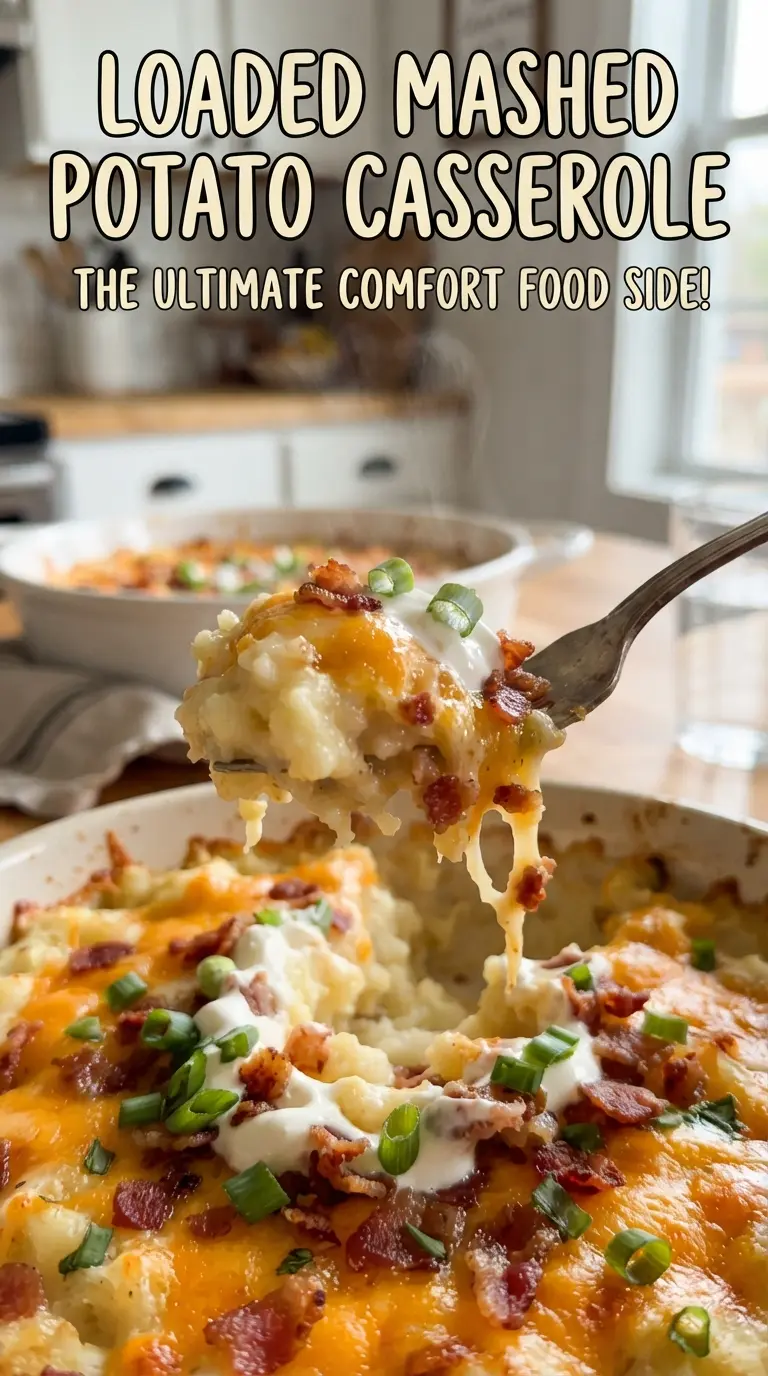
- Russet potatoes — These are the best choice because they break down into a fluffy mash instead of turning waxy or gummy. Yukon golds work in a pinch, but the casserole will be denser and a little more buttery in texture.
- Cream cheese and sour cream — This is the backbone of the filling. Cream cheese adds body and helps the casserole hold together after baking, while sour cream keeps the flavor bright so the potatoes don’t taste heavy.
- Whole milk — Just enough milk loosens the mash so it spreads cleanly in the baking dish. Lower-fat milk works, but the casserole won’t have the same plush texture.
- Cheddar, bacon, and green onions — Cheddar melts into the potatoes and browns on top, bacon adds salt and crunch, and green onions cut through the richness. Don’t add all the bacon and onions only on top; mixing some into the potatoes gives every scoop more flavor.
- Butter — It rounds out the potatoes and helps carry the flavor of the dairy. Use unsalted butter here so you can control the seasoning yourself.
Building the Casserole So It Bakes Up Light, Not Dense
Boiling the Potatoes All the Way Through
Start the potatoes in salted water and cook them until a fork slips in with no resistance. If they’re undercooked, you’ll end up with tiny hard bits that never smooth out, no matter how long you mash. Drain them well, then let the steam escape for a minute before adding the dairy. That extra moisture left in the pot is what can make the casserole waterlogged.
Mashing While the Potatoes Are Still Hot
Hot potatoes absorb butter, cream cheese, sour cream, and milk much better than lukewarm ones. Add the butter first so it melts right in, then mash in the cream cheese and sour cream before pouring in the milk. The mixture should look creamy and spreadable, not soupy. If it feels stiff, add a splash more milk; if it looks loose, let it sit for a minute and thicken before you stir in the mix-ins.
Layering in the Cheese, Bacon, and Onions
Stir in most of the cheddar, half the bacon, and half the green onions before baking. That gives the casserole flavor all the way through instead of making the topping carry everything. Spread it into a buttered 9×13-inch dish, then finish with the remaining cheddar and bacon so the top turns golden and a little crisp in spots. Add the last bit of green onion after baking so it stays fresh and sharp.
Baking Until the Center Is Hot and the Top Is Bubbling
Bake just long enough for the cheese to melt and the edges to bubble. You’re not trying to dry the casserole out; you’re heating it through and setting the top. If the surface starts browning too fast before the middle is hot, cover it loosely with foil and keep going. The finished casserole should hold its shape when scooped but still look creamy inside.
How to Adjust This Casserole Without Losing the Creamy Texture
Make it vegetarian
Skip the bacon and add a little extra cheddar plus a handful of chopped chives or sautéed mushrooms for depth. You’ll lose the smoky saltiness, so add a pinch more salt and a little smoked paprika if you want that same savory edge.
Make it gluten-free without changing a thing
This casserole is naturally gluten-free as written, as long as your bacon and seasonings are certified gluten-free. The texture and baking time stay the same, which makes this one of the easiest sides to serve to a mixed crowd.
Use Yukon golds for a richer, smoother mash
Yukon golds make the casserole silkier and a little denser, with a more buttery flavor. They won’t fluff up quite like russets, but they hold their shape well and bake into a very creamy side dish.
Make it ahead for a crowd
Assemble the casserole up to a day in advance, cover it, and refrigerate it before baking. Let it sit on the counter while the oven preheats so the center isn’t ice-cold, then add a few extra minutes in the oven if needed. Cold casseroles need a little longer in the middle, not a hotter oven.
Storage and Reheating
- Refrigerator: Store leftovers covered for up to 4 days. The texture firms up as it chills, but it stays creamy once reheated.
- Freezer: It freezes well in a tightly wrapped baking dish or airtight container for up to 2 months. Thaw overnight in the refrigerator before reheating for the best texture.
- Reheating: Cover and warm in a 325F oven until heated through, or reheat smaller portions in the microwave at medium power. High heat dries out the edges before the center is hot.
Questions I Get Asked About This Recipe
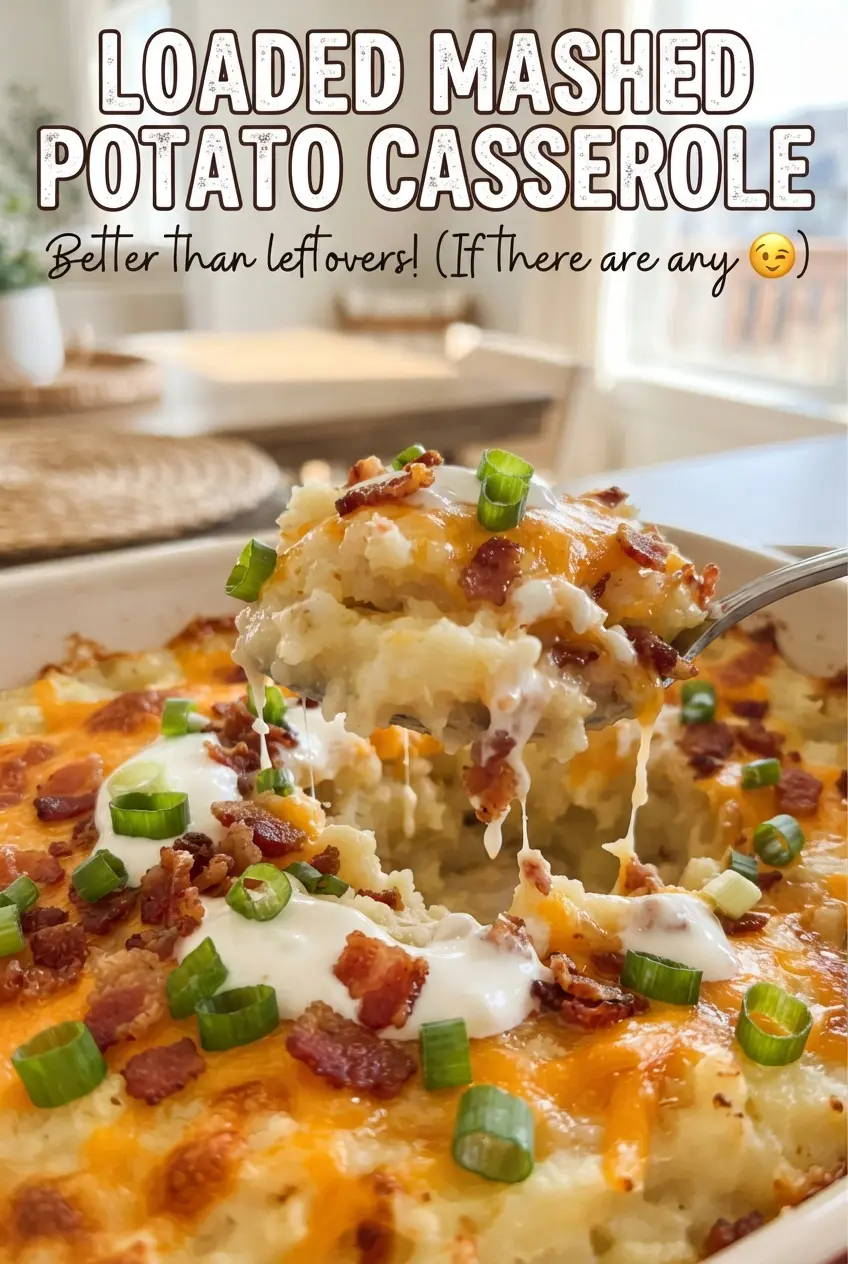
Loaded Mashed Potato Casserole
Ingredients
Equipment
Method
- Preheat the oven to 350F and butter a 9x13-inch baking dish so it releases easily after baking.
- Boil the peeled and cubed russet potatoes in salted water for 15-18 minutes until tender, then drain thoroughly.
- Mash the drained potatoes with unsalted butter, softened cream cheese, sour cream, and whole milk until completely smooth.
- Stir in 1 cup shredded cheddar, half the cooked and crumbled bacon, half the sliced green onions, 1 tsp salt, and 1/2 tsp black pepper.
- Spread the mashed potato mixture into the prepared dish, then top with the remaining shredded cheddar and the remaining bacon.
- Bake at 350F for 25-30 minutes until hot and bubbly, then sprinkle the remaining green onions over the top for a fresh, green finish.