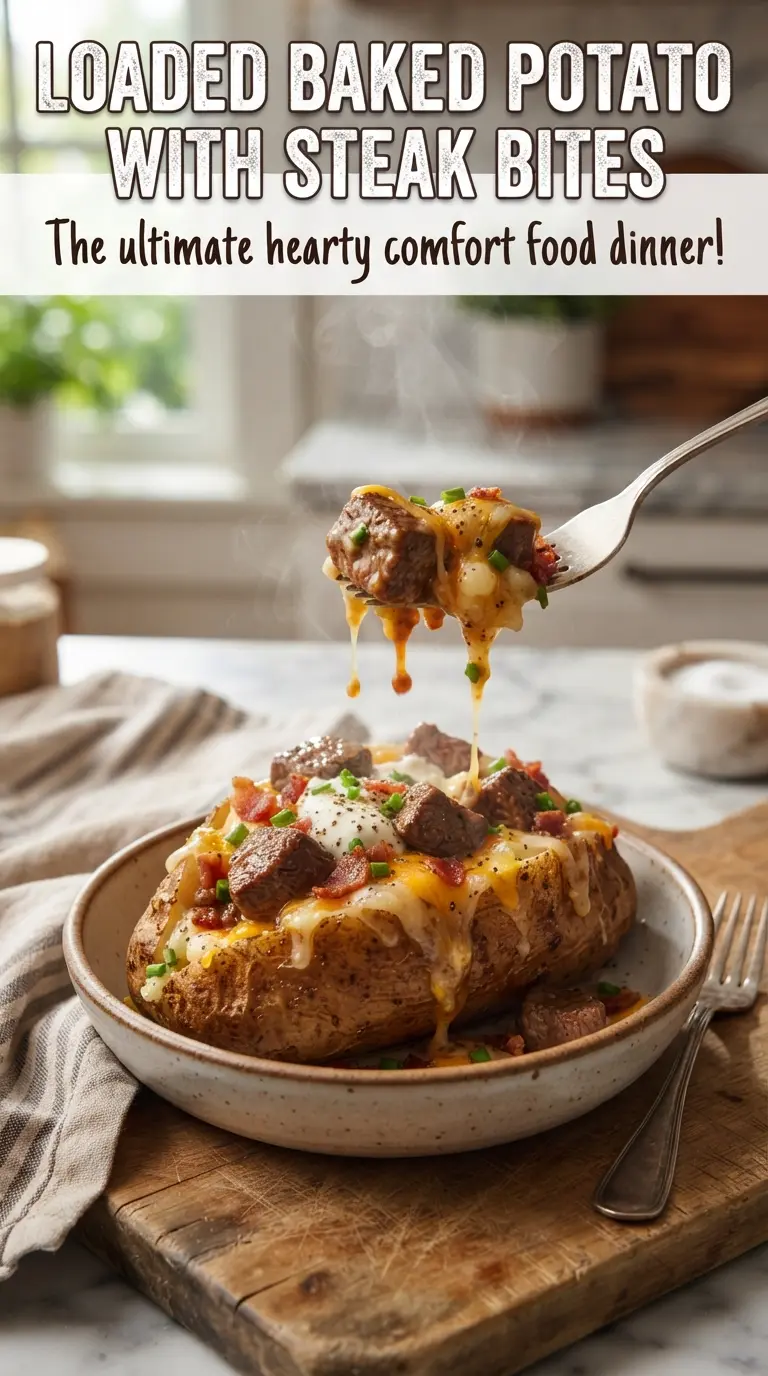
Loaded baked potatoes get a whole lot more interesting when the topping isn’t just bacon and cheese but tender steak bites sizzling in garlic butter. The contrast is what makes this one worth repeating: a crackly-skinned russet with a fluffy center, then juicy seared beef, sharp cheddar, cool sour cream, and fresh chives all landing in the same forkful.
The key is treating the potato and the steak like two separate jobs that meet at the end. Russets need enough time in the oven for the inside to go soft and steamy while the skin dries out. The steak, on the other hand, needs a hard sear in a hot pan so it browns before the garlic goes in. Once the butter hits, the pan turns into the sauce, and those browned bits at the bottom become part of the topping instead of getting left behind.
Below, I’ll walk through the small choices that keep the steak juicy and the potato fluffy, plus the swaps that still work if you want to change up the cheese or make it dairy-free.
The potatoes came out fluffy and the steak stayed juicy even after I spooned the garlic butter over everything. My husband kept saying the pan butter on top made it taste like a steakhouse dinner.
Save this loaded baked potato with steak bites for a dinner that brings fluffy potatoes, garlicky steak, and melted cheddar together in one pan-worthy plate.
The Potato Skin Needs More Time Than the Steak Does
A baked potato can look done on the outside and still be dense in the center if you rush it. Russets need enough oven time for the starches inside to fully soften, which is what gives you that light, fluffy middle when you split them open. The skin also needs time to dry out; that’s what keeps it from tasting steamed.
The steak is a different story. Small cubes sear fast, and if they sit in a crowded pan they’ll gray before they brown. Give them space and heat, and don’t move them around too much at the start. That hard sear gives you the savory crust that stands up to the butter, sour cream, and cheese.
- Russet potatoes — These are the right potato for a loaded baked potato because the skins hold up and the centers go fluffy, not waxy. If you swap in Yukon Golds, you’ll get a creamier texture, but the potato won’t split and fluff quite the same way.
- Sirloin steak — Sirloin stays tender with a quick sear and doesn’t need long cooking. Ribeye also works if you want more richness, while leaner cuts need to be sliced smaller and cooked even more quickly or they’ll toughen.
- Cheddar — Sharp cheddar gives the loaded potato its punch. Pre-shredded cheese melts fine, but block-shredded cheese melts smoother because it doesn’t have anti-caking starch coating each piece.
- Sour cream and chives — These finish the dish with coolness and freshness. The sour cream cuts through the butter, and the chives keep the whole thing from tasting heavy.
What Each Ingredient Is Actually Doing in This Recipe
- Primary ingredient (the star) — Quality matters most. Choose the best you can find.
- Cooking medium (oil, butter, or broth) — This carries flavors and prevents dryness.
- Seasonings (salt, pepper, spices, herbs) — Layer flavors so nothing overpowers. Build depth gradually.
- Aromatics (garlic, onion, herbs) — Cook with fat to bloom flavors. Become the foundation.
- Supporting ingredients — Complement the main ingredient without overpowering it.
- Sauce or liquid (if applicable) — Brings flavors together. Balance richness with acid.
- Acid (lemon, vinegar, wine, or other) — Brightens and prevents flat-tasting results.
- Final finish (garnish, glaze, or sauce) — Prevents one-dimensional taste and adds visual appeal.
Build the Steak Bites in the Pan, Then Use the Drippings
Getting the Potatoes Fully Baked
Rub the potatoes with oil and coarse salt before they go into a 425°F oven. That salted skin is what gives you the savory crust people actually want to eat. Bake them until a knife slides in with no resistance and the center feels soft when pressed; if they still feel firm, they’ll stay gluey inside. Let them sit for a minute or two before splitting so the steam settles instead of blowing out the filling.
Searing the Steak Without Steaming It
Heat the oil until it shimmers before the steak goes in. The pan needs to be hot enough that the cubes sizzle immediately, otherwise they leak juice and steam themselves. Leave them alone long enough to brown on one side, then turn them and finish the other sides. If the pan looks crowded, sear in batches; that extra minute is worth it for the crust.
Turning Butter and Garlic Into the Finish
Once the steak is browned, add the butter and garlic and toss fast for about a minute. Garlic burns quickly, so this part should smell nutty and savory, not sharp or bitter. The butter picks up the fond from the pan and clings to the steak instead of pooling at the bottom. Spoon that butter over the potatoes at the end — that’s where the biggest flavor lives.
Assembling So Every Bite Has Something
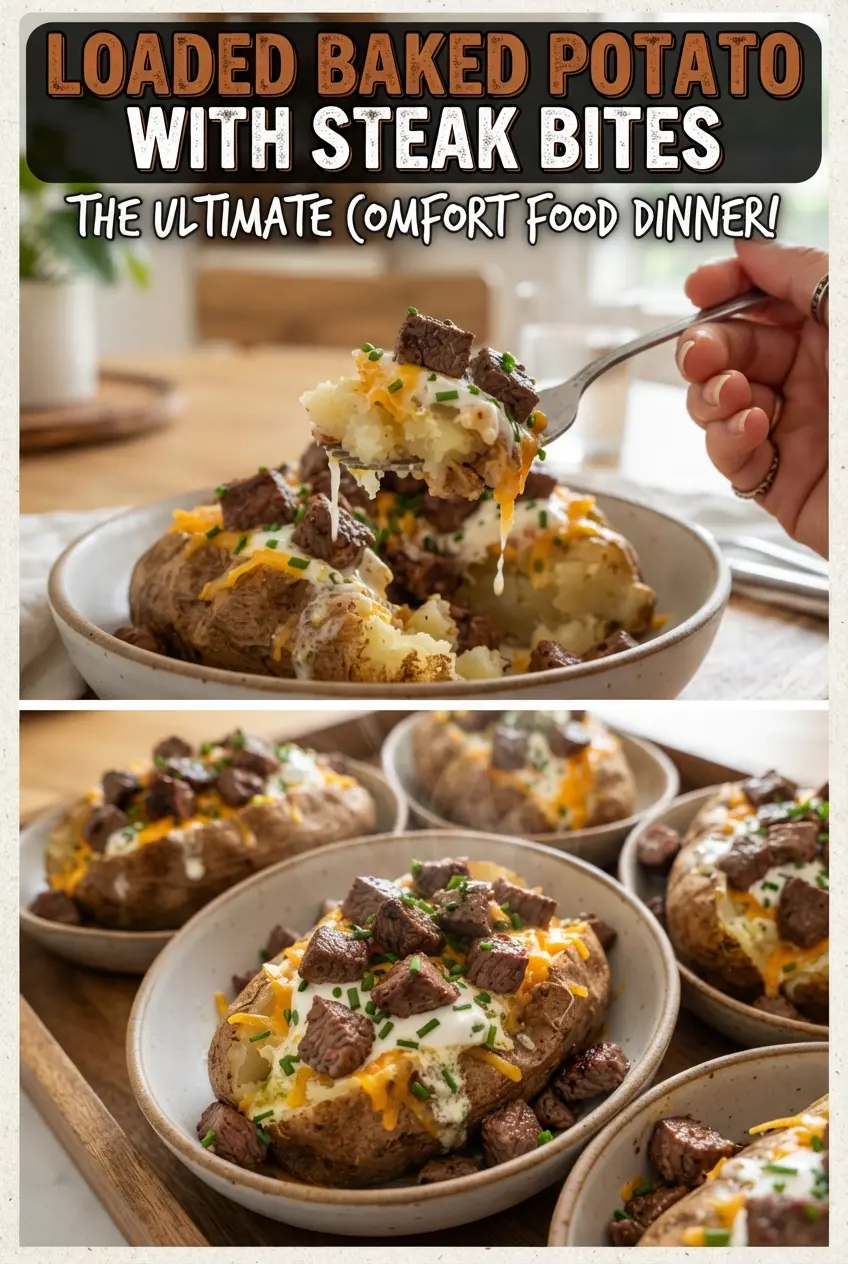
Split the potatoes down the center and fluff the insides with a fork so the cheese has somewhere to melt. Add the cheddar while the potato is hot, then pile on the steak bites right away so the cheese softens underneath. Finish with sour cream and chives last. If you add the sour cream too early, it can melt into the potato instead of staying cool and distinct on top.
How to Change It Without Losing What Makes It Good
Dairy-Free Version
Swap the butter for a plant-based butter that browns well, and use a dairy-free cheddar-style shred that melts cleanly. The steak still gets the same garlicky finish, but the topping will taste a little less rich and a little more savory than the original.
Bacon-and-Steak Shortcut
If you want an even heavier loaded-potato feel, add crisp bacon over the top with the chives. Keep the steak portion the same and use the bacon as a finishing layer, not the main protein, so the potatoes still eat like a steak dinner instead of a bacon side dish.
Spicy Version
Add a pinch of cayenne or crushed red pepper to the steak seasoning, or finish with a spoonful of hot sauce over the sour cream. The heat works best as a final note, because too much spice in the butter can mask the garlic and make the whole dish taste blunt.
Make It a Full Meal for a Crowd
Bake extra potatoes and double the steak, then set up the toppings buffet-style. This holds well for serving, but keep the sour cream cold until the end and add the pan butter just before serving so the potatoes don’t turn greasy while they sit.
Storage and Reheating
- Refrigerator: Store leftovers for up to 3 days. The potato will firm up a little, but the steak and cheese still reheat well if you keep everything covered.
- Freezer: The steak portion freezes better than the assembled potatoes. If you want to freeze it, store the steak bites separately and bake fresh potatoes later for the best texture.
- Reheating: Warm the potato in the oven or air fryer until hot, then reheat the steak gently in a skillet over low heat or in short bursts in the microwave. High heat dries out the steak and makes the potato mealy, which is the fastest way to ruin the texture.
Answers to the Questions Worth Asking
Loaded Baked Potato with Steak Bites
Ingredients
Equipment
Method
- Preheat the oven to 425F and place a sheet pan in the oven to heat up. Rub the russet potatoes with olive oil and coarse salt, then bake for 50-60 minutes, until tender and the skins look dry and crisp.
- Season the sirloin steak cubes with salt and black pepper. Heat vegetable oil in a very hot cast iron skillet and sear the steak for 2-3 minutes, turning until browned.
- Add butter and minced garlic to the skillet. Toss for 1 minute until the garlic butter smells fragrant and the steak cubes look glossy.
- Split the baked potatoes lengthwise and fluff the insides with a fork. Sprinkle the fluffy centers with shredded cheddar so it starts melting as you assemble.
- Pile on the garlic butter steak bites and spoon the pan butter over the top. Finish with sour cream and fresh chives for a layered, juicy loaded potato.