A loaded baked potato earns its place in the rotation because the contrast never gets old: crackly skin, fluffy steaming center, melted cheddar, cool sour cream, and salty bacon in every forkful. When it’s done right, the potato itself still tastes like the star, not just a vehicle for toppings.
The small things matter here. Russets are the right potato because their dry, starchy flesh turns light and fluffy instead of waxy. Rubbing the skins with oil and coarse salt gives you a better crust, and splitting the potatoes open while they’re hot lets the steam escape before the butter and cheese go in. That’s what keeps the insides airy instead of gluey.
Below, I’ve included the timing cue that keeps the skins crisp, the cheese-melting step that makes the center extra rich, and a few swaps if you’re building these around what you’ve got on hand.
The potatoes came out with shattery skins and the inside stayed fluffy after I split them open. Melting the butter and cheddar for those last couple minutes made the center taste like a diner baked potato.
Save this loaded baked potato for the nights when you want crisp skins, fluffy centers, and all the classic toppings in one place.
The Crisp Skin and Fluffy Center Happen at the Same Time
The most common mistake with baked potatoes is treating the skin and the interior like separate jobs. They’re connected. High heat dries the skin enough to crisp it, while the long bake gives the interior time to steam itself into that light, fluffy texture. If the potato goes in wrapped in foil, the skin steams and goes soft. If it’s pulled too early, the inside stays dense and a little undercooked in the middle.
Use russets, not waxy potatoes. Their higher starch content is what gives you the classic baked-potato texture. The potato is done when a knife slides in with no resistance and the skin looks dry and taut. Give it a gentle squeeze with an oven mitt; it should yield easily without feeling heavy in the center.
What the Potatoes, Butter, and Cheese Are Actually Doing
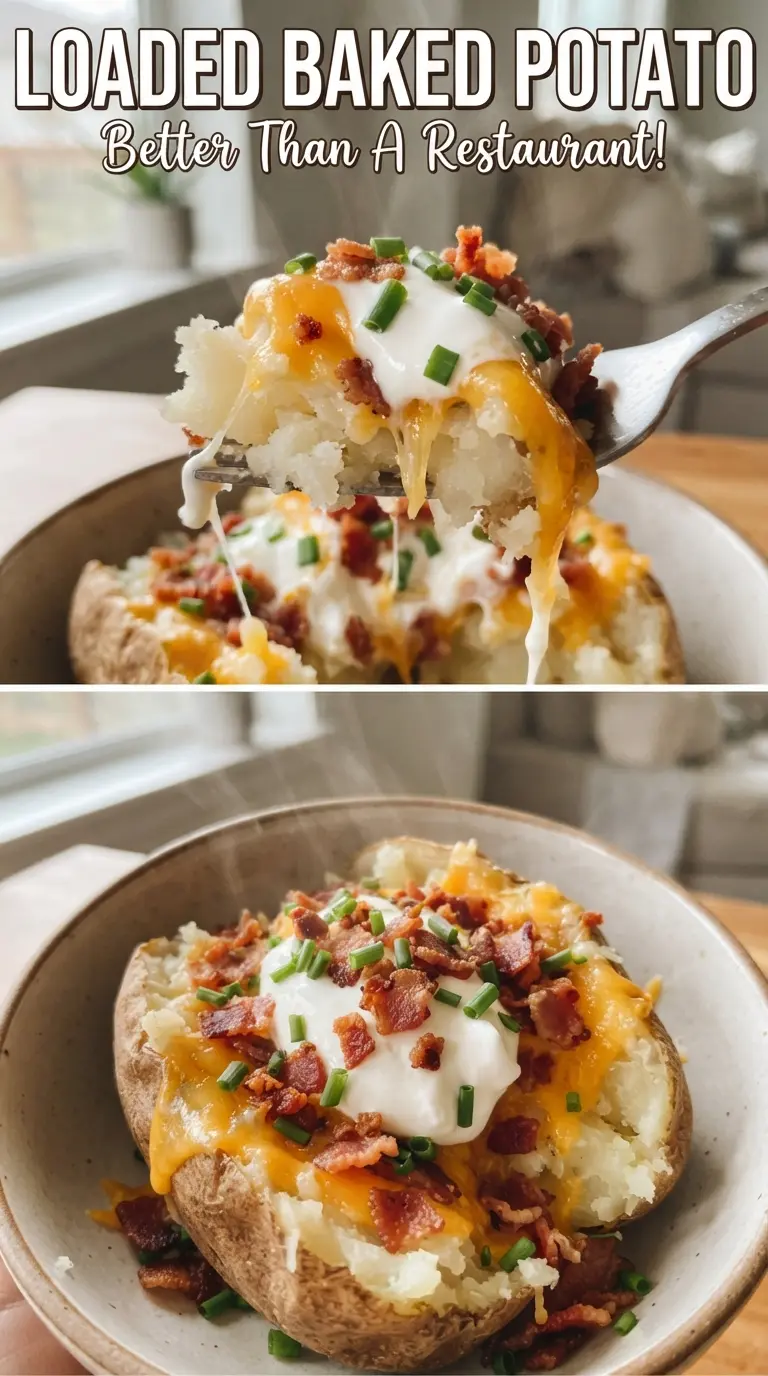
- Russet potatoes — These are the only potatoes that give you that dry, fluffy interior and sturdy skin. Yukon Golds stay creamier and waxier, which is fine for mash but not ideal here.
- Olive oil and coarse salt — The oil helps the skin blister and crisp, while the salt seasons the skin all the way through. Don’t skip the salt if you want the skins worth eating.
- Butter — Added first, it melts into the hot potato and coats the fluff so the cheese doesn’t just sit on top. Cold butter works better than softened butter here because it melts slowly into the steam pockets.
- Sharp cheddar — Sharp cheddar brings enough flavor to stand up to the potato. Mild cheddar melts fine, but it disappears faster once the sour cream and bacon go on.
- Sour cream — This needs to go on after the cheese melts, not before. If you heat it too early, it thins and loses the cool tang that balances the rich toppings.
- Bacon and chives — Bacon adds salt and crunch, chives add freshness and a little onion bite. Both finish the potato instead of weighing it down.
Building the Potato So the Toppings Don’t Turn It Soggy
Setting Up the Skin
Heat the oven fully to 425°F before the potatoes go in. Prick each potato a few times so steam can escape, then rub them with oil and coarse salt until the skins look evenly coated. That coating is what dries into a crisp shell, and the salt pulls the flavor all the way into the skin instead of leaving it bland.
Roasting Until the Center Gives Way
Bake the potatoes for 50 to 60 minutes, depending on size. You’re looking for a skin that feels firm and crisp and a center that gives when pressed gently. If a potato still feels dense near the middle, keep it in longer; underbaked potatoes don’t fluff properly and the toppings sink into a heavy center.
Fluffing, Buttering, and Melting the Cheese
Split the potatoes open lengthwise as soon as they’re cool enough to handle, then fluff the insides with a fork to break up the steam-packed flesh. Add the butter first so it melts into the hot interior, then pile on the cheddar and return the potatoes to the oven for 2 to 3 minutes. That brief return heat melts the cheese without drying out the potato or turning the sour cream watery later.
Finishing with the Cold Toppings
Spoon on the sour cream after the cheese melts, then scatter over the bacon, chives, and black pepper. The contrast matters: hot potato underneath, cool sour cream on top, salty bacon for crunch, and fresh chives to cut through the richness. If you add the sour cream too early, it warms through and loses the sharp finish that makes the whole potato taste balanced.
Three Ways to Make This Potato Fit What’s in Your Kitchen
Make It Vegetarian Without Losing the Loaded Feel
Skip the bacon and add extra chives, a pinch of smoked paprika, or crispy fried onions for crunch. You lose the salty meatiness, but the potato still feels loaded because the butter, cheddar, and sour cream carry the richness.
Go Dairy-Free Without Sacrificing the Crispy Skin
Use a dairy-free butter and a shredded meltable plant-based cheese, then finish with a dairy-free sour cream alternative. The skin and potato method stay the same, but the topping layer will be a little less rich and a little more dependent on seasoning, so don’t skimp on salt and pepper.
Turn It Into a Main Dish
Top the finished potato with shredded rotisserie chicken, leftover pulled pork, or steamed broccoli for a heavier meal. The key is to add the extra topping after the cheese melts so the potato still keeps its hot, fluffy center instead of getting overloaded before it’s finished.
Storage and Reheating
- Refrigerator: Store leftover baked potatoes for up to 4 days. Keep the toppings separate if possible so the skin doesn’t soften more than it has to.
- Freezer: The baked potato itself can freeze, but the texture turns a little mealy after thawing. I don’t recommend freezing the finished loaded potatoes.
- Reheating: Reheat uncovered in a 375°F oven until hot in the center. The microwave softens the skin fast, so use it only if you don’t care about crispness.
Answers to the Questions Worth Asking
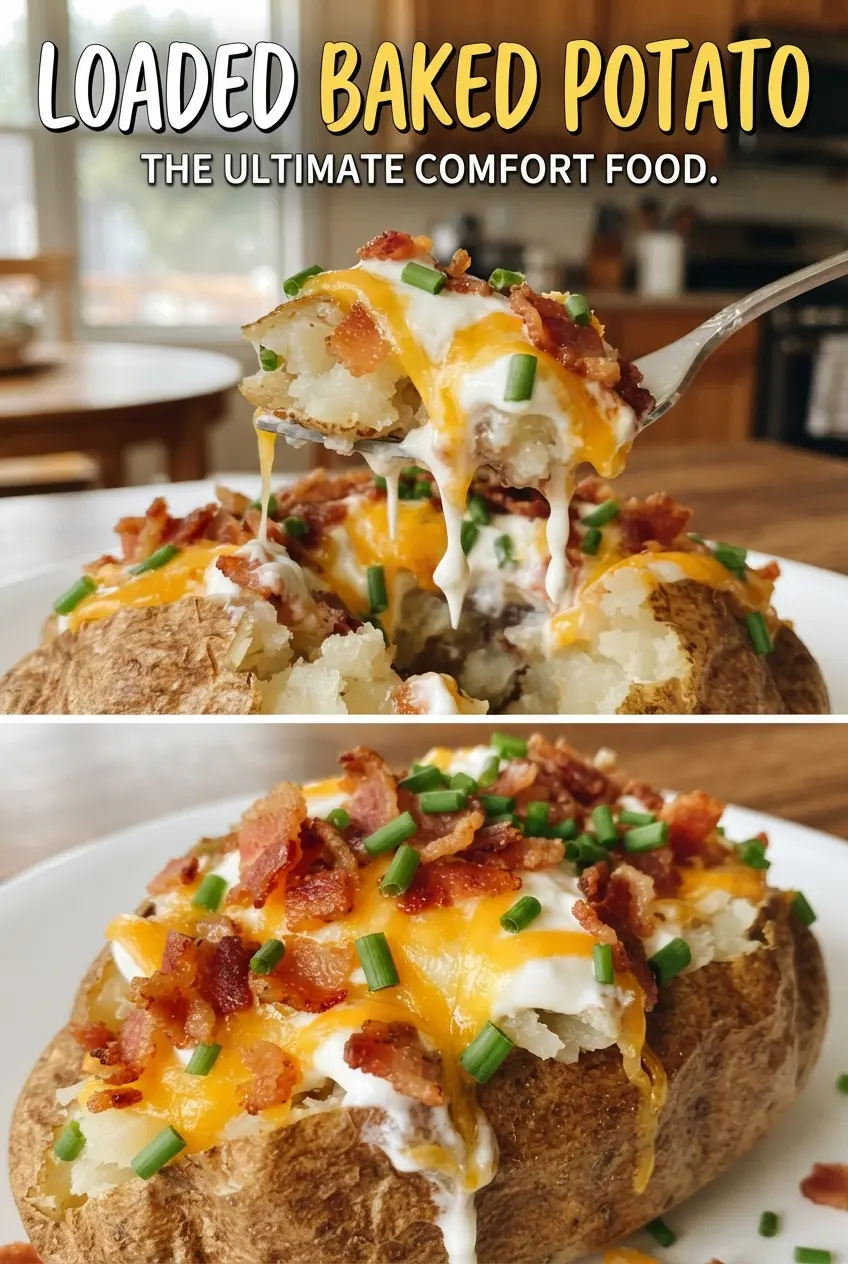
Loaded Baked Potato
Ingredients
Equipment
Method
- Preheat the oven to 425°F and place a sheet pan inside to help the bottoms crisp. Prick the potatoes all over, then rub with olive oil and coarse salt.
- Bake for 50-60 minutes, until the skins are crisp and the centers feel tender when squeezed gently.
- Split each potato open and fluff the insides with a fork so the butter and cheese can sink in. Add butter and shredded sharp cheddar to the hot interior.
- Return to the oven for 2-3 minutes, just until the cheddar melts and looks glossy. Top with sour cream, crispy bacon, chives, and black pepper right before serving, then serve hot.