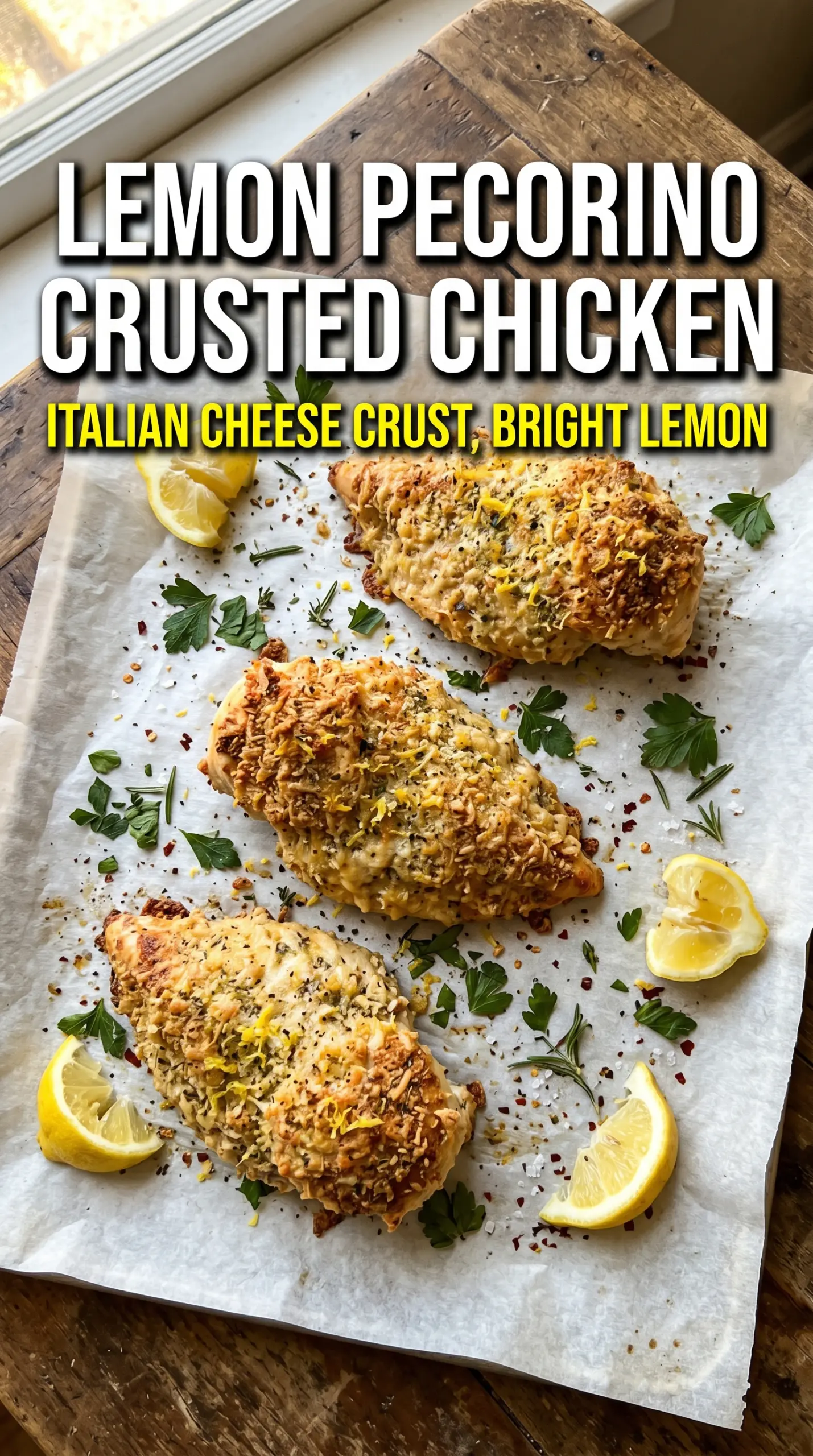
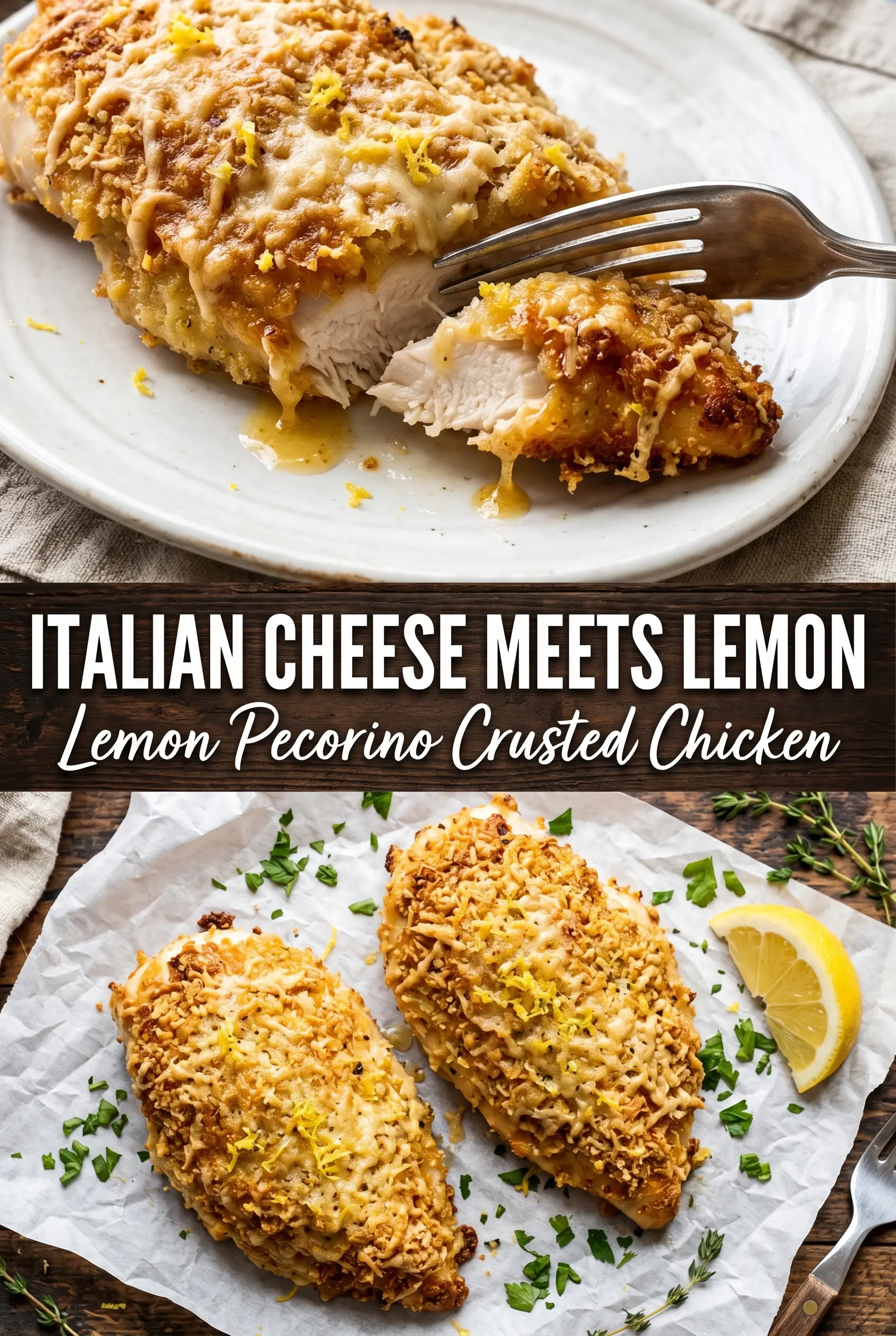
Lemon Pecorino crusted chicken brings a crackly, savory topping that turns plain chicken breasts into something people actually get excited to eat. The cheese bakes into a thin, golden shell with lemon zest threaded through it, so every bite lands with sharp saltiness first and a bright citrus finish after. The chicken stays juicy underneath because the coating is pressed on firmly and baked hot enough to brown fast before the meat dries out.
The trick here is the balance. Pecorino Romano carries the salt and the deep nutty bite, while panko keeps the crust from turning dense or greasy. Dijon mustard helps the coating cling and adds a quiet tang that disappears into the finished crust instead of tasting like mustard on the plate.
Below, I’ve included the one detail that keeps the crust crisp, plus the swaps I’d use if you need to work around what’s in your kitchen. The method is simple, but a few small choices make the difference between a crust that shatters and one that slides off.
The crust turned out crisp and browned all over, and the lemon zest made it taste fresh instead of heavy. I used a wire rack like you said and the bottom stayed crunchy instead of soft.
Lemon Pecorino crusted chicken with that crisp, golden cheese shell is the kind of dinner worth keeping close.
The Secret Is Keeping the Crust Dry Enough to Brown
Most baked cheese crusts go soft because the topping traps steam before it has a chance to crisp. Pecorino Romano helps here because it’s drier and saltier than many other cheeses, so it browns faster and sets into a more brittle crust. Pair that with panko and a hot oven, and you get that crackly top instead of a damp blanket of cheese.
The other mistake is overloading the chicken with topping. A thick layer looks generous going in, but it tends to slide once the cheese starts melting. A firm, even press is what keeps the coating attached, especially if the chicken breasts are pounded to the same thickness first so they bake through at the same pace.
- Pecorino Romano — This is the backbone of the crust. It brings sharpness and salt, and it melts into a better baked crust than softer, wetter cheeses. If you substitute Parmesan, the result is milder and a little less assertive, which is fine if you want a gentler finish.
- Panko breadcrumbs — These keep the crust light and crisp. Regular breadcrumbs work in a pinch, but they make the topping tighter and less shattery.
- Lemon zest — Fresh zest is what gives the crust its bright edge. Bottled lemon juice won’t do the same job here; it adds moisture without the citrus oils that carry the aroma.
- Dijon mustard — This acts like edible glue and adds a subtle tang under the cheese. If you skip it, the crust is more likely to fall off when you cut into the chicken.
What Each Ingredient Is Actually Doing in This Chicken
- Chicken (the protein star) — Choose the right cut for the method. Pat dry before cooking so it browns instead of steams.
- Oil or butter (the browning medium) — This helps develop flavor through browning. High-heat oil is essential.
- Seasonings (salt, pepper, spices, herbs) — Don’t hold back. The chicken carries the entire flavor profile.
- Aromatics (garlic, onion, herbs) — Cook with fat to bloom the flavors. They become part of the dish foundation.
- Sauce or liquid (the moisture keeper) — This prevents the chicken from drying and adds flavor. Balance richness with acid.
- Acid (lemon, vinegar, wine, or tomato) — This brightens and prevents one-dimensional flavor.
- Optional vegetables — Layer by cooking time so everything finishes together. Hard vegetables first.
- Proper doneness (165°F internal temperature) — Use a thermometer. Overcooked chicken is dry; undercooked is unsafe.
Building the Crust So It Bakes Crisp Instead of Sliding Off
Season and Flatten the Chicken Evenly
Pound the chicken breasts to the same thickness so the thinner edges don’t dry out before the center is done. Season both sides before adding the mustard mixture, because the crust itself won’t season the meat all the way through. If one breast is much thicker than the others, slice it horizontally or pound it more aggressively so everything finishes together.
Brush on the Mustard Base
Mix the Dijon with olive oil and brush it on both sides. You want a thin, tacky layer, not a thick coating that puddles on the pan. If the surface looks glossy but not wet, you’re in the right place. Too much mustard will make the crust slippery and can mute the clean lemony finish.
Press the Topping on Firmly
Combine the Pecorino, panko, lemon zest, parsley, garlic powder, and pepper, then press that mixture onto the chicken with your hands. Don’t just sprinkle it on top; you need gentle pressure so the cheese catches on the mustard layer. The coating should look packed and a little rough, with no bare patches showing through.
Bake on a Rack for a Drier Crust
Set the chicken on a wire rack over a baking sheet so hot air can move underneath. That’s the difference between a crust that stays crisp and one that steams on the bottom. Bake at 425°F until the topping is deeply golden and the thickest part of the chicken reaches 165°F. Let it rest for 3 minutes before serving so the juices settle and the crust doesn’t lose all its structure the second you slice in.
What to Change When You Need a Different Version
Gluten-Free Crust
Swap the panko for gluten-free panko or crushed gluten-free crackers. You’ll still get a crisp top, though the texture may be a little more delicate depending on the brand. Keep the layer thin so the crumbs toast instead of turning sandy.
Dairy-Free Adaptation
This one is trickier because the Pecorino is the main event, but you can use a firm dairy-free Parmesan-style shred plus an extra tablespoon of panko for structure. The crust won’t brown as sharply or taste as salty and savory, but it will still cling and crisp if the topping is pressed on well.
Make It With Thighs
Boneless skinless thighs work if you want a juicier cut and a little more forgiveness in the oven. They’ll need a few extra minutes, and the crust may not sit as flat because thighs are shaped unevenly, but the flavor lands beautifully.
Storage and Reheating
- Refrigerator: Store leftovers in an airtight container for up to 3 days. The crust softens a little, but it still reheats well.
- Freezer: Freeze after baking only if you need to; the crust won’t stay as crisp, but it’s usable for a quick future dinner. Wrap tightly and freeze for up to 2 months.
- Reheating: Reheat on a wire rack in a 375°F oven until warmed through. The biggest mistake is microwaving, which turns the crust soggy and pulls the coating away from the chicken.
Answers to the Questions Worth Asking
Lemon Pecorino Crusted Chicken
Ingredients
Equipment
Method
- Preheat the oven to 425°F and line a baking sheet with a wire rack so air circulates under the chicken.
- Season the chicken breasts with salt, pepper, and garlic powder to taste.
- Mix Dijon mustard with olive oil, then brush the mixture over both sides of each chicken breast.
- Combine Pecorino Romano, panko, lemon zest, parsley, garlic powder, and black pepper.
- Press the crust mixture firmly onto the mustard-coated chicken so it adheres in an even layer.
- Place the chicken on the prepared rack and bake for 20-22 minutes at 425°F until the crust is golden and the internal temperature reaches 165°F.
- Rest the chicken for 3 minutes so the juices settle and the crust stays crisp.
- Garnish with fresh basil and serve with lemon wedges.