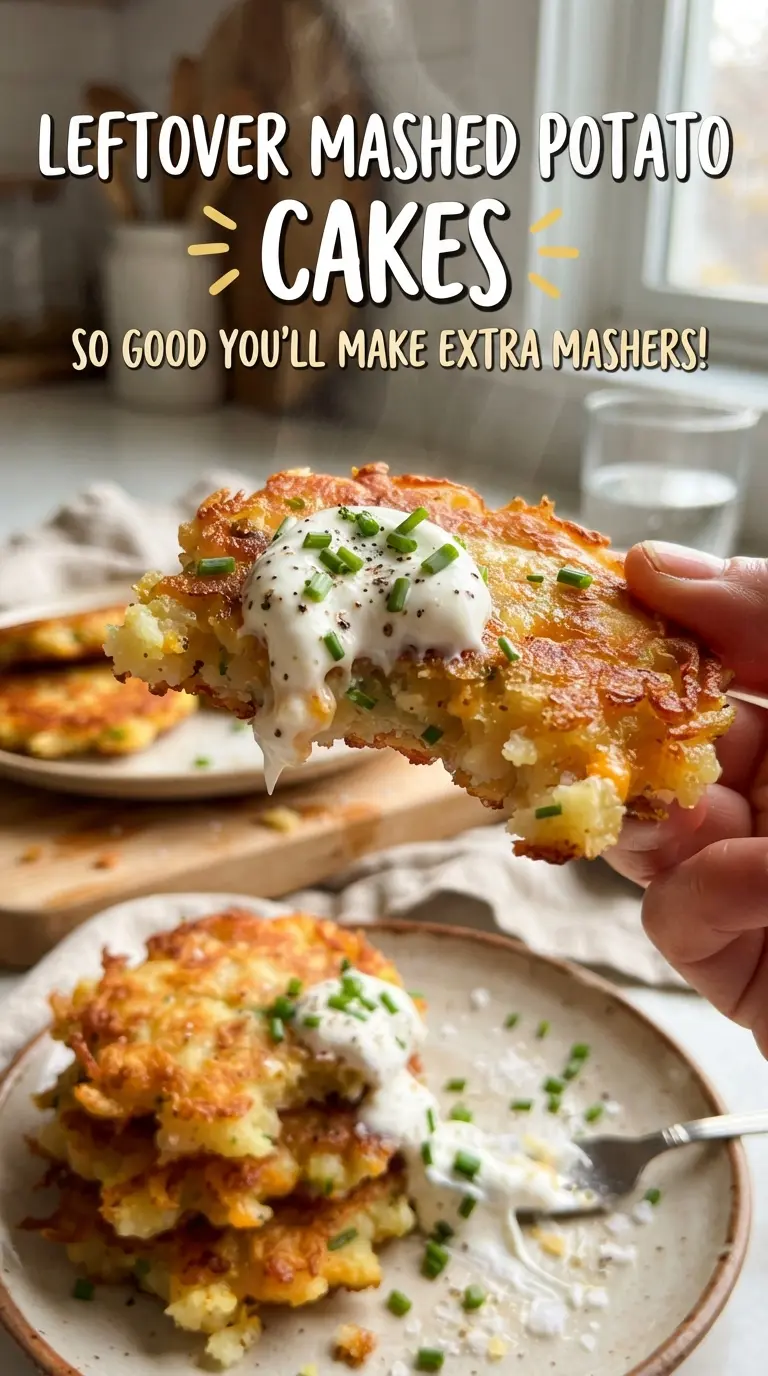
Golden, crisp-edged mashed potato cakes turn leftover potatoes into the kind of side dish people start hovering over before dinner is even on the table. The outside fries up with a crackly crust, while the middle stays soft and steamy, and the cheddar and green onions give every bite enough punch that you don’t need much else besides a spoonful of sour cream.
The key is cold mashed potatoes. Warm potatoes are too loose and hard to shape, but chilled leftovers hold together much better once the egg and flour go in. I also keep the mix modest on flour so the cakes stay tender instead of turning bready, and I cook them in a thin layer of oil over medium heat so the crust has time to build before the centers dry out.
Below, I’ve included the little details that make these potato cakes hold together cleanly, fry up evenly, and stay crisp long enough to get to the table. If your leftovers have ever turned gluey, broken in the pan, or tasted flat, the notes in this post will help.
The patties held together on the first flip and the edges went shatter-crisp without falling apart. I topped mine with sour cream and chives, and my husband kept sneaking them off the cooling rack.
Crispy leftover mashed potato cakes with cheddar and chives are the easiest way to turn yesterday’s potatoes into tonight’s best side.
The Cold Potato Mixture That Holds Together in the Pan
Mashed potato cakes fail for one of two reasons: the mixture is too wet, or the pan is too hot before the crust has a chance to form. Cold leftovers solve most of the first problem because the starches firm up as they chill, which gives the patties enough structure to flip without falling apart. The flour and egg are there as insurance, not as filler, so the mix should still feel soft and scoopable, not stiff like dough.
Cheddar matters here because it melts into the potatoes and helps the cakes brown with a little savory edge. If your leftovers are very loose from extra milk or butter, add just enough flour to get a shape that holds when pressed gently in your hand. If the mix feels sticky, chill it for 10 to 15 minutes before shaping instead of piling on more flour, which can make the cakes heavy.
What Each Ingredient Is Actually Doing in These Potato Cakes
- Cold leftover mashed potatoes — These are the backbone of the recipe. Leftovers that were made with a little butter and milk work beautifully, but if they’re loose and soupy, the cakes won’t hold as well.
- Egg — The egg binds the mixture so the patties set in the skillet instead of breaking when you turn them. One large egg is enough for this amount; too much egg makes the cakes taste more like fritters than potato cakes.
- All-purpose flour — This adds just enough structure to help the patties fry cleanly. You can swap in a 1:1 gluten-free flour blend if needed, though the cakes may be a touch more delicate.
- Cheddar — Sharp cheddar gives the best payoff because it brings salt and tang without needing much extra seasoning. Pre-shredded cheese works, but freshly shredded melts more evenly.
- Green onions — They cut through the richness and keep the flavor from tasting flat. Slice them thin so they disappear into the mixture instead of tearing the patties when you shape them.
The 15 Minutes That Make Them Crisp Instead of Soggy
Mixing the Base
Combine the potatoes, egg, flour, cheddar, green onions, garlic powder, salt, and pepper until everything is evenly distributed, but stop once the mixture comes together. Overmixing smears the potatoes and makes the texture dense. The finished mixture should hold its shape when pressed, yet still look soft and a little rough around the edges.
Shaping the Patties
Form the mixture into 12 patties about 1/2 inch thick. Thin patties brown faster and can dry out before the center warms through, while thick ones take too long to set and may split when flipped. If the mixture clings to your hands, dampen them lightly with water or chill the bowl briefly before shaping.
Frying to a Deep Golden Crust
Heat the oil in a large skillet over medium heat and wait until it shimmers before adding the patties. If the oil isn’t hot enough, the cakes soak it up and turn greasy; if it’s too hot, the outside browns before the middle firms. Fry in batches so the pan isn’t crowded, then leave the first side alone until you see a dark golden edge and the cake releases easily from the pan.
Draining and Serving
Move the finished cakes to paper towels and let them sit for a minute before serving. That short rest lets the crust set instead of steaming soft from trapped oil. A spoonful of sour cream on top is the right finish because the cool tang cuts through the richness and keeps the cakes from feeling heavy.
Three Ways to Work With What You’ve Got
Gluten-Free Potato Cakes
Use a cup-for-cup gluten-free flour blend in place of the all-purpose flour. The cakes will still hold, though they may need an extra minute in the pan before they release cleanly. Don’t use almond flour here; it doesn’t bind the same way and can make the texture crumbly.
Dairy-Free Version
Skip the cheddar and serve with a dairy-free sour cream or plain yogurt alternative. The cakes will be a little less rich and won’t brown quite as deeply, but the texture still works because the egg and flour do the binding.
Make Them a Little Heartier
Stir in a handful of finely chopped cooked bacon or a spoonful of minced fresh herbs like parsley or dill. Bacon adds salt and a crisp bite, while herbs lift the potatoes and keep the cakes from tasting too heavy.
Storage and Reheating
- Refrigerator: Store leftover cakes in an airtight container for up to 4 days. The crust softens a bit in the fridge, but the flavor holds up well.
- Freezer: Freeze cooked cakes in a single layer, then transfer to a bag or container for up to 2 months. Reheat from frozen for the best texture instead of thawing first.
- Reheating: Warm them in a skillet over medium heat or in a 400°F oven until hot and crisp again. The biggest mistake is using the microwave alone, which steams the crust and turns it soft.
Answers to the Questions Worth Asking
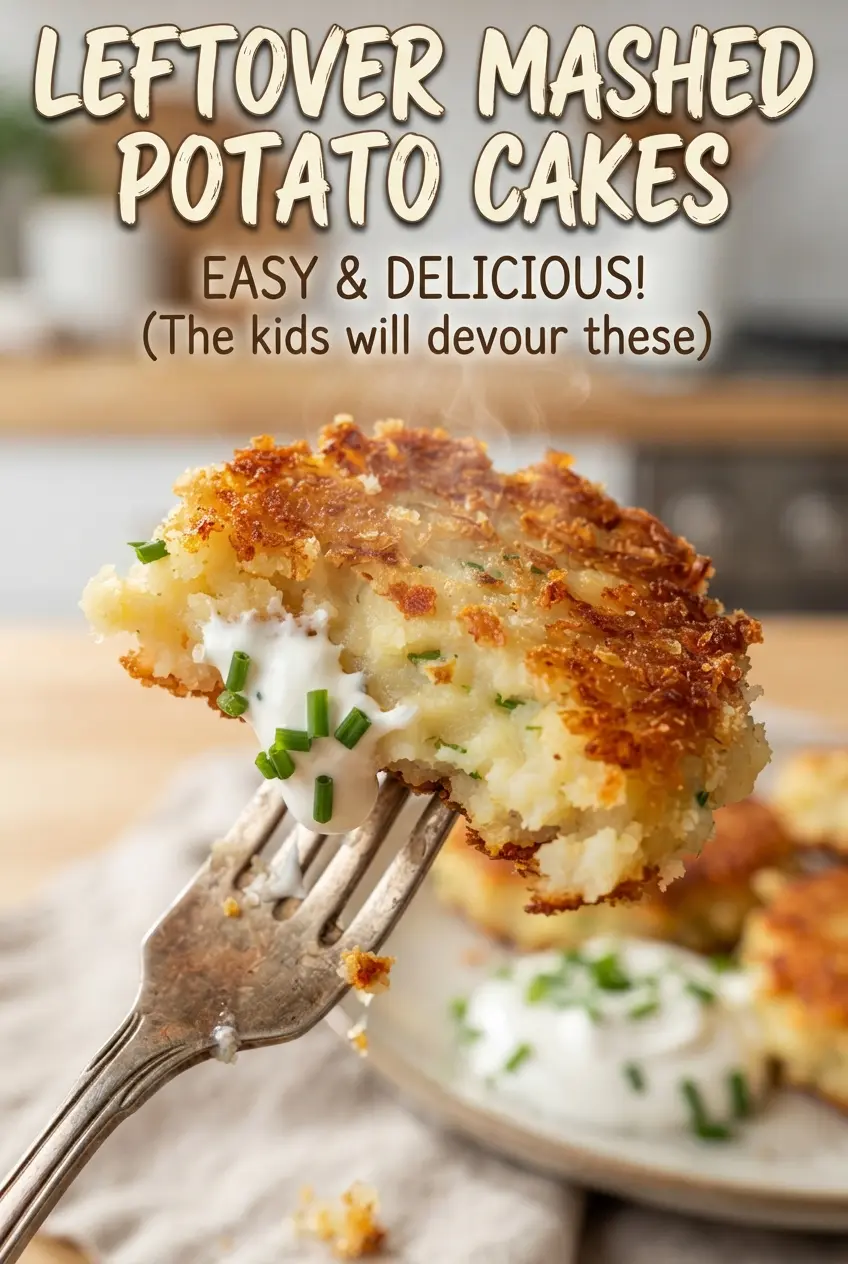
Leftover Mashed Potato Cakes
Ingredients
Equipment
Method
- In a mixing bowl, combine cold leftover mashed potatoes, large egg, all-purpose flour, shredded cheddar, green onions, garlic powder, salt, and pepper until evenly mixed; the texture should look cohesive and thick (no dry pockets).
- Shape the mixture into 12 patties about 1/2 inch thick so they fry evenly and keep their shape; set them aside briefly while you heat the skillet.
- Heat vegetable oil in a large skillet over medium heat until it shimmers slightly; this is your cue the pan is ready to crisp the patties.
- Place the patties in the skillet and fry 3-4 minutes per side until golden and crispy, pressing lightly with a spatula only if needed to ensure contact; flip when the edges look set and browned.
- Drain the potato cakes on paper towels right after frying to remove excess oil; serve while hot for the crispiest edges with sour cream.