Layered cornbread cake brings the best parts of cornbread and dessert together in one tall, tender slice. The crumb stays soft and sturdy enough to stack, while the honey butter frosting sinks into the edges and makes every bite taste like a warm skillet of cornbread dressed up for a celebration. The finish of honey and flaky salt pulls the whole cake into focus, keeping it from leaning too sweet.
What makes this version work is the balance. Cornmeal gives the cake its signature texture, but there’s enough flour and dairy in the batter to keep the layers light instead of gritty or dry. Honey shows up in both the cake and the frosting, which ties the flavors together without making the frosting cloying. I also like using buttermilk with whole milk here; the buttermilk sharpens the flavor, and the whole milk keeps the crumb tender.
Below, I’ve laid out the parts that matter most: how to keep the layers from baking up dense, which frosting texture is ideal for stacking, and a few smart variations if you want to adjust the sweetness or make the cake a little more practical for your own kitchen.
The layers baked up moist and held together beautifully, and the honey butter frosting was fluffy enough to spread cleanly without sliding off the cake.
Save this layered cornbread cake for the honey butter frosting and that sweet-salty flaky salt finish.
The Trick to Keeping Cornbread Layers Tender Enough to Stack
Cornmeal can make a layer cake feel heavy if the batter gets overmixed or if the oven runs too hot. Here, the batter needs just enough stirring to bring it together, then it goes straight into the pans so the baking powder and baking soda can do their job while the oven heat stays even. If the layers dome too much, they’ll be awkward to frost and the cake will lean once stacked.
The other thing that matters is the bake time. Pull the layers when the center springs back and a toothpick comes out clean or with a few moist crumbs. If they bake past that point, the cornbread dries out fast, and frosting can only cover so much. Let them cool all the way down before you stack anything, or the honey butter frosting will slide right off.
What Each Ingredient Is Actually Doing in This Cake
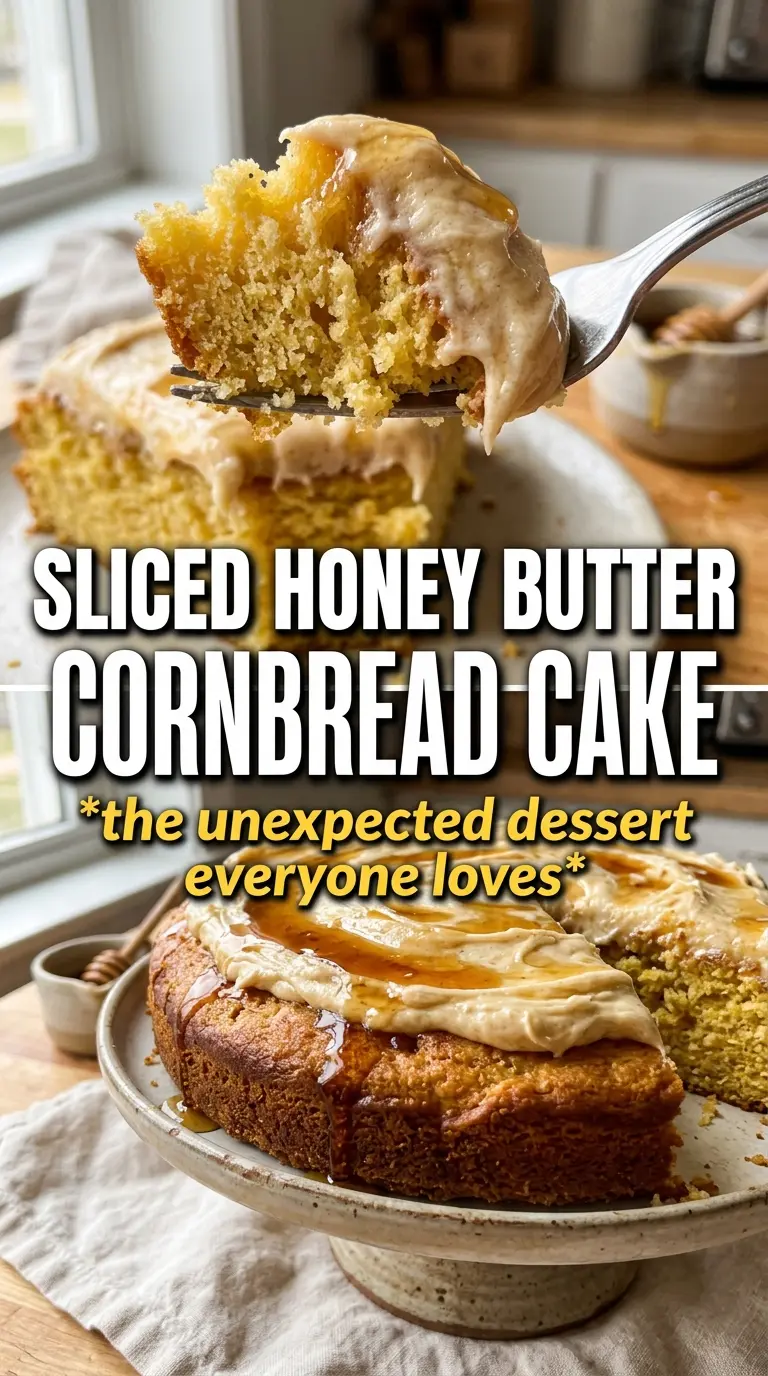
- Yellow cornmeal — This is where the cornbread character comes from. Use a fine or medium grind so the crumb stays tender; coarse cornmeal can turn the cake sandy.
- Buttermilk — It brings a little tang and helps soften the texture. If you don’t have it, stir 1/2 tablespoon lemon juice or vinegar into 1/2 cup milk and let it sit for 5 minutes, then use that in place of the buttermilk.
- Honey — Honey sweetens both the cake and the frosting, but more importantly it carries the flavor through the whole dessert. The cake gets a gentle floral note, and the frosting tastes less flat than one made with sugar alone.
- Butter, melted for the batter and softened for the frosting — Melted butter keeps the cake layers rich without making them dense. Softened butter is the key to the frosting’s fluffy texture, so don’t rush it with cold butter or you’ll end up fighting lumps.
- Powdered sugar — This gives the frosting its body and spreadability. If you cut it too much, the frosting will be loose and won’t hold up between layers.
- Heavy cream — Just a couple tablespoons smooths the frosting without thinning it out. Add it slowly so you can stop at a spreadable, swoopy consistency instead of making it runny.
Building the Layers Before the Frosting Melts the Whole Thing
Mix the Batter Just Until It Comes Together
Whisk the dry ingredients in one bowl and the wet ingredients in another, then fold them together until no dry streaks remain. The batter should look thick and pourable, not whipped and airy. If you keep stirring after that point, the cake can turn tight and bready instead of soft.
Watch the Pans, Not Just the Timer
Divide the batter evenly between the three prepared pans so the layers bake at the same rate. Start checking at 22 minutes, because oven differences matter more than most recipes admit. You want the tops set, the edges just pulling from the pan, and a toothpick in the center coming out clean or with a few crumbs.
Beat the Frosting Until It Looks Like It Can Hold Its Own Weight
Whip the softened butter first until it looks pale and fluffy, then add honey, powdered sugar, cream, vanilla, and salt. Keep beating until the frosting is light but stable. If it looks greasy or loose, the butter was too warm; chill it for a few minutes and beat again until it firms up enough to spread without sliding.
Stack, Drizzle, and Finish Cold Enough to Set
Spread a generous layer of frosting between each cooled cake layer, then use the rest on the outside. A small offset spatula helps, but the main thing is patience: if the layers are even slightly warm, the frosting softens and gets slippery. Finish with a drizzle of honey and a pinch of flaky salt just before serving so the top stays glossy and the salt keeps its crunch.
Ways to Adjust the Sweetness, Texture, or Dairy Without Losing the Point
Less-sweet version with the same honey flavor
Cut the frosting sugar by about 1/2 cup and keep the flaky salt finish. The cake itself already brings sweetness from the honey, so you can back off a little without losing the dessert feel. The frosting will be slightly softer, so chill it for 10 minutes before assembling if needed.
Gluten-free version with better structure
Swap the all-purpose flour for a 1:1 gluten-free baking blend that includes xanthan gum. The cornbread texture will stay close to the original, though the crumb may be a touch more delicate, so let the layers cool completely before moving them. Avoid trying to replace the flour with only almond flour or the cake won’t hold a clean stack.
Dairy-free approach that still bakes well
Use a neutral plant-based butter in both the cake and frosting, and swap the milk and buttermilk for unsweetened non-dairy milk plus 1/2 tablespoon vinegar or lemon juice. The frosting won’t be quite as rich, but it will still whip up if the plant butter is the kind that firms when chilled. Don’t use a tub-style spread, or the frosting can turn greasy.
Storage and Reheating
- Refrigerator: Store covered for up to 4 days. The cake stays moist, and the frosting firms up, so let slices sit out for 20 to 30 minutes before serving.
- Freezer: Freeze individual slices or unfrosted layers wrapped tightly for up to 2 months. Thaw in the refrigerator overnight, not on the counter, or the frosting can sweat and separate.
- Reheating: This cake is best served at room temperature, not warmed. If you want to soften a chilled slice, leave it on the counter rather than microwaving it, since heat will melt the frosting and make the crumb feel gummy.
Answers to the Questions Worth Asking
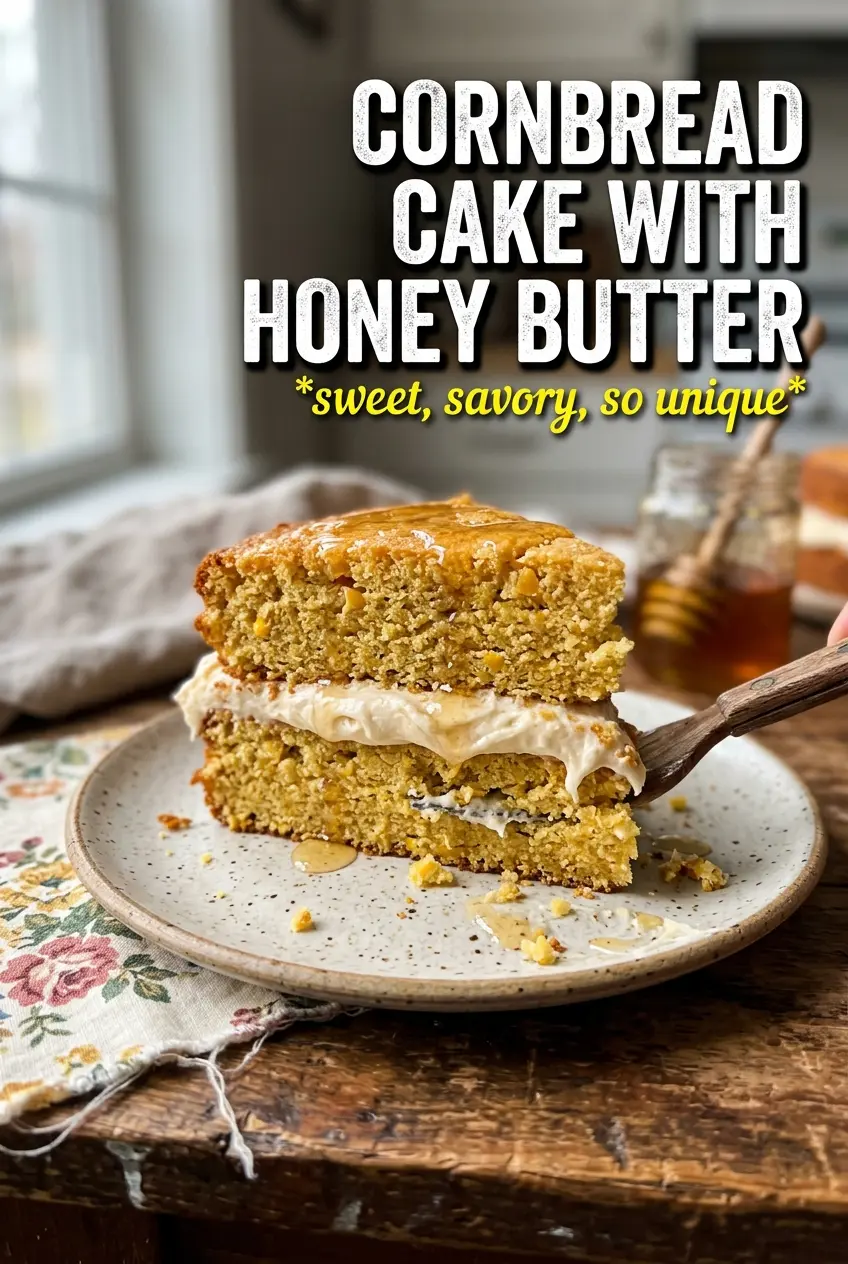
Layered Cornbread Cake With Honey Butter Frosting
Ingredients
Equipment
Method
- Preheat oven to 350F and grease three 8-inch round pans, so the layers release cleanly after baking.
- Whisk all-purpose flour, yellow cornmeal, granulated sugar, baking powder, baking soda, and salt in one bowl.
- Whisk eggs, whole milk, buttermilk, melted unsalted butter, honey, and vanilla in a separate bowl.
- Fold the wet mixture into the dry mixture just until combined, then divide the batter between the three prepared pans.
- Bake for 22-25 minutes, until a toothpick comes out clean.
- Cool the cakes completely before frosting so the honey butter frosting sets smoothly.
- Beat softened unsalted butter with honey until smooth, then gradually add powdered sugar while continuing to beat.
- Add heavy cream, vanilla, and salt, then beat until very light and fluffy with a pale, airy texture.
- Frost generously between all layers and over the outside for even coverage and clean edges.
- Drizzle with honey and sprinkle flaky sea salt over the top right before serving.