Thin, lacy Korean potato pancakes with cheese hit the pan with a sizzle and come out with the kind of crisp edges that crack when you bite them. The middle stays tender and lightly chewy from the grated potato, while the mozzarella gives you those salty, melty pockets that turn a simple snack into something people hover over at the stove.
The trick here is all in the potato prep. Once the grated potatoes are squeezed dry, they fry instead of steaming, which is what gives you that deep golden crust. Potato starch helps bind the mixture without making it heavy, and a little garlic and green onion keep the flavor from leaning flat or one-note.
Below, I’m breaking down the part that matters most: how to get the potatoes dry enough, how much oil you actually need, and what to expect when the cheese starts melting inside the pancake. If yours have gone limp before, the fix is probably in the pan, not the recipe.
I squeezed the potatoes like you said and the pancakes actually crisped up instead of turning soggy. The cheese melted through the middle and the edges got those little lacey bits my kids kept stealing off the plate.
Crispy Korean potato pancakes with cheese disappear fast, so keep this one handy for a quick breakfast, snack, or side with extra-crisp edges and a melty center.
The Potatoes Need to Be Dry Before They Ever Hit the Pan
The biggest mistake with gamja jeon is treating the grated potatoes like a batter. They’re not. They’re a wet, starchy vegetable that needs aggressive draining or the pan will steam them into pale, soft rounds. Squeeze out as much liquid as you can, and don’t stop at one pass; press, twist, and press again until the potato shreds look almost fluffy.
That dry texture is what lets the starch grab and hold the pancake together. If the mixture feels loose after stirring, add a touch more potato starch rather than more egg. Too much egg makes these heavier and more omelet-like, which works against the crisp, potato-forward finish this recipe is after.
What the Cheese and Starch Are Actually Doing Here

- Russet potatoes — These are the best choice because they’re starchy and crisp up well. Waxy potatoes hold more moisture and tend to stay softer in the middle.
- Potato starch or cornstarch — This gives the mixture structure and helps the edges set quickly. Potato starch makes the cleanest, snappiest crust, but cornstarch works if that’s what you have.
- Mozzarella — Use low-moisture shredded mozzarella, not fresh mozzarella. Fresh cheese releases too much liquid and can turn the pancakes soggy.
- Green onions and garlic — They keep the pancakes from tasting flat. If you want a gentler allium note, use only the green parts of the onion; the flavor stays fresh without overpowering the potato.
- Vegetable oil — You need enough oil to fry, not just lightly coat the skillet. That thin, shallow-fry layer is what gives you the lacey edges and deep color.
Getting the Pan Hot Enough for Lacy Edges
Mixing the Batter Without Overworking It
Combine the drained potato, cheese, egg, starch, salt, garlic, and green onions just until everything looks evenly coated. If you stir too long, the potatoes start to weep again and the mixture loosens. It should hold together when you scoop it, with the shreds still visible.
Frying for Crispness, Not Pale Softness
Heat the oil over medium-high until it shimmers and a small bit of mixture sizzles right away. Drop in about 1/4 cup of batter and press it flat with a spatula so the pancake is thin enough to crisp through. If the heat is too low, the potatoes absorb oil and go greasy; if it’s too high, the outside browns before the center has time to cook.
Flipping at the Right Moment
Leave the pancake alone until the edges turn deeply golden and the underside releases without sticking. That usually takes 4 to 5 minutes, depending on your pan. If it tears when you try to flip it, it’s not ready yet. The surface should look set, not wet, before you turn it.
Serving While the Cheese Is Still Soft
These are best the moment they leave the pan, when the cheese is melted and the crust is still sharp. Keep finished pancakes on a rack in a low oven if you’re making a batch, not stacked on a plate, or the steam will soften the bottoms. Mix the dipping sauce while the last pancakes fry so everything hits the table hot.
How to Adapt These Korean Potato Pancakes Without Losing the Crunch
Dairy-Free Version
Leave out the mozzarella and add an extra tablespoon of potato starch for better binding. You’ll lose the melted cheese pull, but the pancakes will turn out even crisper and taste more like a classic savory gamja jeon.
Cornstarch Instead of Potato Starch
Cornstarch works well if you don’t have potato starch, and the crust still comes out crisp. Potato starch gives a slightly cleaner bite, but the difference is small enough that I’d use what’s in the pantry.
Make Them Spicier
Add a pinch of gochugaru or a little extra red pepper flakes to the dipping sauce. That gives the pancakes a sharper, more savory finish without changing the texture of the batter.
Storage and Reheating
- Refrigerator: Store in an airtight container for up to 3 days. The crust softens a bit, but they still reheat well.
- Freezer: Freeze on a sheet pan, then transfer to a bag with parchment between layers. They lose a little of the fresh-crisp texture, but they do freeze better than most fried potato dishes.
- Reheating: Reheat in a skillet over medium heat or in a 400°F oven until the edges crisp back up. Don’t microwave them if you want the texture back; it makes the potatoes soft and the cheese rubbery.
Questions I Get Asked About This Recipe
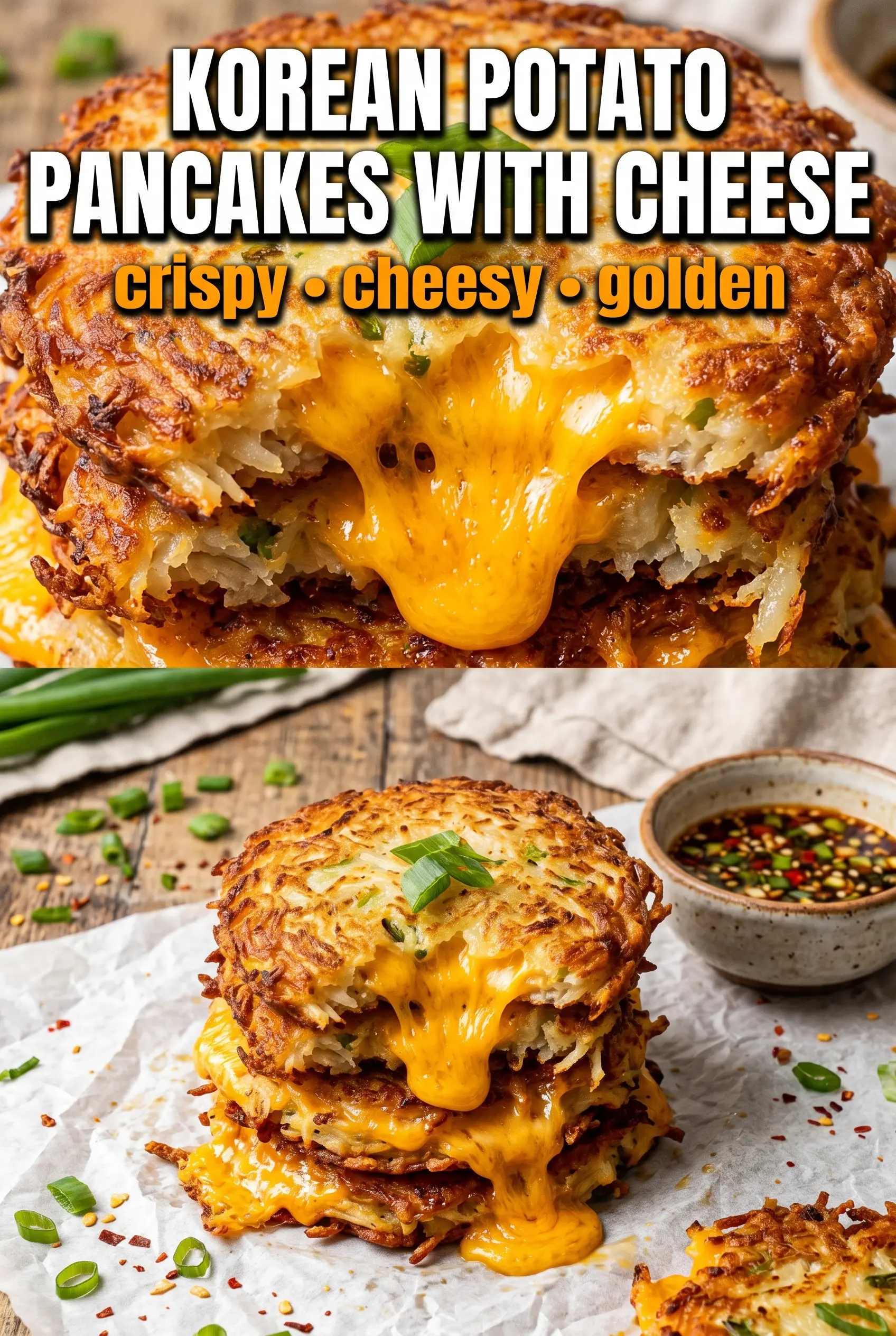
Korean Potato Pancakes with Cheese (Gamja Jeon)
Ingredients
Equipment
Method
- Grate the potatoes, then squeeze out as much liquid as possible; the drier the grated potato, the crispier the pancakes will be.
- In a bowl, mix the drained grated potato with mozzarella, egg, potato starch, salt, garlic, and green onions until evenly combined.
- Heat a generous layer of vegetable oil in a skillet over medium-high heat until hot.
- Spread about 1/4 cup of the potato mixture into the pan and press flat, then cook 4–5 minutes per side until deeply golden and crispy.
- Work in batches so the pan stays hot; transfer finished pancakes to a sheet pan and keep warm in the oven while you fry the rest.
- Mix soy sauce, rice vinegar, sesame oil, sugar, and red pepper flakes until the sugar dissolves.
- Serve the hot, crispy Korean potato pancakes alongside the dipping sauce.