Sticky, caramelized Korean BBQ chicken tucked into warm tortillas hits that perfect middle ground between fast weeknight dinner and something you’d happily make for friends. The chicken gets a glossy gochujang-sesame coating that clings to every bite, while the quick kimchi brings crunch, heat, and just enough tang to keep the tacos from feeling heavy. It’s the kind of meal that disappears fast because each bite has a little sweetness, a little spice, and a lot of texture.
What makes this version work is the order. The chicken cooks first on its own so it can pick up color, then the sauce goes in at the end and reduces just enough to glaze instead of scorch. The quick kimchi doesn’t try to be traditional fermented kimchi; it’s a fast cabbage toss that softens and seasons in the time it takes to cook the chicken, which is exactly what you want here. That short rest gives the cabbage a crisp-tender bite and keeps the tacos bright.
Below, I’ve included the small details that matter most: how to keep the sauce glossy, when the chicken is actually done, and what to swap if you need a gluten-free version without losing the punch of the dish.
The chicken got this sticky caramelized edge in the skillet, and the quick kimchi was crunchy and tangy after just 15 minutes. My tortillas kept tearing the first time, but warming them in the dry pan made the whole thing hold together better.
Save these Korean BBQ Chicken Tacos with Quick Kimchi for the nights when you want sticky glaze, crunchy cabbage, and dinner on the table fast.
The Trick to Keeping the Gochujang Glaze From Burning
Gochujang has enough sugar in it that it can go from glossy to bitter fast if you add it too early and leave it sitting over high heat. The chicken needs time first. Give it that initial sear so the pieces pick up a little color and the pan has some browning on the bottom, then add the sauce and keep it moving until it thickens and coats the chicken instead of pooling around it.
If the sauce looks thin at first, that’s normal. It tightens as the liquid reduces and the honey starts to cling to the chicken. If the pan is screaming hot when the sauce goes in, pull it back for a moment; the goal is a deep red-brown glaze with tiny sticky edges, not scorched paste stuck to the skillet.
What Each Ingredient Is Doing in These Tacos
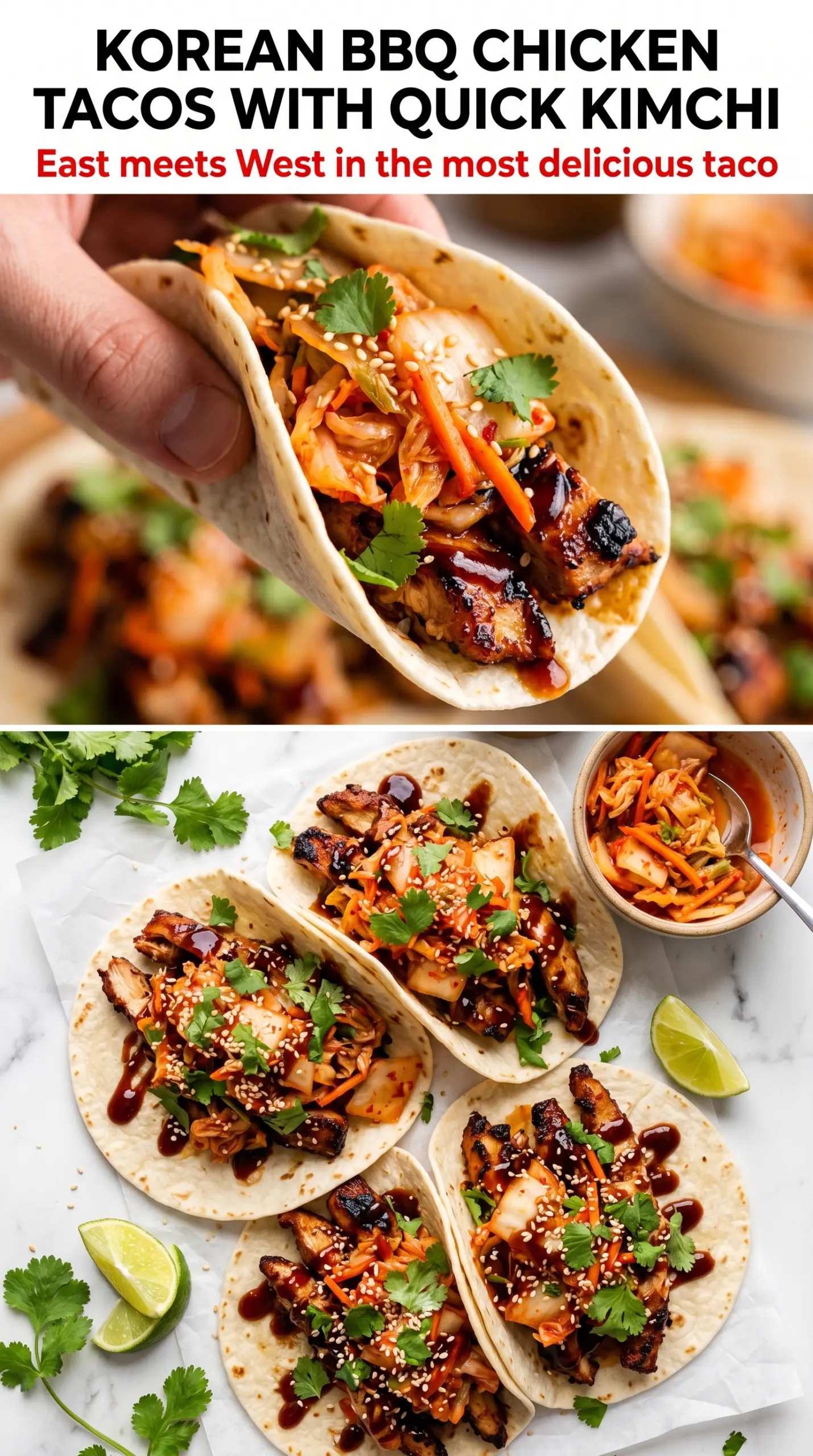
- Chicken thighs — Thighs stay juicy under high heat and hold up to the sticky sauce better than breasts. If you swap in chicken breast, cut the cooking time down and pull it as soon as it’s cooked through or it’ll turn dry once the glaze goes on.
- Gochujang — This is the backbone of the dish. It brings heat, salt, fermented depth, and that thick paste texture that helps the sauce cling to the chicken in a way chili flakes alone can’t.
- Sesame oil — Use the real thing here, not a neutral oil. Its toasted flavor shows up in both the chicken sauce and the quick kimchi, and there isn’t a substitute that gives the same nutty finish.
- Napa cabbage — It softens quickly without collapsing, which makes it perfect for a fast kimchi-style topping. Regular green cabbage works in a pinch, but it stays a little sturdier and less delicate.
- Rice vinegar — This gives the quick kimchi its clean, sharp edge. Lemon juice can step in if needed, but it will taste brighter and less rounded.
- Flour tortillas — Soft flour tortillas are the right match for a sticky filling. Corn tortillas work if you need them gluten-free, but warm them well so they don’t crack when you fold them.
Building the Chicken, Then Layering the Heat
Let the Chicken Brown Before the Sauce Goes In
Heat the skillet until it’s properly hot, then add the chicken in a single layer. You want the pieces to sizzle on contact and take on a little color before you stir them around. If the pan is crowded, the chicken will steam and the glaze won’t have anything good to grab onto. Cook until the outside is mostly opaque and you can see some browned bits starting to form at the bottom of the pan.
Cook the Glaze Until It Clings
Pour in the soy sauce mixture and stir constantly as it bubbles. Within a few minutes, the liquid should reduce enough to coat each piece in a shiny, sticky layer. If the pan looks dry before the chicken is cooked through, add a splash of water rather than more oil; extra oil just makes the sauce slide off. The chicken is done when it’s cooked through and the glaze looks lacquered, not watery.
Use the Rest Time for the Quick Kimchi
Mix the cabbage with the chili flakes, garlic, sesame oil, vinegar, and salt, then let it sit while the chicken cooks. That short rest softens the cabbage just enough to make it snacky and bright without losing crunch. If you dress it too far ahead, the cabbage releases more water and the topping turns loose, so keep the timing tight.
Warm the Tortillas Last
Warm each tortilla in a dry skillet until it’s pliable and a little spotted, then stack them in a towel so they stay soft. Cold tortillas crack as soon as you fold them around the filling. If they’re warmed properly, they’ll bend without tearing and hold the saucy chicken without leaking all over the plate.
How to Make These Tacos Fit What’s in Your Kitchen
Gluten-Free Tacos
Use tamari instead of soy sauce and swap the flour tortillas for corn tortillas. The flavor stays bold, but the filling feels a little lighter and the tacos pick up a more corn-forward finish.
Chicken Breast Version
Chicken breast works if that’s what you have, but it needs a shorter cook and a gentler finish. Cut the pieces a little larger than you would with thighs so they stay juicy, and pull them the moment they’re cooked through before the glaze gets too thick.
Less Heat, Same Depth
If you want the flavor without as much burn, cut the gochujang back slightly and add a touch more honey. You’ll lose a little edge, but the sauce still tastes layered and savory, especially with the sesame and garlic in the mix.
Storage and Reheating
- Refrigerator: Store the chicken and quick kimchi separately for up to 3 days. The cabbage softens a bit more each day, but the flavor stays bright.
- Freezer: The chicken freezes well for up to 2 months. Freeze it without the tortillas or kimchi, then thaw in the fridge before reheating.
- Reheating: Warm the chicken in a skillet over medium-low heat with a splash of water to loosen the glaze. Microwaving at full power can make the sauce sticky in patches and dry out the meat, so use shorter bursts if that’s your only option.
Questions I Get Asked About This Recipe
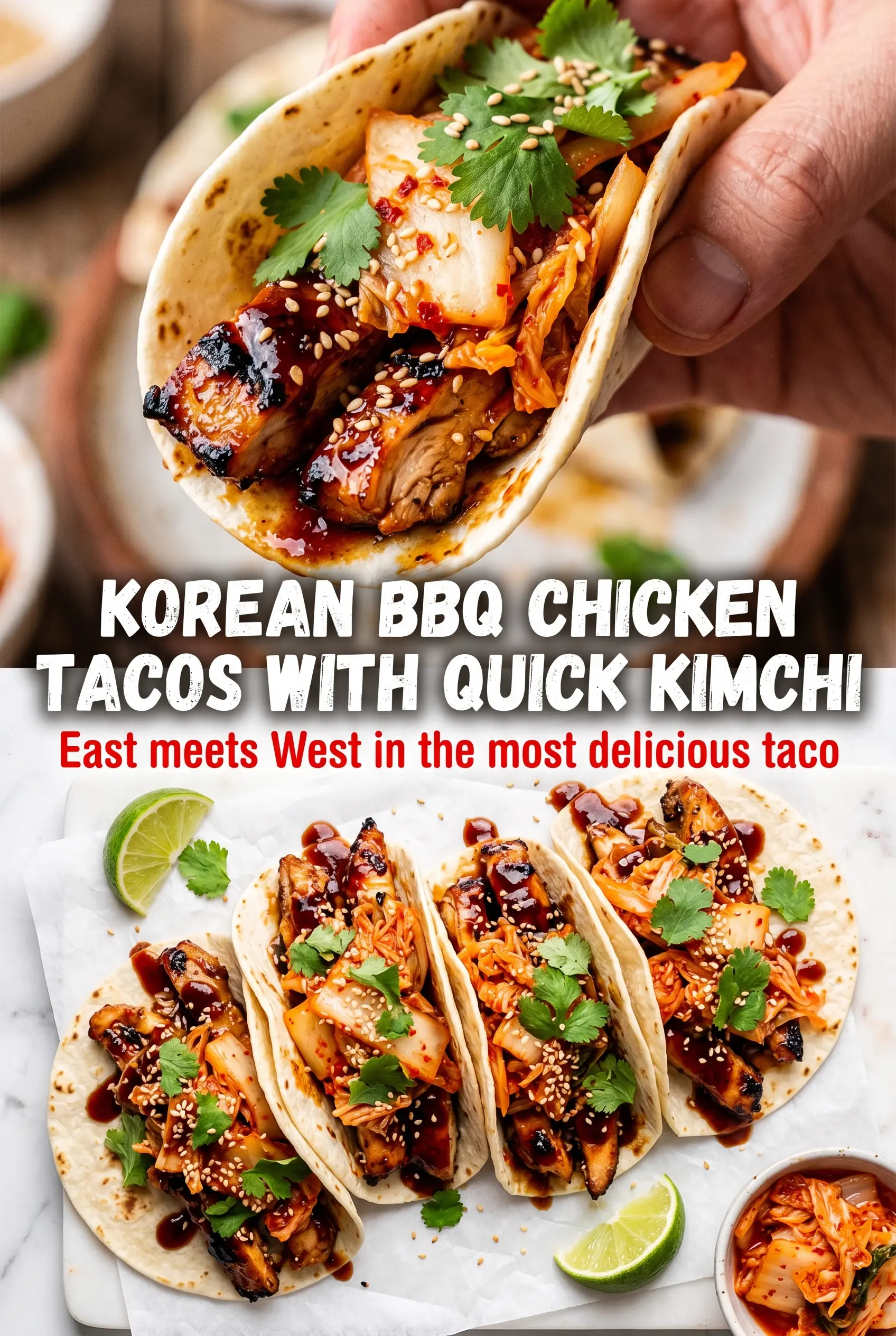
Korean BBQ Chicken Tacos with Quick Kimchi
Ingredients
Equipment
Method
- In a bowl, combine napa cabbage, red chili flakes, garlic, sesame oil, rice vinegar, and salt. Stir until evenly coated, then let sit for 15 minutes so the cabbage softens and releases moisture.
- In a bowl, mix soy sauce, gochujang, honey, sesame oil, garlic, ginger, and rice vinegar until smooth. Heat a large skillet or wok over high heat, then add chicken pieces and cook for 8-10 minutes until mostly cooked.
- Pour in the gochujang mixture and cook for 3-4 minutes more, stirring, until caramelized and chicken is cooked through. The sauce should look glossy and cling to the pieces.
- Warm flour tortillas in a dry skillet over medium heat for 30-60 seconds per side until pliable and lightly toasted. Fill each tortilla with Korean BBQ chicken, top with quick kimchi, and garnish with sliced scallions and sesame seeds.
- Serve immediately while the chicken glaze is sticky and the tortillas are warm. Add a final sprinkle of sesame seeds if desired and keep toppings from sliding by piling kimchi lightly.