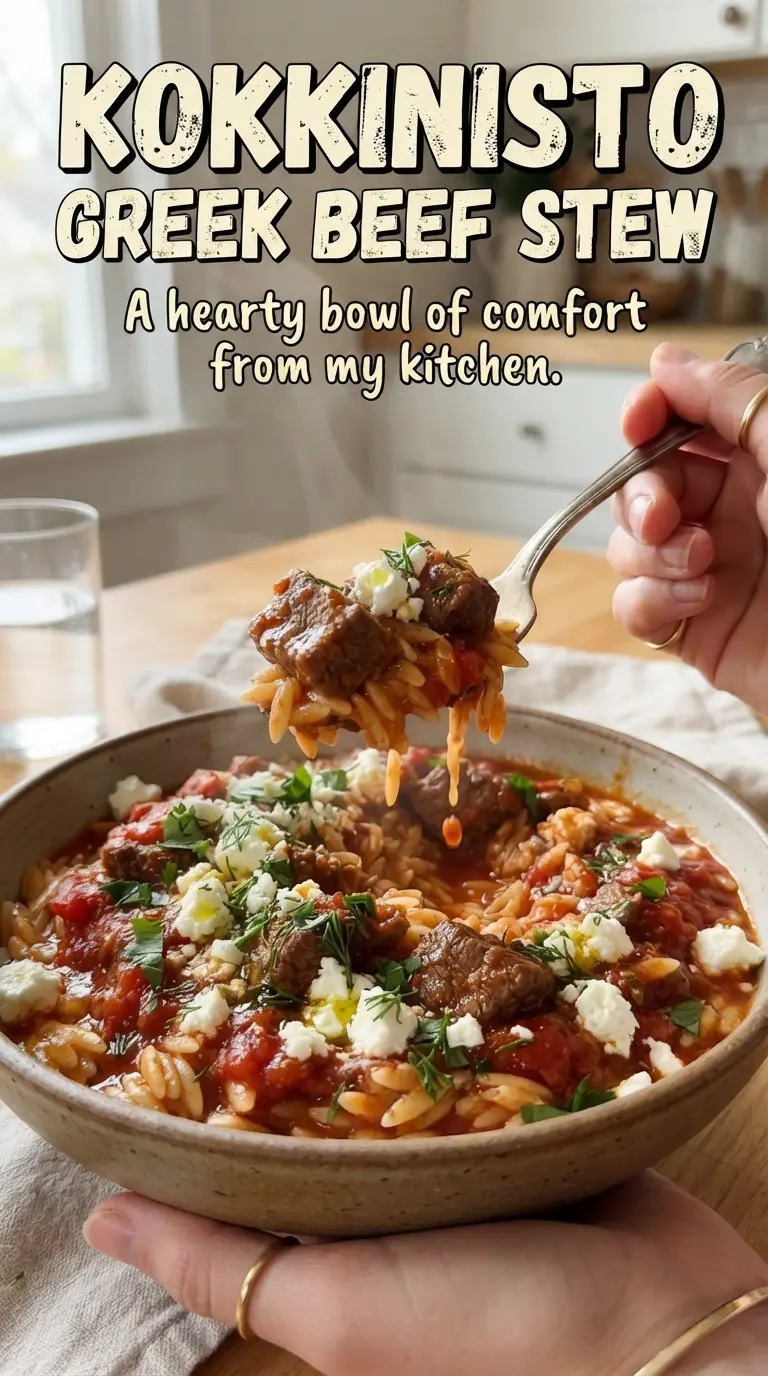
Deeply savory beef, a tomato sauce that turns rich and velvety as it simmers, and that unmistakable warm note of cinnamon make kokkinisto the kind of stew people remember after the first bowl. The beef doesn’t just get tender here; it becomes spoon-soft while the sauce reduces into something glossy enough to cling to orzo or potatoes. A little feta on top sharpens everything and keeps the dish from tasting heavy.
What sets this version apart is the balance. Browning the beef in batches builds real flavor before the sauce ever goes in, and the tomato paste gets cooked long enough to lose its raw edge. The wine and a splash of water loosen the browned bits on the bottom of the pot, which is where a lot of the depth lives. Cinnamon, allspice, and bay are used with a light hand so they read as background warmth, not dessert spices.
Below, you’ll find the exact point where the sauce changes from thin and sharp to thick and rounded, plus a few swaps that still keep the stew in classic Greek territory.
The beef was fall-apart tender and the sauce turned thick and glossy without getting too sweet. I served it over orzo, and the feta on top made the whole bowl taste brighter.
Save this Kokkinisto Greek Beef Stew for the nights when you want tender beef, cinnamon-scented tomato sauce, and one-pot comfort over orzo.
The Secret to Kokkinisto Is Letting the Sauce Reduce Before You Think It’s Ready
The biggest mistake with kokkinisto is pulling it too early, when the broth still tastes bright and thin. This stew needs time for the tomatoes to lose their sharpness and for the beef to release enough gelatin to thicken the sauce naturally. If you rush it, you get tender meat in a loose sauce; if you wait until the liquid looks darker, glossier, and coats the spoon, you get the dish you were after.
The other point that matters is the browning stage. Work in batches and let each piece sit long enough to build a deep crust before turning it. If the pot looks crowded, the beef will steam and the sauce will never get the same depth.
What the Cinnamon, Wine, and Tomato Paste Are Doing Here
- Beef chuck — This is the cut that gives you tenderness without falling apart into shreds too soon. It has enough connective tissue to turn silky during the long simmer, which is what makes the sauce taste full and almost sticky in the best way. A leaner cut won’t give you the same body.
- Tomato paste — Cooking it with the onions and garlic before the wine goes in is what gives the stew depth instead of flat tomato flavor. That minute of heat removes the raw edge and darkens the paste just enough to taste richer.
- Dry red wine — The wine deglazes the pot and carries the browned bits into the sauce. Use something dry and drinkable, not sweet; if you skip it, add a little extra water and expect the stew to taste a bit less layered.
- Cinnamon stick, allspice, and bay leaves — These are background aromatics, not the main event. The whole spices infuse slowly and keep the sauce warm and fragrant without leaving gritty bits behind. Ground spices will muddy the sauce, so keep the whole versions here if you can.
- Crushed tomatoes — Choose good canned tomatoes, because they set the tone for the whole pot. If your tomatoes taste harsh right from the can, the stew will need the full simmer time to mellow out.
Building the Pot So the Sauce Turns Rich, Not Watery
Browning the Beef in Real Batches
Season the beef first, then brown it in hot olive oil without crowding the pan. You want a dark crust on the outside and a lot of fond stuck to the bottom of the pot, because that browned residue becomes part of the sauce. If the beef starts to look gray and damp instead of browned, the pan is overloaded and you need fewer pieces at a time.
Softening the Onions and Toasting the Paste
Cook the onions until they turn soft and translucent and the edges start to look slightly golden. Add the garlic and tomato paste and stir for a full minute; the mixture should smell sweet and concentrated, not sharp or raw. That short cooking step is what keeps the finished sauce from tasting like canned tomatoes with beef in it.
Deglazing and Starting the Simmer
Pour in the wine and scrape the pot while it bubbles for a couple of minutes. The liquid should pick up every brown bit from the bottom, and the harsh alcohol smell should fade before the tomatoes go in. If you skip the scraping, you leave flavor behind and the sauce loses a lot of its depth.
Waiting for the Beef to Go Spoon-Tender
Add the tomatoes, water, spices, sugar, and beef, then cover and let the stew simmer gently until the meat gives easily when pressed with a spoon. The liquid should reduce to a thick, brick-red sauce that clings to the beef instead of pooling around it. Keep the heat low enough that the surface barely blips; a hard boil tightens the meat and can make the sauce look greasy instead of glossy.
How to Adapt the Stew Without Losing Its Greek Character
Serve It Over Potatoes Instead of Orzo
Boiled or mashed potatoes soak up the sauce beautifully and make the stew feel a little heartier. This swap keeps the dish naturally gluten-free and gives you a softer, more rustic plate.
Make It Dairy-Free
Skip the feta garnish and finish with extra parsley and a drizzle of olive oil. You’ll lose the salty tang, but the stew itself stays just as deep and satisfying.
Use Lamb Instead of Beef
Lamb gives the stew a stronger, more traditional Greek flavor and cooks on the same timeline if you use shoulder. The sauce will taste a little richer and more aromatic, but the cinnamon should stay restrained or it can start to compete.
Storage and Reheating
- Refrigerator: Store in an airtight container for up to 4 days. The flavor deepens overnight, and the sauce thickens as it chills.
- Freezer: This freezes well for up to 3 months. Cool it completely first, then portion it with enough sauce to keep the beef protected from freezer burn.
- Reheating: Reheat gently on the stove over low heat with a splash of water if needed. Don’t blast it in the microwave straight from cold, or the beef can tighten and the sauce can separate at the edges.
Answers to the Questions Worth Asking
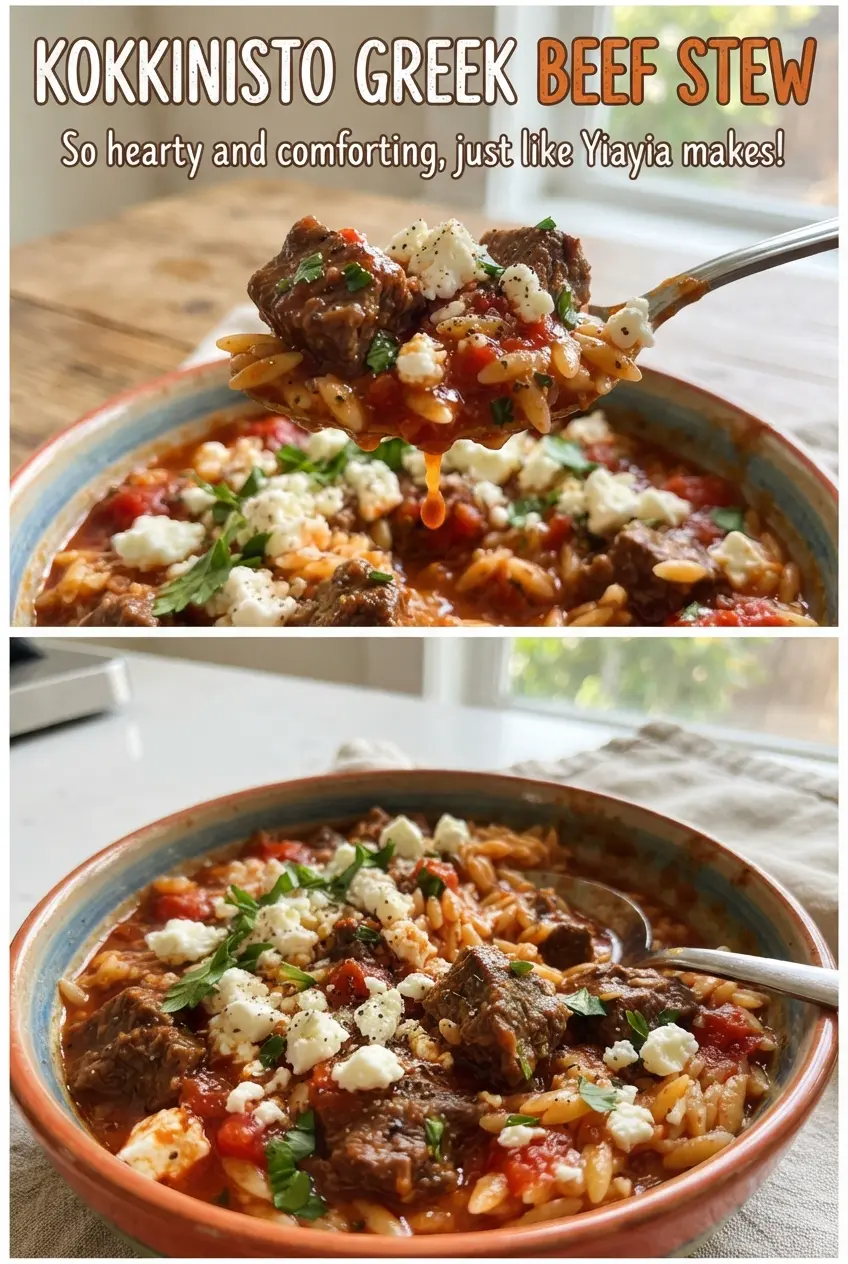
Kokkinisto Greek Beef Stew
Ingredients
Equipment
Method
- Season the beef chuck cubes with salt and black pepper. Heat olive oil in a Dutch oven over medium-high heat, then brown the beef in batches until browned on all sides, using a visible crust as your cue.
- Add the finely diced onions to the Dutch oven and cook for 6 minutes until soft. Stir in the minced garlic and tomato paste and cook 1 minute, until fragrant and darker in color.
- Pour in the dry red wine and simmer for 2 minutes, scraping the bottom to loosen browned bits. Watch for the liquid to reduce slightly and look glossy.
- Add the crushed tomatoes, water, cinnamon stick, allspice berries, bay leaves, sugar, and the browned beef to the pot. Stir so the sauce is evenly combined and the beef is mostly covered.
- Cover and simmer over low heat for 1 1/2-2 hours until the beef is very tender and the sauce is thick. Look for beef that breaks apart easily with a fork and a sauce that coats the meat.
- Remove the whole spices (cinnamon stick and bay leaves) before serving. Spoon the stew over cooked orzo or potatoes so the thick red sauce clings to the base.
- Top each bowl with crumbled feta and parsley for garnish. Serve hot, with visible flecks of herbs and creamy feta on top.