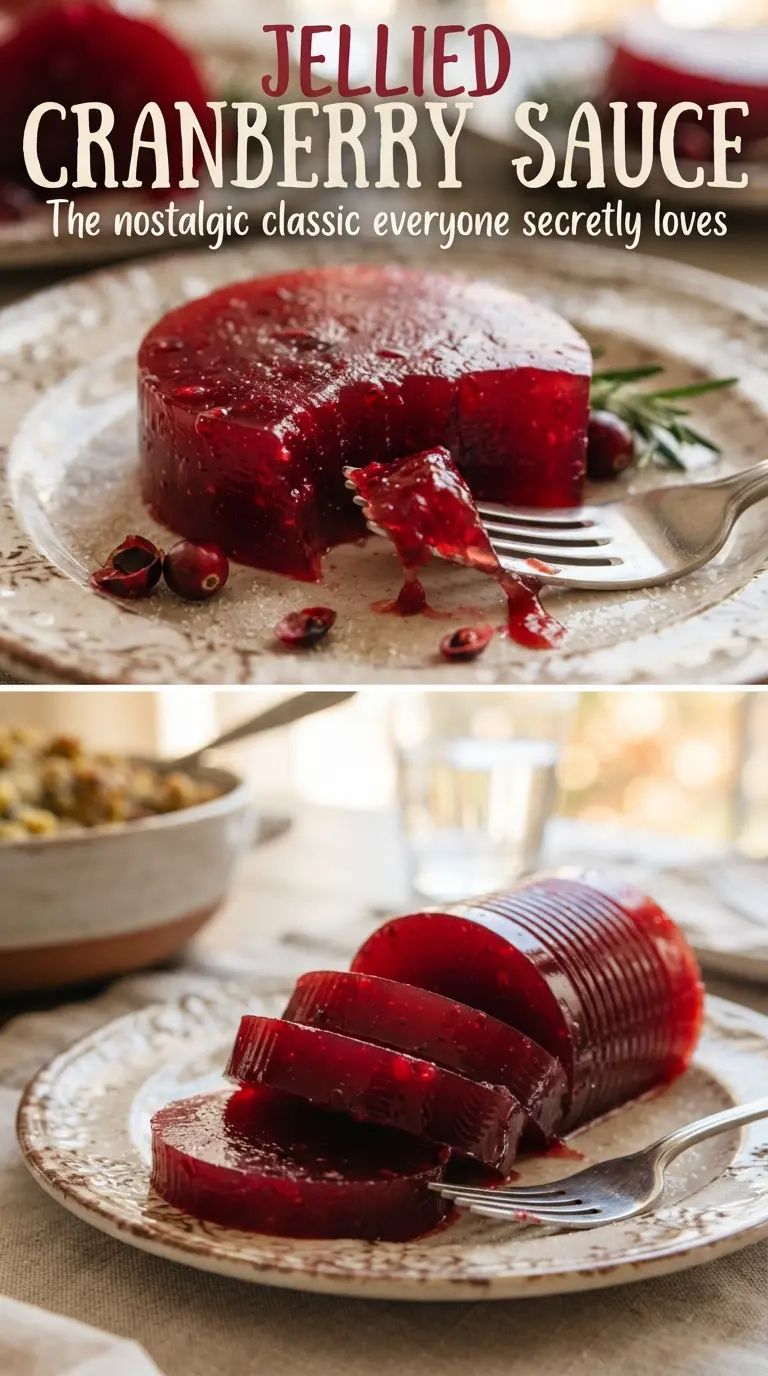
Jellied cranberry sauce earns its place on the table because it slices cleanly, turns glossy and jewel-toned in the mold, and brings a sharp sweet-tart bite that cuts through richer dishes. When it’s done right, it holds the shape of the can or loaf pan, but the texture stays smooth enough to feel elegant on the plate instead of syrupy or loose.
The key is cooking the cranberries long enough to burst completely, then pressing every bit of puree through a fine-mesh strainer so the finished sauce sets without seeds or skins. After that, a short second boil helps the pectin do its work, and the sauce firms up as it chills. Lemon juice sharpens the flavor and gives the cranberry a brighter edge, while a pinch of salt keeps the sweetness from tasting flat.
Below, I’ve included the little details that matter most: how to get a clean release from the mold, what to do if your sauce seems too loose, and a few smart ways to adapt it when you want a different shape or a lighter sweetness.
I loved how it sliced into neat rounds after chilling overnight, and the lemon kept it from tasting too sweet. The texture was smooth and glossy, just like the old-school molded cranberry sauce I grew up with.
Love that glossy, sliceable jellied cranberry sauce? Save this recipe for the holidays when you want a clean-cut molded cranberry side.
The Trick to Getting Cranberry Sauce to Set Cleanly
The part that trips people up is stopping the cook at the right moment. Cranberries need to burst fully so their natural pectin can thicken the sauce, but if you quit while several berries are still intact, the mixture often stays loose after chilling. The second boil matters too: once the pulp is strained, that short return to the pot concentrates the sauce enough to give it the firm, sliceable texture people expect from a molded cranberry side.
Another thing that helps is letting the sauce cool before you judge it. It will still look soft when it goes into the mold, and that’s normal. The set happens in the refrigerator, not on the stove, so resist the urge to cook it down until it looks jammy in the pot. That’s how it turns rubbery instead of smooth.
What Each Ingredient Is Actually Doing in This Dish
- Fresh cranberries — These bring the pectin, tartness, and deep color that make the sauce set on its own. Frozen cranberries work too; use them straight from the freezer without thawing, and expect the simmer to take a minute longer.
- Sugar — This balances the sharp cranberry bite and helps the sauce set with that glossy, clean slice. Cutting it much lower changes both the flavor and the texture, and the sauce can end up too soft.
- Water — This gives the berries enough liquid to break down evenly before the fruit thickens the mixture. You need the full amount at the start; otherwise the sugars can scorch before the cranberries burst.
- Lemon juice — The acid brightens the flavor and keeps the finished sauce from tasting heavy. A little bottled juice is fine here if that’s what you have.
- Salt — Just a pinch rounds out the sweetness and makes the cranberry taste more vivid. Leave it out and the sauce can taste flat, even when the texture is right.
Cooking the Berries, Straining the Pulp, and Letting It Set
Breaking Down the Cranberries
Bring the cranberries, sugar, and water to a full boil, then drop the heat just enough to keep a lively simmer for about 10 minutes. You want every berry to burst and the liquid to look thickened and deeply red. If some berries are still holding their shape, keep cooking; undercooked fruit is the fastest way to get a sauce that never fully firms up.
Pressing Through the Strainer
Set a fine-mesh strainer over a bowl or pot and scrape the mixture through, pressing with a spoon or spatula until only skins remain. The pulp is what gives you that smooth, molded finish, so don’t rush this part. If you leave too much behind in the strainer, the sauce can set up weak and feel watery instead of plush and firm.
The Final Boil and the Chill
Return the strained puree to the pot with the lemon juice and salt, then boil it for 3 to 4 minutes, stirring so it doesn’t catch on the bottom. Pour it into a lightly oiled mold, loaf pan, or even a clean can, and let it chill at least 6 hours, though overnight is better. If it’s even slightly warm when you unmold it, it can slump at the edges instead of holding that clean cylinder shape.
How to Change the Mold, Sweetness, or Make-Ahead Plan
Loaf Pan Instead of a Metal Mold
A lightly oiled loaf pan gives you an easy shape without any special equipment. The finished sauce won’t have the classic ridged look of a can-style mold, but it slices just as neatly once chilled and released onto a plate.
Lower-Sugar Version
You can reduce the sugar a bit, but don’t cut it aggressively if you still want a firm gel and a glossy finish. Less sugar means a softer set and a sharper tart flavor, which some people like, but it won’t taste like the classic molded version.
Make It Ahead for a Busy Holiday Table
This is a good make-ahead side because it needs time in the refrigerator anyway. Chill it the day before, unmold it just before serving, and keep it cold until it hits the table so the edges stay sharp.
Storage and Reheating
- Refrigerator: Store covered for up to 5 days. The texture stays firm, though the surface can lose a little shine after the first day.
- Freezer: Freezing isn’t ideal; the gel can turn grainy or weep after thawing.
- Reheating: This dish is served cold or at cool room temperature, so don’t reheat it. If it softens too much, chill it again before slicing.
Answers to the Questions Worth Asking
Jellied Cranberry Sauce
Ingredients
Equipment
Method
- Bring fresh cranberries, sugar, and water to a boil in a pot. Simmer for 10 minutes, stirring occasionally, until all the berries burst and the mixture looks thicker and ruby-red.
- Press the hot cranberry mixture through a fine-mesh strainer, scraping to push all the pulp through. Discard the skins, and keep only the smooth puree.
- Return the strained puree to the pot and stir in lemon juice and salt. Boil for 3-4 minutes, stirring, until glossy and slightly thickened.
- Pour the hot cranberry mixture into a lightly oiled mold, loaf pan, or clean can. Leave it at room temperature briefly until pour-smooth, then chill until firm—at least 6 hours or overnight.
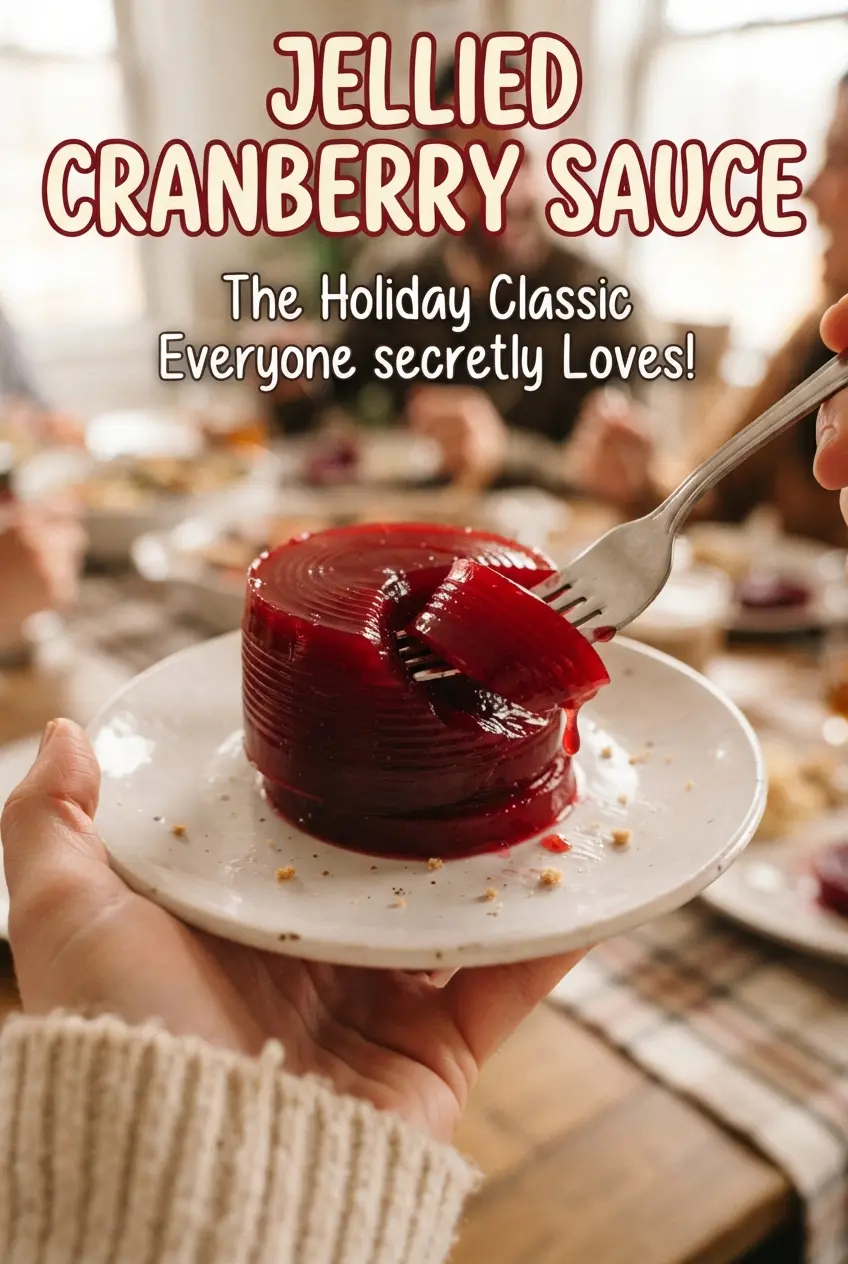
- Run a knife around the edge, then invert the jellied cranberry sauce onto a plate. Slice into rounds to serve, showing the smooth, shiny ruby surface.