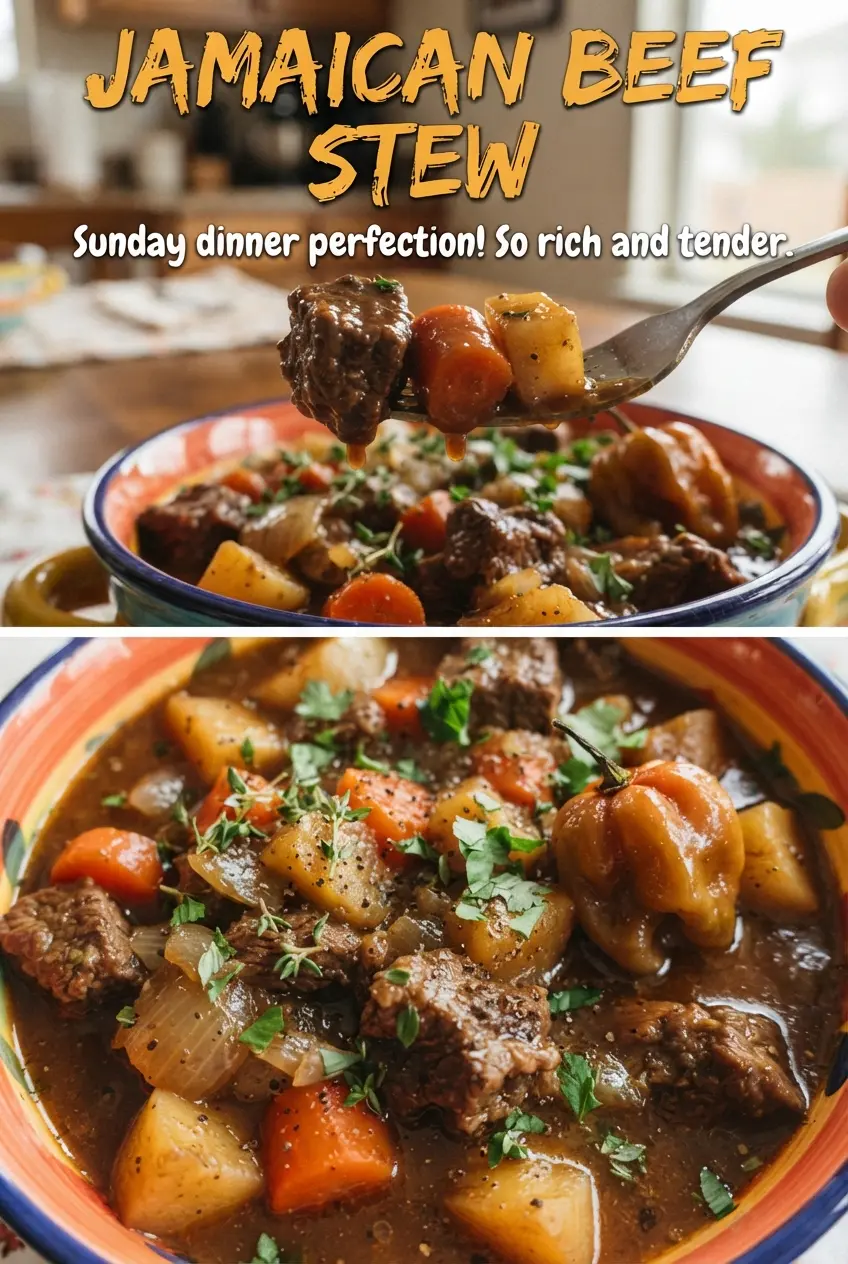
Deep brown Jamaican beef stew has a way of tasting like it took all day, even when the actual hands-on work is fairly simple. The beef turns tender in a glossy, richly seasoned gravy, the carrots and potatoes soak up all that spice, and the butter beans give each spoonful a little softness at the end. Served over rice, it’s the kind of stew that lands heavy in the best way.
What makes this version work is the layering. The beef gets a full hour to marinate with browning sauce, soy, Worcestershire, and aromatics, which seasons the meat before it ever hits the pot. Then the sugar is darkened first, not for sweetness alone but for that deep color and the round, almost roasted flavor you want in a Jamaican-style stew. The scotch bonnet goes in whole, too, so the pot gets heat and perfume without turning the whole dish into a dare.
Below, I’ll show you why the browning step matters, which ingredients carry the flavor, and how to keep the stew rich instead of thin or muddy. If you’ve ever had beef stew that tasted flat, this method fixes that fast.
The gravy turned deep and glossy, and the beef was fall-apart tender after the full simmer. I loved that the scotch bonnet stayed whole because we got a warm kick without it being too hot for the kids.
Save this Jamaican beef stew for the night you want glossy gravy, tender chuck, and rice-ready comfort with real island flavor.
The Browning Step Is What Gives This Stew Its Deep Color
The biggest mistake with beef stew like this is rushing the color. If the sugar and browning sauce don’t get dark enough before the beef goes in, the final pot tastes flat and looks pale, even if the seasoning is right. You want a deep amber-brown base with a slightly nutty smell before you add the meat. That’s where the richness starts.
Keep the heat steady and watch the sugar closely. It should darken quickly, but not smoke into bitterness. Once the beef hits the pot, leave it alone long enough to sear properly. If you stir too soon, the meat steams in its own liquid and you lose the crust that gives the stew its backbone.
What Each Ingredient Is Actually Doing In This Dish

- Beef chuck — This is the right cut because it has enough collagen to turn tender during the long simmer. Leaner stew meat can work, but it dries out faster and won’t give you the same silky bite.
- Browning sauce and brown sugar — These do the heavy lifting for color and that deep, cooked flavor. Browning sauce alone won’t give the stew the same depth; the darkened sugar rounds it out.
- Soy sauce and Worcestershire — They add salt, umami, and a savory edge that makes the gravy taste fuller. If you substitute only salt, the stew will taste more one-dimensional.
- Thyme, allspice, ginger, and scotch bonnet — This is the Jamaican character of the dish. Don’t skip the thyme or allspice, and keep the scotch bonnet whole unless you want the heat to spread aggressively through the pot.
- Butter beans — They soften into the stew near the end and give it a creamy contrast against the beef. Canned beans are fine here because they only need warming through, not long cooking.
Getting Tender Beef and Thick Gravy in the Same Pot
Marinating for a Head Start
The marinade seasons the meat all the way through before the pot ever comes to a simmer. Toss the beef with the aromatics and sauces, then let it sit for the full hour so the chuck picks up salt and spice on the surface. If you skip this step, the stew still works, but the seasoning stays closer to the gravy instead of living in the meat itself.
Building the Dark Base
Heat the oil and brown sugar until the mixture turns noticeably darker, then add the beef and hold back the reserved aromatics for a moment. You want a hard sear on the cubes, not a crowded pan full of gray meat. If the pot looks wet, the temperature is too low, and the beef is boiling instead of browning.
Simmering Until the Chuck Gives Up
Once the broth, ketchup, thyme, and whole scotch bonnet go in, cover the pot and keep the heat low enough that the stew bubbles gently. You’re waiting for the beef to go from tough to easy-piercing with a spoon, and that usually takes the full hour and a half. If it still feels chewy at that point, give it more time; chuck gets tender by patience, not force.
Finishing With the Vegetables and Beans
Add the carrots and potatoes after the beef has nearly softened so they hold their shape. The butter beans go in last because they only need enough heat to turn creamy and warm through. Pull out the scotch bonnet and thyme stems before serving, then spoon the stew over rice while the gravy is still glossy and hot.
How to Adapt This Jamaican Beef Stew Without Losing the Point
Milder Heat for Sensitive Eaters
Use the scotch bonnet whole and leave it in for less time, then remove it once the stew has picked up enough aroma. That gives you the signature flavor without the full burn. If you cut the pepper open, the heat jumps fast and the pot gets harder to control.
Gluten-Free Version
Swap in certified gluten-free Worcestershire sauce and use a gluten-free browning sauce if your brand requires it. The texture stays the same, and the stew still gets that dark, savory depth. Check the broth label too, since that’s often the hidden source of gluten.
No Butter Beans on Hand
Use canned cannellini beans or skip them entirely. Cannellini stay creamy and mild, while leaving the beans out gives you a more traditional meat-and-vegetable stew. If you do omit them, add a splash more broth at the end if the gravy tightens too much.
Storage and Reheating
- Refrigerator: Keeps well for up to 4 days. The gravy thickens as it chills, and the flavor gets deeper by the next day.
- Freezer: Freezes well for up to 3 months. Cool it completely first, then portion it into airtight containers so the potatoes don’t fall apart from repeated thawing.
- Reheating: Warm it gently on the stove over low heat with a splash of broth or water. A hard boil can break the potatoes and turn the beef stringy.
Questions I Get Asked About This Recipe
Jamaican Beef Stew
Ingredients
Equipment
Method
- Combine the beef chuck with browning sauce, soy sauce, Worcestershire sauce, all-purpose seasoning, allspice, onion, garlic, fresh ginger, and green onions in a bowl, ensuring the beef is coated. Refrigerate for 1 hour to marinate, allowing the flavors to soak in.
- Heat the vegetable oil in a Dutch oven over medium-high heat and stir in the brown sugar until it darkens. Add the marinated beef (reserving the aromatics) and sear for 6-8 minutes, until browned on the outside.
- Stir the reserved aromatics into the pot along with the ketchup, beef broth, fresh thyme, and the whole scotch bonnet pepper. Cover and simmer for 1 1/2 hours, until the beef is nearly tender and the stew looks glossy.
- Add the carrots and potatoes to the pot and simmer for 30-40 minutes, until the vegetables are tender. Keep the lid on between stirs so the stew maintains a steady simmer.
- Stir in the butter beans and simmer for 10 minutes, just to heat through and thicken the stew. The sauce should coat a spoon and look deep brown.
- Remove the scotch bonnet and the thyme stems from the stew. Serve the Jamaican beef stew over rice with the vegetables and beans evenly distributed.