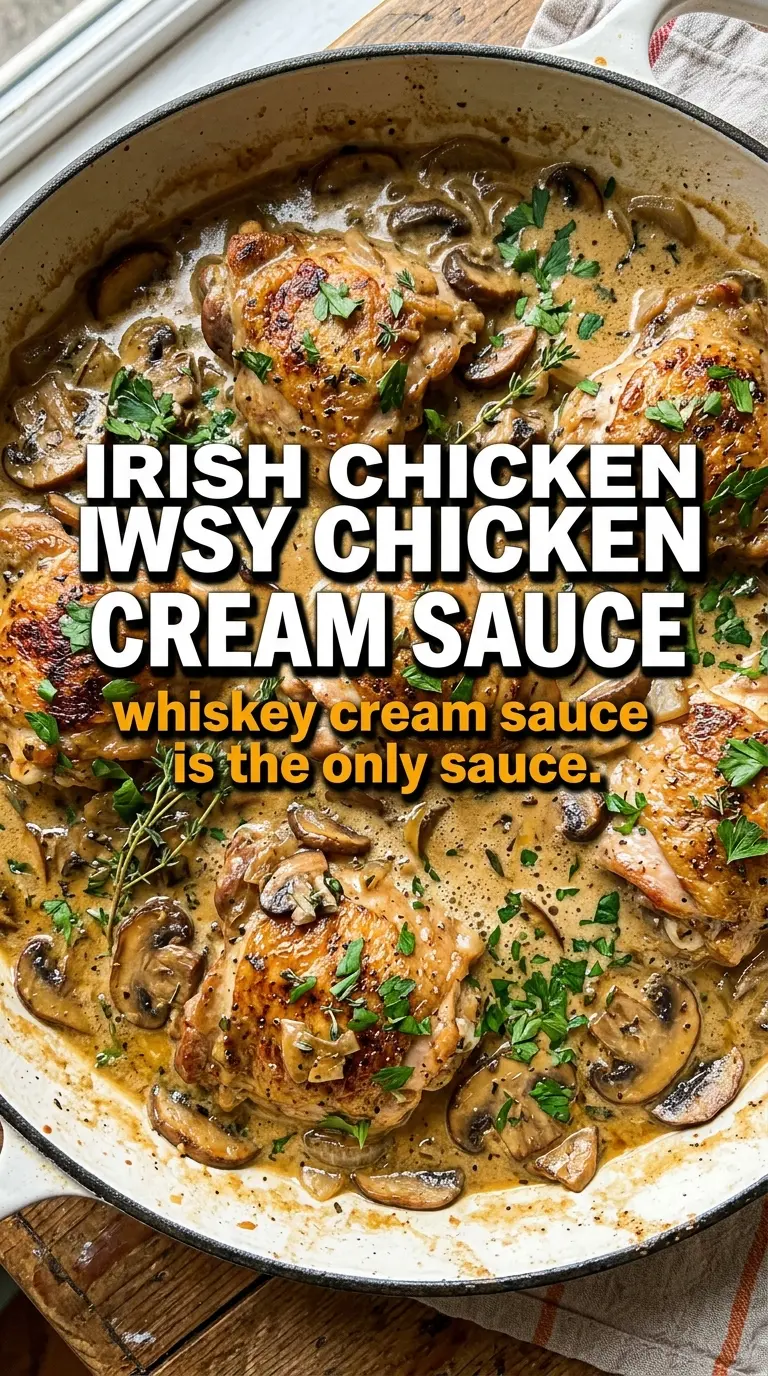
Golden seared chicken breasts in whiskey cream sauce have a way of turning a plain pan dinner into something that feels restaurant-worthy without asking much more than a good skillet and a steady hand. The sauce clings to the chicken instead of sliding off, the mushrooms bring that savory, earthy depth, and the whiskey adds a warm edge that keeps the cream from tasting flat.
What makes this version work is the order of operations. The chicken gets real color first, then the shallots and mushrooms cook in the same pan so all those browned bits stay in the sauce. The whiskey goes in after the pan comes off the heat for a moment, which keeps the whole thing from flaring up and gives it time to mellow before the cream and broth thicken it into something silky.
Below, I’ve included the little details that matter most: how to keep the sauce smooth, what to swap if you don’t cook with whiskey often, and how to reheat it without turning the chicken dry.
The sauce thickened beautifully and coated the chicken instead of pooling in the bottom of the pan. My husband said the mushrooms and whiskey made it taste like something from a nice pub.
Like this Irish chicken in whiskey cream sauce? Save it to Pinterest for the nights when you want a silky pan sauce, tender chicken, and almost no cleanup.
The Trick to Keeping the Whiskey Cream Sauce Smooth
This dish lives or dies on heat control. If the whiskey goes in while the pan is screaming hot, it can steam off too fast and leave a harsh edge instead of a rounded, mellow flavor. Pulling the pan off the burner for that quick pour lets the alcohol settle before you bring it back to a simmer.
The other place people run into trouble is the cream. Heavy cream is forgiving, but it still wants gentle heat once it’s in the pan. A hard boil can make the sauce look greasy or broken, while a steady simmer thickens it into that glossy, spoon-coating finish you want.
- Chicken breasts — Boneless, skinless breasts cook fast and slice cleanly for serving, but they dry out if they’re overcooked by even a few minutes. If yours are very thick, pound them to an even thickness so the outside doesn’t overcook before the center hits 165°F.
- Irish whiskey — This is what gives the sauce its signature warmth. Jameson is a good, approachable choice, but any smooth Irish whiskey will work; don’t use something aggressively smoky or peaty here, because it can overpower the cream.
- Heavy cream — This is not the place for milk or half-and-half if you want the sauce to hold together. Heavy cream reduces neatly and stays silky, while thinner dairy can split or stay too loose.
- Dijon mustard — It doesn’t make the sauce taste mustardy. It sharpens the cream and helps the sauce taste balanced instead of heavy.
What Each Ingredient Is Actually Doing in This Creamy Chicken
- Chicken (the protein foundation) — Cut into uniform pieces so they cook evenly. Room temperature chicken cooks more evenly than cold.
- Butter or oil (the cooking medium) — This browns the chicken and creates pan flavor. Don’t skip browning or the sauce tastes flat.
- Wine or spirit (the flavor depth) — This adds complexity and prevents the sauce from tasting one-dimensional. Use quality wine you’d drink.
- Cream or broth (the sauce base) — This creates the luxurious sauce. Balance richness with acid so it doesn’t taste heavy.
- Cheese (the umami and binding) — This adds depth and helps the sauce cling to pasta. Add off heat so it melts smoothly.
- Aromatics (garlic, shallot, herbs) — Cook these with oil first to bloom flavors. They become the foundation of the sauce.
- Acid (lemon or vinegar) — This prevents creamy sauces from tasting flat. Add at the end to preserve brightness.
- Proper heat (low simmer, not boil) — This keeps the sauce smooth instead of breaking. High heat can cause separation.
Building the Sauce in the Same Pan That Seared the Chicken
Get the Chicken Out with Color, Not Dryness
Season the chicken well before it hits the pan, then sear it over medium-high heat until it’s deeply golden on both sides and just cooked through. You’re looking for a browned crust and juices that run clear, not pale chicken that needs extra time later. If the pan is crowded, the chicken will steam instead of sear, so cook in batches if you need to.
Let the Mushrooms Cook Until Their Moisture Is Gone
After the chicken comes out, the mushrooms and shallots go into the same skillet with the butter. At first, the mushrooms will release liquid and look slippery, then they’ll start turning golden and catching on the bottom of the pan. That browned fond is part of the sauce, so don’t rush this stage by cranking the heat higher and stirring constantly.
Add the Whiskey After the Pan Cools for a Beat
Once the garlic has cooked for a minute, remove the skillet from the heat before you pour in the whiskey. That short pause keeps the alcohol from flashing up too aggressively and gives you more control. When the pan goes back on the burner, let the whiskey bubble for a minute or two so the raw edge cooks off and the sauce starts smelling warm and rounded.
Finish with Cream and Simmer Gently
Stir in the cream, broth, Dijon, and thyme, then bring the sauce to a gentle simmer. It should reduce enough to coat a spoon and leave a trail when you drag a spatula through the pan. If it still looks thin after a few minutes, keep simmering; if it starts boiling hard, lower the heat right away so the dairy stays smooth.
Swap the Whiskey for a Non-Alcoholic Pan Sauce
Use an equal amount of chicken broth plus 1 teaspoon apple cider vinegar or a splash of lemon juice. You’ll lose the whiskey’s caramel-like depth, but the sauce will still be rich, balanced, and good with the mushrooms and thyme.
Make It Gluten-Free Without Changing the Method
This recipe is naturally gluten-free as written, as long as your chicken broth and Dijon mustard are certified gluten-free. The sauce gets its body from reduction and cream, not flour, so you don’t need a separate thickener.
Turn It Into a Mushroom-Forward Vegetarian Sauce
Skip the chicken and double the mushrooms, then serve the sauce over mashed potatoes, pasta, or roasted cauliflower. The sauce will still taste rich and savory, but you’ll want to add the vegetables or starch underneath because the pan sauce is carrying the whole dish.
Use Chicken Thighs for a Juicier Finish
Boneless thighs work well if you want a richer, more forgiving cut. They need a few extra minutes in the skillet, but they stay tender even if you let them simmer in the sauce briefly before serving.
Storage and Reheating
- Refrigerator: Store leftovers in an airtight container for up to 3 days. The sauce may thicken as it chills, which is normal.
- Freezer: I don’t recommend freezing this one. Cream sauces can separate after thawing, and the chicken can turn a little grainy.
- Reheating: Warm it slowly in a covered skillet over low heat with a splash of broth or cream. High heat is the mistake here; it breaks the sauce and toughens the chicken before the center is hot.
Answers to the Questions Worth Asking
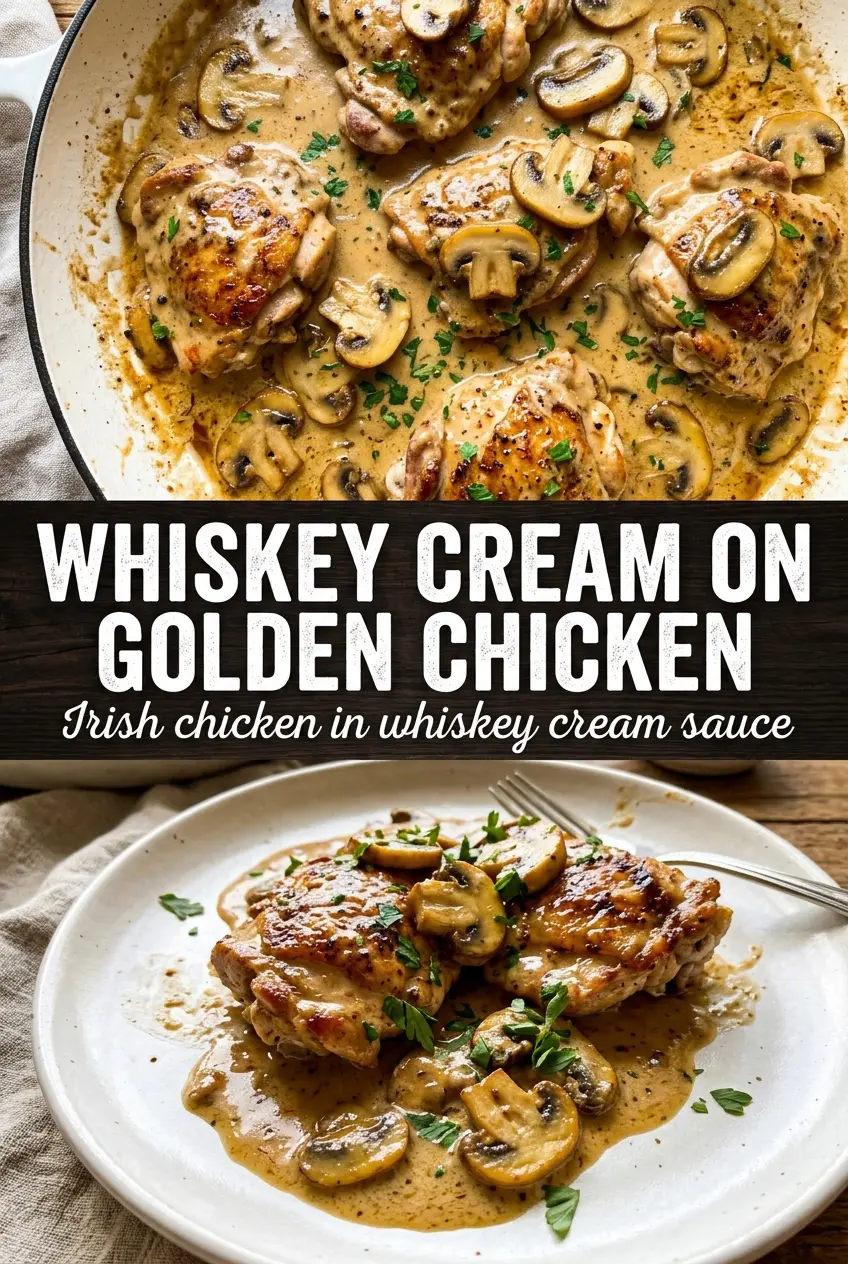
Irish Chicken in Whiskey Cream Sauce
Ingredients
Equipment
Method
- Season the chicken breasts with salt, pepper, garlic powder, and dried thyme to taste. Heat olive oil in a large skillet over medium-high heat and sear until golden and cooked through to 165°F, 5-6 minutes per side.
- Remove the chicken from the pan and set aside. Keep any juices in the skillet for the sauce.
- Melt butter in the same pan. Cook shallots and mushrooms over medium-high heat until golden, 5-6 minutes.
- Add garlic and cook for 1 minute. Stir to keep the aromatics from browning too quickly.
- Remove the pan from heat and carefully pour in Irish whiskey. Return to medium heat and let the alcohol cook off for 1-2 minutes, until the sharp smell fades.
- Stir in heavy cream, chicken broth, Dijon mustard, and fresh thyme leaves. Simmer until the sauce thickens, 5-6 minutes.
- Return the chicken to the pan and spoon whiskey cream sauce over each breast. Simmer briefly just to reheat the chicken, then serve immediately.
- Garnish with fresh thyme sprigs. Spoon extra amber sauce over the top before plating.