Irish beef stew earns its place at the table because the broth turns deep and savory while the beef softens into spoon-tender chunks that still hold their shape. The potatoes soak up the gravy without falling apart, the carrots add a little sweetness, and the whole pot tastes like it has been working on something important all afternoon.
The trick is in the browning and the stout. Beef that gets a proper crust before the liquid goes in gives the stew a darker, fuller base, and the beer loosens the browned bits from the pan instead of hiding them. Tomato paste does its part too, but only after it cooks for a minute with the onions and garlic; that brief step keeps the finished stew from tasting raw or tinny.
Below you’ll find the timing that keeps the vegetables from turning mushy, plus a few useful swaps if you need to adjust the stout or make the stew ahead. The method is straightforward, but the order matters.
The beef got beautifully tender and the broth thickened into that rich gravy I was hoping for. Adding the potatoes later kept them from turning to mush, and the whole pot tasted even better the next day.
Save this Irish beef stew for a rich, slow-simmered dinner with tender beef, stout gravy, and hearty vegetables.
The Browning Step That Gives This Stew Its Deep, Savory Base
The biggest mistake with beef stew is crowding the pan and rushing the sear. If the meat steams instead of browns, the broth can still be good, but it won’t have that deep, rounded flavor that makes people go back for seconds. Browning in batches lets the surface dry out enough to develop actual color, and that color becomes part of the gravy.
The flour on the beef does two jobs here. It helps the meat take on a better crust, and it gives the stew a little body later on, once the liquid simmers and the starch hydrates. If you add too much flour or dump it in without shaking off the excess, the gravy turns pasty instead of silky.
What Each Ingredient Is Doing in the Pot
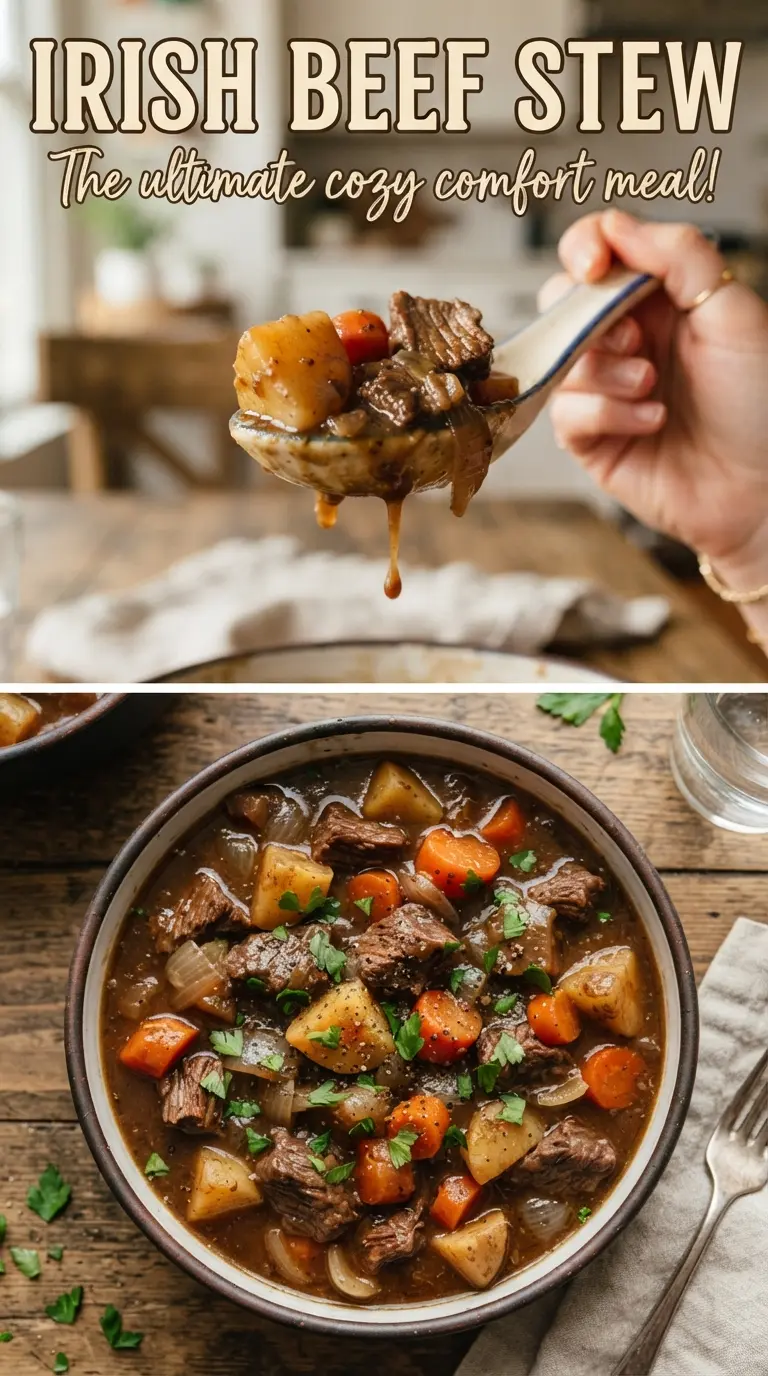
- Beef chuck — This is the cut that makes stew taste like stew. It has enough connective tissue to soften into tenderness over a long simmer, and it holds up better than lean cuts that dry out and turn stringy.
- Irish stout — This gives the broth its malty depth and helps lift the browned bits from the pan. A dry stout works best; sweeter beer can make the stew taste heavier than it should.
- Tomato paste — A small amount adds color and a quieter richness that rounds out the broth. Cook it for a minute with the onion and garlic so it loses its raw edge.
- Potatoes, carrots, and celery — These go in late because they need a shorter simmer than the beef. Add them too early and they collapse before the meat is ready.
- Thyme, rosemary, and bay leaves — This combination gives the stew an herbal backbone without taking over. Bay leaves need to come out before serving; they’re there for depth, not for eating.
Building the Stew in the Right Order
Seasoning and Browning the Beef
Toss the beef with salt, pepper, and flour until every piece has a light coating. Brown it in batches in hot oil, leaving space around each cube so the surface can caramelize instead of steam. The pan bottom will look messy at this stage, and that’s exactly what you want, because those browned bits are what the stout will pull up later.
Cooking the Onion Base
Once the beef comes out, add the onion to the same pot and cook it until it turns soft and lightly golden at the edges. Stir in the garlic and tomato paste for just a minute; that short cooking time wakes up the paste and keeps the garlic from turning harsh. If the pot looks dry, the moisture from the onion will loosen the last bits on its own.
Pouring in the Stout and Simmering Low
Add the stout and scrape the bottom thoroughly with a wooden spoon. Let it bubble for a minute so the beer loses its sharp edge, then add the broth, herbs, and beef. Cover the pot and keep the heat low enough that you see only an occasional lazy bubble; a hard boil tightens the meat and clouds the broth.
Adding the Vegetables at the End
Stir in the potatoes, carrots, and celery after the beef has had its long simmer. This timing keeps the vegetables intact and lets them absorb some of the gravy instead of dissolving into it. Keep cooking until the potatoes are tender at the center and the stew has thickened enough to coat a spoon.
Finishing with Parsley
Pull out the bay leaves and stir in the parsley right before serving. The herbs brighten the stew after all that slow cooking, and the fresh finish keeps the gravy from tasting heavy. If the stew seems thin, let it simmer uncovered for a few extra minutes instead of adding more flour at the end.
How to Adjust This Stew for Your Pantry and Your Schedule
Make It Without the Stout
Use extra beef broth plus 1 tablespoon balsamic vinegar or Worcestershire sauce for a deeper base. You’ll lose the malty bitterness from the beer, but the stew will still have a rich, savory backbone.
Gluten-Free Version
Skip the flour on the beef and brown it plain, then stir in 1 to 1 1/2 tablespoons cornstarch mixed with cold water near the end if you want more body. The stew will be a little lighter in texture, but the flavor stays the same.
Vegetable Changes That Still Work
Parsnips or turnips can stand in for some of the potatoes if you want a more earthy finish. Keep the total amount of vegetables about the same so the pot doesn’t get overloaded and water down the gravy.
Storage and Reheating
- Refrigerator: Store in an airtight container for up to 4 days. The flavor deepens overnight and the gravy thickens as it chills.
- Freezer: It freezes well for up to 3 months. Cool it completely first, and freeze in portions so the potatoes don’t get broken up from repeated thawing.
- Reheating: Warm it gently on the stove over low heat, stirring occasionally. A hard boil can make the beef tough and can cause the potatoes to fall apart.
Questions I Get Asked About This Recipe
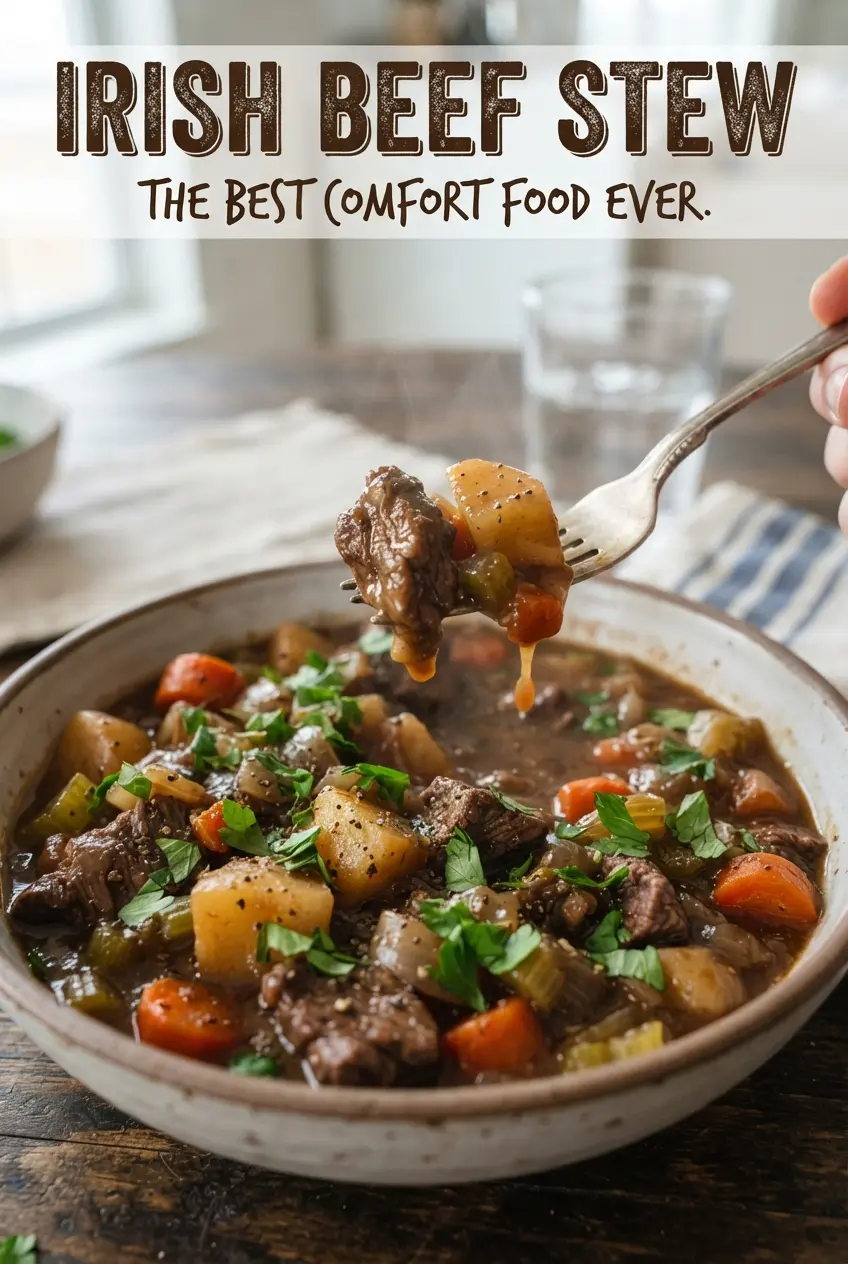
Irish Beef Stew
Ingredients
Equipment
Method
- Season the beef cubes with salt and black pepper, then toss with flour to coat evenly. Heat the vegetable oil in a Dutch oven over medium-high heat until shimmering.
- Brown the beef in batches, searing until well browned on the outside, then transfer to a plate between batches to avoid steaming.
- Cook the chopped onion for 5 minutes in the Dutch oven, stirring as needed, until softened. Add the minced garlic and tomato paste and cook for 1 minute to bloom the flavors.
- Pour in the Irish stout and scrape the bottom of the pot to dissolve the browned bits. Add beef broth, dried thyme, dried rosemary, and bay leaves, then return the browned beef to the pot.
- Cover and simmer for 1 1/2 hours, keeping a steady low simmer so the beef turns tender. Visually check that the liquid is bubbling gently under the lid.
- Add the potatoes, carrots, and celery to the stew, then return to a gentle simmer. Cook for 45-60 minutes, stirring occasionally, until the vegetables are tender and the gravy looks thicker.
- Remove the bay leaves and finish by stirring in the chopped fresh parsley. Taste and adjust seasoning if needed, then serve hot.